@dfat@AmbVasyl
I finally went to my bank today to enquire: Why does every type of transaction I try to make from my 🇦🇺 bank to a 🇺🇦 anything, fail? "Couldn't process." "Unknown error" etc.
NO 🇦🇺 banks can deal with BOTH 🇷🇺 & 🇺🇦 banks! 🇷🇺ofc! 🇺🇦? This is a farce & an outrage!
🇷🇺𝐋𝐀 𝐇𝐎𝐍𝐓𝐄 𝐃𝐄 𝐋’𝐀𝐑𝐌𝐄́𝐄 𝐑𝐔𝐒𝐒𝐄 🇷🇺
𝐋’𝐎𝐍𝐔 𝐏𝐋𝐀𝐂𝐄 𝐄𝐍𝐅𝐈𝐍 𝐌𝐎𝐒𝐂𝐎𝐔 𝐀𝐔 𝐁𝐀𝐍𝐂 𝐃𝐄𝐒 𝐀𝐂𝐂𝐔𝐒𝐄́𝐒
𝐮𝐧 𝐯𝐞𝐫𝐝𝐢𝐜𝐭 𝐚𝐜𝐜𝐚𝐛𝐥𝐚𝐧𝐭 𝐪𝐮𝐢 𝐛𝐫𝐢𝐬𝐞 𝐝𝐞𝐬 𝐚𝐧𝐧𝐞́𝐞𝐬 𝐝𝐞 𝐝𝐞́𝐧𝐢
Pendant plus de trois ans, le Kremlin a tenté d’étouffer les témoignages, de nier les accusations et de présenter ses soldats comme des « libérateurs ».
Mais les faits sont têtus.
Les Nations Unies viennent de franchir une étape historique en inscrivant pour la première fois les forces armées et les services de sécurité russes sur leur liste noire des auteurs présumés de violences sexuelles dans les conflits armés.
Cette décision n'est pas le résultat d'une campagne médiatique ou d'une manœuvre politique.
Elle repose sur des enquêtes, des témoignages, des preuves recueillies malgré tous les obstacles dressés par Moscou.
Alors que la Russie refuse systématiquement l'accès à ses lieux de détention et à ses territoires occupés, les enquêteurs de l'ONU ont malgré tout réussi à vérifier des centaines de cas.
Pour le régime de Vladimir Poutine, c'est une humiliation internationale majeure.
Pour les victimes, c'est enfin une reconnaissance officielle de ce qu'elles ont subi.
𝒍𝒂 𝒗𝒊𝒐𝒍𝒆𝒏𝒄𝒆 𝒔𝒆𝒙𝒖𝒆𝒍𝒍𝒆 𝒄𝒐𝒎𝒎𝒆 𝒂𝒓𝒎𝒆 𝒅𝒆 𝒈𝒖𝒆𝒓𝒓𝒆
Les violences sexuelles commises en temps de guerre ne sont jamais de simples actes individuels.
Elles servent à humilier, terroriser, briser psychologiquement les victimes et envoyer un message à toute une population.
Les conclusions de l'ONU sont particulièrement glaçantes.
⚠️Sur les 310 cas vérifiés, la majorité des victimes sont des prisonniers de guerre et des civils détenus.
Beaucoup sont des hommes, ce qui rappelle une réalité souvent passée sous silence : dans les prisons et centres de détention russes, les violences sexuelles seraient utilisées comme instrument de torture et de domination.
L'objectif n'est pas seulement de faire souffrir. Il s'agit de détruire l'identité même de la victime, de l'écraser moralement, de lui faire comprendre qu'elle est entièrement à la merci de ses geôliers.
Lorsqu'un État laisse se développer de telles pratiques à grande échelle, il ne peut plus parler d'incidents isolés. Il doit répondre de son système.
𝒖𝒏 𝒆𝒎𝒑𝒊𝒓𝒆 𝒅𝒆 𝒑𝒓𝒊𝒔𝒐𝒏𝒔 𝒆𝒕 𝒅𝒆 𝒕𝒐𝒓𝒕𝒖𝒓𝒆
Depuis le début de l'invasion à grande échelle de l'Ukraine, les témoignages d'anciens prisonniers se ressemblent de manière troublante.
Coups quotidiens.
Décharges électriques.
Simulations d'exécution.
Privations de nourriture.
Humiliations constantes.
Menaces contre les familles.
Violences sexuelles.
Les récits provenant de centres de détention comme Olenivka, Taganrog ou d'autres prisons russes dessinent le portrait d'un univers où la brutalité semble être devenue une méthode de gestion.
Le médiateur ukrainien des droits de l'homme, Dmytro Lubinets, affirme que les autorités ukrainiennes ont recensé des centaines de formes différentes de torture utilisées contre les prisonniers ukrainiens.
Des détenus sont battus jusqu'à perdre connaissance.
D'autres sont forcés de rester dans des positions douloureuses pendant des heures.
Certains subissent des électrocutions répétées. Les chiens sont parfois utilisés pour terroriser les captifs.
⚠️Ces descriptions évoquent davantage les pages les plus sombres du XXe siècle qu'une armée prétendant appartenir à une puissance moderne.
𝒍𝒂 𝒄𝒖𝒍𝒕𝒖𝒓𝒆 𝒅𝒆 𝒍’𝒊𝒎𝒑𝒖𝒏𝒊𝒕𝒆́ 𝒓𝒖𝒔𝒔𝒆
Le problème ne se limite pas aux actes eux-mêmes.
Ce qui rend ces crimes encore plus inquiétants est l'absence presque totale de responsabilité. Les autorités russes refusent les enquêtes indépendantes.
Elles nient systématiquement les accusations. Elles empêchent les observateurs internationaux d'accéder aux détenus.
⚠️Cette attitude nourrit un climat d'impunité.
Lorsqu'un soldat sait qu'il ne sera probablement jamais poursuivi, lorsque son commandement ferme les yeux, lorsque l'État rejette toute critique comme étant de la propagande occidentale, les abus se multiplient.
L'histoire montre qu'aucune armée n'est à l'abri des crimes de guerre.
Mais les démocraties disposent généralement de mécanismes d'enquête et de justice.
En Russie, le réflexe dominant semble être le déni.
𝒍𝒆𝒔 𝒑𝒓𝒊𝒔𝒐𝒏𝒏𝒊𝒆𝒓𝒔 𝒖𝒌𝒓𝒂𝒊𝒏𝒊𝒆𝒏𝒔 𝒂𝒃𝒂𝒏𝒅𝒐𝒏𝒏𝒆́𝒔 𝒂̀ 𝒍𝒆𝒖𝒓𝒔 𝒃𝒐𝒖𝒓𝒓𝒆𝒂𝒖𝒙
Les conventions internationales sont pourtant claires.
Un prisonnier de guerre doit être protégé.
Il ne doit pas être torturé.
Il ne doit pas être humilié.
Il ne doit pas être soumis à des violences sexuelles.
Pourtant, les témoignages qui émergent des centres de détention russes décrivent exactement le contraire.
Les prisonniers ukrainiens racontent des passages à tabac systématiques à leur arrivée. Ils décrivent des cellules surpeuplées, l'absence de soins médicaux, les privations alimentaires et les violences permanentes.
Le simple fait de parler ukrainien, de porter un tatouage patriotique ou d'avoir servi dans certaines unités militaires suffit parfois à déclencher des sévices supplémentaires.
⚠️Cette haine obsessionnelle de tout ce qui est ukrainien apparaît comme un fil conducteur dans de nombreux témoignages.
𝒍𝒆 𝒎𝒂𝒓𝒕𝒚𝒓 𝒅’𝒐𝒍𝒆𝒌𝒔𝒂𝒏𝒅𝒓 𝒌𝒓𝒐𝒌𝒉𝒎𝒂𝒍𝒊𝒖𝒌
Le décès du médecin militaire ukrainien Oleksandr Krokhmaliuk a bouleversé de nombreux Ukrainiens.
Chef du service médical de l'unité Azov, il avait consacré sa vie à sauver celle des autres.
Après la chute d'Azovstal, il est tombé aux mains des forces russes.
Il ne devait jamais revenir vivant.
Son parcours à travers différents centres de détention russes illustre le destin tragique de nombreux prisonniers ukrainiens.
Son nom s'ajoute désormais à la longue liste des captifs morts en détention.
⚠️Derrière chaque nom se cache une famille détruite, des proches laissés dans l'attente, une existence brisée.
𝒑𝒐𝒖𝒕𝒊𝒏𝒆 𝒏𝒆 𝒑𝒐𝒖𝒓𝒓𝒂 𝒑𝒂𝒔 𝒆́𝒕𝒆𝒓𝒏𝒆𝒍𝒍𝒆𝒎𝒆𝒏𝒕 𝒔𝒆 𝒄𝒂𝒄𝒉𝒆𝒓 𝒅𝒆𝒓𝒓𝒊𝒆̀𝒓𝒆 𝒔𝒆𝒔 𝒎𝒆𝒏𝒔𝒐𝒏𝒈𝒆𝒔
Depuis le début de la guerre, le Kremlin a construit un récit parallèle dans lequel la Russie serait victime de complots, de provocations et de campagnes de désinformation.
Mais ce récit se heurte de plus en plus aux enquêtes internationales, aux images satellites, aux témoignages des survivants et aux rapports des organisations indépendantes.
Boutcha. Marioupol.
Les déportations d'enfants.
Les exécutions de civils.
Les tortures de prisonniers.
Et désormais les violences sexuelles reconnues par les Nations Unies.
À chaque nouveau rapport, le fossé se creuse entre la propagande officielle russe et la réalité documentée sur le terrain.
𝒖𝒏𝒆 𝒕𝒂𝒄𝒉𝒆 𝒊𝒏𝒅𝒆́𝒍𝒆́𝒃𝒊𝒍𝒆 𝒔𝒖𝒓 𝒍’𝒂𝒓𝒎𝒆́𝒆 𝒓𝒖𝒔𝒔𝒆
Les armées peuvent remporter des batailles. Elles peuvent conquérir des territoires.
Elles peuvent imposer temporairement leur force.
Mais lorsqu'elles deviennent synonymes de torture, de viols, d'humiliations et de brutalité systématique, elles perdent quelque chose qu'aucune victoire militaire ne peut restaurer : leur honneur.
L'inscription des forces russes sur la liste noire de l'ONU constitue une condamnation morale extrêmement lourde.
Elle rappelle au monde que derrière les discours du Kremlin se cache une réalité beaucoup plus sombre.
Les victimes ukrainiennes méritent justice. Les survivants méritent d'être entendus.
Les responsables méritent d'être poursuivis.
⚠️Et plus le temps passe, plus les preuves s'accumulent.
Le Kremlin peut tenter d'effacer les traces, d'intimider les témoins et de verrouiller l'information.
Mais il devient chaque jour plus difficile de cacher ce que révèle la guerre : derrière les drapeaux, les slogans et la propagande, une machine de violence s'est mise en marche, laissant derrière elle des milliers de victimes et une réputation que l'armée russe mettra des générations à effacer.
sources /
https://t.co/gfOLi7NuJE
https://t.co/mdJOmuY6iP
(femmes ukrainiennes et polonaises assistent à une manifestation)
In every area of Ukraine occupied by russians, schools have become re-education and training centers aimed at brainwashing Ukrainian children and preparing them to become cannon fodder in russia's next war.
School № 28, Mariupol, Ukraine
Today I want to pay tribute to late Sage O’Donnell, an Australian who made the ultimate sacrifice defending freedom in Ukraine.
Sage’s name is now inscribed on the Commemorative Roll at the @AWMemorial as the first entry under Ukraine conflict i.e. Russia-Ukraine war, a profound and historic recognition. It ensures his courage and sacrifice are remembered as part of Australia’s military history and deepens public understanding of the human cost of Russia’s war against Ukraine.
This recognition also honours all Australians who have stood with Ukraine in its darkest hour. They are part of a shared story of service, solidarity and sacrifice.
I am grateful to Sage’s mother for sharing this deeply personal milestone. We remember Sage not only as a brave Australian volunteer, but as a symbol of mateship and the enduring Australian commitment to freedom.
Lest we forget
Protest of schoolchildren in Crimea. In 2014, the Russian occupiers played the Russian anthem at the graduation ceremony of the lyceum, but all the students started singing the Ukrainian anthem louder than the Russian anthem, and the Russians had to turn the volume up to maximum to drown out the children.
😢 During the terrorist attack in Kyiv, a local janitor shielded a child with his body and was killed
When the attacker opened fire, a janitor named Oleksandr Hryhorovych ran up to the boy and covered him with his body, taking the bullets himself.
Doctors fought for his life for more than a day, but he could not be saved due to severe injuries.
Residents say he was always ready to help others. He dreamed that after the war he would build a long table in the yard and celebrate victory together with his neighbors.
He is survived by his cat — locals have promised to take care of it.
Twelve years ago, on April 17, 2014, in Donbas. Russian special-ops group led by 🇷🇺 FSB-officer Igor Girkin (Strelkov), seized and tortured local 🇺🇦 politician Volodymyr Rybak. A man whose only “crime” was that he was for Ukraine.
His stomach was slit, a backpack filled with stones was put on his back, and he was thrown (still alive) into the river. His dead body was fished out days later.
Together with him they found Yury Popravka, an 18-year-old student who also suffered a martyr’s death. His “crime” was the same.
It was April 2014. There was still no understanding that war had come. But Russians already created a daily Golgotha, to which they and their local collaborators took anyone who was for Ukraine.
Let us remember Volodymyr, Yury, and all the others who endured torment in Donbas and Crimea in March, April and May 2014. Let’s not forget who started the bloodshed.
“What the fascists did to prisoners of war looks like cartoons compared to what the russians did to us.”
They beat him with rifle butts along his spine, used electric shocks, drowned him in a toilet, and kept him for eight months without daylight.
This is the testimony of Valentyn “Did” Ponomaryov, who spent 1,195 days in captivity.
On the first day of the full-scale invasion, he joined the Svatove territorial defense as a volunteer, even though he was already retired.
The battalion commander asked: “Grandpa, how old are you?”
“62 and a half.”
“Take a rifle and get into the trench.”
His wife was against it, but she understood. He told her: “I’m sorry, I can’t do otherwise.”
He spent 3 years, 3 months, and 10 days in captivity. He was held in Luhansk Detention Center No. 4, Colony No. 38 in Sverdlovsk, and in Mordovia.
In the detention center, they put a bag over his head, attached wires to his ears, and shocked him with electricity from a flashlight.
“So, old man, how is it? Can your heart handle it?” the torturer would ask, increasing the current. The head of one detention center personally killed two prisoners.
An “Akhmat” commander would take them out for mock executions, firing a silenced pistol past their heads. Valentyn said: “In a fraction of a second, my whole life flashed before my eyes.”
In Mordovia, for eight months there were no walks and no daylight, as the windows were sealed with metal from the outside. Every time the door opened, all prisoners had to fall to their knees, cross their legs behind them, stretch their arms toward their shoulder blades, and press their foreheads and noses to the floor.
After his release, Valentyn still had a callus on his forehead for a long time. They drowned him in a toilet.
They forced him to play clapping games for two hours. He was made to sing the russian anthem up to 15 times a day. At every meal, he had to shout: “Glory to the russian special forces!”
But the worst part of captivity was the thought that he would be seen as a traitor in Ukraine and that his son would abandon him.
Instead, it turned out that his son, through university friends, had been searching for him and did everything possible to secure his release as quickly as possible.
On July 23, 2025, he was freed. When the bus entered the Chernihiv region, people stood along the road with flashlights, welcoming them. Tears streamed down Valentyn’s face.
He is now 66 years old. After his release, he underwent three surgeries and still needs another. His wife was also held hostage by russians.
His son is currently serving in the army. His hometown, Svatove, remains under occupation.
Valentyn said: “If I could turn back time, I would still go. I cannot sit at home when the enemy has come to your land.”
Source: translated from Tymofiy Mylovanov
Ukrainian children forcibly taken by Russia from the Kherson Children’s Home in 2022 are now listed on a Russian state-run adoption database.This is part of Russia’s systematic practice of forced relocation, document alteration, adoption, re-education, and militarisation — ongoing since 2014.
ℹ️ The Ombudsman’s Office has already returned 2,083 children to Ukraine, but many remain. The international community must act swiftly to protect their lives, identity, and future.
❤️🩹🇺🇦😟
Daria Zymenko was repeatedly raped by a🇷🇺soldier
During the occupation of the Kyiv region
Daria is now an activist who highlights these war crimes
Helping others who have experienced trauma🙏
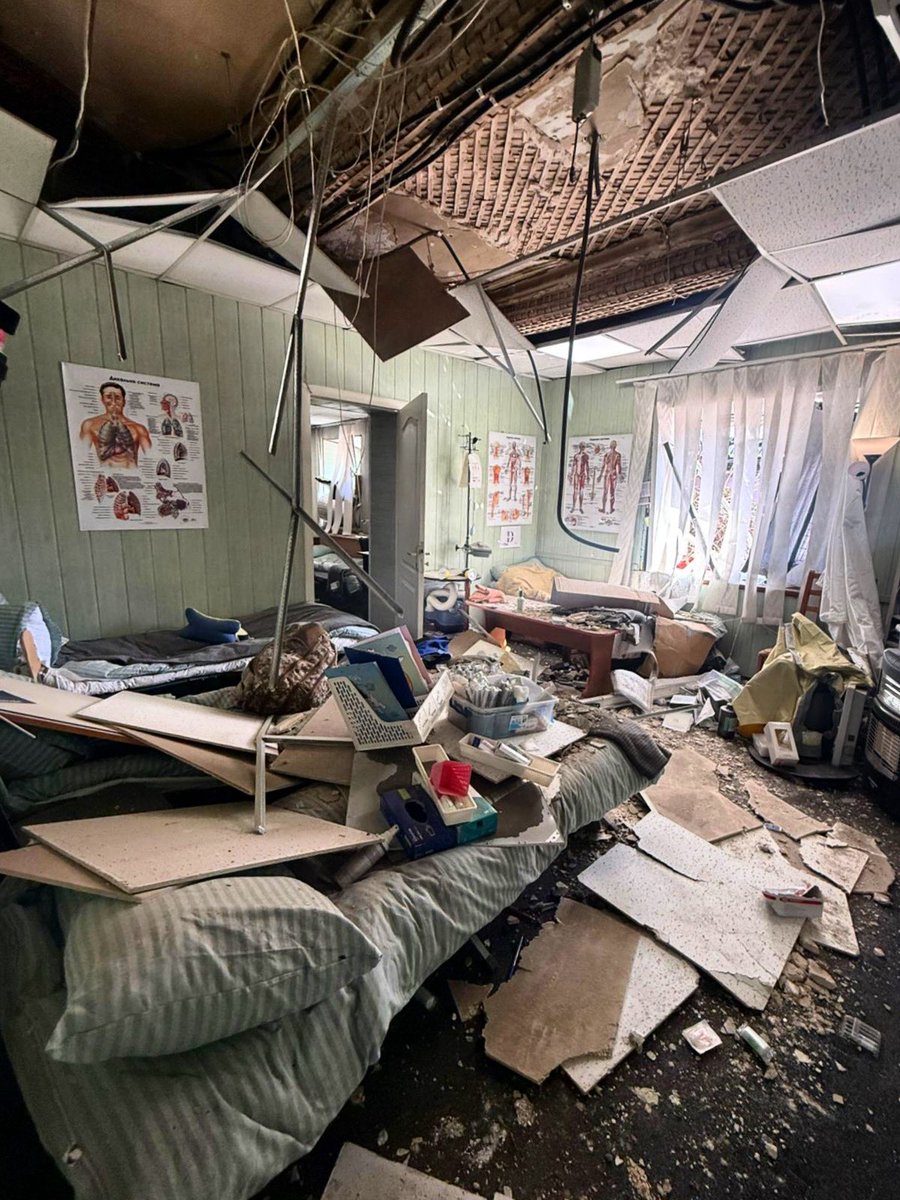
Yesterday at approximately 13:00, two KAB-250 aerial bombs struck my medical point.
The first detonation occurred while I was on the porch organizing medical supplies. Inside, my nurse @once_upon_a_travel_nurse was caring for recovering servicemen, assisted by @ryeioww. Another female soldier was preparing food. Two servicemen under active care were present, including one with severe combat injuries resulting in blindness and loss of function in one leg.
Immediately after the first strike, my nurse and I established verbal contact and confirmed that all personnel were alive. Without hesitation, the team responded with discipline and composure. We began evacuating the wounded from the structure, moving them across the street while coordinating transport for further evacuation.
During this process, a second bomb struck.
The second impact, a FAB-250, is a 250-kilogram high-explosive aerial bomb carrying approximately 120 kilograms of explosive material, designed to destroy infrastructure and fortified positions with a blast radius of roughly 120 meters. It detonated directly at the rear of the medical point.
The explosion caused a structural collapse. The ceiling fell onto my nurse, who, despite the impact, continued providing care. I sustained shrapnel injury to the thigh. Vivi maintained focus and continued assisting with the evacuation, ensuring the wounded were loaded into a vehicle.
All vehicles at the site were destroyed. The medical point was completely demolished.
Despite the scale of the strike, all personnel survived. The strength and resilience of my amazing girls is unmatched, and without them, the outcome would have been much different
Russian sympathizers love to scream “war crime” the moment Ukraine touches a soldier who crossed the border to invade their country.
But when a Russian drone hunting civilians in Nikopol or any other frontline city, they have nothing to say about.
This is a DAILY human safari, and this is an actual war crime.
Eight children and teenagers were rescued from occupation by the Save Ukraine team last week. This became possible thanks to the support of partners within the framework of the President of Ukraine’s initiative Bring Kids Back UA. All of them had been living under pressure, fear, and constant threat to their lives, but now they are finally safe.
Among those rescued:
🔹 17-year-old Oleksandr, whose home was raided by armed FSB officers who conducted searches and inspections. After that, the boy rarely left his home, understanding that he would be forced to fight for russia as soon as he turned 18.
🔹 14-year-old Zoryana, who was separated from her father by the occupiers. He was illegally deprived of his documents and deported after being accused of posing a “threat to national security.” The girl was forced to attend a russian school, where classrooms had so-called “desks of heroes,” children were taught about the greatness of russia, and even trained to use weapons.
🔹 17-year-old Hlib, who was also subjected to russia’s militarization in schools. Students were told that russia had “liberated” them, shown grenades and rifles, and russian soldiers were frequent visitors in classrooms. In such conditions, the boy could not imagine any future, so he searched for ways to escape.
These children, along with five others rescued last week, have now been given a chance at a new life. All of them are currently staying in our Hope and Healing Centers, where they receive psychological support, assistance with documents, housing, and care — everything needed to restore a sense of safety and begin rebuilding their future.
But thousands of children still living under occupation. There, they are forced into silence, made to adapt, and prepared for war. But we do not stop.
🙏 We are grateful to our partners @klitschko, Tatjana Kiel, WeAreAllUkrainians, The Humanity Funds, and the Joint Coordination Center for Search and Release — together, we are bringing Ukrainian children home.
Thanks to @SaveukraineUs, more than 1,200 children are already back home.
When the whole world learned about Bucha. About Ukrainians butchered in the streets of Bucha by Russian occupiers. About our people tortured in basements. About those shot on the roads. About adults and children whose bodies were found in graves in Bucha. Everyone saw the horror that Russia and its aggression bring. They saw what Ukraine is really defending itself against.
Today, on the fourth anniversary of Bucha’s liberation from Russian occupiers, we honored the memory of Ukrainians who were killed and tortured there. We remember and will never forget what the enemy did. Every Russian murderer, executioner, and terrorist must be held accountable for every crime against our people.
Blessed be the memory of everyone whose lives were taken by Russia – to all who were killed in Bucha and across Ukraine at the hands of Russian occupiers.
In Mariupol, a 17-year-old boy, Dmytro Shuvalov, who had cerebral palsy, was left alone in a locked house after his parents were shot by a sniper while going out to get humanitarian aid. He couldn’t walk. He couldn’t speak. He was found dead on a couch months later. No one knows how long he survived alone. This what Russia did “liberating” Mariupol in its genocidal war. https://t.co/yXT2pNJhmS
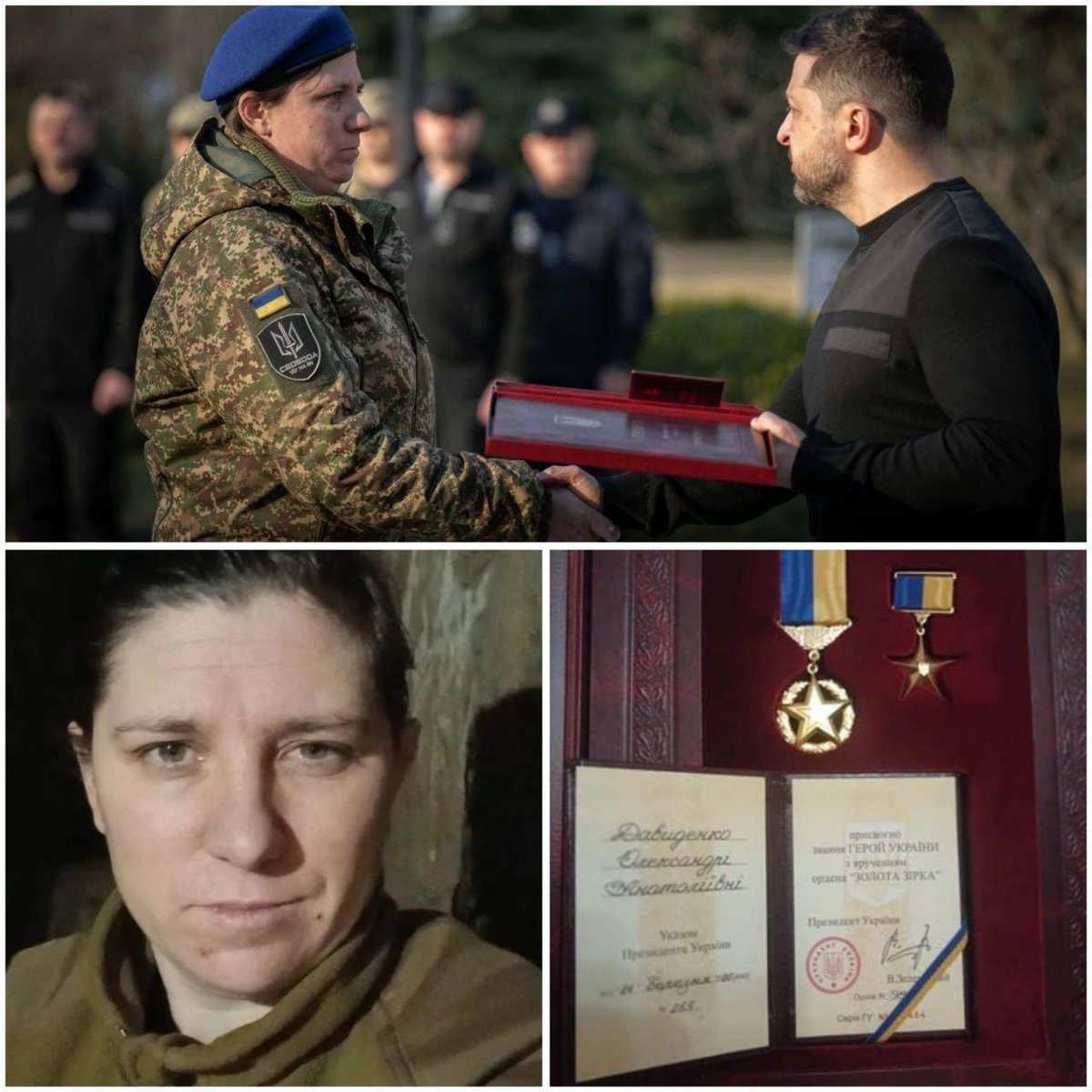
Oleksandra Davydenko just made history, and she did it the hard way.
A machine gunner on the Donetsk front, she stood her ground when it mattered. She engaged the enemy head on, stopped an assault, and took the fight to them. Even after being wounded, she did not step back. She pulled her comrade out under fire and got them to safety.
That is what this war looks like. That is what courage looks like.
Being named Hero of Ukraine is not just a title. It is earned through actions like this, under pressure, when everything is on the line. She did not hesitate. She acted.
And now she stands as the first female National Guard soldier to receive this honor. Not because of who she is, but because of what she did.
Respect to you, Oleksandra. What you did matters. What you represent matters even more.
Ukraine is still standing because of soldiers like you.
Слава Україні. Героям слава. 🇺🇦
"A russian soldier wanted to rape her."
Ivan's mother was raped and killed by a russian soldier while the boy was in the next room. After her death, he lived in the occupied part of the Kherson region until volunteers helped him escape to Kyiv.