“The question what to believe is perhaps the most momentous that anyone can put to himself. Our beliefs are ….the necessaries of existence."
— Felix Adler
via the 5-Bullet Friday newsletter (https://t.co/s1OALf4ySz) from @tferriss
“If you expect to succeed as a writer, rudeness should be the second-to-least of your concerns. The least of all should be polite society and what it expects.”
― Stephen King
via the 5-Bullet Friday newsletter https://t.co/s1OALf4ySz from @tferriss
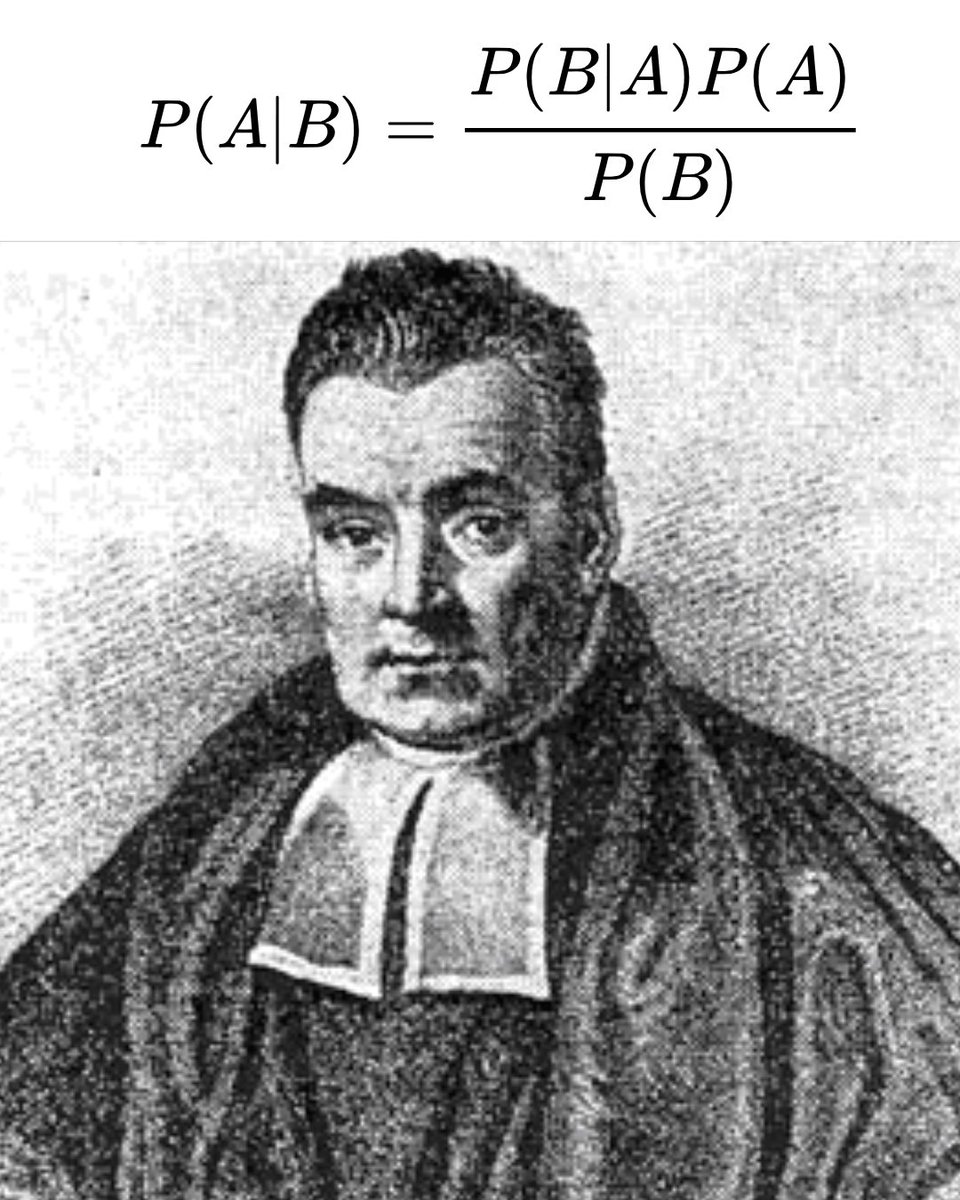
Bayes’ theorem is probably the single most important thing any rational person can learn.
So many of our debates and disagreements that we shout about are because we don’t understand Bayes’ theorem or how human rationality often works.
Bayes’ theorem is named after the 18th-century Thomas Bayes, and essentially it’s a formula that asks: when you are presented with all of the evidence for something, how much should you believe it?
Bayes’ theorem teaches us that our beliefs are not fixed; they are probabilities. Our beliefs change as we weigh new evidence against our assumptions, or our priors. In other words, we all carry certain ideas about how the world works, and new evidence can challenge them.
For example, somebody might believe that smoking is safe, that stress causes mouth ulcers, or that human activity is unrelated to climate change. These are their priors, their starting points. They can be formed by our culture, our biases, or even incomplete information.
Now imagine a new study comes along that challenges one of your priors. A single study might not carry enough weight to overturn your existing beliefs. But as studies accumulate, eventually the scales may tip. At some point, your prior will become less and less plausible.
Bayes’ theorem argues that being rational is not about black and white. It’s not even about true or false. It’s about what is most reasonable based on the best available evidence. But for this to work, we need to be presented with as much high-quality data as possible. Without evidence—without belief-forming data—we are left only with our priors and biases. And those aren’t all that rational.
“Spirituality is not just about finding quiet in a noisy world. It is about finding the sacred in the mundane.”
— Tara Mohr
via the 5-Bullet Friday newsletter (https://t.co/s1OALf4ySz) from @tferriss
“This world is full of conflicts and full of things that cannot be reconciled. But there are moments when we can … reconcile and embrace the whole mess, and that’s what I mean by ‘Hallelujah.’”
Leonard Cohen
5-Bullet Friday newsletter (https://t.co/s1OALf56I7) from @tferriss
“Happiness lies in thinking or doing that which one considers beautiful.”
— Hazrat Inayat Khan
via the 5-Bullet Friday newsletter (https://t.co/s1OALf56I7) from @tferriss
“When life gets tough, some of us feel that we’ve lost the game and life has won. But life isn’t trying to defeat you. Life isn’t even a participant—the game is yours.”
— Mo Gawdat
via the 5-Bullet Friday newsletter (https://t.co/s1OALf56I7) from @tferriss
NEW podcast episode is up!
Arthur Brooks — Finding The Meaning of Your Life, The Poet’s Protocol, The Holy Half-Hour, and Why Your Suffering is Sacred
Arthur Brooks (@arthurbrooks) is a professor at the Harvard Kennedy School and the Harvard Business School, where he teaches courses on leadership and happiness. He is also the host of the weekly podcast Office Hours with Arthur Brooks and a columnist at The Atlantic, where he writes the popular weekly “How to Build a Life” column.
Brooks is the author of 15 books, including the #1 New York Times bestsellers, Build the Life You Want, co-authored with Oprah Winfrey, and From Strength to Strength: Finding Success, Happiness, and Deep Purpose in the Second Half of Life.
His next book, The Meaning of Your Life: Finding Purpose in an Age of Emptiness, will be released on March 31, 2026.
Please enjoy!
“The key is to keep asking yourself the same question, again and again and again: this is your life—what do you want to pay attention to?”
— Catherine Price
via the 5-Bullet Friday newsletter (https://t.co/s1OALf4ySz) from @tferriss
“There are times when the world is rearranging itself, and at times like that, the right words can change the world.”
― Orson Scott Card
via the 5-Bullet Friday newsletter (https://t.co/s1OALf4ySz) from @tferriss
“It was books that taught me that the things that tormented me most were the very things that connected me with all the people who were alive, or who had ever been alive.”
― James Baldwin
via the 5-Bullet Friday newsletter (https://t.co/s1OALf56I7) from @tferriss
“The typical expression of opening Friendship would be something like, ‘What? You too? I thought I was the only one.’”
— C.S. Lewis
via the 5-Bullet Friday newsletter (https://t.co/s1OALf4ySz) from @tferriss
3 Essential Lessons Too Many of Us Learn Too Late in Life “Today is the day, now is the time — it’s your turn…”
https://t.co/PiG9IbrECp via @marcandangel
“Do not anticipate trouble, or worry about what may never happen. Keep in the sunlight.”
— Benjamin Franklin
via the 5-Bullet Friday newsletter (https://t.co/s1OALf4ySz) from @tferriss
“Do not anticipate trouble, or worry about what may never happen. Keep in the sunlight.”
— Benjamin Franklin
via the 5-Bullet Friday newsletter (https://t.co/s1OALf56I7) from @tferriss
“Everyone believes very easily whatever they fear or desire.”
— Jean de La Fontaine
via the 5-Bullet Friday newsletter (https://t.co/s1OALf56I7) from @tferrissz