🚀 𝗝𝗮𝘃𝗮 𝗠𝗶𝗰𝗿𝗼𝘀𝗲𝗿𝘃𝗶𝗰𝗲𝘀 A Practical Guide to Interview Preparation
Master the core concepts you need to crack your next backend or microservices interview!
✅ Spring Boot & REST APIs
✅ Service Discovery & Load Balancing
✅ Docker, Kubernetes & CI/CD
✅ Real-world Interview Q&A
📘 FREE for the first 500 people!
1️⃣ Like & Repost
2️⃣ Comment “JAVA”
3️⃣ Follow (so I can DM you the guide)
Level up your backend interview prep today! 💻
#Java #Microservices #BackendDevelopment #InterviewPrep #SpringBoot #Giveaway #Developers #Coding
@makakmayumjava When you deploy your containers, please reduce both the size and your security risk by using something like the Google Distroless bases! They reduce your runtime to the minimum. I have an example with Go but Java is just as easy! 👇 https://t.co/FNoK5SH7oo
As a Java/Backend engineer, learn these properly to be a better engineer instead of trying to learn every new fancy tech or a language:
To organize data efficiently: Data Structure
To optimize problem solving: Algorithms
To protect data endpoints: API Security
To enable asynchronous communication: Messaging
To store application data properly: Databases
To improve application performance: Caching
To build scalable architecture: System Design
To enable service communication: API design
To automate software delivery: CI/CD
To deploy and scale services: Docker/ Kubernetes
Want a job in DevOps?
👉Stop chasing certificates. Do this instead:
• Master Git. Not just push/pull. Handle merge conflicts, merge, rebase
• Pick one cloud. AWS, Azure, or GCP. Go deep, not wide
• Live in YAML. Kubernetes, Docker Compose, Ansible. You’ll debug indentation daily
• Build real CI/CD. Not tutorials. Actual pipelines that deploy real apps
• Deploy something public. A website people can visit beats any certificate
• Learn Infrastructure as Code. Terraform or plumini. Manual clicking is dead
• Get comfortable with Linux. SSH, file permissions, systemd services. You’ll live in the terminal
• Think security first. Scan containers, manage secrets properly, understand IAM roles
• Monitor everything. Prometheus, Grafana, or cloud monitoring. If you can’t see it, you can’t fix it
• Automate boring stuff. Scripts that save time show you think like DevOps
• Break things safely. Practice chaos engineering. Learn how systems fail
• Document your wins. Blog about problems you solved. Show your thinking
👉The brutal truth: Your GitHub profile matters more than your resume.
✅That portfolio > certificates every single time.
Don’t overthink it.
• Host a static site on S3
• Deploy a serverless API with Lambda
• Build a chatbot using Lex
• Set billing alerts in CloudWatch
• Store files securely in S3
• Automate tasks with Step Functions
• Secure access with IAM roles
The best way to learn AWS?
Projects. Not tutorials.
If I Were to Start Learning DevOps From Zero, This Is How I Would Have Done It
🫵 Here is the 6-month no-bullshit roadmap
✅ Month 1: Linux, Networking, Shell Scripting, and Git
→ Learn Linux commands (ls, cd, grep, find), file permissions, and process management.
→ Master networking basics including TCP/IP, DNS, load balancers, and firewalls.
→ Build shell scripting skills with variables, loops, and functions.
→ Complete Git essentials - clone, commit, push, pull, branching, and merging.
✅ Month 2: Cloud Platforms and Containerization
→Focus on AWS fundamentals - EC2 instances, S3 storage, VPC networking, IAM roles and policies, and RDS databases.
→ Master Docker basics, including containers vs VMs, Dockerfiles, and Docker Compose for multi-container applications.
✅ Month 3: Infrastructure as Code and CI/CD
→ Learn Terraform for infrastructure management including syntax, providers, and state management.
→ Set up GitHub Actions for automated testing and deployment pipelines.
→ Master AWS ECS(or a similar service) for container orchestration with clusters, services, and load balancers.
✅ Month 4: Kubernetes Ecosystem
→ Master Kubernetes architecture, pods, services, deployments, and kubectl commands.
→ Learn monitoring with Prometheus and Grafana. Implement GitOps with ArgoCD and manage applications with Helm charts.
→ Cover EKS setup and advanced Kubernetes concepts.
✅ Month 5: Python for DevOps and
Event-Driven Architecture
→ Learn Python fundamentals, basic data structures, and data manipulation
→ Learn Python for DevOps automation using boto3 and AWS SDK. Master AWS Lambda and serverless architecture with event-driven patterns.
→ Work with SQS, EventBridge, and S3 triggers for Lambda
✅ Month 6: Build the Projects That Will Get You Hired
1. Automated system monitoring with real-time alerts and performance visualization dashboards
2. Multi-environment infrastructure (dev/staging/prod) managed through Terraform modules and GitHub Actions
3. Containerized microservices deployment on Kubernetes with comprehensive monitoring and service mesh
4. Event-driven serverless data processing pipeline using Lambda, SQS, SNS with Python automation scripts
5. GitOps workflow implementation with ArgoCD featuring blue-green deployments and automated rollback capabilities
Document everything on GitHub and Medium. Your profile becomes your portfolio.
🚀 240+ Core Java Interview Questions & Answers (45 Pages PDF)
Preparing for a Java Interview?
Here’s a complete guide covering Core Java from Basic to Advanced, real interview questions with detailed answers to help you crack your next role confidently! 💼
✅ 240+ Core Java Q&A
✅ Covers OOPs, Collections, Threads, Exceptions & More
✅ 45 Pages of pure interview prep value
Absolutely FREE for first 500 people 🎁
To get your copy:
Comment "Java"
Like & Repost
Follow (must) so I can DM you the PDF
#Java #InterviewPreparation #Developers #Coding #TechCommunity
Never call an API in a transaction.
In relational databases, it's best practice to keep transactions as short-lived as possible.
Longer transactions lead to more resource contention. If each transaction acquires row locks, being longer-lived means higher likelihood of lock waits and execution delays.
Then there's MVCC. Postgres keeps multiple versions of rows for MVCC, and long-running transactions keep old rows from becoming autovacuum candidates. MySQL handles this with an undo log. When there are lots of long transactions, the log has to be kept around longer, log length and performance.
If you're using a connection pooler like PgBouncer in transaction pooling mode, long transactions can easily result in pool exhaustion producing failures on your clients.
The database is the most core part of your stack. Keep it as contention-free as possible.
Top 10 Coding Concepts You Must Master Before Any Interview
1. Time & Space Complexity
Learn Big-O notation to analyze how efficient your code is.
2. Recursion
Understand base and recursive cases.
Practice problems like factorial, Fibonacci, and tree traversal.
3. Sorting Algorithms
Know how Bubble, Merge, Quick, and Insertion Sort work.
Focus on time complexities and when to use each.
4. Two Pointers
Ideal for array and string problems such as palindrome checks, duplicates, and pair sums.
5. Sliding Window
Essential for subarray problems like maximum sum or longest substring.
6. Binary Search
A must for sorted data problems.
Also useful for solving range-based or search space problems.
7. Hashing
Use hash maps to store counts, frequencies, or index positions.
Common in anagram, duplicate, and pattern problems.
8. Greedy Algorithms
Make the locally optimal choice at each step.
Great for interval scheduling, coin change, and activity selection problems.
9. Dynamic Programming
Break problems into smaller subproblems.
Master memoization, tabulation, and common patterns like Fibonacci, Knapsack, and LIS.
10. Graphs
Understand DFS, BFS, cycle detection, and shortest path algorithms (e.g., Dijkstra’s).
Practice problems on connected components and topological sorting.
Tip: Focus on understanding patterns not just memorizing solutions.
❤️Save this list and keep refining your problem-solving foundations.
Quick question :
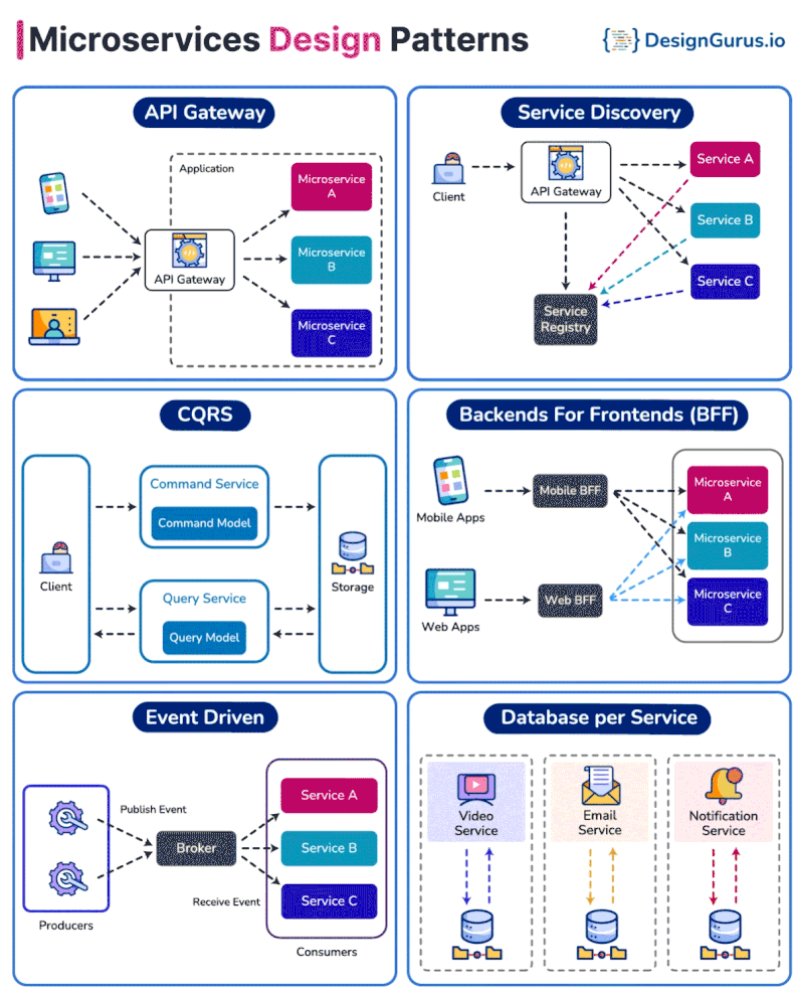
You have 50 microservices, each with its own API.
The frontend team is losing their mind.
To render a single page, they make 10+ network calls.
The app is sluggish. Users are complaining.
How do you fix this ?