Check out the visualization of 40 Milky Way-mass galaxies. The video shows the dark matter components of these galaxies & span over 600,000 light years across. Each realization is a different set of initial conditions that help us understand/contextualize our own Milky Way galaxy
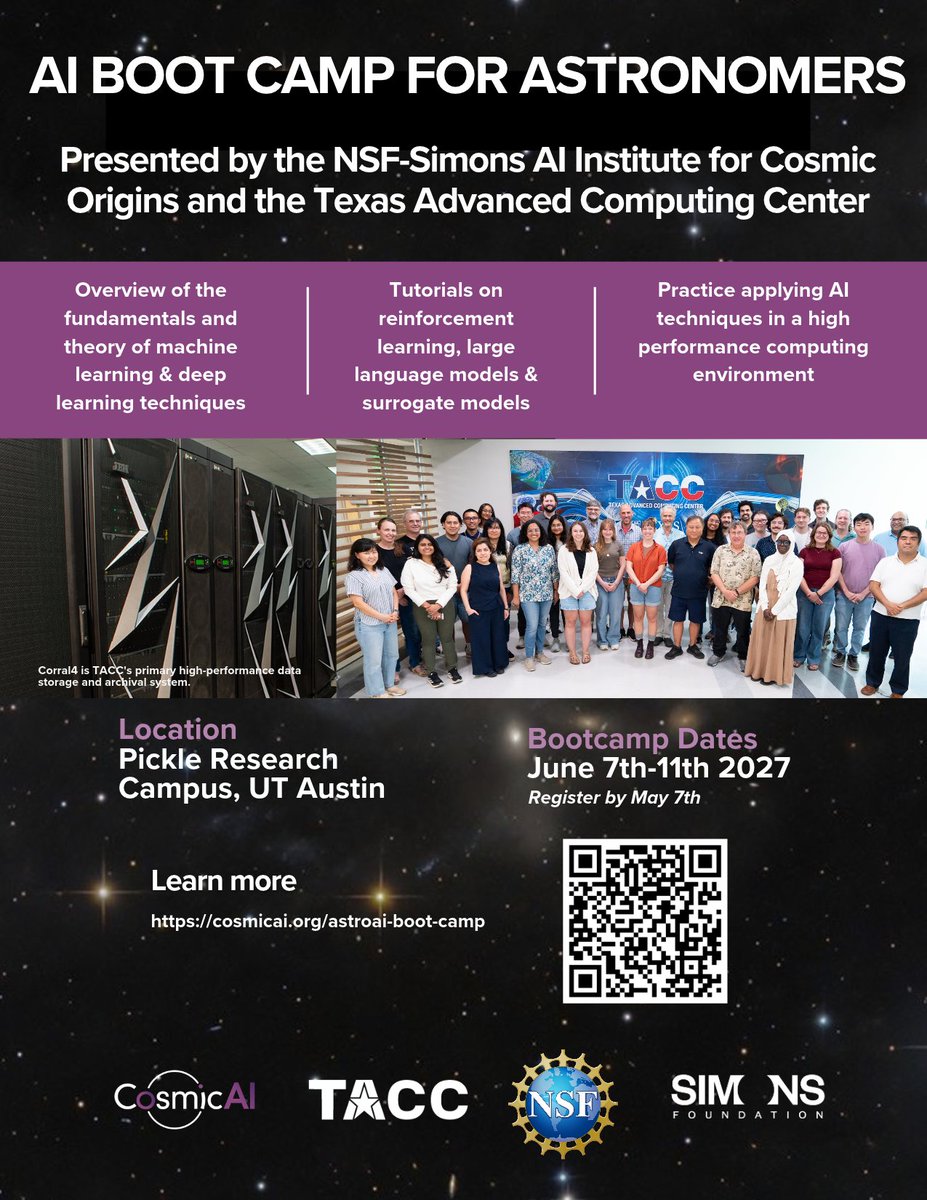
Save the date for our summer 2027 AI Boot Camp For Astronomers!
Presented by CosmicAI and @TACC
Pickle Research Campus, UT Austin
June 7th-11th 2027
Learn more https://t.co/zFabH3O9j3
Sign up for our email list for upcoming info on registration https://t.co/bgO3mQketg
We’re excited to collaborate with the NSF–Simons AI Institute for Cosmic Origins (@CosmicAI_Inst) at UT Austin on AI for Open Science, centered on a shared interest in AI for Open Science. 🔭
Together, we’ll advance foundation models to accelerate astronomical discovery. CosmicAI will apply IFM’s models to astronomy challenges and complex datasets, giving feedback on emerging AI capabilities in real-world science.
We’ll openly share the resulting models, built on the open foundation of K2 Horizon, and lessons learned with the scientific and open-source AI communities.
Here’s to AI as an engine for scientific discovery! ✨
We are excited to highlight a new research collaboration between the NSF–Simons AI Institute for Cosmic Origins (CosmicAI) at @UTAustin and @IFM_AI at Mohamed bin Zayed University of Artificial Intelligence (MBZUAI), centered on a shared interest in AI for Open Science!
CosmicAI team members Arya Farahi and Ritwik Vashistha are working on how to account for noise in observed data. Two of their recent works on this problem were accepted at NeurIPS 2026!
In the first paper, they developed a new flexible approach called convMMD that uses the known information about the noise to obtain denoised observations. In the second paper, they went one step further and considered how to account for noise if the noise mechanism is unknown.
Part of Albertine Conversations series, Villa Albertine & UT Austin presents a conversation (including @mattlease) on AI alignment and the ethical, technical, & governance challenges posed by rapidly advancing systems. https://t.co/glUm5RlTjY
CosmicAI Researchers and team explored the question “Can large language models (LLMs) condition their reasoning on explicitly supplied formal rules even when those rules conflict with their training priors?” @jessyjli https://t.co/mlMempo4mu
Call for Seed Funding Proposals: Abstract Submissions for 2026-27 are open!
CosmicAI invites the submission of proposals for novel research projects at the intersection of AI/machine learning and astronomy.
Learn more/apply! https://t.co/VJt3fHFCSK
CosmicAI Hybrid Seminar Wed, Nov 18!
1pm-2pm CT
Zoom/in person at @NOIRLabAstro
Explorable Universe
Part 1: What Makes Good Post-Training Reasoning Data?
(Baharan Mirzasoleiman)
Part 2: LLMs for Reliable Multi-Archive Astronomy (Robert Nikutta)
https://t.co/8QyeMfyMSA
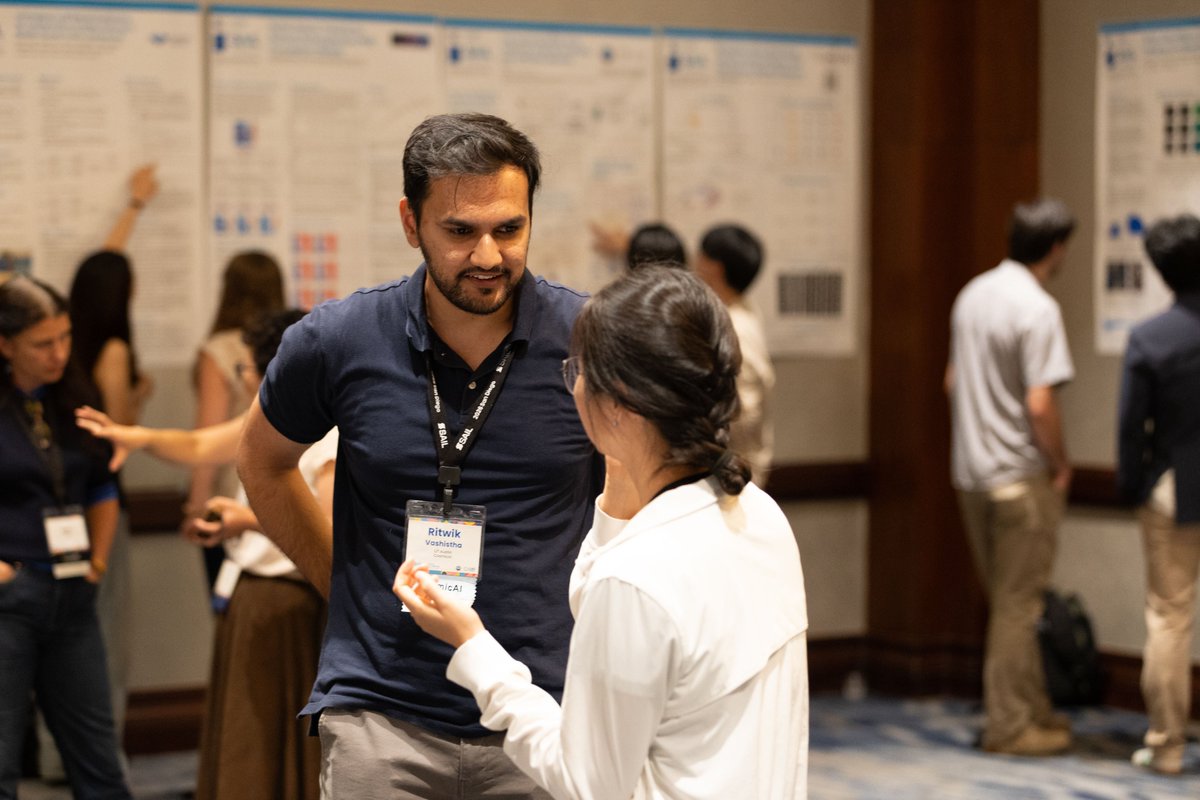
Listen as CosmicAI PhD student Ritwik Vashistha describes his research on finding signal in data in the presence of noise!
Ritwik showcased his poster “Nonparametric Denoising using Empirical Bayes and Simulation Based Inference” at the Summit for AI Institutes Leadership (SAIL)!
Listen as CosmicAI PhD Student Yufeng Luo describes his research on DESI and his multimodal foundation model – AstroVision model for Imaging & Spectroscopy
His video won 1st place at the Grad Student/Postdoc Workshop at SAIL, among ~60 participants!
https://t.co/GffJIBLsPf
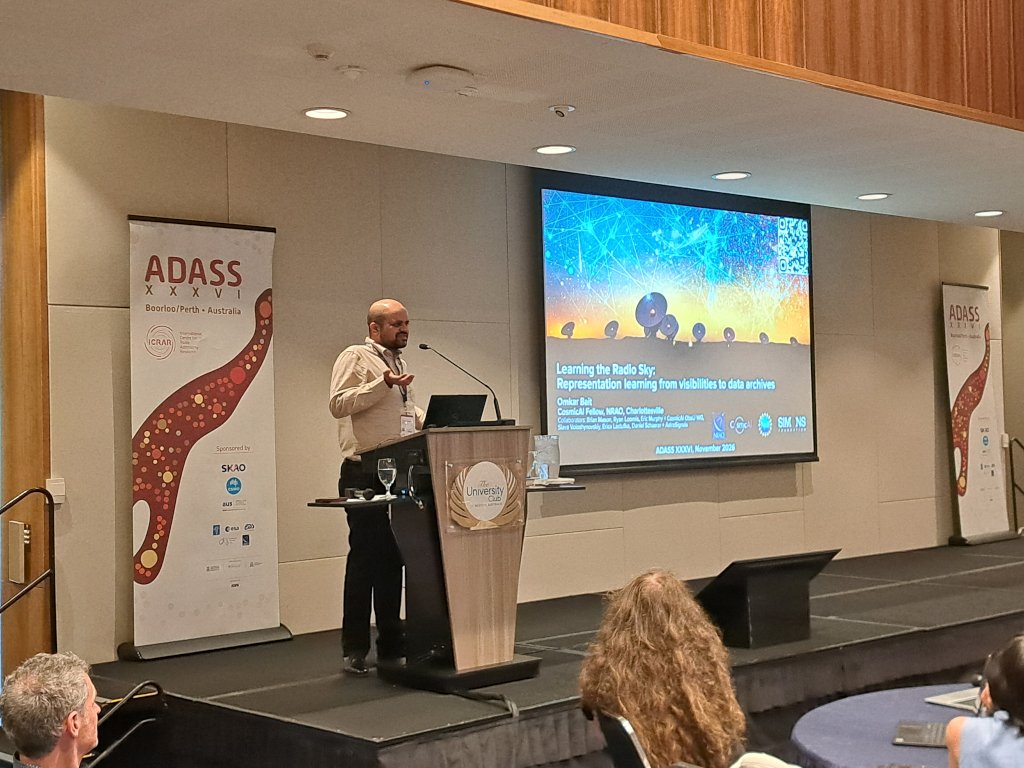
Congratulations to CosmicAI Fellow Omkar Bait, who gave the invited talk "Learning the Radio Sky: Representation Learning from Visibilities to Data Archives" at the Astronomical Data Analysis & Software Systems (ADASS) conference this week in Perth, Australia @TheNRAO
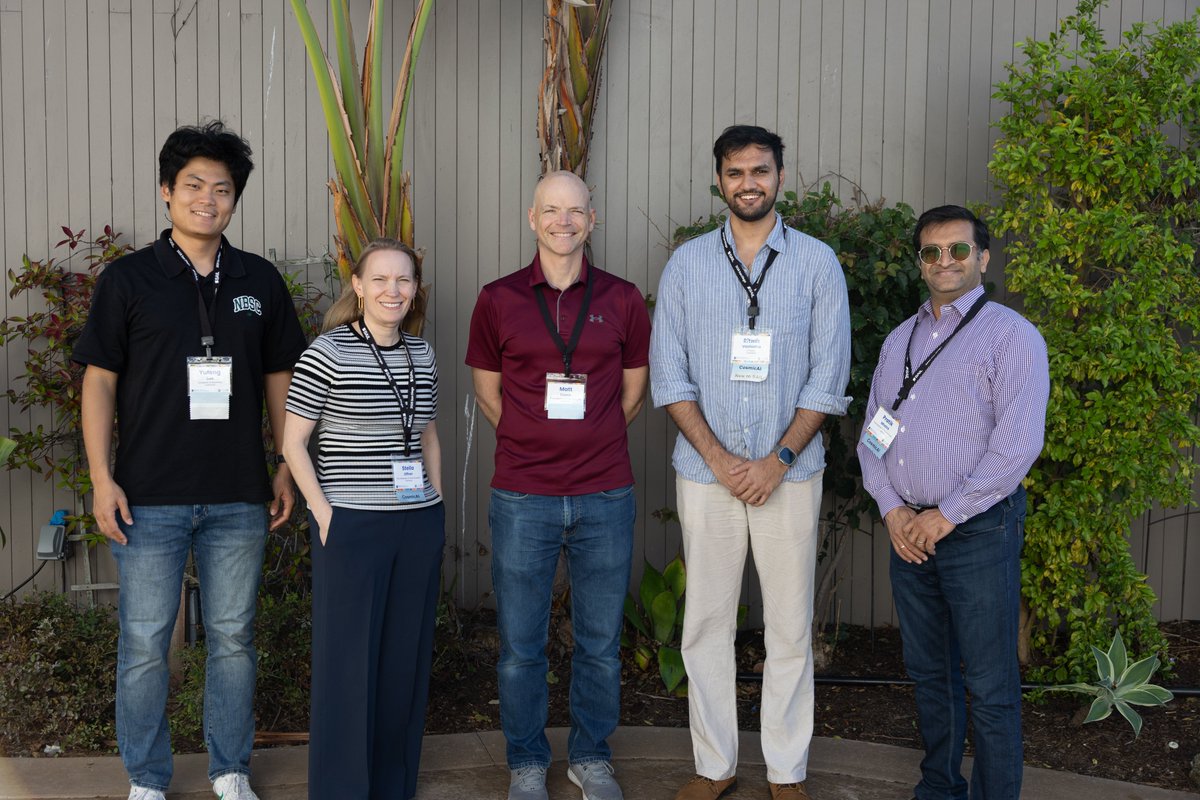
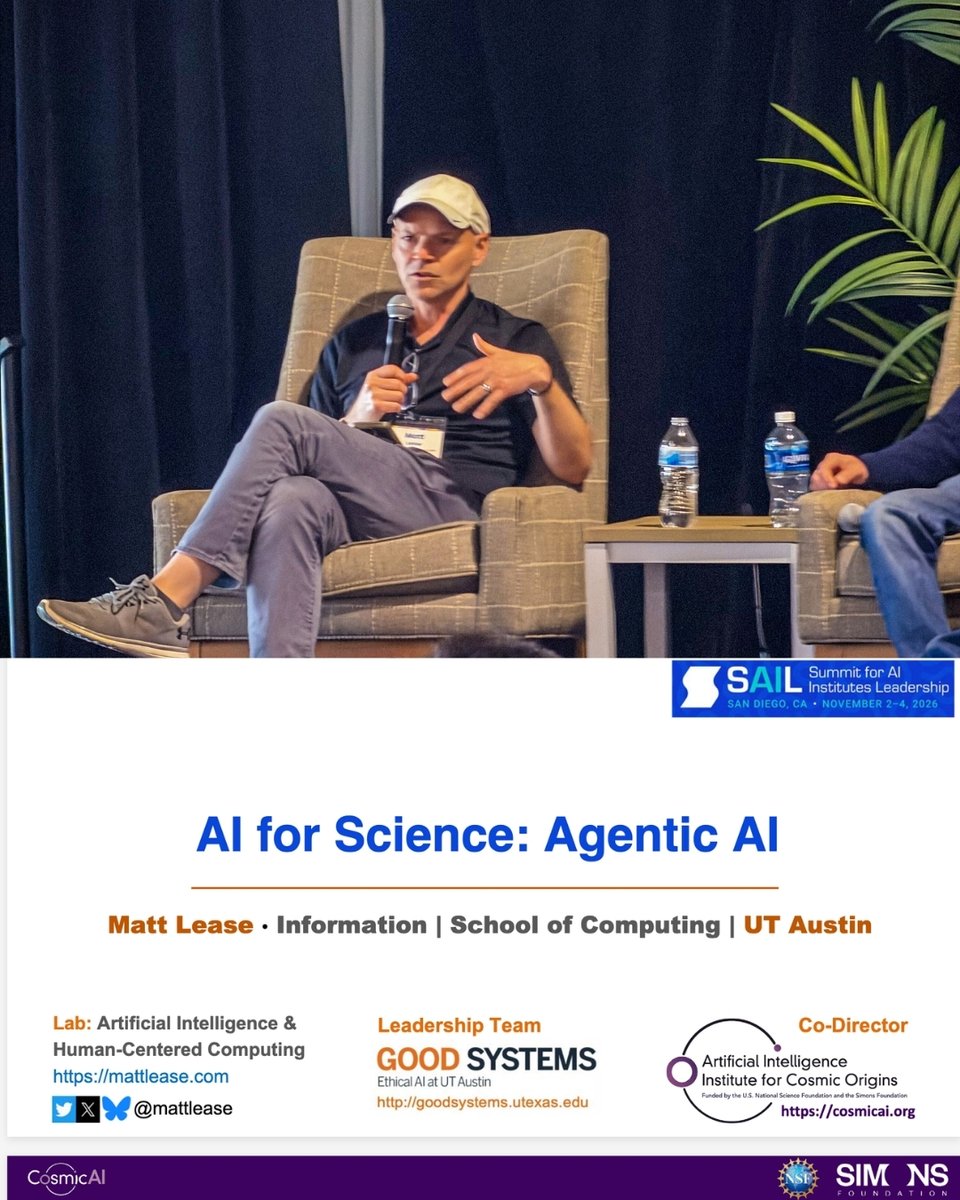
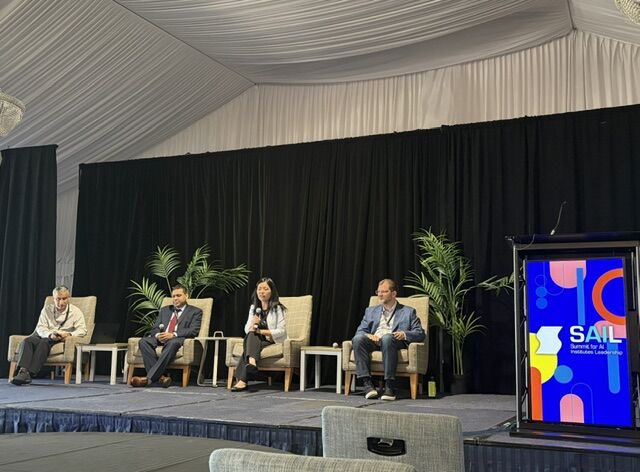
CosmicAI Summit for AI Institutes Leadership (SAIL) Highlight! CosmicAI Co-Director @mattlease on the panel “AI for Science: Agentic AI” alongside Eric Eaton, Kagan Tumer, and Suresh Venkatasubramanian. The panel was moderated by Gautam Biswas!
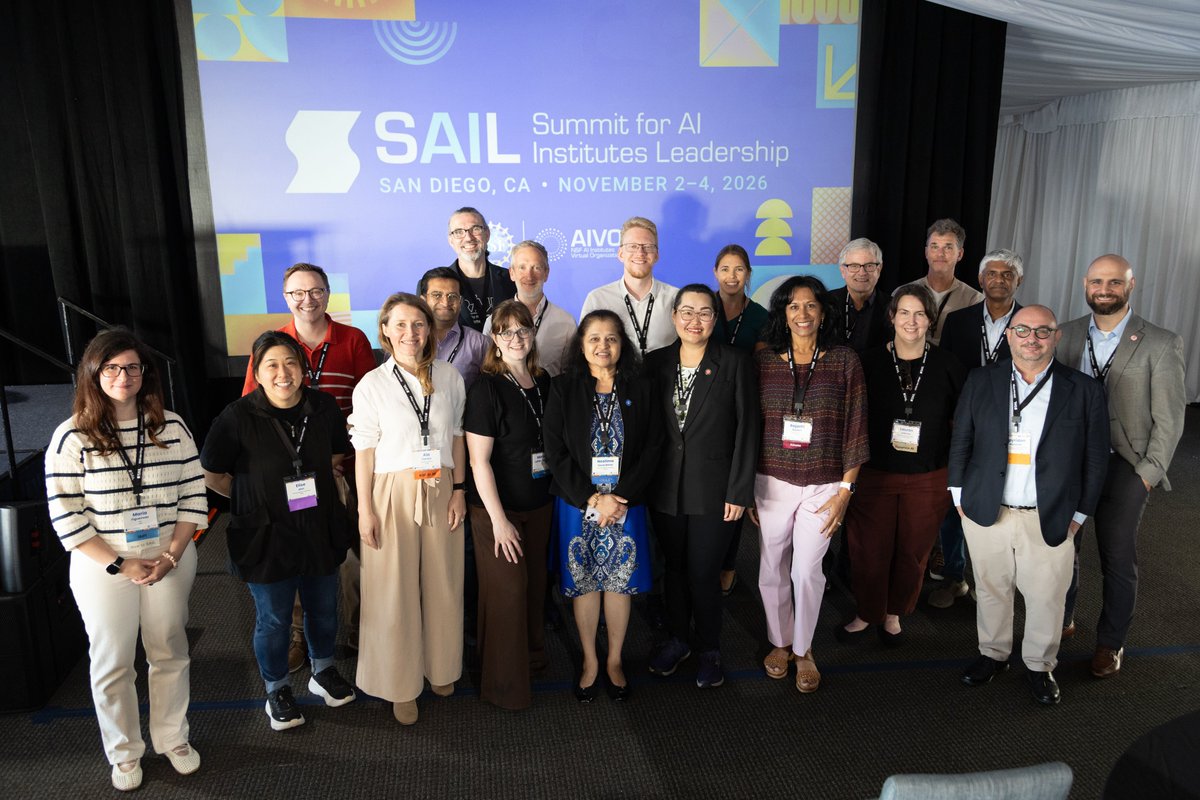
CosmicAI SAIL highlight! CosmicAI Managing Director Pratik Mhatre organized the session “Digital Twins” alongside Dynamics AI Managing Director Lauren Lederer!
Pratik stood on the main planning committee for SAIL, and was a judge for Round 1 of the GSR & Postdocs Grand Challenge!