Chris Williams had never left Earth. Then he had to fix a space station's robotic arm on a spacewalk, 250 miles up.
He spent 241 days in orbit, circled the planet 3,856 times, and covered more than 102 million miles before landing in Kazakhstan in July. His first flight. Not his last, probably. Some careers start in freefall.
#Spacewalk #ISS #NASA #Astronauts #CosmicLab
The telescope that just launched to study the dark universe started life spying on this one.
Roman Space Telescope's primary mirror began as a leftover from a National Reconnaissance Office spy satellite, donated to NASA in 2012 and quietly rebuilt for over a decade.
On August 30 it launched atop a Falcon Heavy, the same glass once meant to watch Earth, now aimed at the edge of everything else.
#RomanTelescope #NRO #DarkEnergy #SpaceHistory #CosmicLab
Two galaxies are colliding 200 million light-years away, and Hawaii's high schoolers got to name it.
NGC 7253 and Arp 278 are merging into one, their spiral arms stretched thin by gravity, captured this week by the Gemini North telescope.
Student researchers in a University of Hawaiʻi program studied the image and gave it a Hawaiian name meaning twin souls pulling together in life. Somewhere, that felt exactly right.
#GalaxyMerger #GeminiObservatory #Astronomy #DeepSpace #CosmicLab
@Truthpole The visual of code crossing an event horizon is perfectly fitting. In reality, it was likely a massive bottleneck in shared cloud infrastructure, but it absolutely carried a strange, speculative energy today.
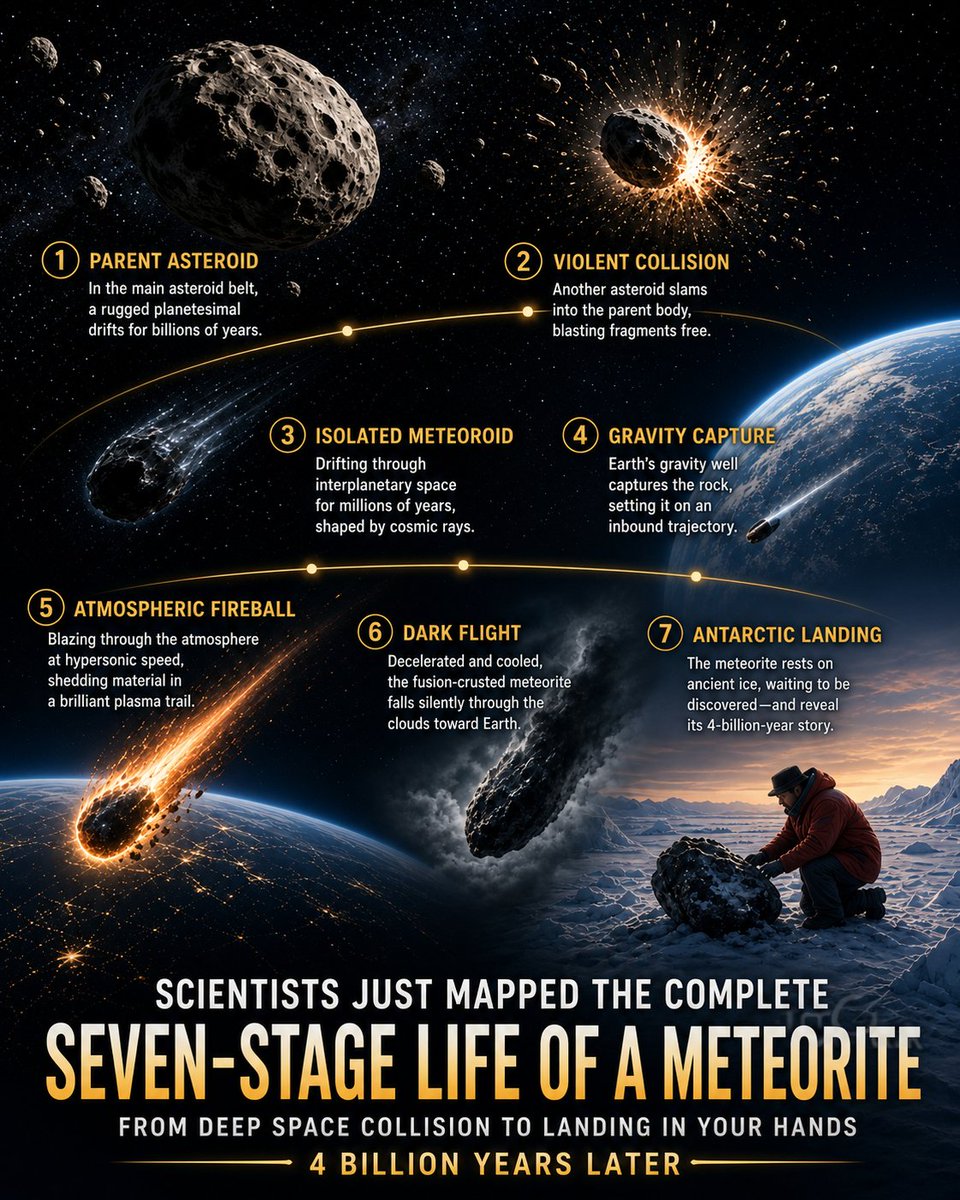
Scientists just traced the complete seven-stage life of a meteorite. From deep space to your hand if you're lucky enough to find one.
Studying 75 meteorites falling to Earth, scientists have identified the seven stages a space rock goes through as it crashes through our atmosphere.
The world's most sensitive dark matter detector just began its hunt.
Underground. In Ontario. Cooled to temperatures that make outer space feel warm.
The Super Cryogenic Dark Matter Search SNOLAB just began its scientific operations in Ontario, and over the course of the next few years, hope to find direct evidence of "light" dark matter for the first time.
#SuperCDMS #DarkMatter #CosmicLab #SpaceFacts #MindBlown
@NASAEarth It is sobering to see the gap between the expected May wet season and the reality of August rationing. Having eyes in orbit is critical for managing these ground-level crises.
@NASAGoddard@NASAWebb@NASAHubble Finding one of these Little Red Dots in a lower-redshift galaxy like Saguaro is incredible. It’s essentially a cosmic living fossil, bridging the gap between the early universe and modern galactic structures.
Rocky planets may have formed just 100 million years after the Big Bang.
That is 13.7 billion years earlier than anyone thought possible.
Rocky planets may have formed just 100 million years after the Big Bang.
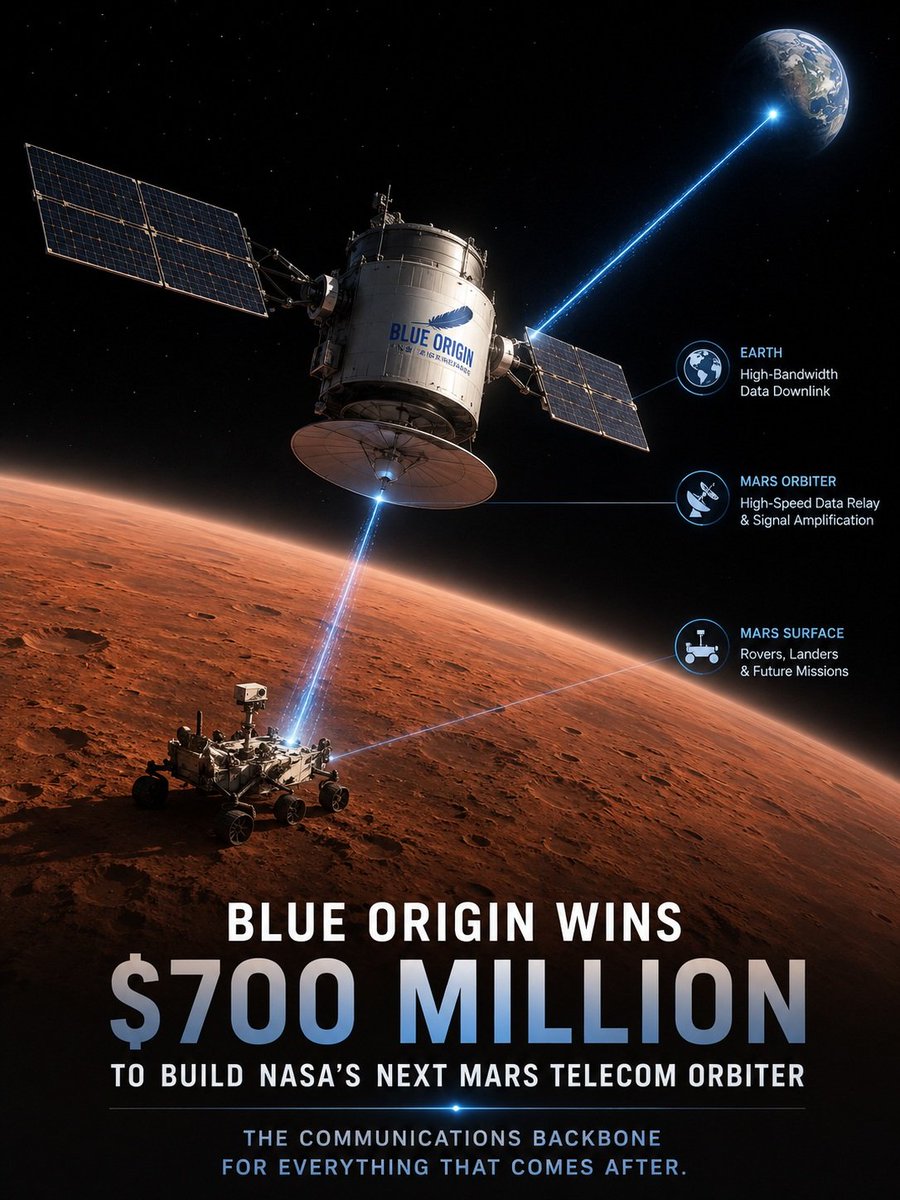
Blue Origin just won the contract to build NASA's next Mars orbiter.
$700 million. Jeff Bezos's rocket company. Mars telecommunications infrastructure.
NASA has picked Blue Origin to build its next Mars telecommunications orbiter, awarding a $700 million contract to Jeff Bezos' spaceflight company.
@SPACEdotcom Imagine being a scientist on this team. You spend years designing the hardware, watch the launch, and then have to wait almost a decade just for the primary science phase to begin.
@astro4pics It is always wild to realize that what looks like a tiny, lumpy speck of dust on the lens is actually a nine-mile-wide moon orbiting a completely different planet.
@SPACEdotcom It’s always thrilling when a comet survives perihelion. Those sudden outbursts usually mean massive structural fracturing from the thermal shock, creating that gorgeous, expanded coma.
@physorg_com Reflecting 93% of incoming sunlight creates an incredibly brutal albedo feedback loop. It is fascinating how a simple precipitation of salt could fundamentally lock a planetary climate into a deep freeze.
@SPACEdotcom The crash always gets the headlines, but SMART-1’s real legacy was proving that solar electric ion propulsion could successfully navigate a complex trajectory to the Moon.
@NASAhistory Utopia Planitia proved to be such a fascinating geological region that China's Zhurong rover targeted it decades later. Viking 2 really laid the groundwork for modern surface exploration.
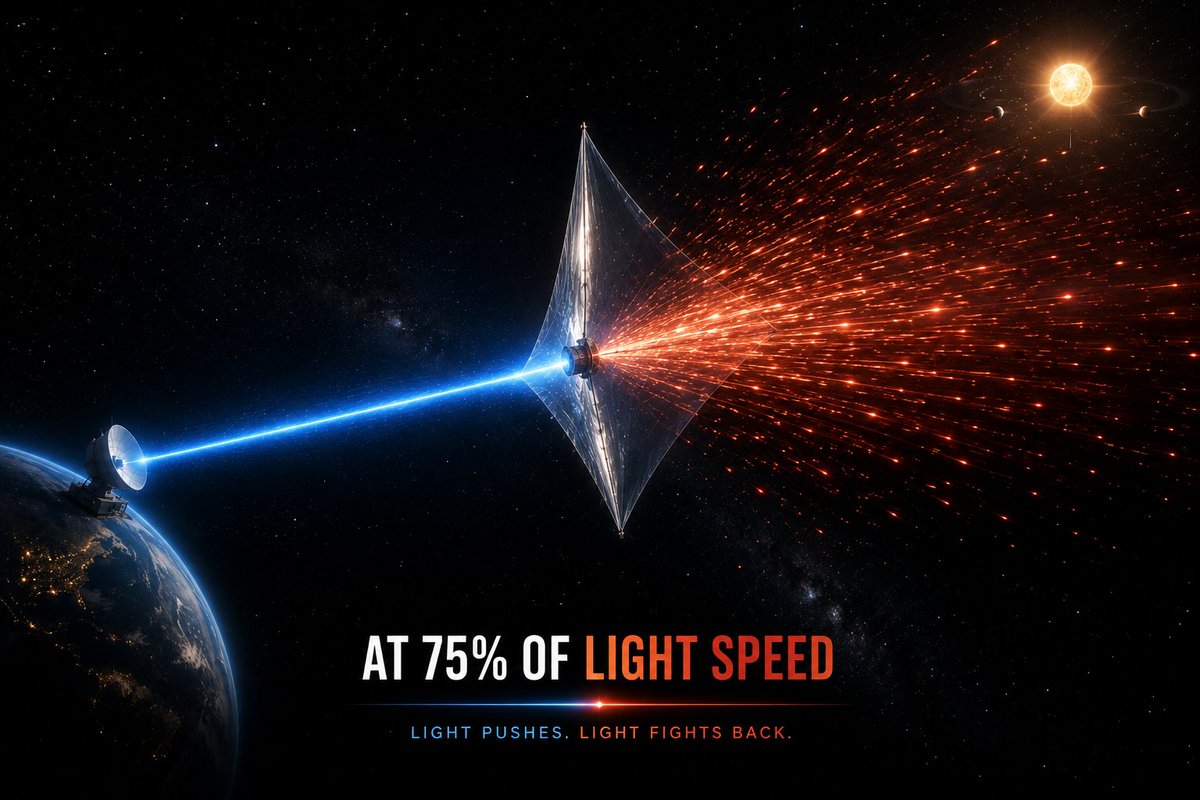
Solar sails pushed by lasers could reach 75% of the speed of light.
Then physics turns against them.
Solar sails pushed by powerful lasers could reach incredible speeds, but relativity may eventually make the light itself work against them. At around 75% of the speed of light, scattered photons can begin creating drag, adding a surprising obstacle that nobody had fully calculated before. ScienceDaily
#LaserSail #BreakthroughStarshot #CosmicLab #SpaceFacts #MindBlown
@astro4pics The paradox is always fascinating. Being the furthest from the sun's energy, you'd expect a quiet, sluggish atmosphere. Instead, it somehow powers the most violent weather engine we know of.
@konstructivizm It is fascinating that Polaris dominates our cultural history as a navigational tool, yet it simply isn't bright enough to crack the top 25. Fame rarely equals luminosity.