Gravitational waves are ripples in spacetime caused by massive objects accelerating, like merging black holes or neutron stars. Predicted by Einstein, they travel outward at the speed of light, stretching and squeezing space as they pass. These waves carry information about cosmic events that light can’t reveal, giving us a new way to explore the universe’s most extreme phenomena.
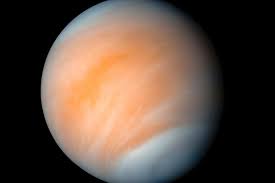
Venus’s clouds are thick layers of sulfuric acid droplets mixed with carbon dioxide, creating a highly reflective and toxic atmosphere. These clouds trap heat through a powerful greenhouse effect, pushing surface temperatures high enough to melt lead. Above the surface, hurricane-force winds whip the clouds around the planet in just a few days. Despite their harsh nature, the cloud tops contain conditions where some scientists speculate microbial life might survive.
Stars are primarily made of hydrogen and helium, the two lightest elements formed after the Big Bang. In their cores, hydrogen fuses into helium, releasing huge amounts of energy as light and heat. As stars evolve, they create heavier elements like carbon, oxygen, and iron through nuclear fusion. These elements can later spread into space when massive stars explode as supernovae, seeding future stars, planets, and even life.
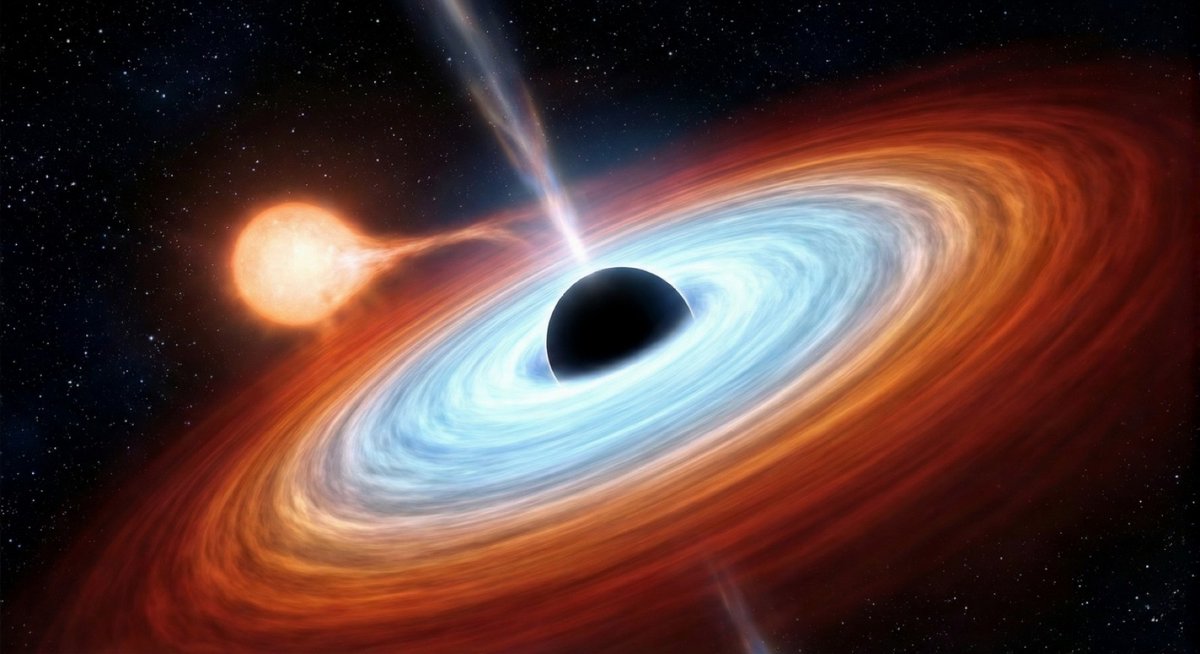
A black hole’s accretion disk is a hot, fast-spinning ring of gas and debris pulled in by the black hole’s intense gravity. It forms when nearby matter is captured and compressed while spiraling inward, heating up due to friction and magnetic forces. The inner disk can reach millions of degrees, often outshining entire galaxies.
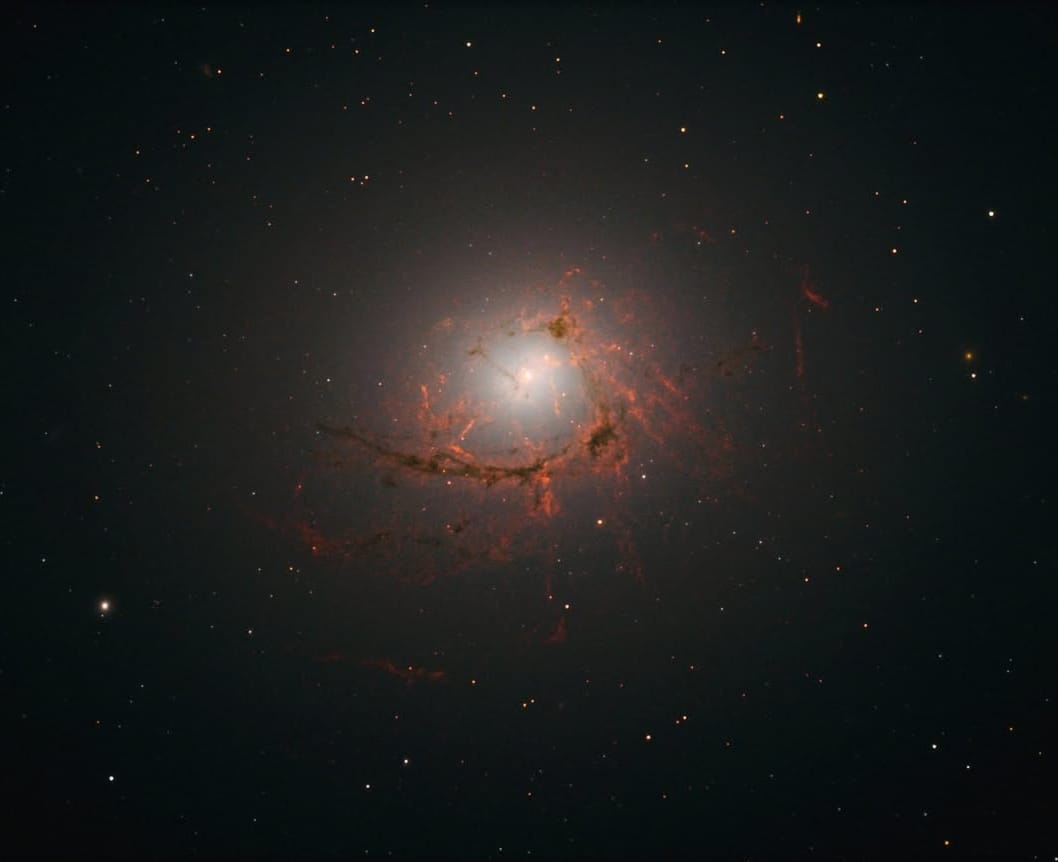
NGC 4696, a galaxy about 150 million light-years away, known for its dark red filaments of gas and dust that appear connected to its core, where a supermassive black hole likely resides and will eventually consume these filaments. It's the largest galaxy in the Centaurus cluster.
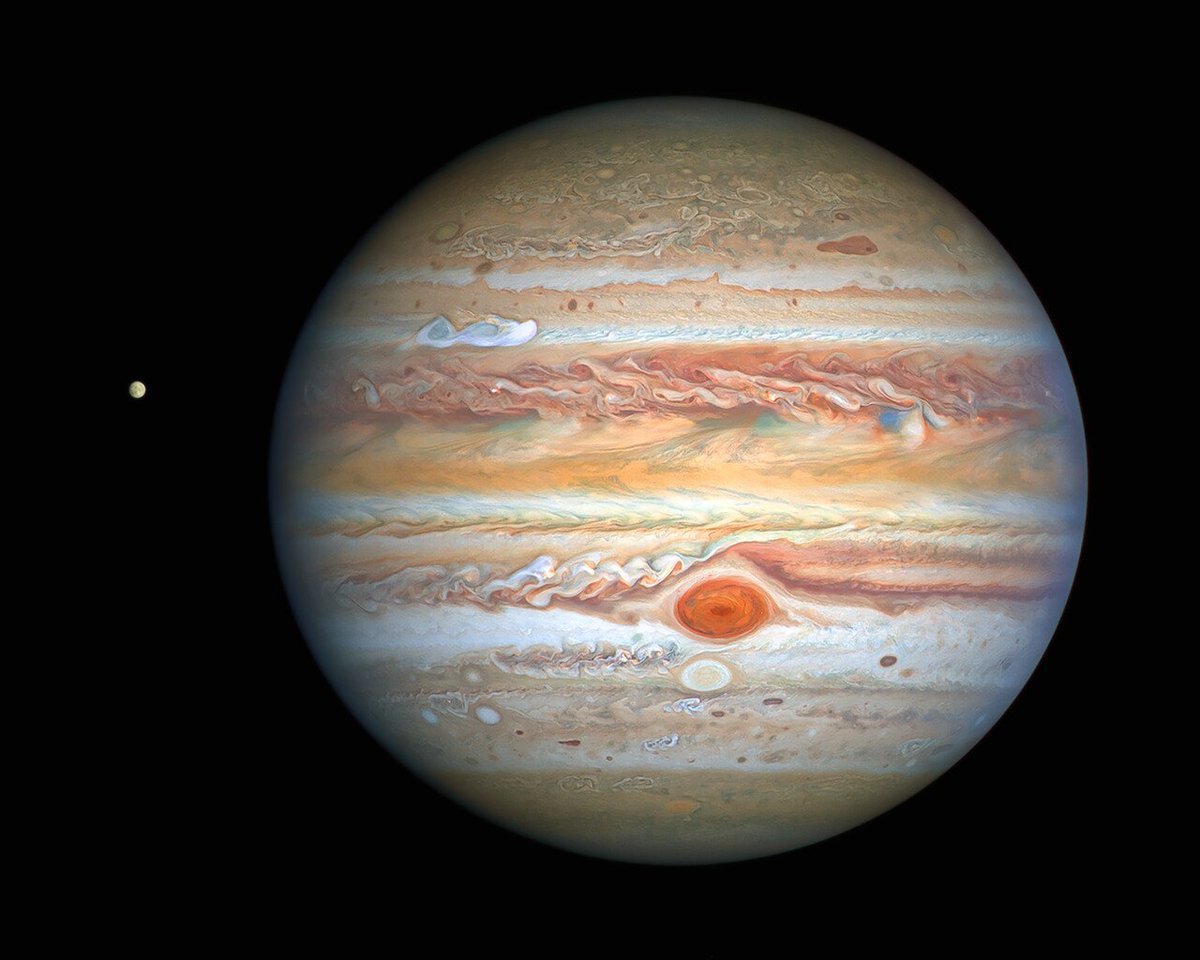
Jupiter. Captured by the NASA/ESA Hubble Space Telescope on August 25, 2020, when 653 million km from Earth. The image shows turbulent atmosphere with a new storm and changes in the Great Red Spot, plus its icy moon Europa.
The magnetic field acts like a shield, redirecting the particles towards the poles where they can cause spectacular aurora displays. This shielding effect helps safeguard life on Earth and maintains a stable environment for our planet's inhabitants. 3/3
Cosmic rays, also known as astroparticles, are incredibly energetic particles or groups of particles that zip through space at nearly the speed of light. They come from our Sun, regions beyond our Solar System within our own galaxy, and even from galaxies far away. 1/3 🧵
The Earth's magnetic field protects us from cosmic rays by deflecting charged particles from space. These particles, mostly protons and electrons, would otherwise bombard the planet, potentially harming life. 2/3
NGC 1317, a vast, face-on spiral galaxy over 50 million light-years away, featuring an inner ring of hot, young stars studied by Hubble to understand star formation.
Image credit: ESA/Hubble & NASA, J. Lee and the PHANGS-HST Team.
Brown Dwarfs in Our Backyard (NASA ID: PIA17992) highlights the discovery of a nearby binary star system, WISE J104915.57-531906, the third closest star system to the Sun. 1/3 🧵
The image was released on March 7, 2014, with contributions from NASA/JPL-Caltech and the Gemini Observatory, operated by AURA and supported by the NSF. 3/3
Initially appearing as a single object in infrared images taken by NASA's Wide-field Infrared Survey Explorer (WISE), sharper imaging from the Gemini Observatory later revealed it to be a binary system composed of two brown dwarfs. 2/2
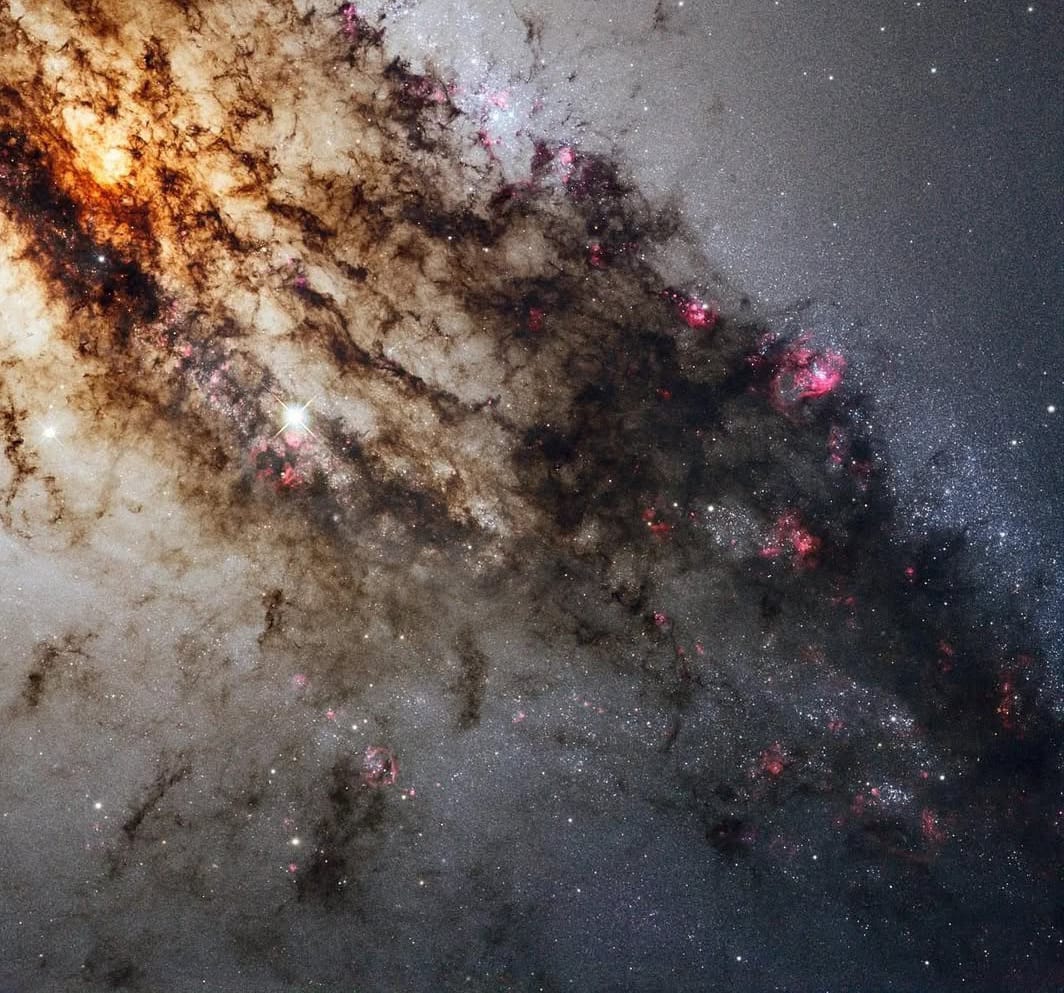
Centaurus A, features a bright orange region in its upper left, with dark dust flowing diagonally downwards. The background is a hazy space filled with distant stars, and pink areas of new star formation are visible within the dust.
UY Scuti is currently the largest known star in the universe. It's a red supergiant that's absolutely massive—about 1,708 times wider than our Sun. To put that in perspective, its radius stretches out to roughly 1.2 billion kilometers, or 738 million miles. 1/2 🧵
@ExploreCosmos_ For sure it is the beginning. The universe follow cause and effect rule. So, many people will ask who caused it, that's where i believe God exists.