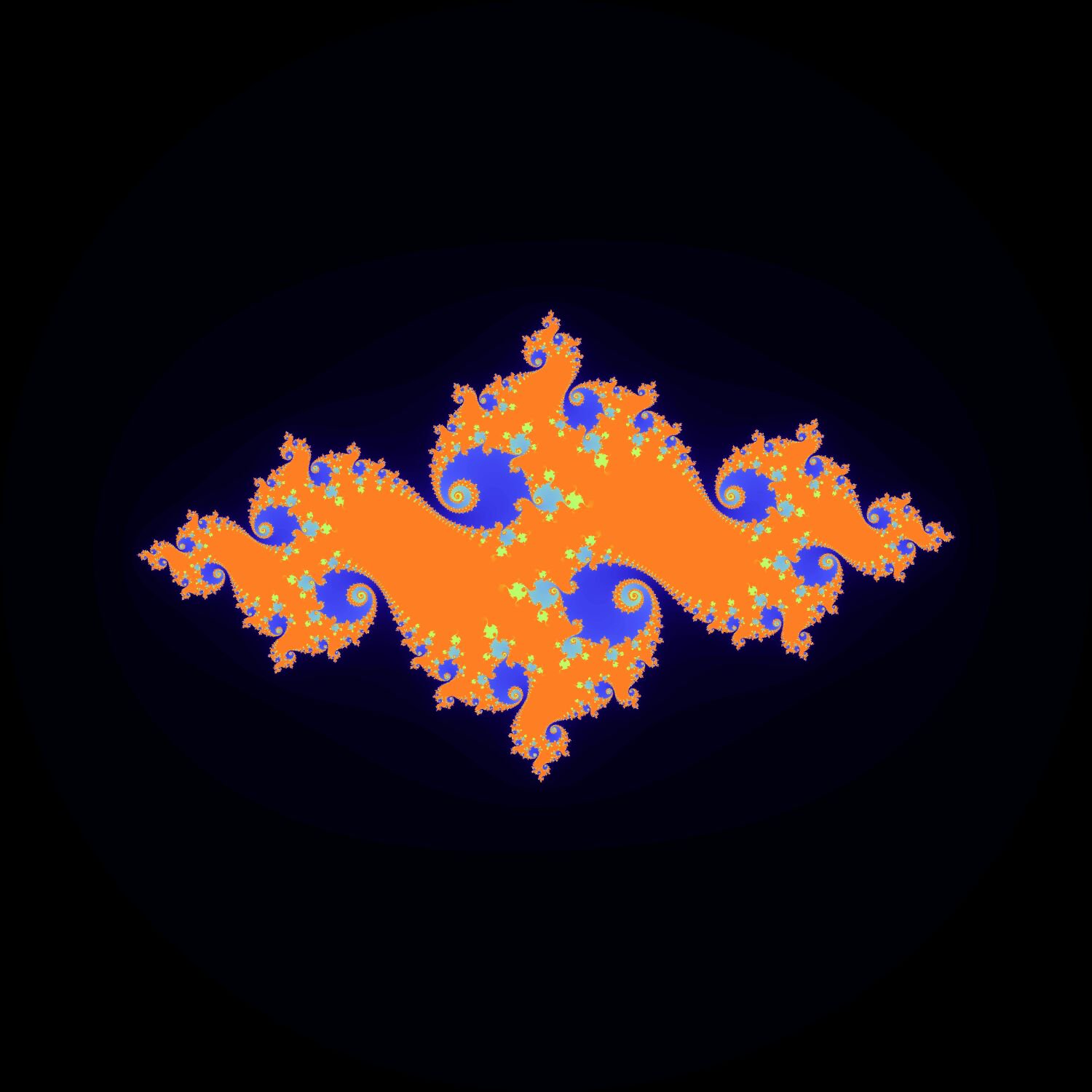
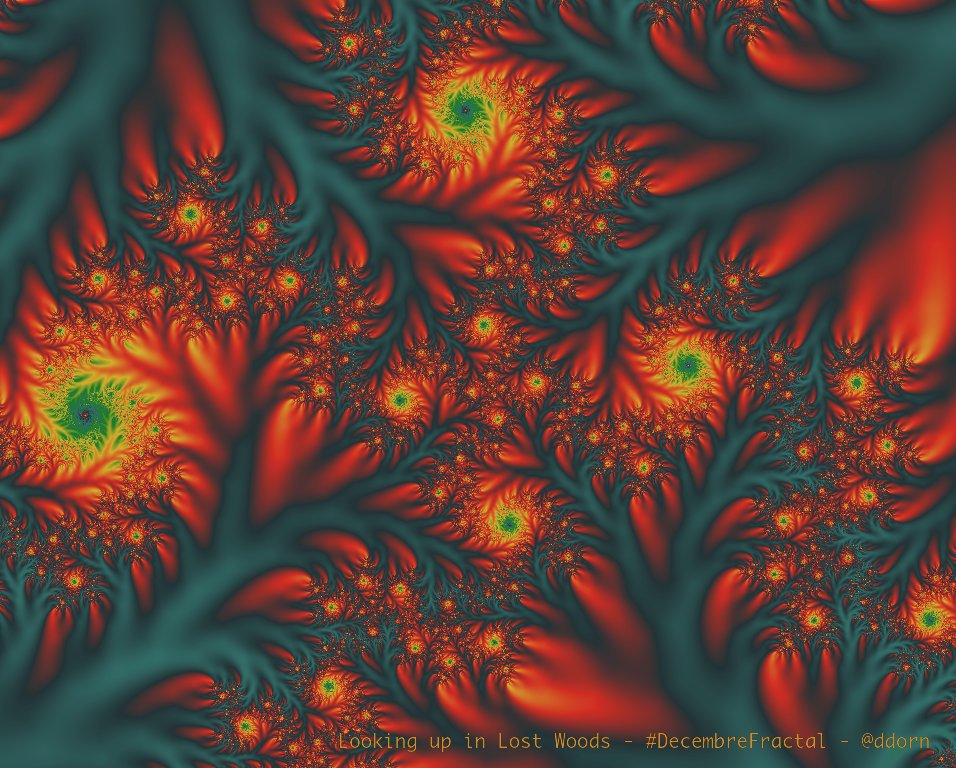
C'est le début de mon #calendrierdelavent des #fractals !
Pour fêter cela, voici un zoom de l'ensemble de #Mandelbrot coloré avec une fonction d'inégalité triangulaire moyenne.
N'hésitez pas à RT mon #DecembreFractal, ça me fera aussi chaud au coeur qu'un chocolat chaud ❤️
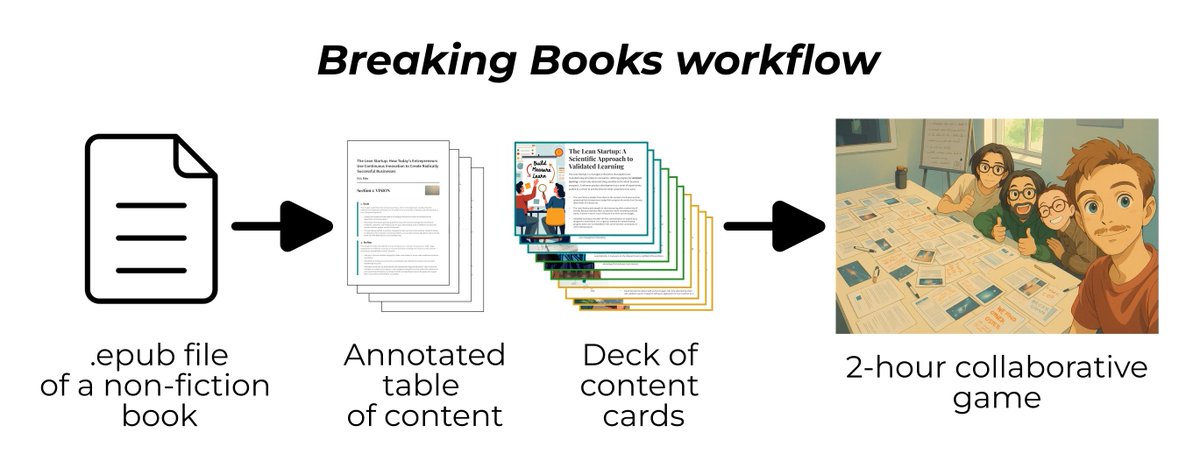
Introducing Breaking Books, a tool to bring books to the social sphere. It is a game changer to read non-fiction books AND hang out with friends.
We used AI to turn an epub into a beautiful deck of cards. The goal is to piece back the book together into a coherent mind map.
The time for AI self-regulation is over.
200 Nobel laureates, former heads of state, and industry experts just signed a statement:
"We urgently call for international red lines to prevent unacceptable AI risks"
The call was presented at the UN General Assembly today by Maria Ressa, Nobel Peace Prize laureate:
Announcing Transluce, a nonprofit research lab building open source, scalable technology for understanding AI systems and steering them in the public interest.
Read a letter from the co-founders Jacob Steinhardt and Sarah Schwettmann:
https://t.co/IUIhBjpYhS
When you leave OpenAI, you get an unpleasant surprise: a departure deal where if you don't sign a lifelong nondisparagement commitment, you lose all of your vested equity: https://t.co/D8RGTJPGFX
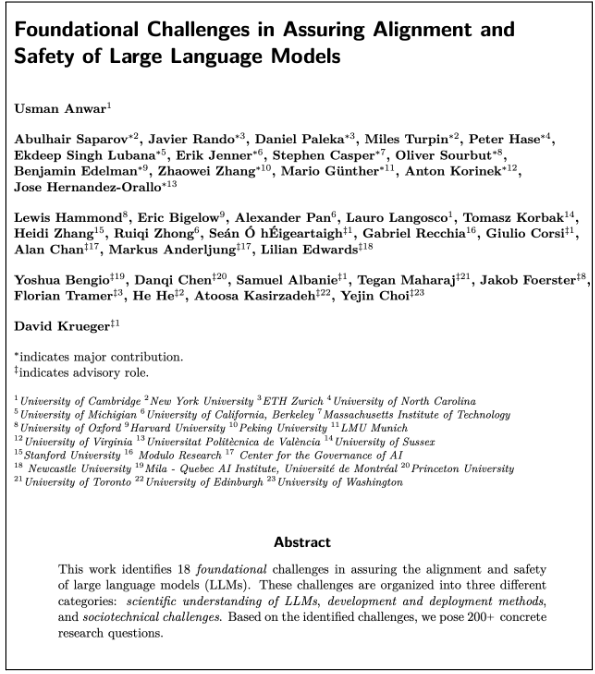
I’m super excited to release our 100+ page collaborative agenda - led by @usmananwar391 - on “Foundational Challenges In Assuring Alignment and Safety of LLMs” alongside 35+ co-authors from NLP, ML, and AI Safety communities!
Some highlights below...
I am looking for PhD students!!
I'm increasingly interested in work supporting AI governance, e.g. that:
- highlights the need for policy, e.g. by breaking methods or models
- could help monitor and enforce policies
- generally increases affordances for policymakers
Addressing the long-term risks of AI doesn't mean we can ignore its present harms — and vice versa. In our @TIME op-ed, @achan96 and I argue that we need to break away from the false "present vs. future" harms dichotomy.
https://t.co/y80CXDnMMI
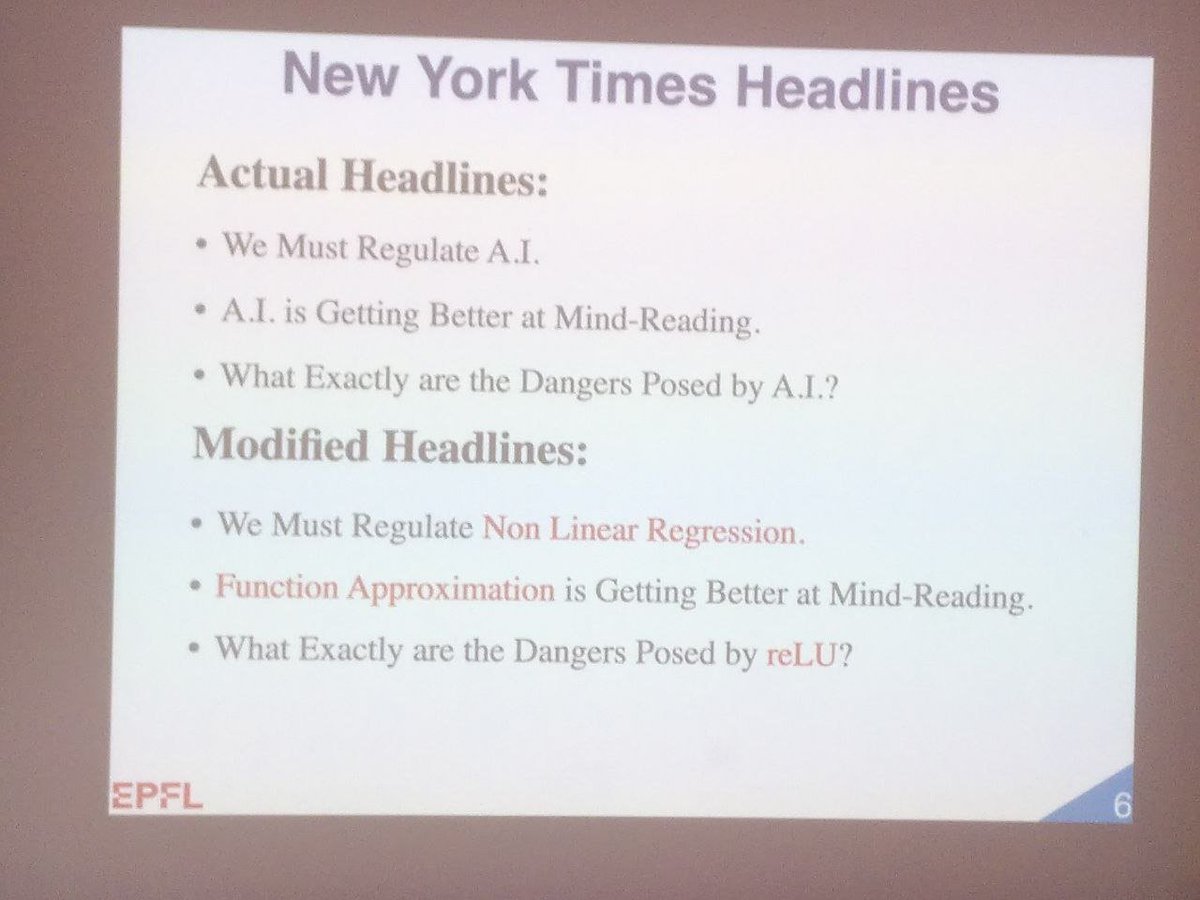
Note that I was not in this classroom, and I don't know who had this slide in their lecture.
Though I'd love to talk with them to understand why we see the world so differently
Feels strange to be studying at @EPFL...
If "non-linear regression" is all it takes to build highly capable systems, we should definitely take the matter seriously.
What will "non-linear regression" do in a few years? New sources of power are emerging, we need to adapt.
I've worried AI could lead to human extinction ever since I heard about Deep Learning from Hinton's Coursera course, >10 years ago.
So it's great to see so many AI researchers advocating for AI x-safety as a global priority.
Let's stop arguing over it and figure out what to do!
@mmitchell_ai What would it mean for an image to be objective? Does this prevent all image generators?
It's not clear either what it means for a text to be objective, as most objective texts contain subjective parts... so it wouldn't prevent models to learn about subjective opinions
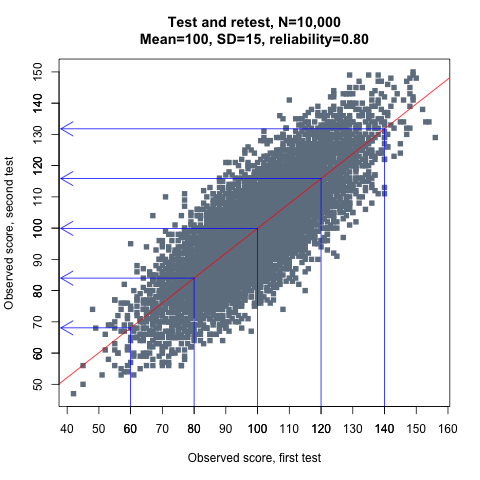
Why the best outcome is never as good as it seems.
And the worst is never as bad as it seems.
A thread on a surprisingly little known but really important concept: regression to the mean.
/1
@ben_j_todd@tobyord (Or maybe random with a distribution according to the spread of different charities, in order to better capture the counterfactual of where I would donate without EA)
@ben_j_todd@tobyord Thanks for this! I always found this "some charities are 100× better" super arbitrary, given that some charities are harmful and some probably have a negligible impact.
But I never went all the way to realise that what we wanted was "how much better compared to random"