HRW #wheat rainfall in April averaged 1.58", 0.56" below normal (36th driest)
Feb-Apr rainfall averaged 2.39"...1.90" below normal...9th driest on record...driest since 2014
@drbrock37 you need to do a little math to calculate "exactly" what planting progress was "precisely" on April 26 (instead of "week 17") in each of the last 5 years.
I show it to be 21, 9, 19, 23, and 22% on April 26 for those 5 years...which would indeed be an average of 19%.
Going to put a pretty good hurtin' on the northern safrinha #corn crop in Brazil for especially tomorrow through May 9...next to no rain for the duration of that period (see map for May 1-7 totals) and temperatures a solid distance above-normal
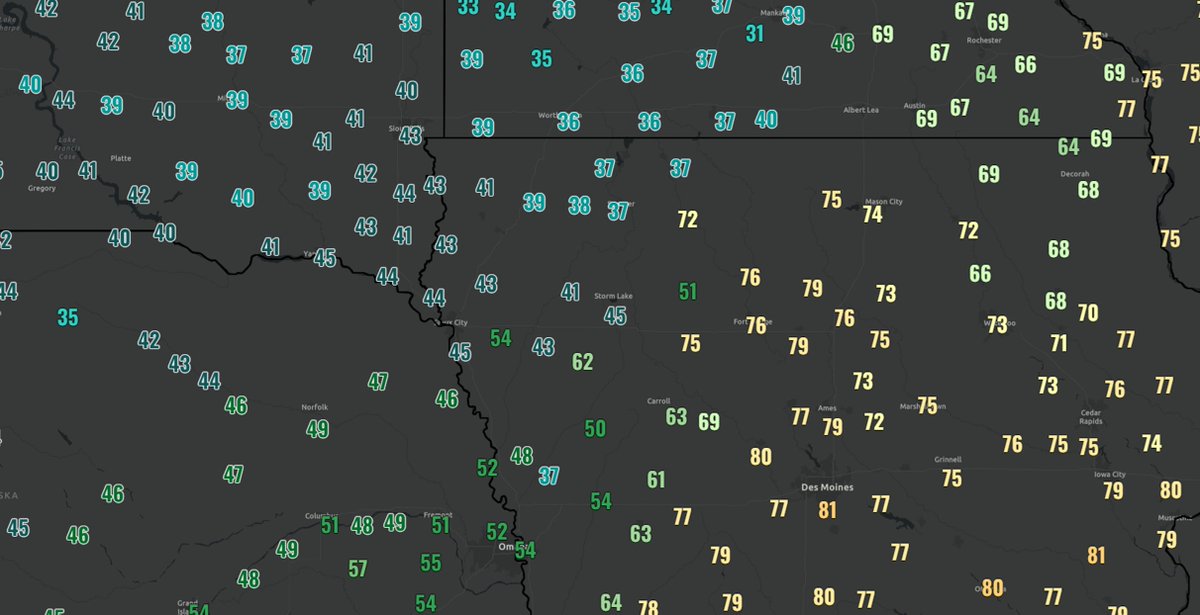
Current temperatures as of around Noon CDT in the Iowa/Minnesota/Nebraska/South Dakota border area
30+ degree difference in temperatures over just a 50 mile distance in some areas
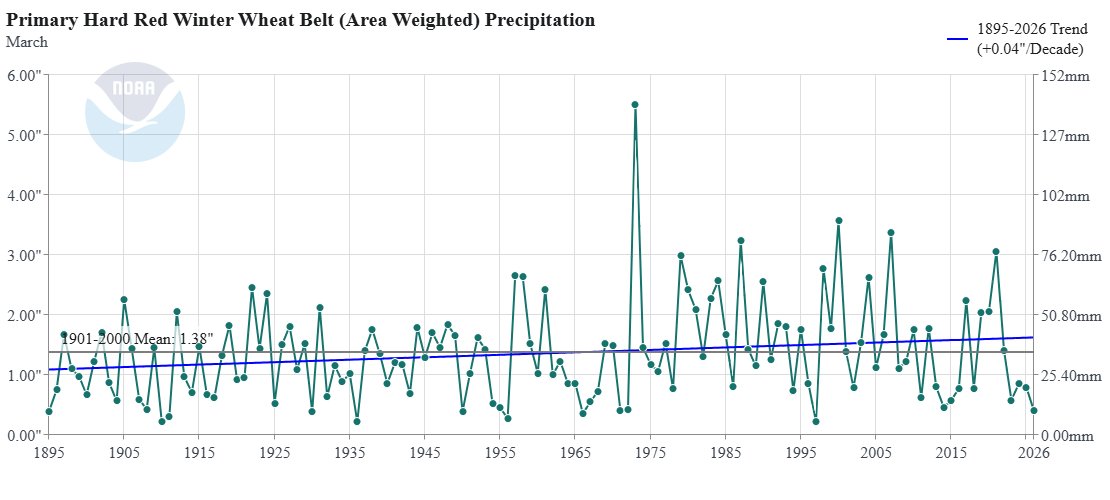
Precipitation in March in the HRW #wheat belt averaged 0.40", 0.98" below normal to make it the 10th driest on record (and the driest March since 1997)
@DMRCyclones "The 2-seed Hawkeyes beat 7-seed Kentucky in the round of 32 in St. Louis"
Gosh, wonder why no one reads the Des Moines Register any more...
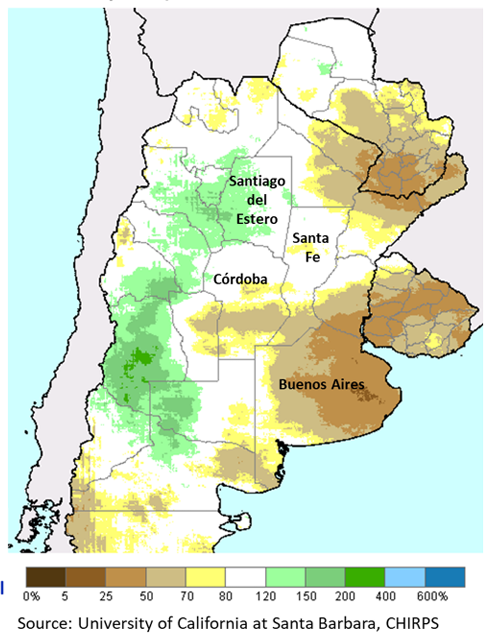
0.5 MMT drop in Argentine #soybean production in today's USDA report comes despite a 2% increase in acreage from last month's number; yields were dropped 3% to 2.86 MT/ha due to dry conditions.
Map shows Jan-Feb % of normal rainfall
No change in Brazil #soybean acreage in today's USDA report so still HUGE differences in that number...Safras/Mercado at just over 48 mil ha, CONAB at 48.4, several firms at 48.7-48.8, USDA at 49.4 million.
48 mil vs. 49.4 mil = 5+ MMT difference in production...
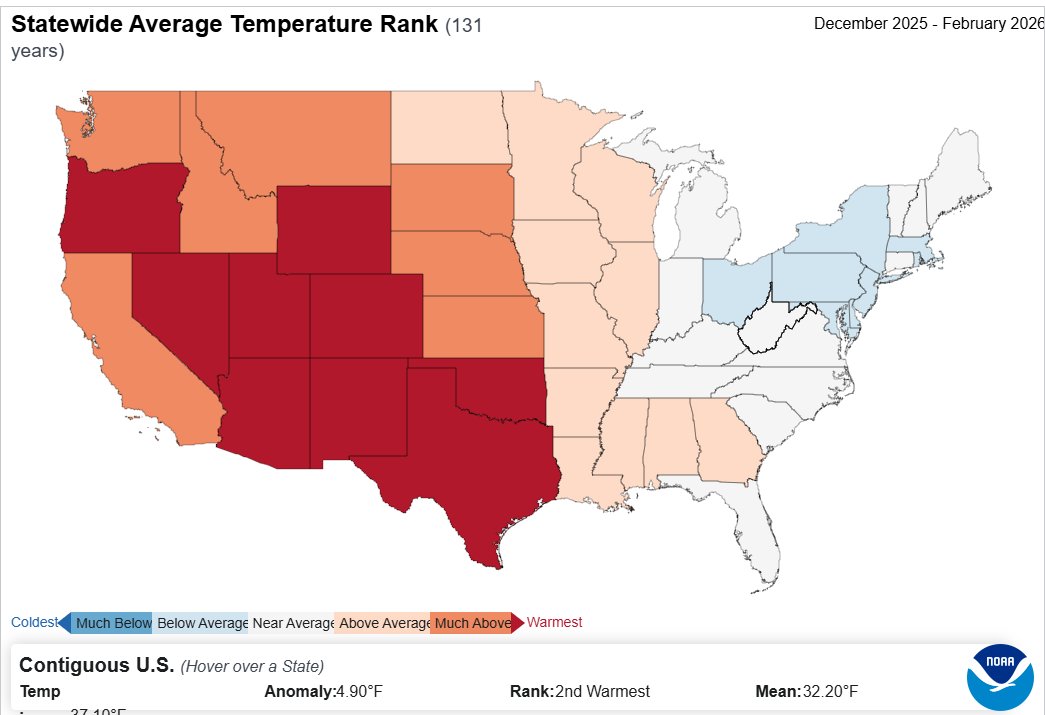
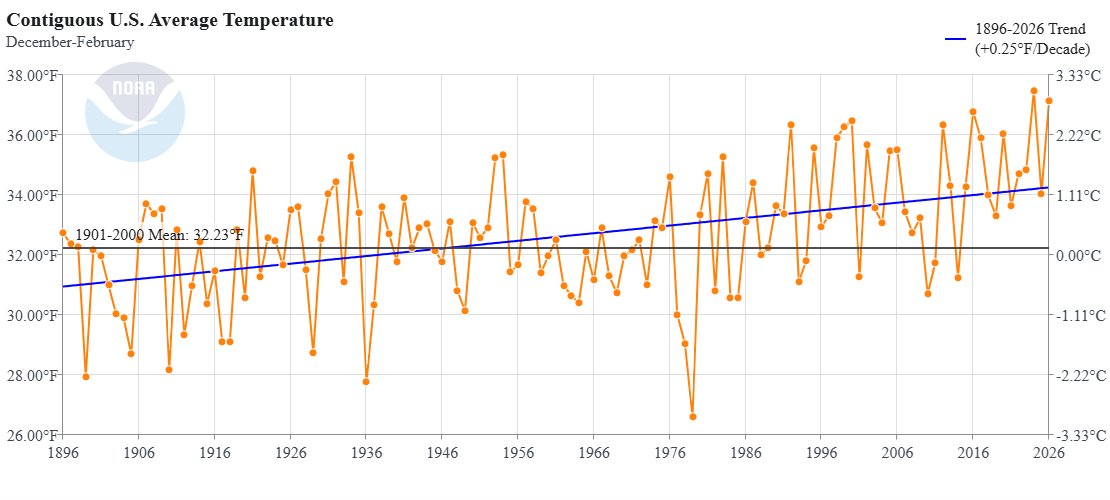
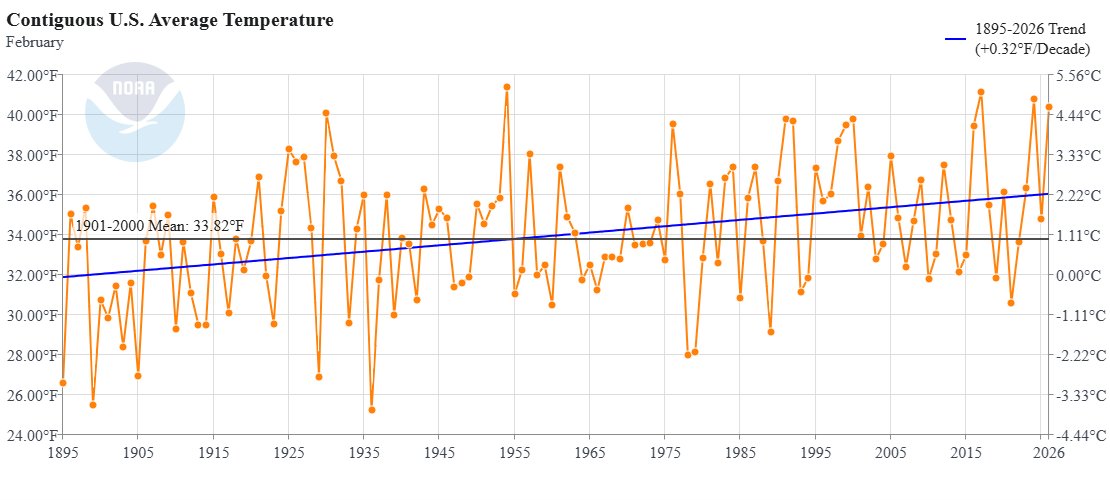
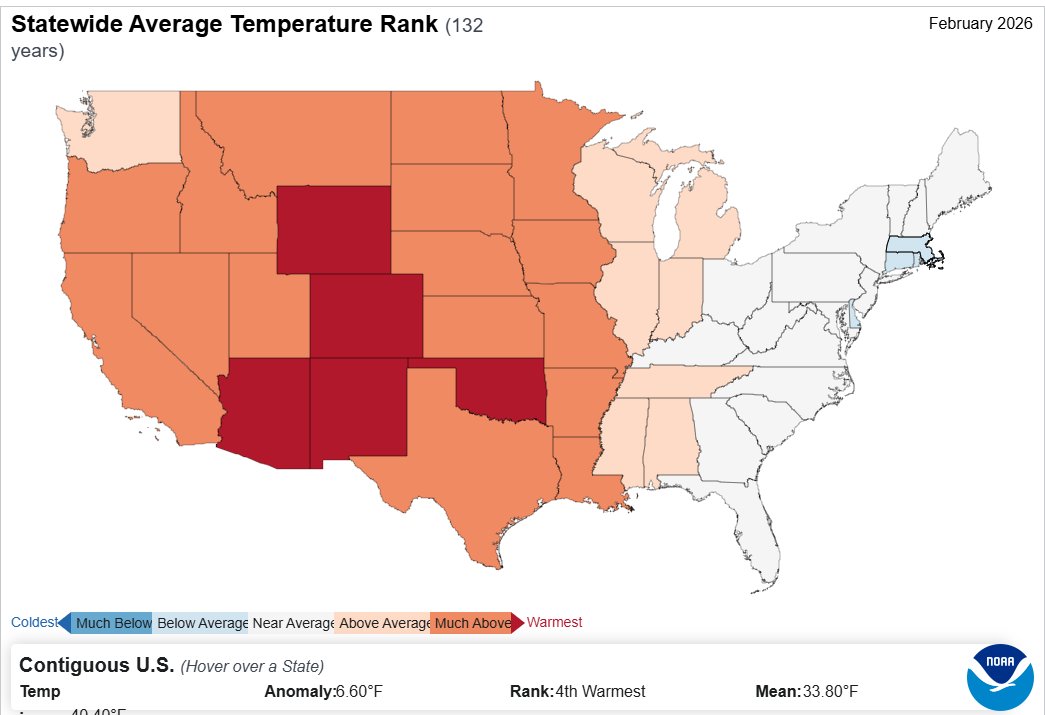
National temperatures in February were the 4th warmest on record, capping off a winter that nationally ranked as the 2nd warmest on record (only the winter of 2023/24 was warmer).