Codex says Fast mode could have saved me 2 hours and 24 minutes today.
My weekly allowance: 15% left. It’s Wednesday. Fast mode uses more.
That’s my fuel light coming on and the car suggesting Sport mode.
OpenAI, have mercy. 😂
One AI agent runs out of juice; I switch tools. The next agent gets the repo, not the conversation.
So I keep a handoff there: current task, decisions, verified work, failed attempts, and next step. Before continuing, the new agent checks it against the actual code.
I want to hand ChatGPT a long task, make coffee, and glance across the room to see whether it’s working or waiting for me. A 12-foot UI needs three states: working, needs me, done. Let me finish my coffee while all is well in AI land.
https://t.co/L7stc262uF
Chrome and ChatGPT keep fighting over my permissions. Image uploads work one day, then fail the next; pages suddenly become inaccessible. I can’t tell which update is doing it. Is anyone else seeing this?
Personal views only; not my employer’s.
A Week's Worth by Tuesday
A year ago, $20 a month felt like plenty for what we asked AI to do. A few months ago, $200 felt almost impossible to use up. Now a weekly allowance can be gone in a couple of days. We have become very good at finding things for these models to do.
Part of that is good news. A single request can become hours of research, coding, testing, and revision. Some models cost less per token than they used to, and we are asking them to take on much more work. Running out faster does not, by itself, mean we are getting less value.
I still want to know what the subscription is buying me. The pricing page tells me what I pay, and the usage meter tells me what is left. Neither tells me what a task is likely to cost, what consumed the allowance, or how I could have used the plan more wisely. A token count does not tell me whether this was a smart use of the subscription.
Give me a rough estimate before a long task and a plain-language receipt after it. Show me when a lighter model or a narrower request would have been enough. If the week's allowance is gone by Tuesday, I want to know what I got for it and how to make it last longer next week.
This writing reflects my personal perspectives on product management, AI, and content discovery. It does not represent the official position of my employer or any affiliated organization.
GPT-6 Sol was at capacity this afternoon. I sympathize with OpenAI. Keeping up with demand is hard, and it’s good to be building something people complain about when it goes down. It means they’re depending on it.
I tried to send feedback. The form returned “Requested device not found.”
Fair enough on the capacity. But do keep the complaint box open.
And thanks for the usage reset, just as the weekend is starting!
“We’d love your business. Please fire your assistant first.”
That’s how some websites greet my AI agent. I sent it. Block it, and you turn me away.
Let me authorize it, limit its access, and step in when needed. Otherwise, we’ll shop elsewhere.
https://t.co/Q75dFRRQit
Nothing was missing from my writing archive. The problem was finding a useful way back in. Search helps when someone knows what to ask for; a good archive also supports recognition.
The useful question during a demo is not only “Does it work?” Ask what it proved, under which conditions, and what remains unknown. A narrow result can earn the next round without carrying every future claim about the product.
My first test for an AI-generated deck: try to move one bullet. I now prompt for human editing after generation, fewer objects, one text box per list, and real template layouts. A slide is not finished if the next person cannot change it.
A bad gradient could corrupt every learning step. A layout defect is easier to inspect. Codex proposed the model routing; I approved the plan by asking how far each error could travel before someone noticed.
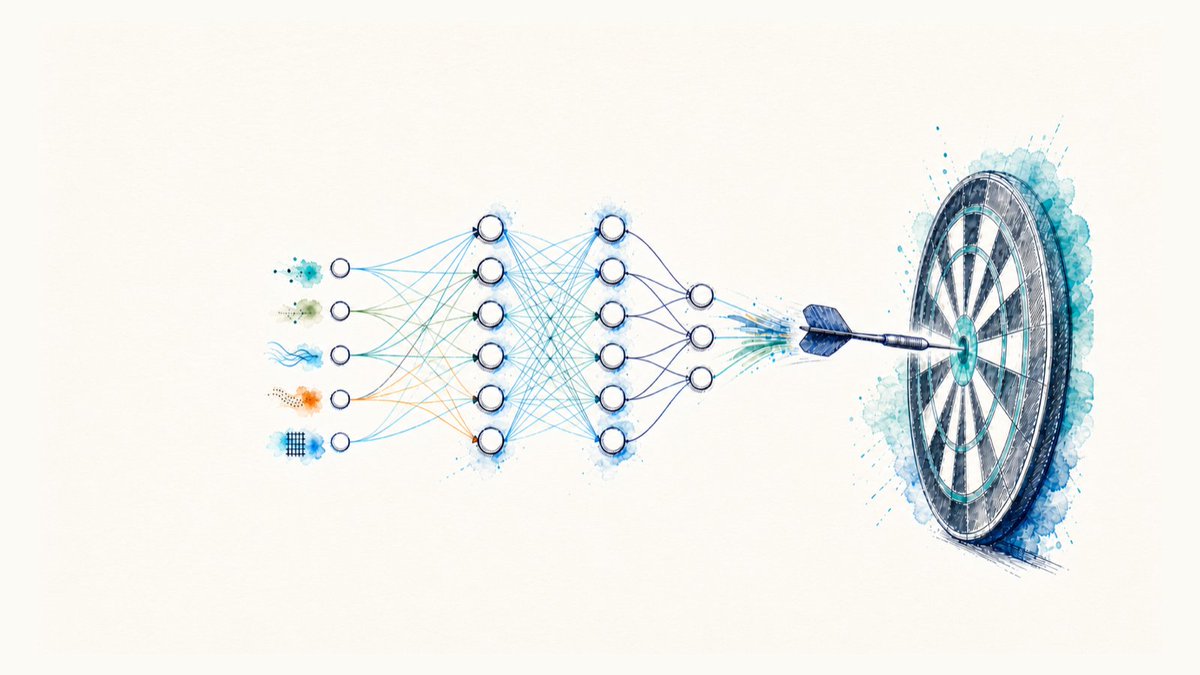
I built a 44-page presentation to explain how neural networks learn. Then I added a button: “Skip the lecture and let’s play darts!”
A slide can describe a feedback loop. A game lets you feel one.
Play Dart Room: https://t.co/jTLaCT1NUu
My laptop has been demoted.
After 34.2B lifetime Codex tokens, 8,290 chats, a 16h 35m longest chat, and a 44-day streak, I’m moving my agentic workflow to an always-on desktop.
The laptop becomes the field console. The desktop gets the night shift.
https://t.co/ahvmNfCJqJ
@graslogamer@chrisbanes@Dimillian@ChatGPT Same thing with me. I actually had to use to reset this week and I am already down to my last 20% with 3 days to go still. And the work this work was no more intense that the previous weeks
Most neural-network explanations start with the network. Learning to Aim starts with one fixed dart throw, then changes the target, wind, and distance so the network has to earn its place in the lesson.
https://t.co/G3PlcVE4mU
Source code may not disappear. Human attention will move elsewhere.
As AI-generated code outgrows line-by-line review, trust will shift to requirements, independent tests, security checks, production evidence, and risk-based escalation.
https://t.co/5fDZlyYQkr
Codex got 6 of 9 steps into a project, then paused for approval of its staffing plan: 12 agents, 21 roles, multiple models, unlimited token budget.
I’m used to approving human headcount. Robot headcount was new.
Anyway, the agents start Monday.
This week, Codex started executing work I asked it only to plan. In another task, it ignored explicit resource limits. I want persistence after I say go. Before that, planning and execution need to remain separate.
https://t.co/pNZdPUL3iF