'We describe ourselves as living in a digital age and ourselves as digital citizens.'
'What Edoardo’s work is doing is creating the parameters, the framework for that society, that will protect democratic rights, human rights and citizenship,' says President of DCU @DaireKeogh
New DCU research by Prof @SharonNiBhriain and Dr Patrick Cadwell of @DcuSalis highlights translation as a crucial missing link in crisis communication policies. Read:https://t.co/SX5H9C3DB1
The report was funded by @DCUEdTrust through the DCU #Covid_19 Research & Innovation Hub.
Unfamiliar terms like #SocialDistancing" are a “blind spot” in emergency responses. They can be difficult to translate and understand. Thinking everyone speaks English or understands an international language just isn't enough. https://t.co/1GXvLeApKw #COVID_19#Coronavirustruth
Here you can watch @DcuSalis@CrisisTrans Pat Cadwell giving his talk about training for Crisis Translation at the @fit_ift Translating Europe Workshop in Athens: https://t.co/bkFzjaZySG
The #H2020@CrisisTrans project has now made its Citizen Translation training course available on YouTube. There are 12 short videos explaining basic concepts of “translation” and 5 videos explaining the basics of MT and Post-Editing. @LiteracyMachine
https://t.co/mIGAftkssI

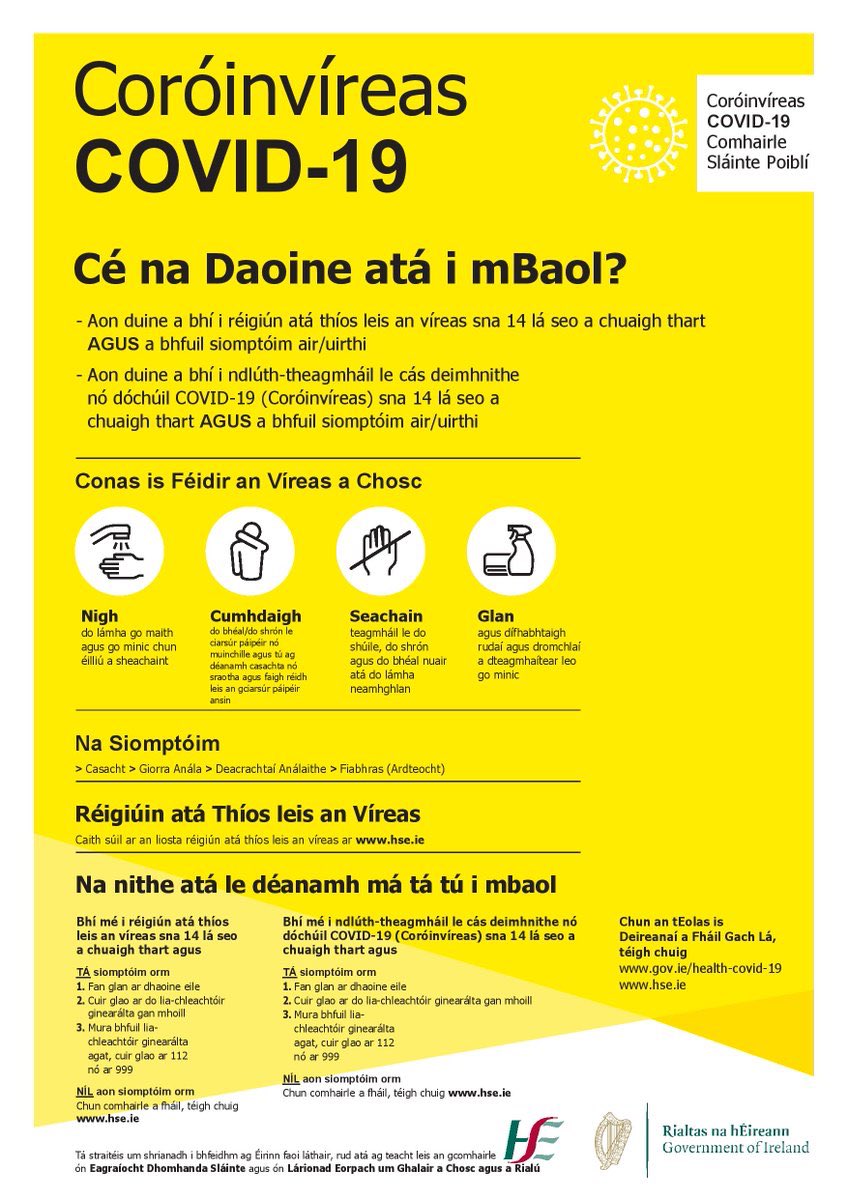
@KhetamAlSharou@kshehari@CrisisTrans @FMFederici The UK’s indigenous, Celtic languages might not have large numbers of speakers, they should also be catered for - and yet aren’t. As an Irish speaker, @NHSuk has nothing for me, so I rely on @HSELive for information:
INTERACT policy recommendation no. 10: Recruit into multilingual organizations who are responsible for aid or emergency response in such a way as to avoid reliance on international lingua franca and ad hoc or convenience translation and interpreting.
A really important point here: ‘during cyclones and disasters, women were the first to help their communities organize and their families’. Don’t underestimate women when it comes to disaster response and readiness.
Pacific women are still being shut out of the decision-making process when it comes to disaster management, says a women's rights advocate. https://t.co/4L9nPAyy4k
INTERACT @CrisisTrans Policy Recommendation No. 9: Establish direct lines of communication between emergency responders and professional associations of translators and interpreters for the purposes of collaboration.
A second @CrisisTrans open publication on crisis translation and ethics in one week: "Ethics at the Intersection of Crisis Translation and Humanitarian Innovation" with @MHuntMcGill@domathuna@SharonNiBhriain & Pat Cadwell: https://t.co/1k0hQDv5kH
Pleased to announce another @CrisisTrans publication with our excellent colleagues @CParraEsc @domathuna@jay_marlowe and Proinsias Roche: “Engaging citizen translators in disasters: Virtue ethics in response to ethical challenges”
https://t.co/bHDTMBvFlG
“In an information vacuum, it is easy for an outbreak narrative to form, one that scapegoats and marginalises.” – @Ethnography911 sees some familiar patterns in discourse about #nCoV#2019nCoV.
https://t.co/qlpCVUhZal
Our 8th rec.: Ensure training is provided for professional and volunteer translators and interpreters so that they can effectively operate in crisis and disaster settings. Also ensure training for users and managers of translation and interpreting services.
INTERACT - Policy Recommendation 7: Emergency management communication policies should allow for two-way
communication between responders and affected communities. It's not enough to translate one way. Listening is crucial. A 'lingua franca' is exclusive.
INTERACT's 6th policy recommendation is inspired by the need to disseminate in many different formats: Alternative formats and channels for dissemination of translated information should
be considered – not just traditional written or spoken formats.
Starting 2020 by continuing with our policy recommendations. This is the 5th one from INTERACT: Emergency management communication policies should consider languages spoken by affected communities (including sign language), levels of literacy, and cultural appropriateness
Starting 2020 by continuing with our policy recommendations. This is the 5th one from INTERACT: Emergency management communication policies should consider languages spoken by affected communities (including sign language), levels of literacy, and cultural appropriateness
Our 4th policy recommendation: 4. Emergency management communication policies should cover ALL phases of crisis and disaster management (mitigation, preparedness, response, and recovery), not just the response stage.