Seaman Knapp was an Extension agent (the first Extension agent!) here in the Finger Lakes of New York. I did cover crop field days on his grandson's farm.
Each year, NIFA joins @APLU_News to sponsor a lecture presented at the APLU Annual Meeting honoring historical figures who shaped the Land-grant University System.
This year, nominations are open to honor Seaman A. Knapp. Submit nominations by June 5: https://t.co/FXy5wivJN5
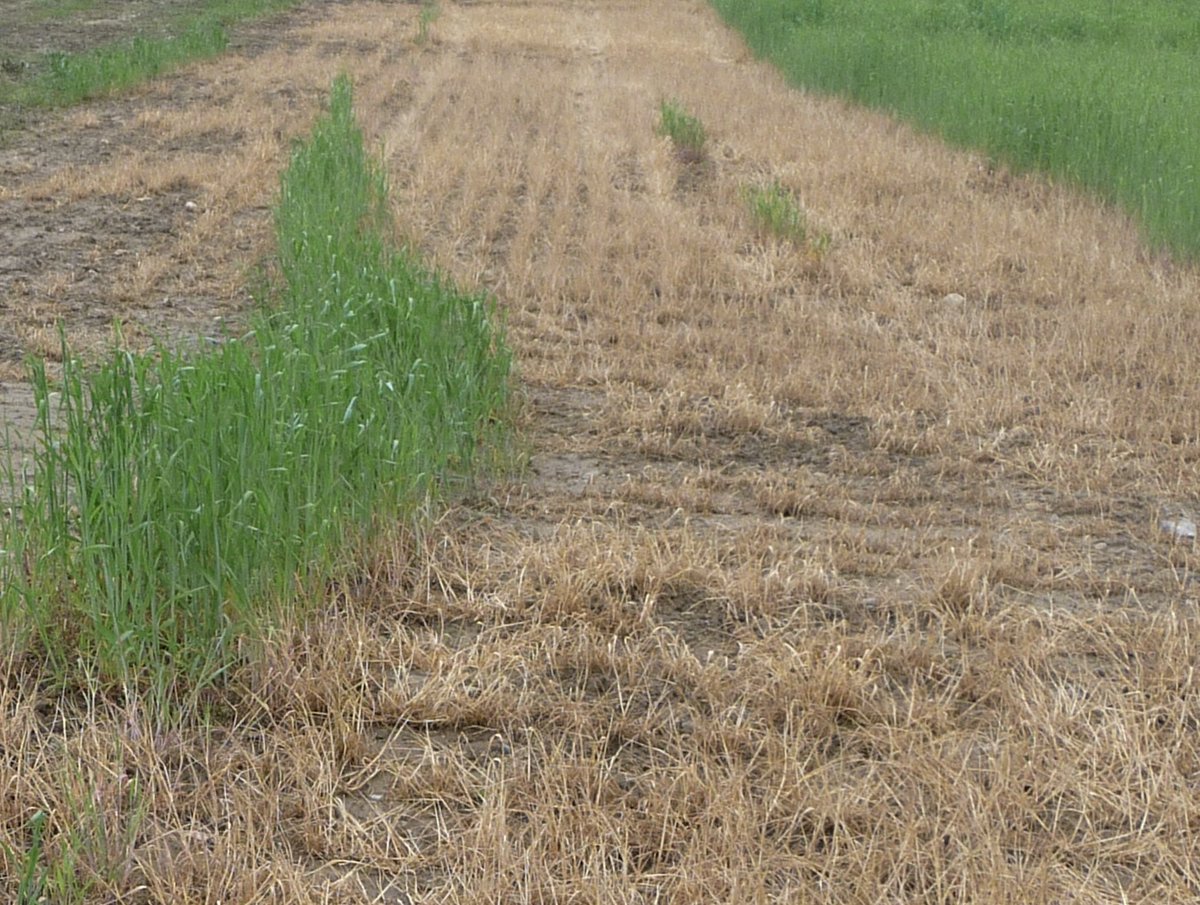
#Covercrop stands must have #nogaps. How big is a gap? For small grains 11 cm can do the job, 22 cm is a gap. For wheat, "narrow row spacing of 11 cm enhanced crop competitiveness and effectively suppressed R. raphanistrum" over winter in Faisalabad.
https://t.co/MRHzakATBM
@NatureRevMicro For crop production, the goal is to have just a single plant species in a field. That is the optimum. What is the optimum soil microbial diversity? It is more than one, but likely to be far less than the maximum.
Labor efficiency is a high priority on vegetable farms worldwide. It takes different forms in different places. Cover crop practices require high labor efficiency as well, and we could use research to find improvements.
In China… smart farming blends simplicity with technology 👨🌾
Farmers plant vegetable seedlings while sitting, using locally made tools designed to fit their needs — a scene that reflects years of hard-earned experience and an innovative adaptation to the land and agricultural conditions.
@auren Make sure the students are getting an actual college education, not just a piece of paper. The credential is worth nothing without the education it is supposed to represent.
Third key to cover crop success: Kill On Time
Terminate when plants will kill completely
Herbicide: Susceptibility depends on both temperature and growth stage. Time application when both are correct.
Don't miss a spot! 10/10
Third key to cover crop success: Kill On Time
Terminate when plants will kill completely
Winter kill: Young plants like Crucifer rosettes are much hardier than older ones that started to bolt or bulb in the fall. Check for runts that survived winter. 9/10
Third key to cover crop success: Kill On Time
Terminate when plants will kill completely
Cultivation or shallow tillage: Separate roots from shoots or roots from soil 8/10
Third key to cover crop success: Kill On Time
Terminate when plants will kill completely
Roller crimping: make sure there is enough biomass and that the stems are brittle. No immature tillers. 7/10
Third key to cover crop success: Kill On Time
Terminate when plants will kill completely
Mow killing: make sure all potential growing points are higher than the mower blade. Early flowering is often best, 6/10
Third key to cover crop success: Kill On Time
Terminate when plants will kill completely
Chose an effective method for the species, growth stage and season. 5/10
Third key to cover crop success: Kill On Time
Always terminate before there is a risk of seed production. Watch mixes closely, any component can become an unwelcome volunteer. 4/10
Third key to cover crop success: Kill On Time
Wheat, triticale and rye are at very different stages. At these stages,terminating wheat gives an N credit, rye a big deficit. 2/10
Third key to cover crop success: Kill On Time
It is time for winter cover crop termination. The right time depends a great deal on management goals.
Here is a series of tweets on getting that right. 1/10
@LucasAHaag@clintwfischer Daughters might be very tempted to sell their share to an investment firm in order to have unrestricted cash now. That is a very common transaction for any payouts over time like annuities, lottery jackpots and court settlements.
Second key to cover crop success: No Gaps
Broadcasting is common, but takes a lot of care. Do overlapping passes, and cover the field twice at different angles
Follow broadcasting with something that presses in the seed to get seed-soil contact.
Second key to cover crop success: No Gaps
Prepare the field so that the planter will not skip.
Use a planter that can handle stones, crop residue, crusting or others impediments to accurate placement.
Adjust the planter so that the seed furrow closes consistently and completely.