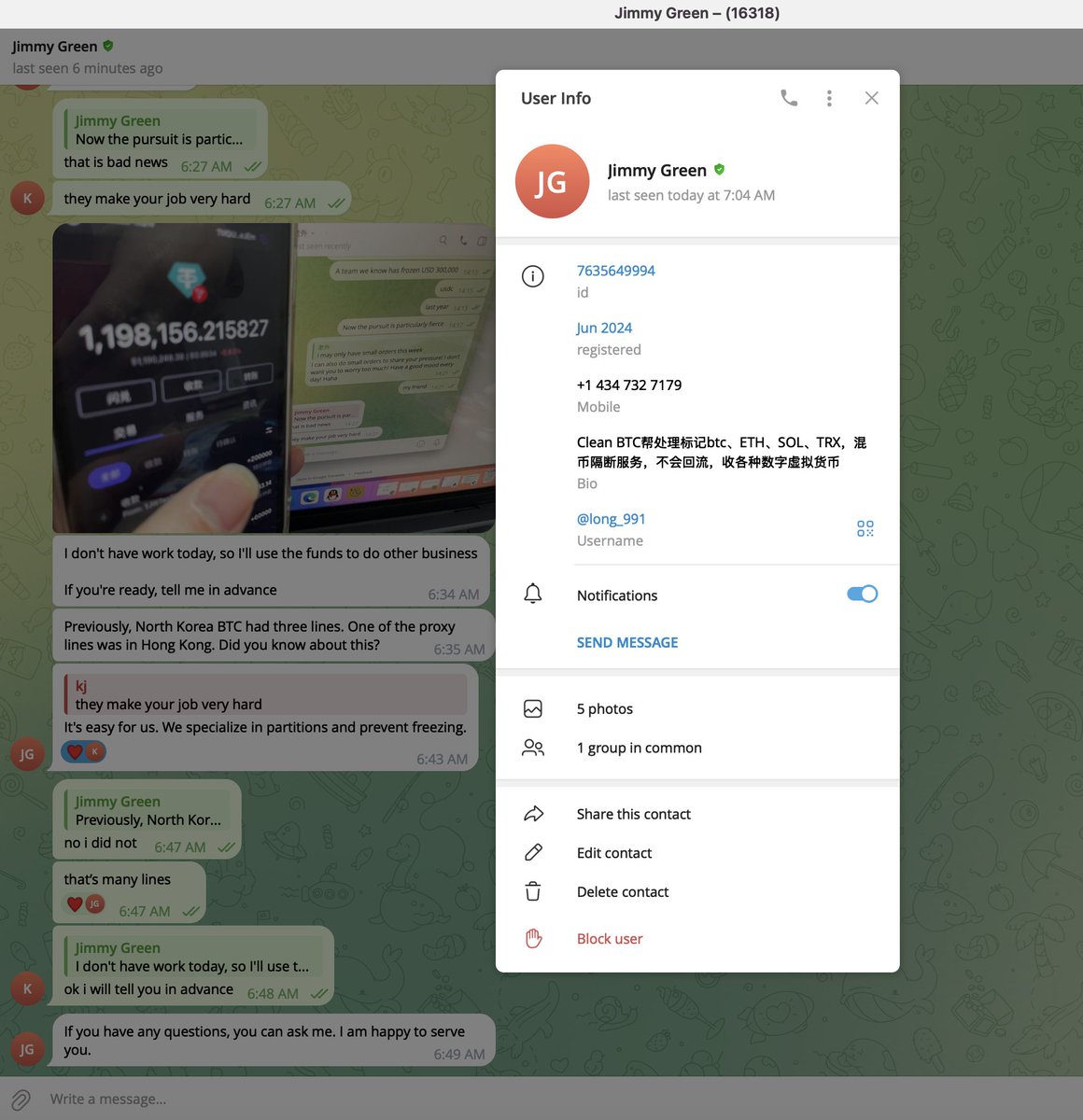
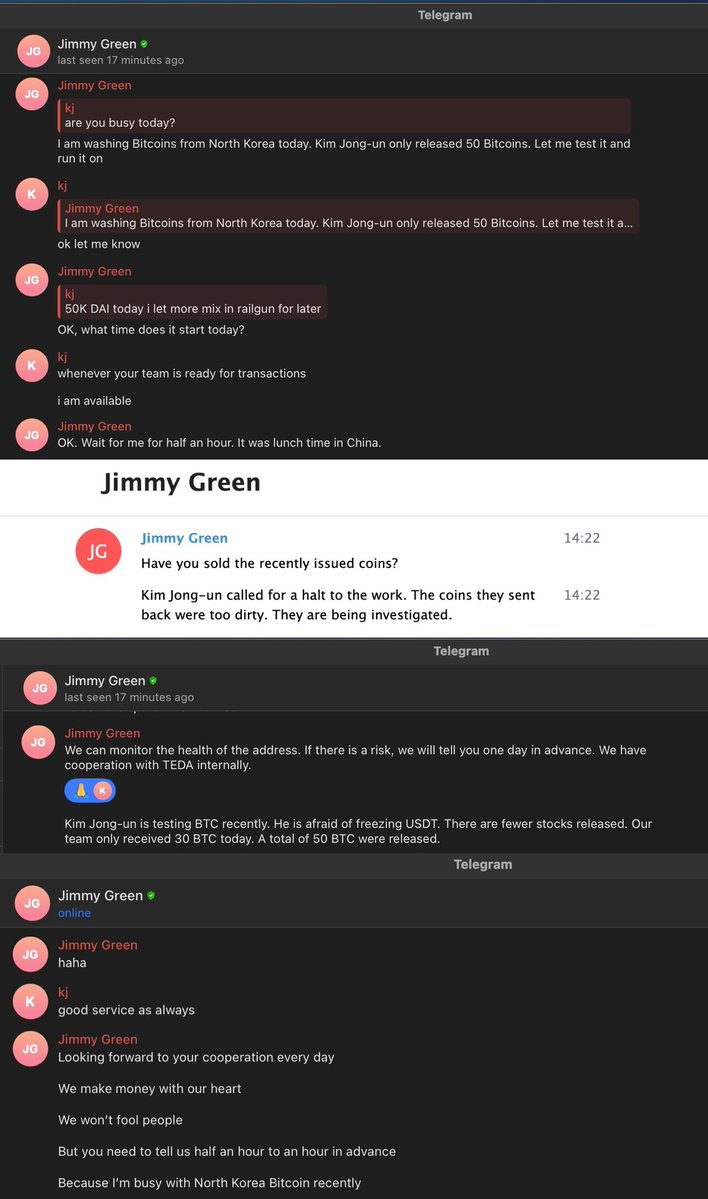
1/ How I infiltrated a Chinese organized crime syndicate that has laundered $1B+ across multiple exploits for Lazarus Group.
Posing as a client, I gathered intel that helped action freezes for the Feb 2025 Bybit exploit and attribute illicit activity onchain.
⏳ The momentum doesn’t stop. Treehouse Booster Season 5 is confirmed!
Stake wstETH or keep your position in the Simple Yield @TreehouseFi wstETH Vault via #BinanceWallet to enjoy $350k TREE in Season 5 rewards.
Learn More⬇️
https://t.co/umojYTK1Qu
I believed I was managing my stablecoin risks effectively before this week.
Losses are the best teacher.
Here's my updated stablecoin due diligence checklist ↓
USDT/sUSDX markets have experienced elevated borrow rates with limited repayment activity.
Recent MEV Capital actions:
- Set allocation cap to 0 for this market
- Updated the Interest Rate Model (IRM) to adjust borrowing incentives
ListaDAO's community is voting to update the oracle parameters through their governance process.
We continue monitoring market activity and liquidation processes.
We want to reassure our community that all user funds on Yei remain fully solvent and will be 100% withdrawable.
Approximately $8.6M USDC was borrowed against sfastUSD in the Yeilend main pool. The Yei team will repay this debt in full, ensuring that all USDC deposits are completely available for withdrawal.
Withdrawals are currently paused while repayment is processed. We will share an update soon with the exact timeline for when the protocol will resume normal operations.
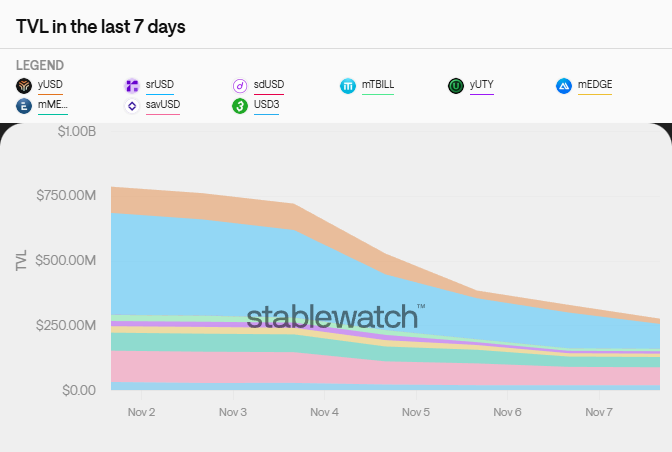
The core issue with the curation vault model lies in the illusion of isolation. Curators are meant to manage distinct strategies and segregate risk, yet in practice, they all end up supplying liquidity to the same underlying lending markets. What is designed to promote diversification instead concentrates exposure, turning one curator’s stress into everyone’s problem.
Despite being framed as modular and independent, the model inherently links all vaults through shared borrower pools. Liquidity from multiple curators merges into a single system, so the decisions or withdrawals of one can ripple instantly across all others as we see with recent issues with xUSD and similar assets. Even a cautious curator cannot escape the fallout from a more aggressive participant operating within the same pool.
When confidence falters or withdrawals accelerate, these shared markets seize up. Utilization shoots to 100%, redemptions grind to a halt, and borrowing rates spike to unsustainable levels. A localized liquidity crunch quickly transforms into a protocol-wide freeze, a DeFi version of a bank run essentially.
This creates a design paradox: a system built for isolation that, in reality, amplifies interdependence. Every vault inherits the risk behavior of the weakest curator, making the entire structure vulnerable when liquidity is most needed.
This model is even amplified by the economic design of these protocols: lower fees or take more risk to create business, otherwise become commoditized.
In contrast, Aave’s architecture achieves the risk segregation that curator models only promise. Each market operates in true isolation, with conservative collateral standards, controlled listings, and transparent onchain governance. Market shocks remain contained, liquidity remains accessible, and the protocol’s record of zero bad debt across billions in total value supplied underscores its resilience.
For vault creators and users, this difference is decisive. Shared-liquidity designs magnify contagion, while isolated-market frameworks contain it. Aave’s conservative design ensures predictable yields, reliable redemptions, and the stability that sustains confidence through volatility.
Just use Aave.
Due to the ongoing fastUSD market situation, we have temporarily paused the protocol as a precautionary measure.
Please stand by — our team is actively investigating.
We will provide an update within the next 24 hours.
As reported widely today, certain V2 Balancer pools have been exploited. The Lido Protocol remains unaffected, and all user funds are safe.
Out of an abundance of caution, the Veda team - curators of Lido GGV - has withdrawn its unaffected Balancer position. All Lido Earn funds remain SAFU.
We are aware of the ongoing security incident affecting the Balancer protocol.
All Treehouse products and vaults are unaffected and funds are SAFU.
On 3 November 2025, 07:50 UTC, Treehouse’s on-chain monitoring systems detected irregular activity involving Balancer’s infrastructure.
Our engineering and risk teams are actively monitoring the situation in coordination with Balancer's core ecosystem teams.
As a precautionary measure, we have:
• Increased monitoring of pool balances, oracle feeds, and vault strategies connected to these positions.
• Engaged Balancer’s security and response team to verify the extent of the impact and confirm when operations can safely resume.
We urge users not to interact with the tETH/wstETH Balancer pools until official confirmation is provided that the issue has been fully resolved.
We are treating this with the highest priority and will provide an update as soon as any new information becomes available.
Thank you for your patience and continued trust in Treehouse.
📣 aiBTC enjoyers 🟠
Your $BTC.b is earning 13% and getting a huge infra upgrade courtesy of @Lombard_Finance. What do you need to do? Nothing, enjoy your weekends, touch grass 🌲