So-called age verification for social media is spreading across the world, framed as an effort to create a safer internet for children. In reality, age verification lays the foundation for a fully controlled internet.
The age verification rush must be slowed down, and politicians need to recognize the consequences of different types of legislation and systems.
Age verification is the wrong approach to fix “the social media problem”
The big tech social media companies are bad. Their business model is bad; it is based on mass surveillance and manipulation, and they cooperate with governments in mapping entire populations. But age verification is fundamentally the wrong approach to preventing children from using big tech social media platforms. Introducing age verification is based on coercion; the state forces social media companies to verify their users’ identities. But the big tech social media platforms already know which of their users are children. Their business model depends on knowing this. They know how old users are, and they know exactly what type of person they are. As age verification is based on coercion, politicians could instead force platforms to stop doing the things politicians consider harmful to children, or force them to block children (again, they know who they are) from using their services. But instead, politicians seek to massively invade everyone’s privacy and undermine democratic rights on a global scale. In other words, the latter is the real objective – they do not want to protect children; they want to impose control.
Slippery slope of age verification
It is undeniable that age verification threatens freedom of expression, risks increasing mass surveillance, and is likely to lead to censorship. It will not only shrink the online world and reduce young people’s right to privacy (for example, if VPN services were to be restricted); but also risks becoming a significant step toward a controlled internet for everyone.
Most age verification is identity verification
Most countries are now considering introducing age verification systems, meaning that everyone would have to identify themselves either to the service/website they want to use or to a third party capable of linking them to their activity on that service or website. This is not age verification but identity verification, and the consequence is therefore that freedom of information is restricted (you can no longer visit regulated websites anonymously) and that you can no longer post anonymously on social media. This is a major problem in countries like the UK and Germany where the police conduct raids on people’s homes for posting content on social media that the authorities dislike. Or in the United States, where authorities are trying to pressure tech companies into revealing the identities behind accounts protesting ICE. Social media identity verification removes important tools for activists in countries where criticizing those in power is dangerous.
Restrictions on app store or operating system level
Some countries are looking to impose identity verification at the app store level or even within the operating system itself. This is an exciting experiment, since this is possible to circumvent using open-source operating systems. Some countries are already looking to include open-source systems. Since open-source systems cannot be controlled, politicians would ultimately need to ban devices that are not controlled by the state. The end point: telescreens like those in Orwell’s 1984, devices that both monitor you and broadcast only the information approved by the state.
The Zero-Knowledge Proof (ZKP) alternative and the EU
The EU has presented its own age verification app as “completely anonymous”. The idea is to use Zero-Knowledge Proof (ZKP) cryptography to break the link between the age credential issuer (EU governments) and the regulated services/sites. Currently, the EU app does not have ZKP functionality, contrasting Ursula von der Leyen’s claim that the app ”is technically ready to be used”. But more importantly, the app is currently designed to always function without ZKP technology; if ZKP is unavailable, the app falls back to a non-ZKP model. Even if fully developed ZKP technology could be implemented in the future, it would remain an optional extra feature that countries may choose to disable and that the EU could remove at any time.
Read more on our site.
https://t.co/wTVKHMS1zg
One thing I really like about being in Thailand is that when you order food online, it’s just waiting for you downstairs at the condo in a designated pickup area near the car park. The delivery rider tells you which numbered slot they left it in, sending a proof of photo in the app. The mindset here feels very different compared to Europe, life in South-East Asia can be incredibly convenient sometimes, it's just one little example of the many benefits living here. #Bangkok 🇹🇭
Here are 4 things that happened to the UK in the last 24 hours:
1. The Labour government confirmed it will remove the right to a jury trial. Cases will be tried by a judge alone.
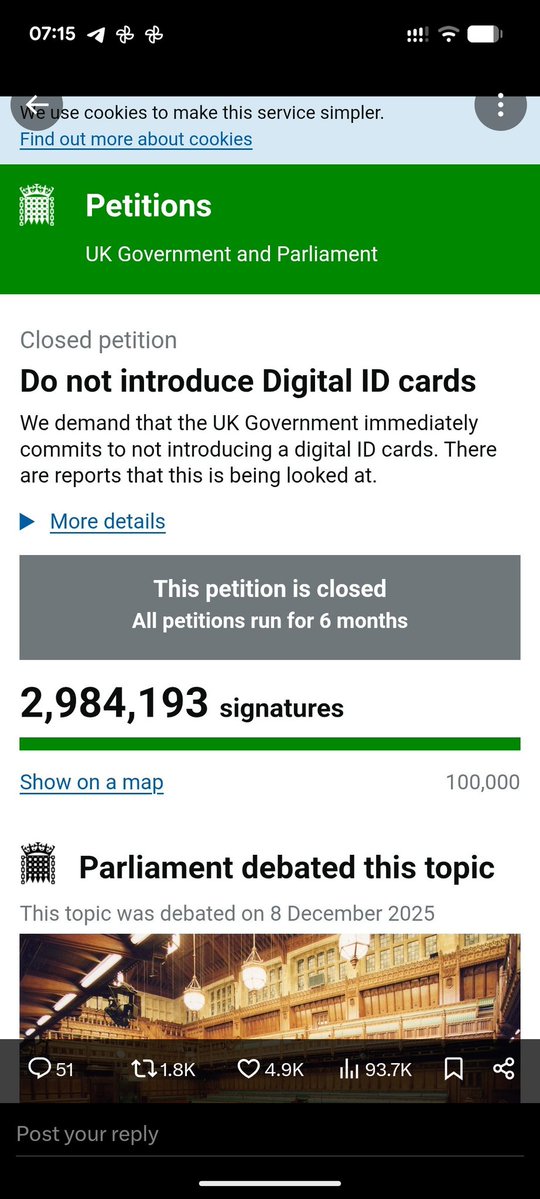
2. The Labour gvt confirmed it will impose Digital ID despite it never being included in Labour's manifesto and nearly 3 million Brits signing a petition against it.
3. The Labour gvt confirmed we will "align" with the European Union, directly going against the 2016 democratic vote for Brexit & forcing the British people to pay billions for laws they'll never be able to influence.
4. The Labour gvt confirmed that while Islamist sympathisers & antisemites are free to march on the streets of our capital city, & while it welcomes former allies of al-Qaeda into Downing Street, it has banned conservative activists from joining a peaceful protest against mass immigration in London.
Put all these things together and you get a sense - just a sense - of how hideously authoritarian and illiberal this Labour government really is.
So looks like banning people from the internet, forcing Digital ID on everyone, removing the right to jury trials, failing to fix pot holes, destroying family farm businesses and heaping ever more costs on the productive parts of the economy....were not after all the hugely popular policies that @UKLabour expected.
Some governments tell you you have to "declare" that you "own" Bitcoin.
Now, how the heck do you do that, exactly?
In short, knowing a Private Key allows you to request that the network apply a specific alteration to the timechain that "moves" sats from one address to another.
But how can knowledge be equivalent to ownership in any legal sense?
And what happens if you utter the Private Key in court? Remember - the twelve magic words in a seed phrase are not a password - they ARE the key!
Now the entire court will be "guilty" of "owning Bitcoin."
And how do you prove that everyone else on Earth DOESN'T know the same twelve words?
Under man-made law, Bitcoin ownership is paradoxical. Under Natural Law, the keyholder simply IS the owner. No declaration is required, and no state is needed to validate it.
Study Praxeology! Read Rothbard!
In Thailand 🇹🇭, overstayers and illegal entrants are fined, deported, and may face re-entry bans.
In the UK 🇬🇧, 41,472 mostly male, economic migrants entered illegally by small boat in 2025. Around 31,000 are still being housed in hotels, costing taxpayers £2.1 billion last year alone, whilst public services and quality of life decline for the citizens funding this utter madness 🤷🏻♂️😂
Borders are a wonderful idea, aren’t they?
Cheers from my local beach in sensible Thailand 🇹🇭 🍻
Nearly three million Britons petition against your policies. Your regulator is a toothless international laughing stock. Private companies fight for our rights to privacy while you, the government, attack them. Your Ministers get community noted for inaccuracy. The founder of Wikipedia himself is fighting for us harder than you are.
When do you look in the mirror, @UKLabour and @darrenpjones, and change course?
Better be before 2029...
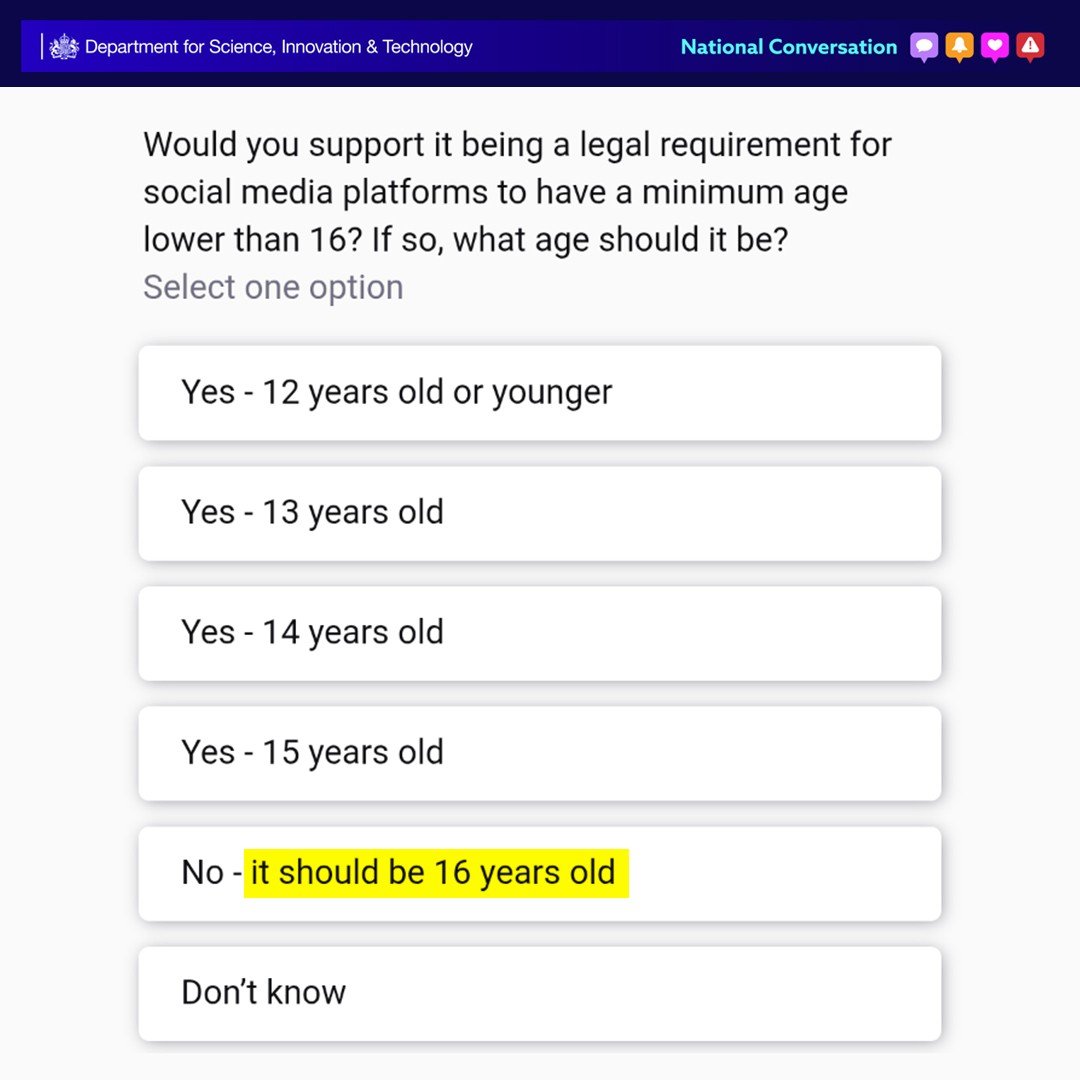
🆔Government to public: Do you want digital ID checks to be used to enforce a social media ban for under-16s
☐ Yes
☐ Definitely yes
☐ Strongly yes
☐ Yes 100%
The “consultation” doesn’t appear to have a box for disagreeing.
Dear @LucyRigby,
I hope you will take a moment to read this. We spoke in the Anacta Suite at Labour Conference. During your conversation with Visa I asked you directly:
“As the UK is the third largest sovereign holder of bitcoin, should the Treasury be researching a strategic bitcoin reserve to strengthen our economic position.”
You took our organisation’s details and said you would follow up.
Before and after that conversation @BitcoinPolicyUK has reached out to you on multiple occasions. We have contacted your office with open letters, emails, our bitcoin manifesto, invitations to meet, policy documents and evidence based submissions. These include the strategic bitcoin reserve letter published here:
https://t.co/dARrTmw4Tu
We have also submitted our policy material which can be found here:
https://t.co/fOi78heeqd
We have had no response.
Our work is independent and carried out in the public interest. We ask only for the opportunity to contribute to the national conversation.
In contrast, Visa and now Ripple appear to have extraordinary access and influence at the highest levels of government.
At Labour Conference Visa representatives advocated for identity linked payments. Ripple is now pushing centralised digital infrastructure that aligns closely with government controlled money, a model that risks creating the most monitored and permissioned financial system we have ever seen.
At the Texas Bankers Association roundtable Visa pushed programmable money and tightly controlled payment rails.
These systems are often marketed as “inclusive,” but reports show they exclude the most vulnerable and create new risks for privacy and autonomy.
Visa and Ripple have both the budget and the access to push this vision across every forum they enter.
This creates a serious problem. The UK is being guided by advice from companies with vast resources and strong commercial incentives. Their interests are not aligned with the interests of citizens.
When ministers hear mainly from large corporates they receive a narrow and distorted view of what the country’s digital future should be. This leads to policy ideas that weaken privacy reduce freedom and place growing power in the hands of intermediaries.
Bitcoin offers the opposite:
- It strengthens national resilience
- It supports privacy and individual freedom
- It provides an open monetary network that no corporation can manipulate
- It is the only digital asset aligned with the principles of a free and open society
My concern is simple. The UK is receiving advice shaped by powerful corporate interests whose incentives run directly against the public good, and Bitcoin is being sidelined at the moment it matters most. This is not a party political issue, it is about ensuring that government hears from more than one type of stakeholder. The stakes include financial stability energy innovation and the UK’s global competitiveness.
https://t.co/2cHUMxFdWS
Bitcoin Policy UK remains ready to brief you at any time. There is no cost and no commercial motive. Only evidence independence and a commitment to helping the UK make informed decisions.
I hope we can finally begin this conversation.
Yours sincerely
Susie Violet Ward
CEO, Bitcoin Policy UK
🚨Today's Must Read🚨
Keir Starmer's online STASI @Ofcom have levied their first fine under the Online Safety Act on 4chan who have been fined £20,000, with daily penalties.
They have instructed lawyers @ByrneStorm & @RonColeman to fight the action in an American Federal Court.
CC @OfcomCommentary