It feels like every week there's another conversation happening around digital payments, crypto, stablecoins, or some new piece of financial technology.
These topics have become impossible to avoid, whether you're scrolling social media or just talking to people in your circle.
The interesting part is that this surge in interest isn't because everyone suddenly figured it all out.
It's simply that the way money works is shifting in real time, and people would rather understand that shift as it happens than get caught off guard by it later.
This curiosity looks different depending on the person. Some people start small, just downloading a digital payment app and getting comfortable using it.
Others go further and start following creators who explain financial technology in plain, simple terms.
And some people dig even deeper, actually trying to understand how blockchain works, what makes digital wallets useful, and how digital assets are reshaping the broader financial landscape.
What I find genuinely interesting is that most people aren't rushing to use every new tool immediately.
Instead, there's a clear focus on learning first. People are spending real time understanding core concepts, digital payments, blockchain fundamentals, digital wallets, and the wider world of digital finance, before making any real decisions.
Nobody has to know everything at once, and honestly nobody does. The actual goal is just staying informed as things continue to change. If there's a specific topic you've been hearing about but never actually looked into, that's a good place to start. Give it fifteen minutes of your attention and see where it takes you.
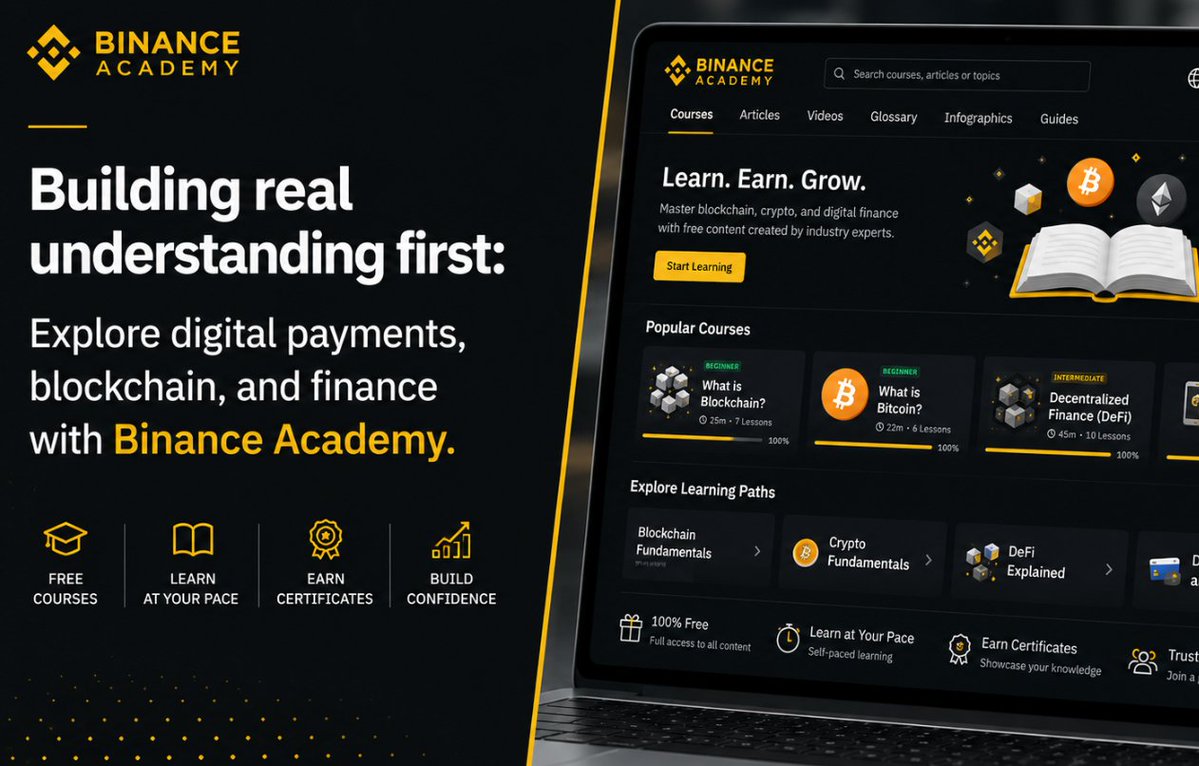
If you're looking for a reliable starting point, Binance Academy has free courses covering exactly these kinds of topics for anyone curious about digital finance.
Always do your own research.
#Binance #BinanceAcademy #LearnWithBinance
None of this means risk disappears entirely, no platform can claim that. But steps like these are exactly what responsible growth is supposed to look like in this space.
Something I've been paying more attention to lately is how seriously regulation is treated in this industry, especially when it comes to platforms operating across our region.
Binance holds more than 20 regulatory approvals worldwide, making it one of the most regulated digital asset platforms out there.
That kind of positioning doesn't come easily, it comes from continuously working with regulators and adapting to whatever framework each market requires.
MENA specifically stands out here. It's become one of Binance's strongest regulated regions, and honestly the country-level details back that up pretty clearly.
Dubai is covered through Binance FZE, licensed by VARA across a range of virtual asset activities.
Abu Dhabi is even more notable, Binance became the first crypto exchange to secure a global license under the ADGM framework there.
In Bahrain, operations run under a Category 4 license from the Central Bank of Bahrain, which is another layer of oversight.
And in Pakistan, Binance has already completed its AML registration, setting the stage for full licensing and local incorporation moving forward.
None of this means risk disappears entirely, no platform can claim that.
But steps like these are exactly what responsible growth is supposed to look like in this space.
If you're active in the region, it's worth checking official sources to see what specifically applies to you before making any decisions.
Always DYOR
#Binance #BinanceAcademy #LearnWithBinance
Your first ten minutes on Binance are honestly a lot less intimidating than people make it sound.
Let me break down exactly how it goes.
First thing's first, Identity Verification. This step basically unlocks your account so you can actually use the platform properly.
It's quick, and once it's complete you're ready to move forward.
From there, the smartest move is starting with a small deposit.
Nothing dramatic, just enough to get comfortable seeing how the process works end to end. You're not trying to prove anything here, you're just learning the ropes.
Now here's where it gets genuinely easy.
Binance Convert lets you swap between supported digital assets in just a couple of taps.
No complicated charts, no confusing order types, just a simple swap function that's perfect for someone still getting their bearings.
Once that starts feeling natural, you can slowly branch out into things like Spot Trading or Simple Earn whenever you're ready.
And if you want to actually understand the "why" behind any of it, Binance Academy has free courses that explain everything at your own pace.
The whole idea here is simple, don't rush it. Take the first few steps slowly, learn as you go, and build from there.
Digital asset prices can go up or down. Educational only, not financial advice.
Always do your own research.
#Binance #BinanceAcademy #LearnWithBinance
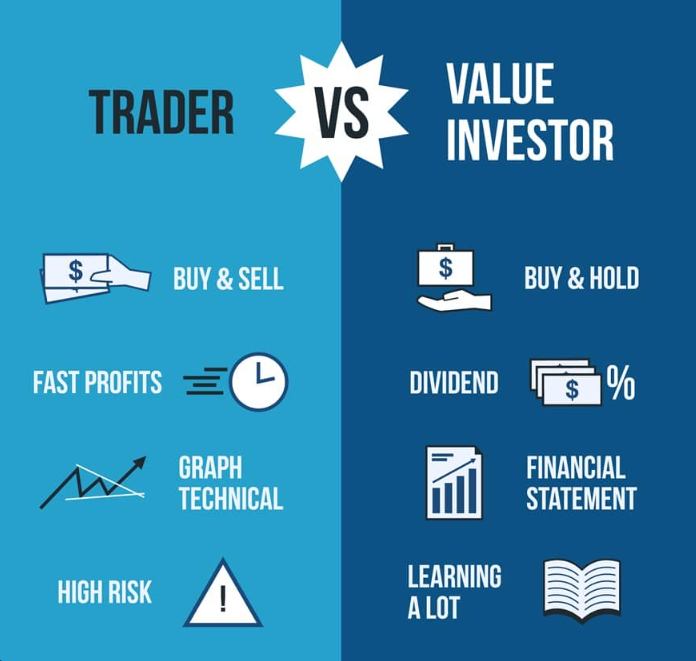
Real question before you buy your first crypto asset: are you investing, or are you trading?
Because a lot of people think it's the same thing, and honestly that confusion is where most beginner mistakes start.
Both involve buying and selling, sure. But the goals behind them are nothing alike.
LONG GAME VS SHORT GAME
Investing is patient by design. You're looking at where something might be years down the line, not what happens next week.
Someone might build a Bitcoin position slowly over months and just let it sit, trusting the long-term thesis instead of reacting to every red candle.
Trading works completely differently. It's active, it's short-term focused, and it leans heavily on things like price action and market sentiment.
It's not passive at all, and it demands actual discipline and risk management skills.
THE TRAP MOST BEGINNERS FALL INTO
This is the part nobody prepares you for. You buy something with a long-term mindset, then the second it drops even slightly, panic kicks in and you sell.
Then two days later you're buying whatever's trending on social media instead.
At that point you're not investing or trading, you're just reacting emotionally and calling it strategy.
Ask yourself before getting started: can you hold through volatility without panic selling? Do you have the time to actually study this daily?
Are you okay waiting a long time to see results?
Plenty of experienced traders and investors do both actually, keeping a long-term core portfolio while trading a smaller portion separately. It's not one or the other necessarily.
If you want to actually understand both approaches properly before jumping in, Binance Academy has free courses that cover exactly this.
Educational only, not financial advice. Always do your own research.
#Binance #BinanceAcademy #LearnWithBinance
Okay quick one, what actually is a "tokenized asset" and why does everyone keep bringing it up?
Simple version: it's when a real-world asset, like a financial product or a commodity, gets represented as a digital token on a blockchain.
So instead of that asset just existing in a traditional system somewhere, it now has an on-chain digital version too.
This is being explored because of what it could potentially offer.
Think faster settlement compared to traditional processes, better transparency since blockchain records are traceable, and fractional access, which could let more people participate without needing the full asset value upfront.
All of that depends heavily on how the specific product is built and regulated though.
Here's the part people skip past too fast.
Tokenized products come with real risks, market risk, liquidity risk, issuer risk, technology risk, and regulatory risk are all part of the picture.
And not every product is available everywhere either, eligibility genuinely depends on your region.
Binance has introduced tokenized and stock-related products like bStocks in certain select markets. If this interests you, go check official Binance sources directly for eligibility and regional details instead of relying on random posts online.
Basically, tokenization sits right at the intersection of TradFi and blockchain. Understand it properly before forming an opinion on it.
Educational only, not financial advice.
Always do your own research and use official sources.
#Binance #BinanceAcademy #LearnWithBinance
If you've been in any crypto group chat, you've probably seen the word "stablecoin" thrown around a lot. Let's actually break it down simply.
A stablecoin is a cryptocurrency that's designed to hold a steady value by tracking another asset, usually a fiat currency like the dollar.
So while regular crypto prices can move up and down fast, a stablecoin tries to stay close to that fixed value instead.
That's basically why it's become such a big part of everyday crypto activity.
People use stablecoins for trading, transferring funds, making payments, and jumping between different digital assets without the extra stress of price volatility getting in the way.
But here's something every beginner should actually know. Stable doesn't mean zero risk.
Stablecoins can still fluctuate, and how safe or reliable one is depends heavily on how it's backed, who's behind it, and what regulations it follows. Not every stablecoin works the same way.
So if you're new here, don't just assume "stable" means "guaranteed."
Take the time to actually understand how a specific stablecoin is backed and what rules apply where you are.
Educational only, not financial advice. Always do your own research and use official sources.
#Binance #BinanceAcademy #LearnWithBinance