🚨 EVERYTHING THAT COULD GO WRONG FOR MARKETS WENT WRONG TODAY.
S&P 500 down -1.65%, wiping out $1.14 trillion.
Nasdaq down -2.60%, wiping out $1.11 trillion.
Gold down -3.38%, wiping out $1 trillion.
Silver down -6.9%, wiping out $280 billion.
Bitcoin down -6.31%, wiping out $80 billion.
In total $2.5 TRILLION wiped out in a single session. These were not isolated moves. Everything started breaking at the same time.
It started with the jobs report this morning.
The US economy added 172,000 jobs in May. Wall Street expected 88,000. That is almost double.
On any normal day, strong jobs is good news. But inflation is already at 3.8% and oil is sitting at $90. A labor market this strong tells the Fed it cannot cut interest rates and may actually need to raise them.
The probability of a rate hike this year went from 40% to 57% in a single day. That spooked every investor holding tech and growth stocks because higher rates mean those stocks are worth less today.
Then the AI trade started cracking.
Yesterday Broadcom reported record earnings: revenue up 48%, AI chip sales up 143% and the stock still crashed 12.6%. The reason was simple.
Broadcom did not raise its AI revenue targets for the year. Investors had expected it to. That single miss made people ask a question they had been avoiding for months: are we paying too much for AI stocks?
That question got louder today when a research firm called SemiAnalysis revealed that Nvidia's next-generation AI chips will need significantly less memory than everyone assumed, roughly half of what the market was pricing in.
Memory chips are what companies like SK Hynix and Samsung make. SK Hynix fell nearly 10% today. Samsung fell over 6%.
South Korea's entire stock market crashed 5.5% in a single session. Japan's semiconductor stocks did the same.
And then Anthropic added fuel to the fire by publishing a report warning that AI is getting close to the point where it can improve itself without human help and calling for a global pause in AI development.
Coming on the same day as the memory demand news and Broadcom's miss, it fed a single growing fear across the market: what if the AI boom is moving faster than the business models can keep up with?
Underneath all of this, there is a liquidity problem nobody is talking about.
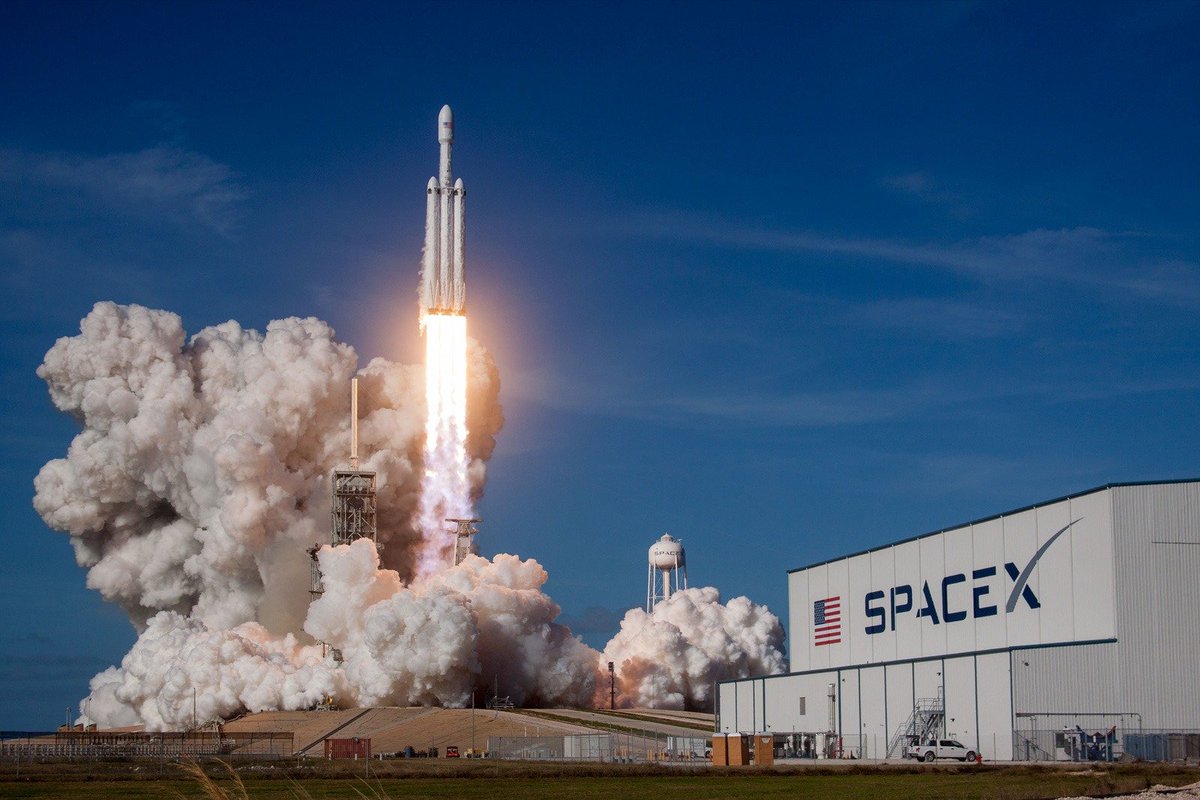
SpaceX goes public next week at a $1.75 trillion valuation. Anthropic just filed to go public. OpenAI is next.
These three companies together are worth $4 to $5 trillion. Fund managers need cash to buy into these listings.
But cash levels are already at their lowest since early 2024. The only way to raise cash is to sell what they already own. That selling is happening right now.
The new Fed Chair Kevin Warsh will also hold his very first policy meeting in 11 days. He was appointed by Trump with the expectation of cutting rates.
He is now walking into a situation where inflation is high, oil is high, and the job market is running hot. Investors do not know what he will do.
When nobody knows what the most powerful central banker in the world will decide in less than two weeks, the safest move is to reduce risk today.
Everything that could go wrong, went wrong at the same time. A hot jobs report, a collapsing ceasefire, a crack in the AI trade, a trillion dollar liquidity drain, and a Fed meeting with no clear outcome.
Google went public in August 2004, and went up 100x from there. But it started at 23 Billion.
Anthropic and Open AI are starting at 1 Trillion.
The difference is not only the valuation, it's the fact that at least 4 players are competing neck and neck for LLMs.
All of them are losing massive amounts of money. Google, in contrast was highly profitable.
AI is going to change the world. But I am not completely convinced about these AI companies.
In contrast, Bitcoin has no competition, and its cheap. All the money printing in the next decade will make it immensely valuable.
Capital markets are funding the AI buildout at historic scale: ~$400B over 6 months. Bitcoin ETFs have seen ~$4B of outflows since May 14, pressuring $BTC. This is a capital rotation, not a Bitcoin impairment. Volatility creates opportunity.
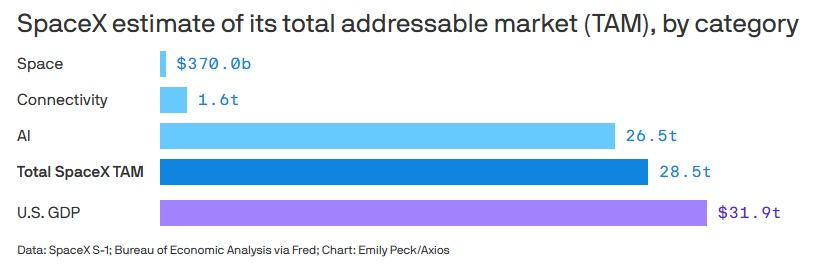
🇺🇸 SpaceX says its total addressable market, meaning the maximum revenue it could theoretically capture, is $28.5 trillion.
That's roughly the size of the entire U.S. economy.
The bulk of it, $26.5 trillion, comes from AI. The Mars colonization revenue potential wasn't even included.
To be fair, SpaceX operates across 164 countries and is building markets that didn't exist a decade ago. Starlink alone rewrote what satellite internet could be.
For comparison, Uber claimed $5.7 trillion in ride-hailing and WeWork claimed $1.6 trillion in office space.
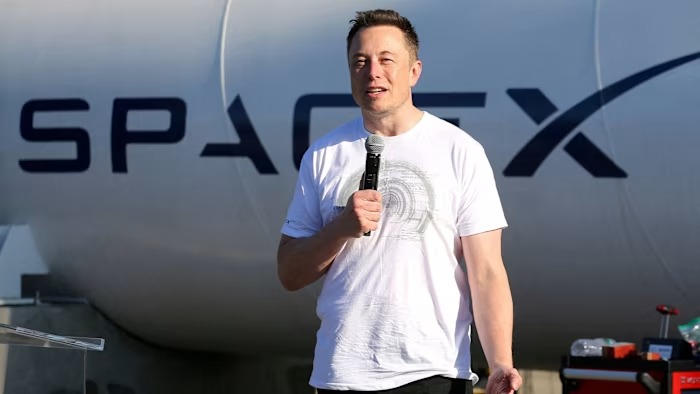
@elonmusk thinks bigger than anyone.
Source: Axios
$1,000 in Bitcoin, ten years ago today: $169,974.
$1,000 in the S&P 500, ten years ago today: ~$3,400.
One of these is "the responsible investment."
The other returned 50x more.
Your financial advisor still won't say its name.
Saylor himself is ultra bullish on $ASST and it makes complete sense.
It is in Strategy's best interest to have as many companies as possible perpetually bidding for Bitcoin alongside them.
More buyers = tighter supply = higher price.
Everyone wins.
🚀ASST MOON MATH🚀
Picture this, kids.
Bitcoin starts at $77,492 today.
Strive owns 15,390.7 BTC.
ASST trades at $18.53.
Current amplification ratio: 43.9%.
Now run the machine.
Assume Strive buys 500 BTC per trading day using SATA once daily dividends are here.
That's only 2,500 Bitcoin per week. Nothing crazy.
That means SATA preferred outstanding grows, BTC stack grows, and the company keeps the amplification ratio locked at today’s 43.9%.
To keep the machine balanced, ASST sells enough common to offset the preferred leverage and fund the 13% annual SATA dividend.
The capital from SATA goes straight into Bitcoin.
The common issuance keeps the structure from getting too top-heavy.
The result is a BTC acquisition flywheel stapled to a tiny equity denominator.
In this scenario, the Strive adds ~123,052 BTC over 5 years with common stock ASST issuance.
Using CEBE math, current common equity effectively owns about 10,358 BTC after senior claims.
That is roughly 14,085 CEBE sats per basic share.
Now assume Bitcoin compounds at 30% CAGR.
No heroic BTC supercycle fantasy.
No $1 million Bitcoin tomorrow.
Just 30% annual BTC growth and 500 BTC per trading day getting absorbed into Strive’s balance sheet like a financial Roomba eating the global bond market’s anxiety medication.
Projection:
Year 1:
BTC: $100,739
ASST BTC stack: 264,006 BTC
CEBE sats/share: 44,132
ASST: $75.48
Year 2:
BTC: $130,961
ASST BTC stack: 455,249 BTC
CEBE sats/share: 58,458
ASST: $129.97
Year 3:
BTC: $170,250
ASST BTC stack: 602,359 BTC
CEBE sats/share: 69,611
ASST: $201.20
Year 4:
BTC: $221,325
ASST BTC stack: 740,174 BTC
CEBE sats/share: 80,463
ASST: $302.34
Year 5:
BTC: $287,722
ASST BTC stack: 909,238 BTC
CEBE sats/share: 93,023
ASST: $454.40
Starting ASST price: $18.53
Five-year modeled ASST price: $454.40
That is a 24.5x.
Bitcoin does 3.7x in the same model.
ASST outperforms Bitcoin by roughly 6.6x.
Why?
Because the magic is not only BTC price appreciation.
The magic is CEBE sats per share.
Current CEBE sats/share: 14,085
Modeled year-five CEBE sats/share: 93,023
That is the entire thesis.
The common shareholder is riding Bitcoin plus a preferred-funded accumulation engine plus a tiny denominator plus capital structure torque.
Now what if they buy more than 2,500 Bitcoin per week?
What if we get a BITCOIN SUPERCYCLE?
ARE YOU STARTING TO SEE WHERE THIS IS GOING?
STRIVE IS GOING TO RETIRE MY BLOODLINE:
John D. Rockefeller did not invent oil. Michael Saylor did not invent Bitcoin.
What they both understood was that controlling the best asset was not enough. You had to build the machine around it.
Rockefeller built refineries, rail deals, pipelines, and distribution. He took raw oil and turned it into an empire.
Saylor is doing the same with Bitcoin. He is building capital structures, preferred shares, debt markets, ETFs, and public equity around the hardest asset on earth.
Rockefeller accumulated oil before the world fully understood how valuable it would become. Saylor is accumulating Bitcoin before the world fully understands what it is.
One built the empire of industrial energy.
The other is building the empire of digital energy.
The playbook is the same: acquire scarce assets early, build the infrastructure around them, and let the rest of the world arrive late.
DIE EIGENTLICHE WÄHRUNG IST ZEIT.
Die meisten Menschen messen ihr Vermögen in Euro.
Manche irgendwann in Bitcoin.
Aber fast niemand misst sein Vermögen in dem einzigen Wert, der wirklich zählt:
Zeit.
Denn was bringt dir ein „großes Portfolio“,
wenn du trotzdem jeden Morgen aufstehen musst,
um wieder Lebenszeit gegen Geld zu tauschen?
Die wahre Frage ist nicht:
„Wie viel Geld habe ich?“
Sondern:
„Wie viele Jahre Freiheit habe ich gekauft?“
500.000 $ Vermögen bei 1.500 $ Ausgaben im Monat bedeuten nicht einfach „eine halbe Million“.
Es bedeutet:
Fast 28 Jahre Selbstbestimmung.
28 Jahre ohne Chef.
28 Jahre ohne Erlaubnis fragen.
28 Jahre Zeit.
Und jetzt kommt der eigentliche Mindfuck:
500.000 $ sind nicht überall gleich viel wert.
Eine halbe Million in der Schweiz kann bedeuten,
dass du weiter im Hamsterrad bleibst.
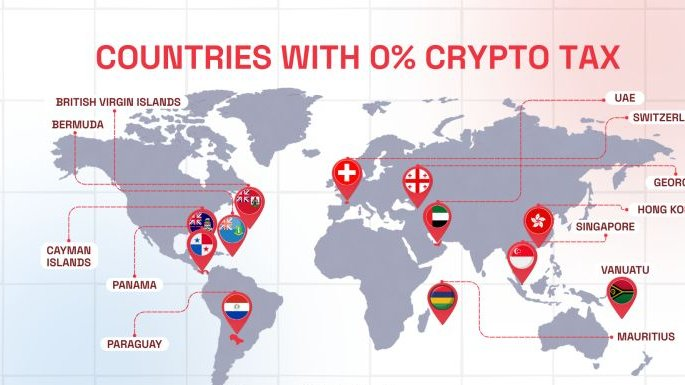
Die gleiche halbe Million in Paraguay, El Salvador oder Teilen von Mexiko
kann plötzlich Jahrzehnte Freiheit bedeuten.
Und genau deshalb verstehen viele Bitcoin irgendwann anders.
Am Anfang misst man Bitcoin in Fiat.
Dann misst man Fiat in Bitcoin.
Aber die letzte Stufe ist:
Man misst Bitcoin in Lebenszeit.
Denn Bitcoin hat etwas verändert,
das Fiat langsam zerstört:
Die Fähigkeit, Zeit zu speichern.
Wer seine Kosten niedrig hält
und gleichzeitig in einem Asset spart,
das langfristig härter wird,
kauft sich nicht einfach Rendite.
Er kauft sich Optionen.
Freiheit.
Lebenszeit.
Die eigentliche Währung war nie Euro.
Nie Dollar.
Sondern Zeit.
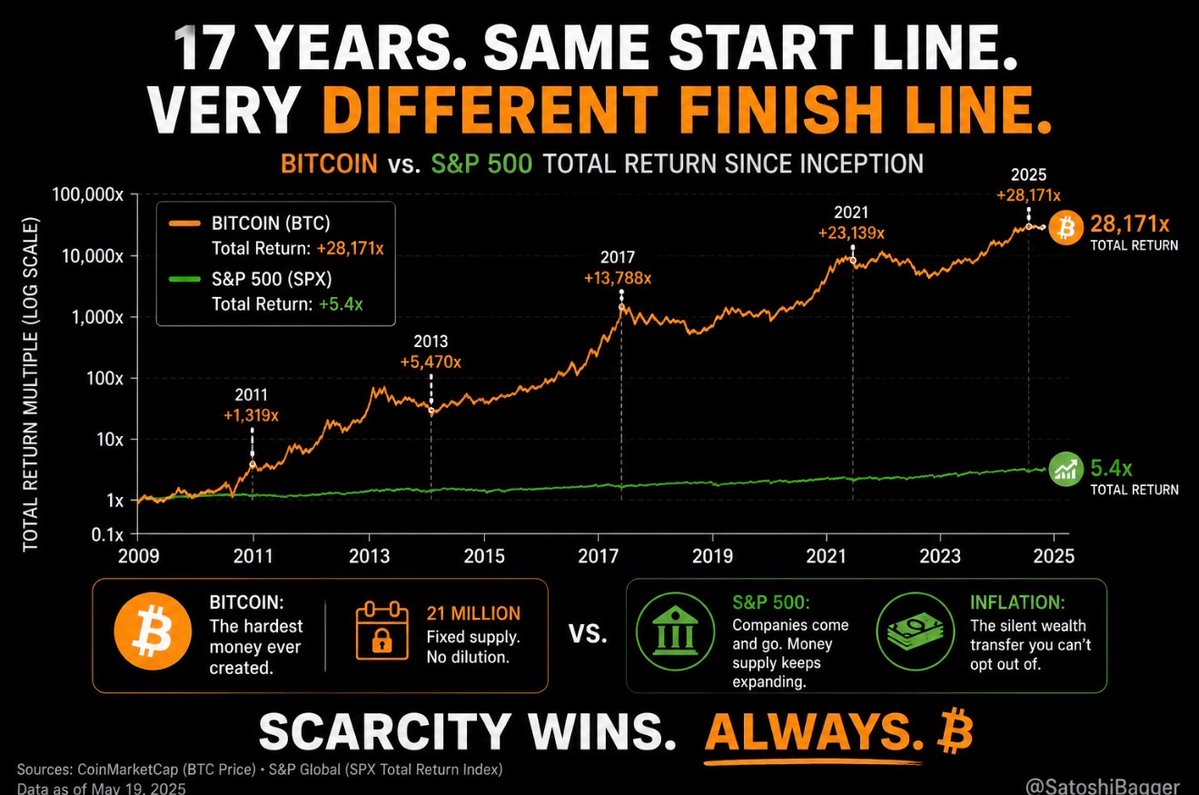
Bitcoin started at zero.
No government.
No CEO.
No marketing department.
No bailout.
Just open-source code and absolute scarcity.
17 years later:
• Bitcoin: +28,000x
• S&P 500: +5x
The market keeps rewarding the same thing:
assets that cannot be diluted.
Scarcity wins.
Every single cycle.
🫡
$10 per day into Bitcoin = about $300/month.
That doesn’t sound impressive.
But over 10 years, that’s $36,000 invested.
Most people underestimate consistency because the results look small at the start.
The same way people underestimate debt, inflation, and bad spending habits.
Compounding works both ways.🔸
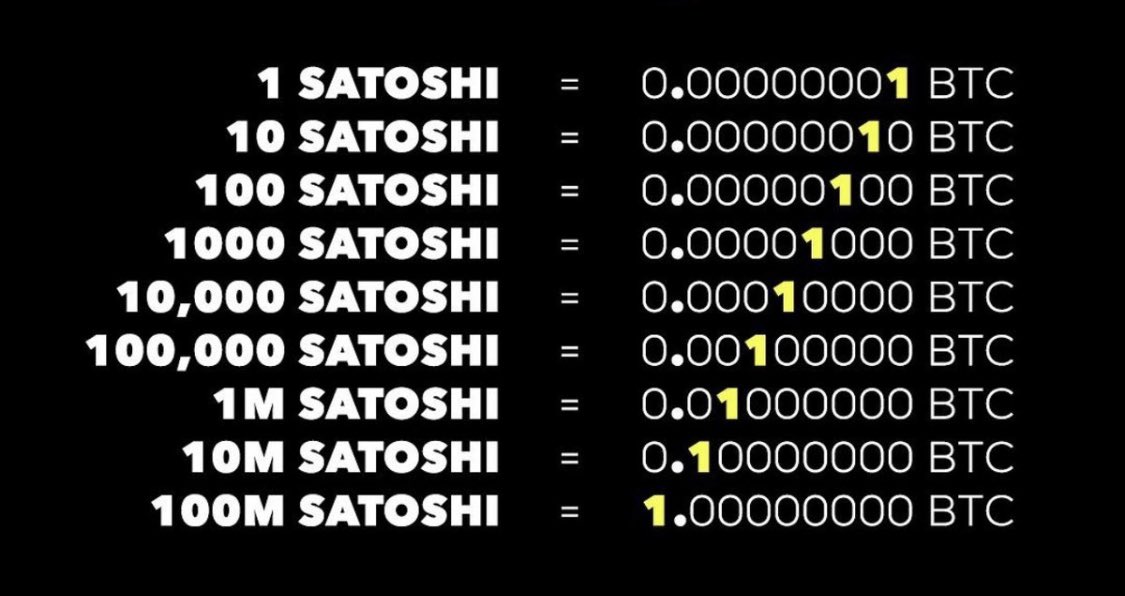
Most people STILL have no idea that you can buy fractions of Bitcoin
I was talking to a friend about BTC today, and he asked, "How am I supposed to buy a $80,000 worth all at once?"
I told him that he can buy fractions
You can buy as much more as little as you want to
There are people in low income countries who are buying $2-$3 worth of Bitcoin a month
It won't make you rich overnight, but it'll be savings that you can rely on in the future, and your purchasing power will go up
🇺🇸 Elon just locked in a deal to buy Cursor for $60 billion.
SpaceX has the option to acquire Anysphere, Cursor's parent company, before the end of the year.
If they walk away, SpaceX still pays $10 billion "for their work together," basically one of the largest termination fees in history. Which tells you they have no intention of backing out.
Cursor does $2 billion in annualized revenue and its users are mostly elite software engineers, exactly the kind of customer base Elon wants heading into SpaceX's summer IPO.
The combined group is expected to hit $1.75 trillion at listing, the largest flotation ever.
@elonmusk now has space, satellites, AI, social media, and the world's most popular coding tool under one roof.
What he's cooking up will be wild.
Source: Financial Times
JAPAN JUST CLASSIFIED BITCOIN AS A FINANCIAL PRODUCT.
The world's 4th largest economy.
125 million people. Fresh crypto tax cuts.
And now Bitcoin has the same legal status as stocks and bonds.
Every Japanese pension fund.
Every Japanese bank.
Every Japanese institution.
Just got the green light.
You thought you were bullish enough.
You weren't even close.
#Bitcoin – What’s Next?
The Big Sunday Report: All We Need to Know
🚩 TA / LCA / Psychological Breakdown:
I can't believe that many are now calling that the bottom was in and the bear is over, or even worse that a new ATH is coming. To make it clear, Bitcoin remains in a strong bear market and what we see now is a relief rally within the bear market. Do you know that during the bear market in 2022 Bitcoin went from 68k to 33k almost straight down, then Bitcoin went up from 33k 45% to 48k before crashing down to 16k. Some people with a small IQ, and those who can't understand time frames can't understand this, this is why you notice a lot of comments such as "Weren't you bearish all the time?" "Now you are turning bullish". In fact, I have been calling for 79-84k since the 60s region, and always said it's not off the table and if the market allows to visit it I will short! So we entered spot at 68k once, and a long at 71k another time. If your brain struggles to hold two different timeframes at once, that is not a market problem! Bitcoin is moving within its box I shared in February 2026. Remember the line "Interested to Short here"? We are coming close to this area! And on top we are in a long since 71k and aiming for the targets of 79-84k region! Now I will add something new to the set-up and it's very important to understand this well:
I am placing new long orders at 70k region in case market allows to visit, due to Monday open volatility. This order remains valid and becomes invalid once we hit 79-84k first. In case 79-84k is not hit first, the long order at 70k region remains valid.
I believe that we are within a strong bear market and my shorts from 115-125k remain fully open and I am looking for target 3 which is between 50-56k region! I am confident that we will hit this target in the next 1-2 months! Market makers are preparing a trap, to make the markets look healthy and strong, and are doing everything possible to increase the price with futures rather than with spot purchases. The volume clearly shows a future-driven increase rather than a spot-driven increase, another sign of strong manipulation, and we don't complain but use this as an indicator for our own favor.
The region of 79-84k is very interesting, and within the last 1-2 weeks the region of 82-85k became more interesting as well, and this doesn't change anything in our short orders but it changes the % of how much I am placing at each area, and again education is important and I hope it's understandable for all. Let's take an example of a budget with $100,000 and in this case I would place with a x5 leverage.
$5,000 at $79,250
$5,000 at $80,250
$5,000 at $81,250
$5,000 at $82,250
$10,000 at $83,500
$20,000 at $84,250
$30,000 at $84,500
$20,000 at $85,000
This is an example and shows approximately how aggressive and in what region I am willing to add what, and how much at each region. Also its clear that I am going to close my 71k longs in the same method (Amount) as mentioned above. Many don't understand trading with orders and how you can target an entire area rather than one specific number. In the example shown above you will notice that the region of 84-85k is targeted with most of the aggressive orders, and before with only 30% of the capital. Most are not ready for whats coming and during these days my focus is on the SP500 as well! I am preparing the big short on SP500 and have shorted it from 6400, 6800 and 6900! Planning to add more shorts in the coming days as I believe the big downside move for SP500 is coming soon! And this is when Bitcoin will react and we will see the strong and next leg down. I see the SP500 crash to happen within this quarter, during this times I will keep adding shorts on SP500!
The next weeks will be very important and many will miss out on real time updates and thats where premium is worth everything. It costs $59 / month and thats less than some of the trading fees you are paying! I cant repeat it more often but premium offers insights you are getting no-where else. Join here: https://t.co/Ice9n2tMya
Want to blow your mind with some MSTR math?
Bitcoin is $74,000.
Bitcoin appreciates at a 30% CAGR for 5 years.
Strategy now has 815,061 Bitcoin on the balance sheet.
At a 30% CAGR, Bitcoin would be about $274,757 in 5 years.
That gives Strategy a Bitcoin NAV of about $223.94 billion.
A 1% premium on that NAV would be worth $2.239 billion.
That’s correct.
1.01 mNAV = $2.239 billion in premium.
With a current annual dividend obligation of $1.489 billion, that means a 1% premium in 5 years covers about 1.50 years of today’s dividend obligation.
A 10% premium to net assets would be worth about $22.39 billion.
That is about 15.0 years of today’s dividend obligation.
And that’s using 815,061 BTC, not 1 million.
Now zoom out.
If Bitcoin compounds at 30% for 10 years, Bitcoin gets to about $1.02 million.
If Strategy gets to 1.5 million BTC on the balance sheet by then, that’s a Bitcoin NAV of about $1.53 trillion.
A 1% premium on that would be worth about $15.3 billion.
That alone would cover about 10.3 years of today’s dividend obligation.
Preferred equity inflows put constant upward pressure on Bitcoin per share, constant upward pressure on total Bitcoin holdings, and constant upward pressure on the scale of the premium machine.
If you are bearish MSTR, you either hate Bitcoin or you can’t do math.
There is no other position.
Strategy will be the most valuable company in the world.