Superb breakdown. Also $supra team stop encouraging farming with these pointless car giveaways etc. Farming has been proven time and time again not to grow ecosystems in meaningful ways.
Introducing Anything Max: Vibe Coding that's leaps above Lovable and Bolt
We've raised money at a $100M valuation and built what we believe is the future of vibe coding.
We asked 100 vibe coders to build their apps side by side on Lovable, Bolt, and Anything Max and they rated Anything Max the winner across all 3 categories - accuracy, design, and 'overall'.
Here's why:
• Full-stack control: Max can test backend hooks, branch database states, and debug issues, because Anything owns the full infrastructure.
• Max can load up your app in its own browser and click on all buttons like a human tester to find all edge case bugs, then trace the bug across the stack - could be a frontend, backend, or a database issue (only we can do this, read #1) and autonomously fix it with 97% accuracy.
Lovable and Bolt build prototypes, but Max users are building production-ready apps and already charging money for them.
Blake built a gut biome app to $10K run rate
Anthony built a referral tool to $20k in revenue
Yuri built a suite of apps doing $40K
Build your app with Max: https://t.co/haQw8s04mB
--------------------------------------------
We're hosting a $100K Hackathon to help people grow their app to $10K MRR.
- We'll teach you everything we know about growing to 1M users.
- You'll have 30 days to build a real product in public and get paying customers for it.
If you do it well, you can start the New Year with a functioning business.
Retweet and comment “LFG”, and we’ll send you a $100 discount code and the link to participate
OG L1s are safe bets.
New L1s are where the real upside lives.
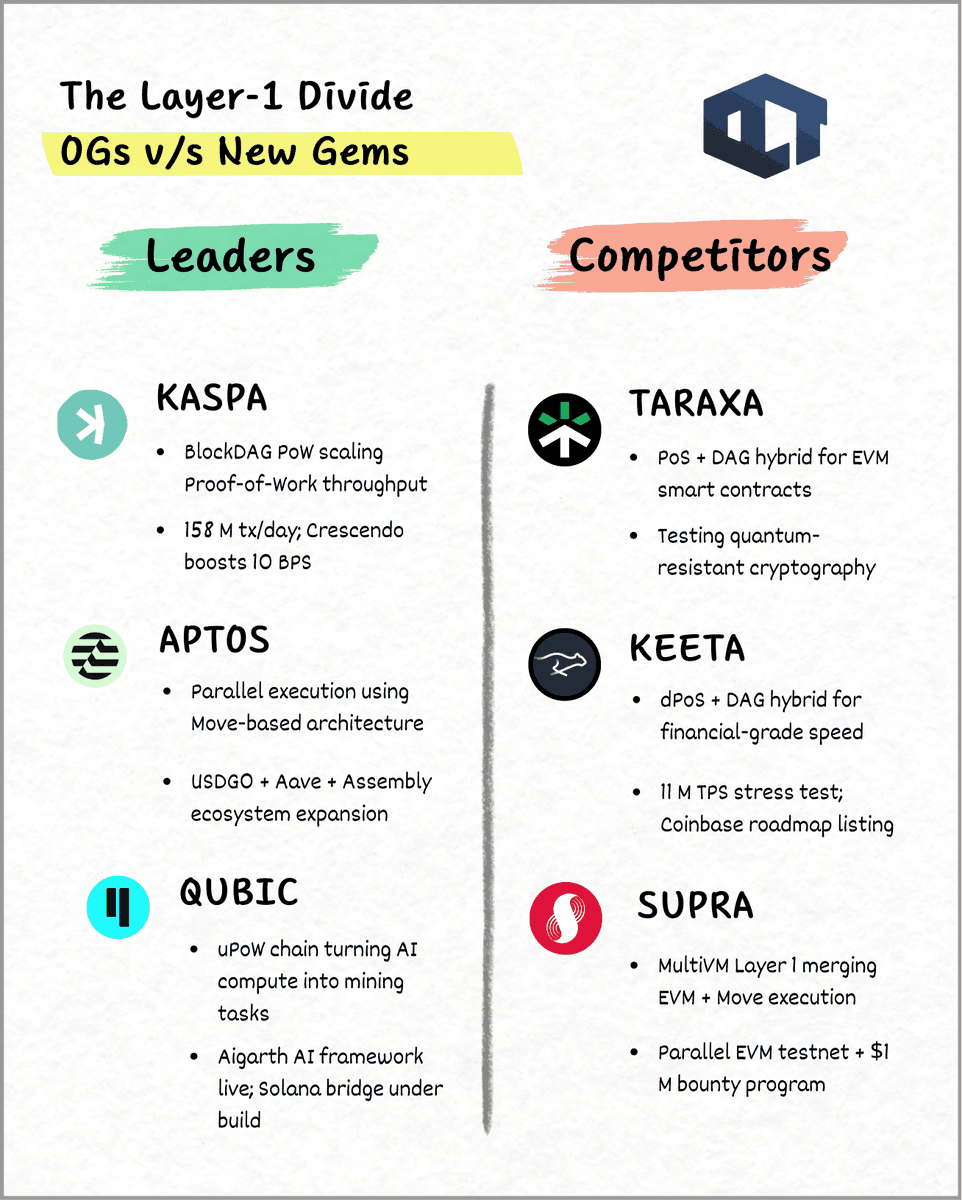
→ $KAS vs $TARA
→ $APT vs $KTA
→ $QUBIC vs $SUPRA
Which ones are setting up for the next 50–100× run?👇
🟢 Kaspa vs Taraxa
✦ Kaspa: the OG of BlockDAG PoW
☞ Vision: Scale Proof-of-Work to thousands of TPS.
☞ Original Idea: GhostDAG consensus for parallel block processing.
☞ Tech Stack: PoW + blockDAG, sub-second block times.
☞ Evolution: Grassroots, fair-launch, miner-driven growth.
☞ Recent Behavior: Processed 158M transactions in one day (Oct 2025); Crescendo Hard Fork boosted to 10 blocks per second.
Kaspa shows PoW isn’t dead it just evolved.
By using GhostDAG, Kaspa lets blocks confirm in parallel, hitting 3,500 TPS live on mainnet.
That’s unheard of for PoW.Its “vProgs” proposal takes this further: apps can run heavy logic off-chain but still prove correctness with ZK proofs, keeping the base layer lean.
Kaspa feels like Bitcoin’s ideological cousin, but with cutting-edge performance.
✦ Taraxa: the Challenger
☞ Vision: EVM-compatible blockDAG for mass adoption.
☞ Original Idea: PoS + DAG hybrid for scalable smart contracts.
☞ Tech Stack: PBFT consensus, DAG ledger, full EVM compatibility.
☞ Evolution: Built a growing ecosystem with strong wallet and tx growth.
☞ Recent Behavior: Surpassed 1M mainnet holders (Sep 2025); testing quantum-resistant cryptography.
Taraxa is the “quiet overachiever.”
While Kaspa dominates headlines, Taraxa quietly climbs adoption charts: 916 million transactions per month and nearly 1.5 million active wallets.
That’s not theory that’s traction. Add in work on quantum-resistant cryptography, and Taraxa is preparing for the future too.
With EVM compatibility baked in, developers can bring apps directly over.
It’s less ideological than Kaspa, but far more accessible.
Comparison: Kaspa leads with PoW innovation + decentralization. Taraxa leads with real adoption metrics, developer friendliness, and quantum-ready tech.
⚫ Aptos vs Keeta
✦ Aptos: the OG of High-Throughput Chains
☞ Vision: High-throughput Layer 1 for mainstream adoption.
☞ Original Idea: Parallel execution using the Move language.
☞ Tech Stack: PoS with BFT consensus, Block-STM parallelism.
☞ Evolution: Born from Meta’s Diem learnings; focused on safety + UX.
☞ Recent Behavior: USDG0 stablecoin integration with Paxos (Nov 2025); Aave incentives launch (Nov 2025); Aptos Assembly builder program (Oct 2025).
Aptos came in swinging with a modern toolkit.
Its Move language and Block-STM parallel execution let it process transactions faster and safer.
While others scale gradually, Aptos skips ahead giving devs throughput upfront.
Its integration of USDG0 positions it as a hub for regulated stablecoin liquidity in DeFi.
Aptos isn’t just faster it’s betting on interoperability as its growth story.
✦ Keeta: the Challenger
☞ Vision: Finance-first blockchain banking platform.
☞ Original Idea: dPoS + DAG hybrid built for extreme throughput.
☞ Tech Stack: Delegated PoS validators, DAG ledger concurrency.
☞ Evolution: Focused on compliance + financial-grade performance.
☞ Recent Behavior: Mainnet launch (Sep 2025); 11M TPS stress test; added to Coinbase listing roadmap.Keeta is swinging for the fences.
A verified stress test showed 11 million TPS across 30 million accounts numbers no one else comes close to.
With Coinbase adding it to the listing roadmap, it’s pushing hard into visibility.Unlike other challengers, Keeta isn’t shy about its ambitions: it wants to be the blockchain for banks and financial institutions, blending performance with compliance.
Comparison: Aptos stands on credibility, DeFi integrations, and long-term resilience. Keeta stands on raw speed, compliance, and market momentum.
🔵 Qubic vs Supra
✦ Qubic: the OG of AI-Powered Chains
☞ Vision: Decentralized AI computation network.
☞ Original Idea: Useful Proof-of-Work (uPoW) for AI tasks.
☞ Tech Stack: Quorum-based consensus, Aigarth framework for self-improving AI.
☞ Evolution: Focused on distributed intelligence and ecosystem growth.
☞ Recent Behavior: Aigarth framework live for self-improving AI (2025); IBW2025 keynote on “Qubic: The Smarter Chain”; MERGE Madrid participation (Oct 2025).
Qubic shows AI and blockchain aren’t separate they’re symbiotic.
By using uPoW, Qubic turns mining into useful AI computation, powering decentralized intelligence.
That’s revolutionary for distributed AI.Its 2025 roadmap pushes infrastructure, security, and multi-chain bridges like Solana integration.
Qubic feels like the bridge between crypto and real-world AI applications.
✦ Supra: the Challenger
☞ Vision: High-performance, vertically integrated L1 for super dApps.
☞ Original Idea: MultiVM support combining EVM and Move.
☞ Tech Stack: Parallel EVM execution, DAG-based elements, AutoFi primitives for on-chain automation.
☞ Evolution: Prioritizes speed, security, and cross-VM compatibility.
☞ Recent Behavior: MultiVM live on testnet with EVM compatibility (Nov 2025); $1M bounty for beating parallel EVM engine.
Supra takes a unified approach to scalability.
Its MultiVM model allows seamless EVM and Move execution, while AutoFi enables automated on-chain processes.
For those, Supra uses advanced consensus for efficiency and quantum-proof security.
Beyond design, its innovations show ambition: faster private compute with Velox and consensus in 2 messages via Sailfish++.
That positions Supra at the intersection of speed, privacy, and future-proofing a bold bet for adoption beyond crypto-native users.
Comparison: Qubic stands apart with uPoW for AI computation and decentralized intelligence. Supra stands apart with MultiVM execution and automated primitives, rethinking scalability from the ground up.
Final Thoughts
The OGs: $KAS, $APT & $QUBIC still set the benchmarks.
They’re trusted, liquid, and have proven resilience.
But the challengers: $TARA, $KTA & $SUPRA are not copycats.
They’re innovating with new architectures, new adoption strategies, and bold performance claims.
BlockDAG Scaling → Kaspa’s PoW innovation vs Taraxa’s adoption + EVM access.
High-Throughput Chains → Aptos’ DeFi integrations vs Keeta’s raw performance + compliance push.
AI-Powered L1s → Qubic’s uPoW ecosystem vs Supra’s MultiVM AI-ready design.
I wasted $6,000 on ads before I found this.
Turns out the best ads all follow the same 100 hook patterns. Just adapted for different products.
I take any hook that already works, plug it into Arcads with my product image, and get a video with AI actors in seconds.
Used to burn through $500 every month testing hooks by guessing.
Now I just copy what's proven and launch the same day.
Comment "HOOKS" and I'll send you the library (must be following)
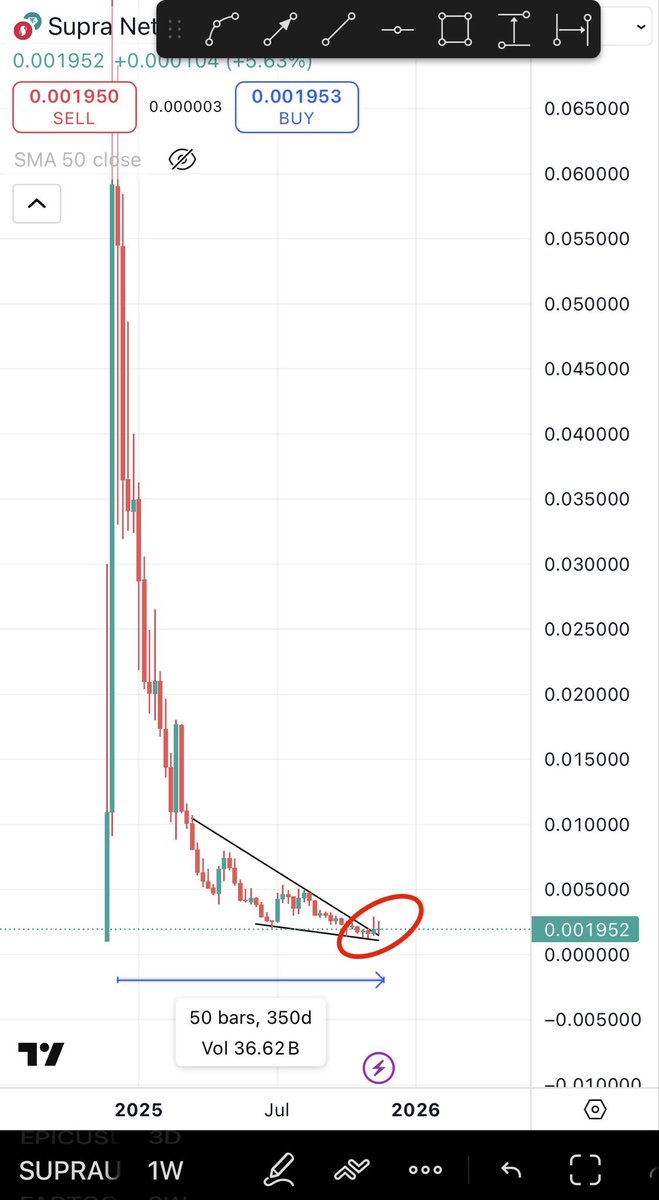
Adding $SUPRA to my midterm holds After this yearlong downtrend breakout 💎.
•Year long downtrend breakout & retest ✅
•Major HTF bullish wedge breakout ✅
•Wedge at the lows often marks bottom ✅
•Great project with a great team ✅
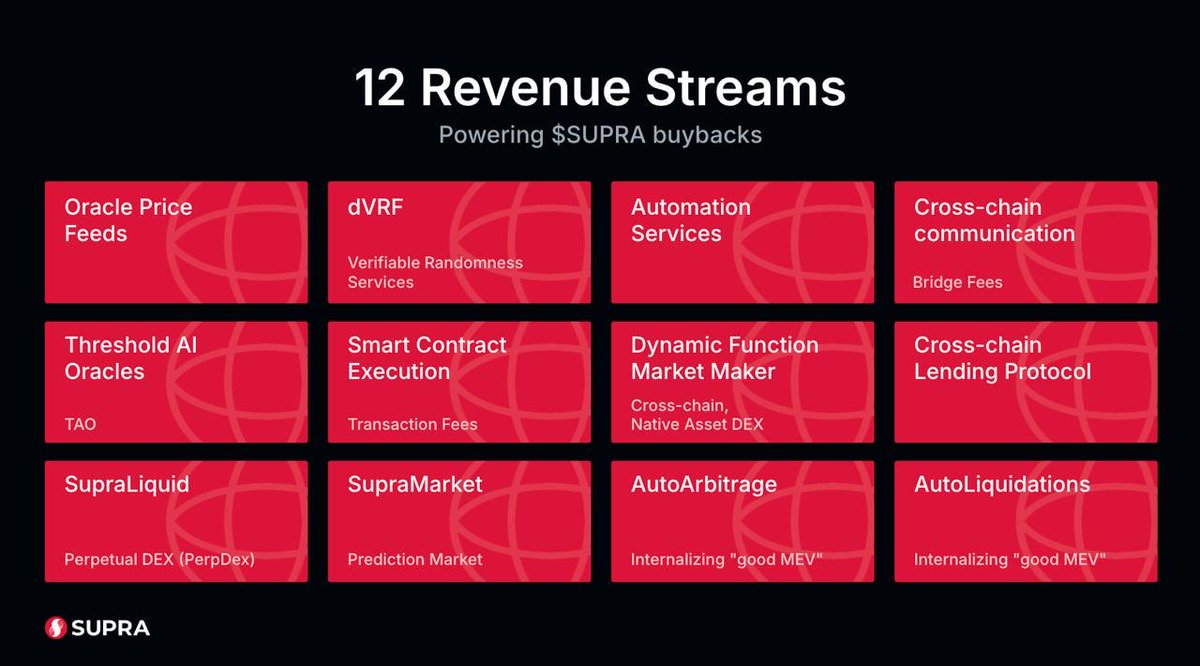
$SUPRA Is an all in one layer-1 with record high speeds of 300,000 tps & 12 different ways to generate revenue which is the most of any other L1 & that will soon be used for buy backs & burns as it is said that they are launching a burning mechanism soon. This can push @SUPRA_Labs to new highs & help maintain an uptrend.
I warned y’all but you weren’t listening.
A lot of FUD under this my formal post from retards.
They so much blinded with FUDing that they missed $SUPRA generational entry I call.
Keep FUD and Jeetn soon you’ll meet us at $1.
The rabbit hole goes deeper than most think on $NPT
Firstly, and to get some perspective even after this recent PA: the price I was quoted 15 months ago was 20 EUR or $23, it's currently sitting just above $7
Check the image attached
With that out the way, the deeper you dig on @NeptuneCash the wilder it gets.
Microsoft's senior researcher Srinath Setty & wider cryptography team is literally building on the same paper that underpins Neptune Cash, and a16'z latest "Lasso/Jolt" systems are derived from it too (1).
Let's go down the rabbit hole 🐰
In 2020, three researchers named Benedikt Bunz, Ben Fisch, and Alan Szepieniec published a paper named "Transparent SNARKs from DARK Compilers" (2). It quietly changed zero-knowledge forever: no trusted setup or logarithmic proofs and real scalability.
Alan took those primitives and turned them into something real with a working system now known as Neptune Cash, built directly on the DARK framework (his own invention).
Then, in 2024-2025, Microsoft's Head of Cryptography - Srinath Setty - published Lasso and Surge. Go read the Lasso paper, it literally cites Alan's paper under ref BFS20 as its core reference for polynomial commitments.
Setty's Lasso = Microsoft Research building on Neptune's underlying cryptography.
a16z Crypto = planning open-source releases of Lasso / Jolt, also citing BFS20, Alan's paper.
You are frontrunning a16z.
To recap:
• Alan Szepieniec co-authors "Transparent SNARKs from DARK Compilers" -> invents DARK compiler
• That tech = the base of Neptune Cash
• Microsoft Research -> exploring it in Lasso
• a16z -> looking to commercialize it
Yet it all stems from @NeptuneCash
___________
Receipts
1. https://t.co/P2l4EocTvo.
2. https://t.co/WAettkMnWT
$NPT Chart looks nice but the tech looks better Substance > hype every time
Scaling + privacy + quantum resistance all on L1
Choose three? Neptune said yes
$ZEC $XMR $ANYONE $ZEN $NOCK
The $ALKIMI Story in three lines:
✅ Top holder revenue on SUI. A metric that can't be overlooked.
✅ When we say all, we mean all! 100% protocol fees are shared with $ALKIMI stakers.
✅ Transforming attention into a currency. Ads that can reward you directly.
All empires repeat the same cycle, says 20th-century historian John Glubb.
He observed that for the past 3000 years every civilization has followed the same 6 stages before decline—what are they?🧵
this is FOMO — a data-powered perp trading app built on smart trader behavior.
now on @HyperliquidX, backed by @DWFLabs.
Final Quest before Closed Beta is live:
🔸 farmed DPS? only Final Quest secures your earnings;
🔹 no? join FOMO now through the Quest
be early ↓