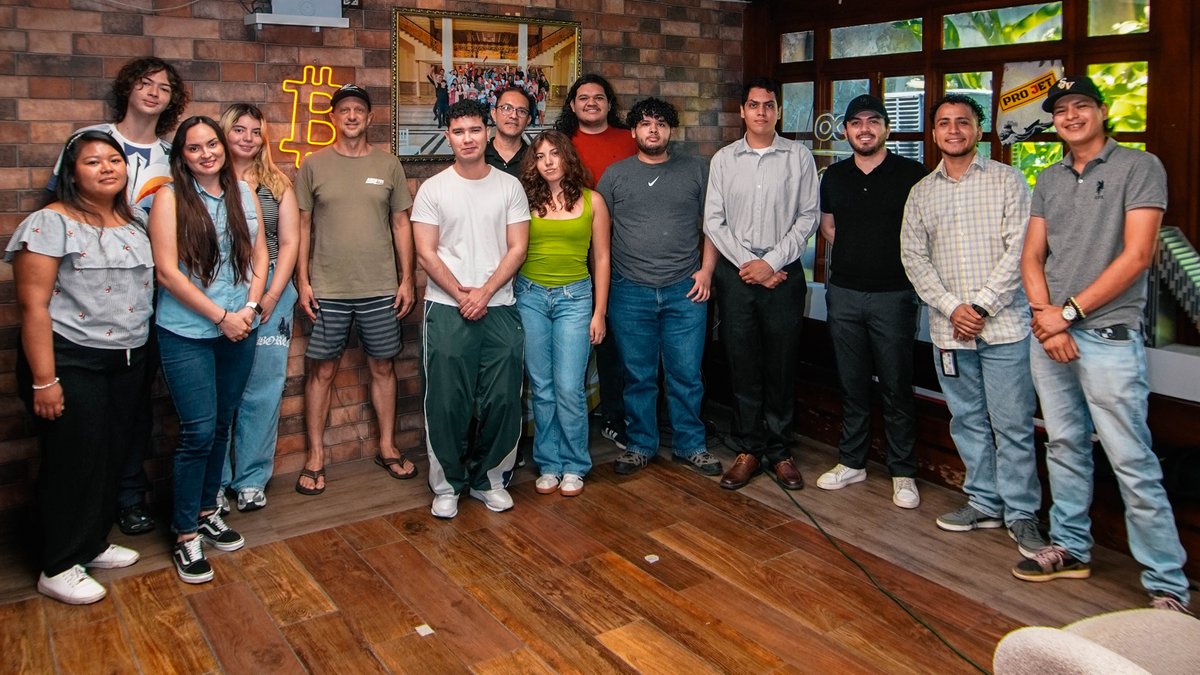
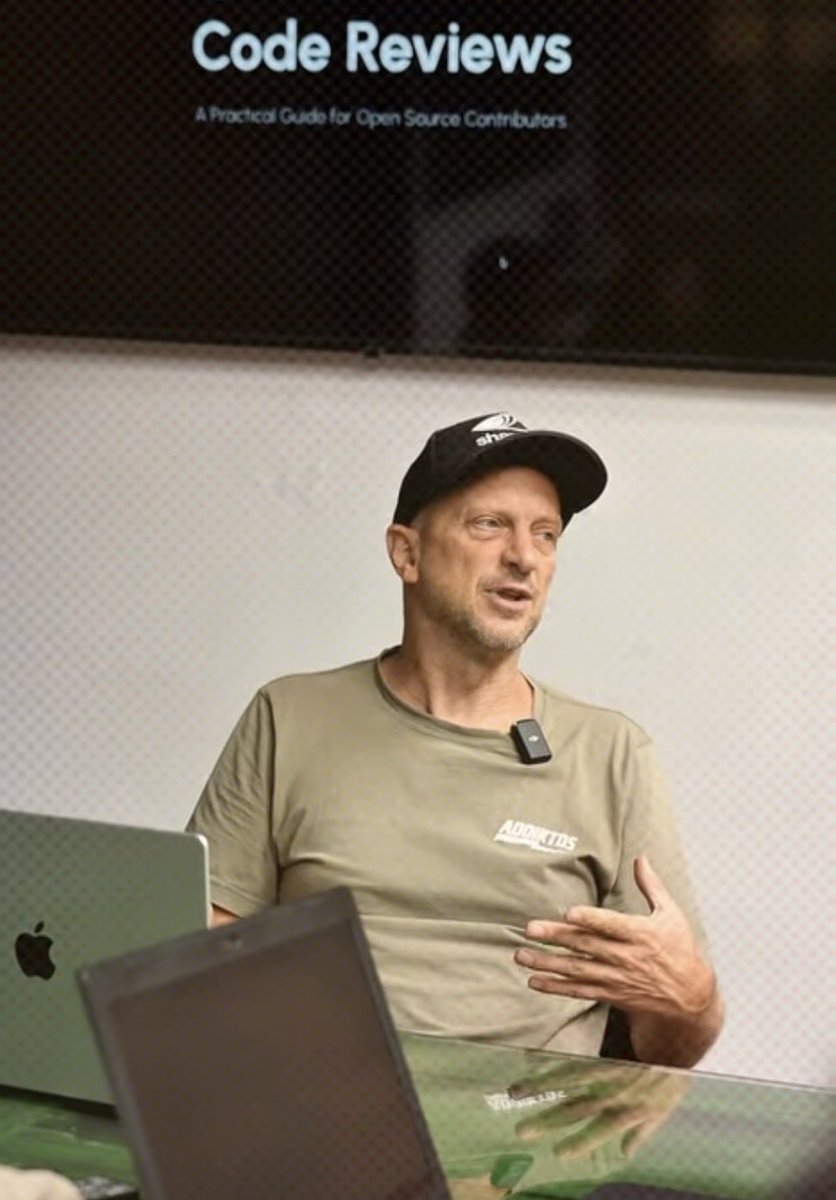
Tomorrow Tom Taber (@TomTaberHODL) teaches a special class at CUBO+ 🐇
Bitcoin Rabbit Holes: the side of Bitcoin few people see, the tech revolution behind it, its impact on society and the future of El Salvador 🇸🇻
📅 Oct 8 · 1:30 PM
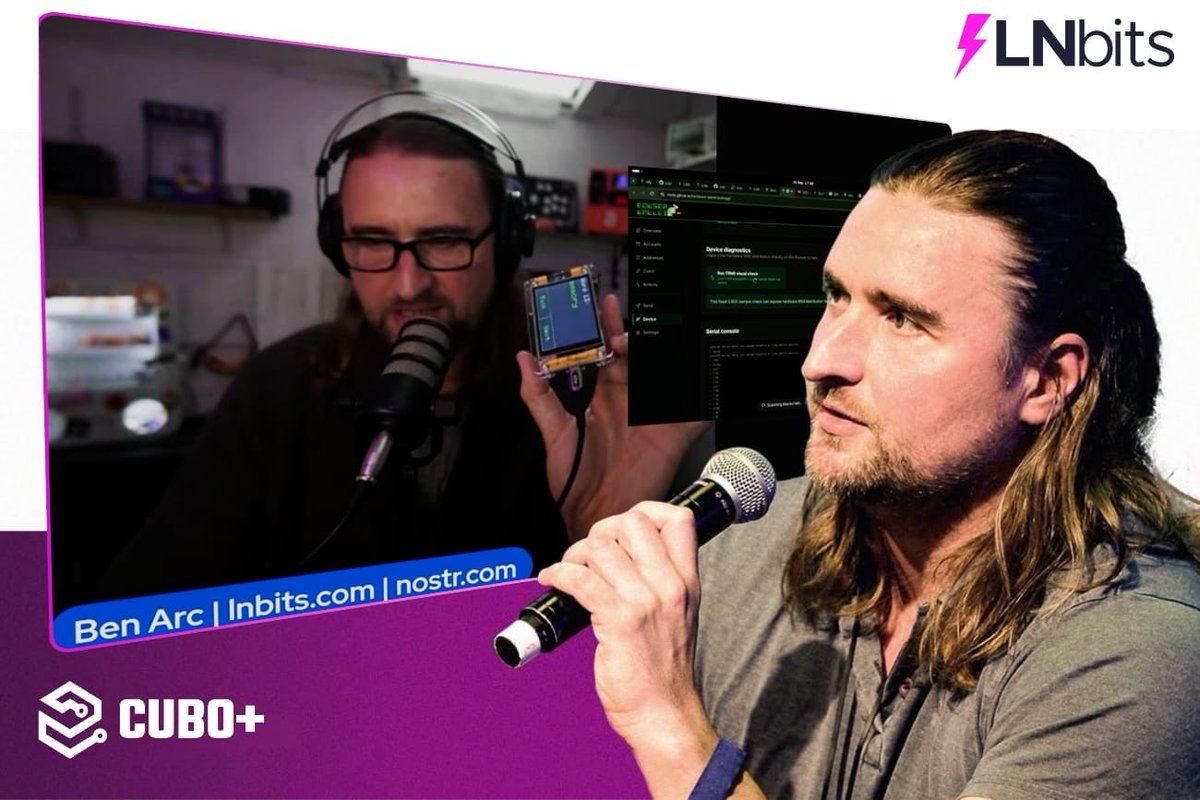
Not every day you get to learn LNbits ⚡️ from its creator.
For this CUBO+ Special Lecture 🎓, @arcbtc joined our students for a deep dive into @lnbits, from how it works under the hood to the best ways to actually use it.
We covered hardware 🔧, integrations, implementation details 💻, good practices ✅, and real-world possibilities 🌎 that go far beyond treating LNbits as just a convenient webhook or interface.
This is what CUBO+ is about: learning directly from the people building the Bitcoin ecosystem ⚡️🧡
21,000 FREE PUPUSAS 🫓🧡
They're back 🔥 After last year's debut, Bitcoin Histórico is once again filling Plaza Gerardo Barrios with pupusas for everyone
21,000 pupusas, a nod to the number every Bitcoiner knows by heart, served free in the heart of Centro Histórico
Locals, visitors, families, first-timers and OG Bitcoiners, all at the same table
Bring your friends, bring your appetite and taste El Salvador the way Salvadorans do 🇸🇻
📅 November 11–12
📍 Plaza Gerardo Barrios, San Salvador
Save the date, tag the friend who never says no to pupusas and spread the word 👇
🌐 https://t.co/BzYUZHZ5QD
👑 BITCOIN HISTÓRICO | 11-12 November
This is more than just another conference.
This is an elevated bitcoin experience, and we are celebrating the good times that strong men have created in the new El Salvador.
The vibes are Philosopher King meets Renaissance 2.0.
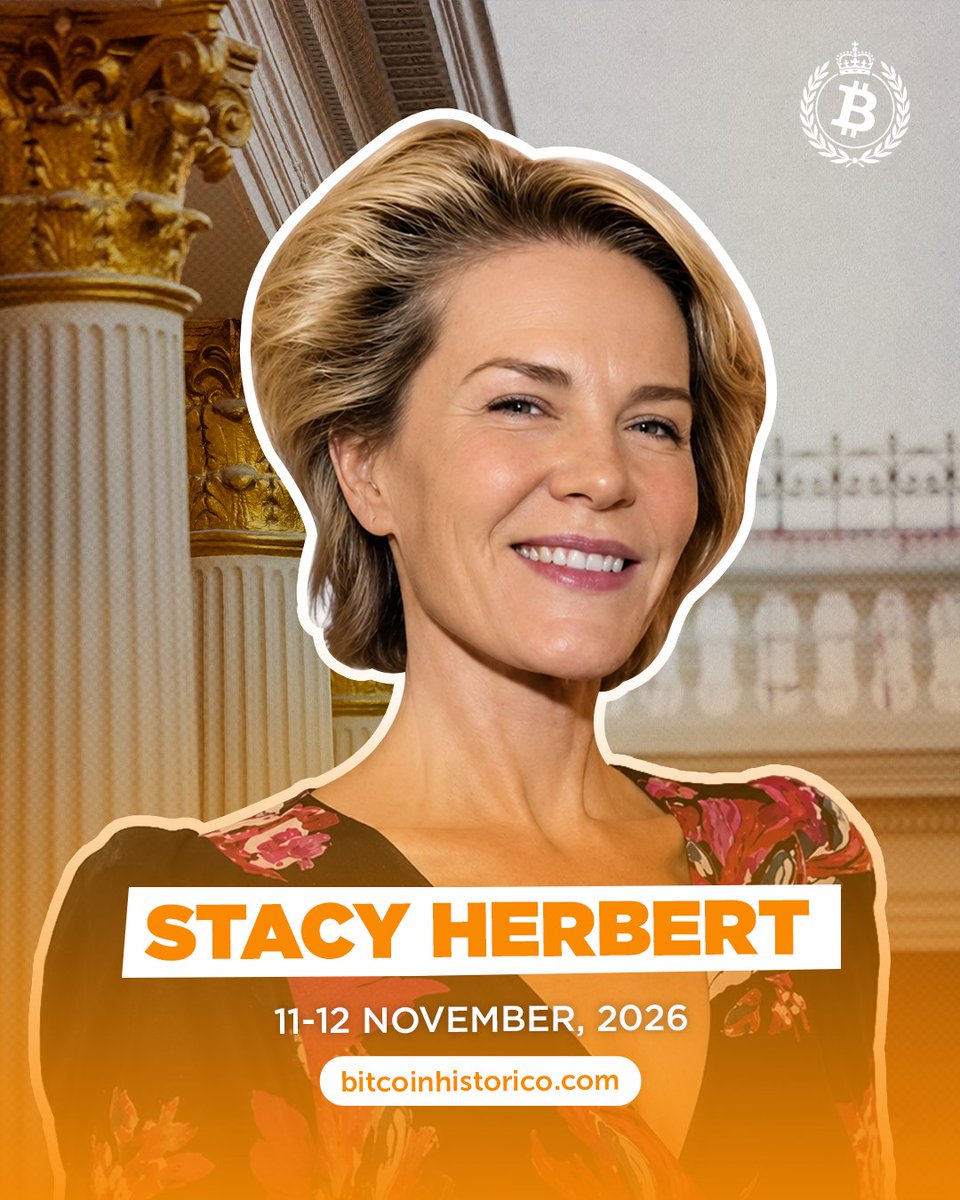
👑 BITCOIN HISTÓRICO | SPEAKER ANNOUNCEMENT
Stacy Herbert (@stacyherbert)
Director of the National Bitcoin Office of El Salvador.
She's one of the very few people who has led Bitcoin adoption at a national level and made it work
While others debated, Stacy built
🎓 Education from kindergarten to civil servants.
✨ Beauty as policy and excellence as the only standard.
🟧 Bitcoin Zones in a library, an airport and CUBOs across the country.
On November 11–12, inside the historic walls of the National Palace, she'll share the real blueprint behind the first country to make Bitcoin legal tender and keep building
A report straight from the front lines of the modern-day Renaissance ⚡
📅 November 11–12, 2026
📍 National Palace, Centro Histórico, San Salvador
🎟️ https://t.co/BzYUZHZ5QD · Code CROWN15
As the director of the National Bitcoin Office of the only Bitcoin Country, I am the world's only expert in nation-state adoption. Facts.
And I will tell you how it's done.
Only at BITCOIN HISTÓRICO.
11-12 November 2026
VIBES: Life. Liberty. Bitcoin.
Meet CUBO+ at Bitcoin Histórico. 🧡⚡
CUBO+ is THE Bitcoin program for young Salvadorans who don't just want to understand Bitcoin, they want to build with it. From generating seed phrases with dice to learning the tools developers use every day, CUBO+ turns curious students into the builders of El Salvador's Bitcoin future.
Come meet the students, the mentors and the energy behind the program that's putting Bitcoin in the hands of the next generation.
📍 The National Palace, San Salvador
📅 November 11–12, 2026
Meet CUBO+ at Bitcoin Histórico. 🧡⚡
CUBO+ is THE Bitcoin program for young Salvadorans who don't just want to understand Bitcoin, they want to build with it. From generating seed phrases with dice to learning the tools developers use every day, CUBO+ turns curious students into the builders of El Salvador's Bitcoin future.
Come meet the students, the mentors and the energy behind the program that's putting Bitcoin in the hands of the next generation.
📍 The National Palace, San Salvador
📅 November 11–12, 2026
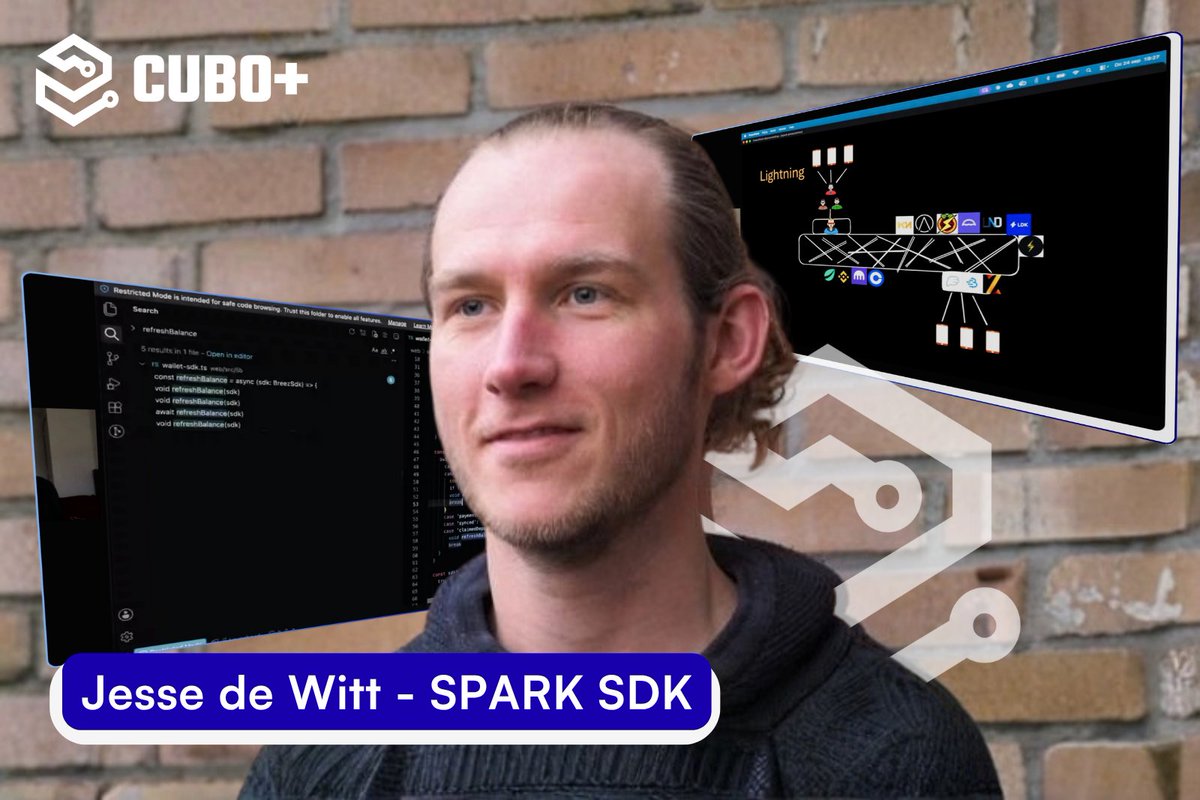
Today's class: Spark SDK with Jesse de Witt ⚡️💻
Jesse broke down why small payments get expensive on-chain (UTXOs + limited block space), and how Spark tackles it: transaction trees and state chains for fast off-chain payments, while you keep the ability to exit unilaterally 🔐
He also covered why Bolt 11 matters: it keeps apps connected to Lightning
Scaling Bitcoin, one class at a time 🧡
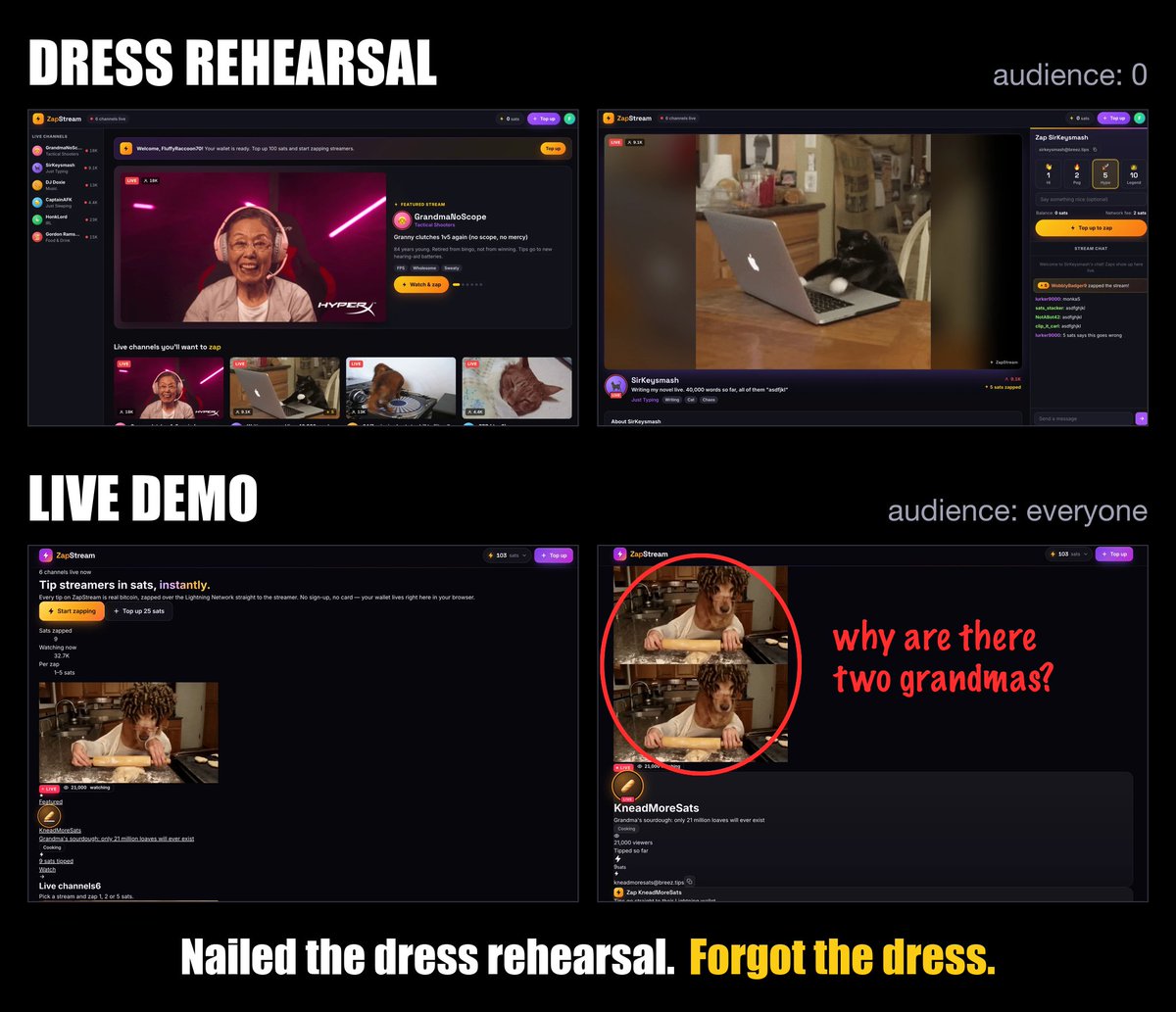
Did a single-prompt app build with Breez SDK during a @cuboplus workshop. The dress rehearsal this afternoon totally nailed it, the live build not so much! Ofcourse, darn demo-gods!
The dress rehearsal even had a playing livechat man!
BUT! The bitcoin part worked obviously!
Howdy folks! 🤠
Time to pull them boots on.
We are mighty proud to announce the inaugural Renaissance Rodeo — a full day of bull riding, barbecue, and good times a-plenty.
It premieres November 13th, the day after Bitcoin Historico. We’ll be celebrating Central American cowboy culture and the renaissance unfolding right before our eyes in El Salvador.
This here’s a welcome for locals, internationals, and the hardworking people in livestock and agriculture who keep this land fed. El Salvador’s growing in sovereignty, prosperity and security by the day — and who better to honor than the men and women who put food on all our tables?
Expect music that’ll get your boots stompin’, a gigantic barbecue, bull riding, horse racing, poker, mutton busting, and a whole heap of other fun to enjoy and join in. Yes. Kids are welcome and will be riding sheep!
We’re much obliged to our sponsors, without whom this rodeo wouldn’t be possible:
👑 Bitcoin Historico
Stacy Herbert and the Bitcoin Office
@btchistoricosv@bitcoinofficesv@stacyherbert
🐮Origin Ganadero
Andrea Hernandez Tobar, Tom Taber and Cole Bolton
@OrigenGanadero
♠️Bitpoker
Cory and Brian
@BitPokerSV
And here’s some good news:
in collaboration with Bitcoin Historico, anybody with a ticket to the conference will receive a free ticket to the Renaissance Rodeo!!!
Folks with boots on the ground in El Salvador can already see the wonderful, positive change this country is in the midst of.
It’s a Renaissance.
And what better way to celebrate that than with a Rodeo?
We’ll be wrangling up weekly updates for y’all in the lead-up to November and Bitcoin Week in El Salvador.
Stay tuned 🎬
Today at CUBO+:
Darvin Otero (@aveotero) led an in-person class on Lightning Network: Instant value.
Students learned how Lightning turns Bitcoin into immediate, usable value.
This is how the next generation of builders gets trained. 🇸🇻🧡
Y con fe inquebrantable el camino del progreso se afana en seguir.
Eso hacemos en CUBO+: formar a la generación que va a llenar el destino de El Salvador y conquistar un feliz porvenir.
Aprender. Verificar. Construir. 🇸🇻🧡
This is exactly why CUBO+ exists. 🧡
Building your own tech company with Bitcoin and AI under El Salvador's innovation law, this is exactly the journey CUBO+ was built to spark.
Proud of what you and @th3labssv are building.
.@cuboplus, @planb_network, and the @bitcoinofficesv changed my life. Bitcoin changed my life. And I don't say that lightly or without basis: my story is just one example of how education changes lives.
I've seen people say the bitcoin project in El Salvador hasn't had any positive impact. But they're only looking at one part of what Bitcoin means. For a long time, the conversation has centered on volatility, on how the asset's price moves. And even that hasn't been a bad thing: once you understand the asset, you understand its core property is scarcity, a fixed supply of 21 million coins that keeps shrinking with every halving. Against that fixed supply, growing demand is mathematically bound to keep pushing its price up over time. What gets missed is that Bitcoin is a tool for understanding the world: a window into how money actually works, and access to a technology that can change and improve how things get done.
The good that's come out of Bitcoin isn't only measured by who made money from it. There's also the shift in mindset, and that's where mine comes in.
I come from a humble town, Chiltiupán, and from a modest family, just my mom, my siblings, and me. I studied in public schools and earned a scholarship to go to university. My life was always built around preparing myself to get ahead: education was always my way of doing that, and the dream of building something of my own was always there too, even though for a long time I couldn't see a clear path to it.
My curiosity led me to Bitcoin. And that's how I learned that talking directly to people like @maxkeiser, @stacyherbert, @giacomozucco, @BitcoinPierre, @peterktodd, and @adam3us teaches you in a way no article ever could. CUBO+ opened my mind and helped me understand I could be more than a reporter, that I could start building my own projects. It showed me the way.
El Salvador has everything it needs to drive innovation. President @nayibbukele didn't just build a successful security strategy, he also laid the groundwork to grow the country's economy. One of the elements that will take this country to the next level is innovation and technology. The laws and the regulatory framework attract foreign investment, yes, but more importantly, they've given salvadorans the conditions to start building.
Today I run my own company, @th3labssv, where we develop our own technology, working with Bitcoin and Artificial Intelligence under El Salvador's innovation and tech manufacturing law. I'm also in the process of building a second startup, this one in real estate. You'll soon be hearing news about @th3labssv and the new projects we're preparing.
Innovation and technology are going to take this country to the next level and grow its economy. I'm sure of that.
This is just my story, but I know the more than 1,000 graduates of CUBO+ and Plan B Network have similar ones, and they're all looking to grow. We're the ones who will lead the new El Salvador.
Grateful to Mike Peterson and the whole @Bitcoinbeach team for the opportunity to sit down and share this story 👇
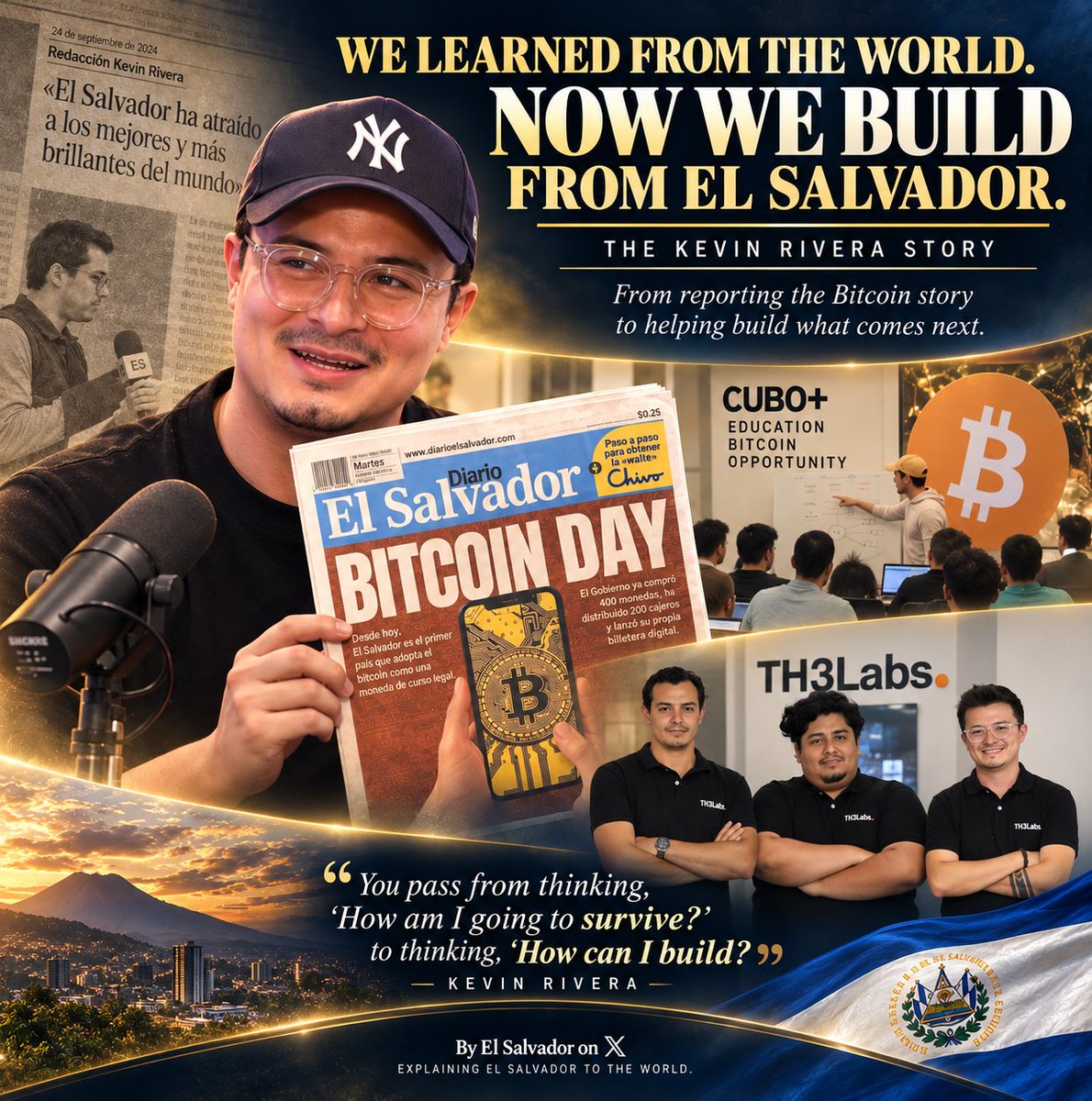
🇸🇻 WE LEARNED FROM THE WORLD. NOW WE BUILD FROM EL SALVADOR.
A Salvadoran journalist set out to understand a technology he needed to write about. That search for knowledge would take Kevin Rivera from the newsroom to CUBO+, from El Salvador to Lugano—and eventually into a Salvadoran technology company of his own.
Kevin Rivera is a Salvadoran journalist, Bitcoin educator and technology entrepreneur whose path into Bitcoin did not begin with plans to start a company.
It began with journalism.
@kealrive22 was working at Diario El Salvador, where he covered economic stories for its De Dinero section. As Bitcoin increasingly entered El Salvador's national conversation, it also became part of the story Rivera was responsible for covering.
But before he could explain it to his readers, he first had to understand it himself.
He remembered hearing that people in El Zonte were using Bitcoin. Curious, he searched online and encountered concepts such as decentralization that initially seemed difficult to grasp.
He kept going.
Rivera read The Bitcoin Standard. He searched for information, followed the people discussing Bitcoin and gradually began putting the pieces together.
Then one encounter changed the pace of that education.
THE INTERVIEW THAT MADE BITCOIN CLICK
In a recent long-form conversation with the Bitcoin Beach podcast, Rivera looked back on those early years and the people and experiences that helped transform his understanding of Bitcoin.
That interview provides part of the foundation for this story, alongside Rivera's earlier journalism, his subsequent work, the creation of TH3Labs—and a connection to his reporting that became personal for us at El Salvador on X.
Rivera recalled seeing that Max Keiser was visiting El Salvador.
Rather than waiting for an introduction, he contacted him directly, introduced himself as a journalist from Diario El Salvador and asked for an interview.
@maxkeiser agreed.
For Rivera, the conversation became much more than material for another article.
He later described having Keiser as his first Bitcoin interview as something of a “blessing.”
Rivera had already spent months reading about Bitcoin, but Keiser's experience in traditional finance helped connect those ideas to money, financial markets and concepts Rivera could more easily place into context.
Things began to click.
The journalist had approached Keiser because he wanted to understand the subject he was covering.
That curiosity would soon lead him much further.
EDUCATION CHANGED THE STORY
Through Keiser, Rivera met Stacy Herbert, whose emphasis on education would become another important part of his journey.
Then came CUBO+.
The Salvadoran Bitcoin education program brought international Bitcoin developers, economists and educators together with Salvadoran students, creating something that went beyond simply teaching people how to use Bitcoin.
Rivera joined its economics track.
And there he encountered an idea that became central to the way he understood Bitcoin:
Start with money.
Students examined the history and concept of money, exchange and the financial system before moving deeper into Bitcoin, financial technology and cryptography.
Rivera summarized the lesson simply:
“You need to understand money to understand Bitcoin.”
But CUBO+ gave him something beyond knowledge.
It changed the questions he was asking himself.
Bitcoin was no longer simply something Rivera needed to understand well enough to write about.
He was beginning to think about what he could create with what he had learned.
And that is where his story begins to become something larger than Bitcoin.
It becomes a story about what can happen when knowledge enters a country, is absorbed by its people—and those people begin building with it.
FROM “HOW AM I GOING TO SURVIVE?” TO “HOW CAN I BUILD?”
Rivera described that transformation in the Bitcoin Beach interview with a sentence that deserves to stand on its own:
“You pass from thinking, ‘How am I going to survive?’ to thinking, ‘How can I build?’”
For Rivera, that change cannot be separated from the broader transformation El Salvador has experienced.
He specifically credited President Nayib Bukele and the country's security transformation with helping establish the foundation for Salvadorans to think beyond survival.
“President @nayibbukele has done an amazing job with that because… security is key.”
Rivera then looked toward what he believes must come next.
After security, he said, Salvadorans are expecting economic development—and his vision is that an important part of that development will come through technology and innovation.
That is not merely something Rivera talks about.
He decided to participate in it.
FROM EL SALVADOR TO LUGANO—AND BACK HOME
Rivera's education eventually took him beyond El Salvador.
He was part of one of three teams that earned an opportunity connected with Lugano, Switzerland. Although circumstances prevented him from making the initial trip, he later traveled there, studied at the @planb_network Hub, met participants from different countries and documented the experience through his journalism.
The significance of experiences like that goes beyond one trip.
For years, specialized knowledge in fields such as Bitcoin, cryptography and emerging financial technology largely had to be sought abroad or learned from international experts.
El Salvador began bringing some of those people and that knowledge directly into the country.
Then Salvadorans began traveling outward, entering those networks themselves.
The question was always going to be:
What happens when they come home?
Kevin Rivera provides one answer.
THE JOURNALIST BECAME A BUILDER
Today, Rivera is a co-founder and Chief Growth Officer of TH3Labs, a Salvadoran-founded technology company working across artificial intelligence, digital-asset infrastructure, cybersecurity and software.
@th3labssv was founded by Salvadorans Marco Suvillaga Schönenberg, Giancarlo Pablo and Kevin Rivera. The company describes itself not simply as a service provider but as a laboratory for innovation and new products built from El Salvador.
Its work includes areas Rivera once reported about from the other side of the notebook: Bitcoin, tokenization, emerging capital markets and advanced technology.
And its ambitions go beyond serving large companies.
The founders have spoken about developing Salvadoran solutions with tangible impact and widening access to technology for micro and small enterprises.
For Rivera, El Salvador's evolving regulatory environment is part of the opportunity. He argues that clearer rules surrounding areas such as digital assets, artificial intelligence and technology give entrepreneurs greater confidence about what can be built from the country.
But perhaps the most important thing Rivera has said about TH3Labs has nothing to do with a particular technology.
It is about identity:
“We are Salvadoran, and that is no small detail.”
And then:
“We want this laboratory to be proof that innovation can also be built right here.”
Three days before El Salvador celebrates its independence, those words carry particular weight.
🇸🇻 LEARNING WAS NEVER SUPPOSED TO BE THE FINISH LINE
There is a temptation to measure El Salvador's Bitcoin experiment primarily through transactions.
How many people are paying with Bitcoin?
How many merchants accept it?
How frequently is it being used?
Those are legitimate questions.
But Rivera argues that they don't capture everything that has happened.
Technology adoption takes time, he says. Meanwhile, another process is occurring that is much less visible:
people are learning.
CUBO+ is one example.
Bitcoin Beach and other community initiatives are another.
And the education is increasingly extending to younger Salvadorans who are encountering concepts involving money, technology and entrepreneurship much earlier in life.
Rivera sees that generation differently.
He sees young Salvadorans gaining tools that previous generations often did not have—and beginning to ask what they can create with them.
That may ultimately prove more consequential than whether someone buys lunch with Bitcoin tomorrow.
Because knowledge compounds.
One Salvadoran learns.
Then teaches another.
That Salvadoran creates something.
Someone else sees it and realizes they can create too.
Eventually, a country begins producing something it once had to import:
expertise.
🇸🇻 THIS STORY IS PERSONAL FOR US, TOO
There is another reason Kevin Rivera's story means something to us at El Salvador on X.
In April 2024, this project had a different name:
El Salvador Translated.
The mission was simple.
We wanted to take Salvadoran news written in Spanish and make it accessible to an English-speaking audience.
So we translated.
Then we began encountering Bitcoin.
Some of the first Salvadoran Bitcoin articles we translated were written by Kevin Rivera.
At first, we were simply doing what our name promised.
Translating.
But there was a problem.
You cannot properly translate something you don't understand.
So we started reading more.
Then learning more.
We wanted to understand Bitcoin well enough to accurately explain what those Salvadoran articles were actually saying.
And somewhere along the way, something unexpected happened.
Kevin was teaching us too.
He didn't know it.
We didn't know where it would lead.
But a Salvadoran journalist who had sought out people from around the world to help him understand Bitcoin was now using his journalism to help other Salvadorans understand it.
We were among them.
Bitcoin led us deeper into technology.
Technology led us toward artificial intelligence.
And eventually our project changed too.
El Salvador Translated became El Salvador on X.
Our mission evolved with it.
We stopped wanting merely to translate El Salvador for the world.
We wanted to:
EXPLAIN EL SALVADOR TO THE WORLD.
That is why Bitcoin and artificial intelligence now occupy such an important place in our coverage.
And it is why readers frequently see names such as @stacyherbert, @bitcoinofficesv, @cuboplus, @cubo_ai, @theaiagencysv, and the Salvadorans participating in these initiatives throughout our reporting.
We mention them deliberately.
Not because a large account might bring us views.
We mention them because their work is part of the story.
If an educational program is helping Salvadorans become developers and entrepreneurs, the world should know who is providing that education.
If an institution is helping Salvadorans gain access to artificial intelligence and advanced technology, the world should know that institution exists.
If people from abroad are transferring knowledge to Salvadorans who can eventually become teachers, engineers, founders and innovators themselves, that chain deserves to be documented.
These programs, institutions and individuals are helping turn the direction El Salvador has taken under its current leadership—toward security, education, technology and innovation—into opportunities Salvadorans can actually use.
Our job is not simply to mention their names.
Our job is to explain what they are helping Salvadorans become.
Kevin Rivera is one example.
🇸🇻 INDEPENDENCE ALSO MEANS BUILDING
As September 15 approaches, there is something particularly fitting about this Salvadoran story.
Independence is something we commemorate through history.
But every generation gets an opportunity to give independence new meaning.
For a new generation of Salvadorans, perhaps part of that meaning will be having the knowledge and confidence to learn here, innovate here, create companies here and build technology from here.
There is no contradiction in learning from the world.
Quite the opposite.
Max Keiser shared what he knew.
Stacy Herbert helped champion education.
International developers, economists, entrepreneurs and Bitcoiners came to El Salvador and taught.
Salvadorans traveled abroad and learned from others.
That knowledge came home.
And then something beautiful happened.
Salvadorans began teaching Salvadorans.
Kevin went looking for knowledge because he wanted to become a better journalist.
Eventually, that knowledge helped him become a builder.
And without knowing it, his journalism helped another Salvadoran understand the same technology.
That's how knowledge takes root.
That's how ecosystems are built.
And perhaps one day, the most important measure of El Salvador's technological transformation will not be how many experts came here from elsewhere.
It will be how many Salvadoran experts, entrepreneurs and builders existed because those doors were opened.
The world shared what it knew.
We learned.
We taught one another.
And now—
🇸🇻 SALVADORANS ARE BUILDING.
From El Salvador. For El Salvador. And increasingly, for the world.
El Salvador on X — Explaining El Salvador to the World.
This article draws in part from Kevin Rivera's long-form conversation with the @Bitcoinbeach podcast. We encourage our readers to watch the complete interview and hear Kevin's story in his own words.
Today at CUBO+
@jonatack showed our students how to start contributing to open source and encouraged them to take the next step: contribute to Bitcoin Core.
Learn the fundamentals. Review. Test. Contribute. Build. 🇸🇻⚡️
This is how the next generation of Bitcoin contributors begins.
Just 2 weeks after our visit to Apopa, we created what would become @cuboplus. After 5 cohorts, the program has changed lives and actually impactd global economic indicators for the country - like national quality of open-source technical talent.
https://t.co/ormkd1umNP
QUOTE @ @cuboplus:
"I think that the most value that CUBO+ brings to the people - it changes their mindset. Because you start to think, "how can I innovate?" "How can I create new things?" So you pass from thinking, "how am I going to survive," to thinking, "what can I build?"