🧬 The Genetic Alphabet: Poetry of Existence
Life’s code is written in four letters — A, T, C, and G. Join CuriosityOrigin as we explore how this simple alphabet composes the poetry of existence.
💫 LIKE ❤️ if DNA amazes you
🔁 SHARE to celebrate the beauty of biology
💬 Comment “GeneticAlphabet” to explore the code of life
#GeneticAlphabet #LifeCode #CuriosityOrigin
H for Histone: Histones are positively charged proteins that act as spools around which negatively charged DNA wraps to form structural units called nucleosomes. By condensing long strands of DNA into compact chromatin, histones play an important role in organizing the genome.
According to the laws of physics, the universe tends toward disorder. Yet, within these microscopic boundaries, particles organize into cells, defying chaos to create structure, purpose, and life. Every cell is a tiny, beautiful rebellion against entropy.
Diabetes reversal is no longer sci-fi.
Scientists just reactivated dormant beta cells and restored insulin production — a powerful step toward natural healing from within. The body’s own code is being unlocked.
Hope just got real.
#DiabetesReversal#FutureOfMedicine
Medical history was just made.
Researchers in the US have officially cracked the code on reversing diabetes. Instead of relying on constant monitoring and external injections, they successfully jumped-started the body's natural defense systems.
The breakthrough centers on waking up dormant pancreatic beta cells. By reactivating these specific cells, the body can organically resume manufacturing its own insulin supply.
It is a monumental shift from managing a lifelong condition to actually biological restoration.
A universal breath of protection.
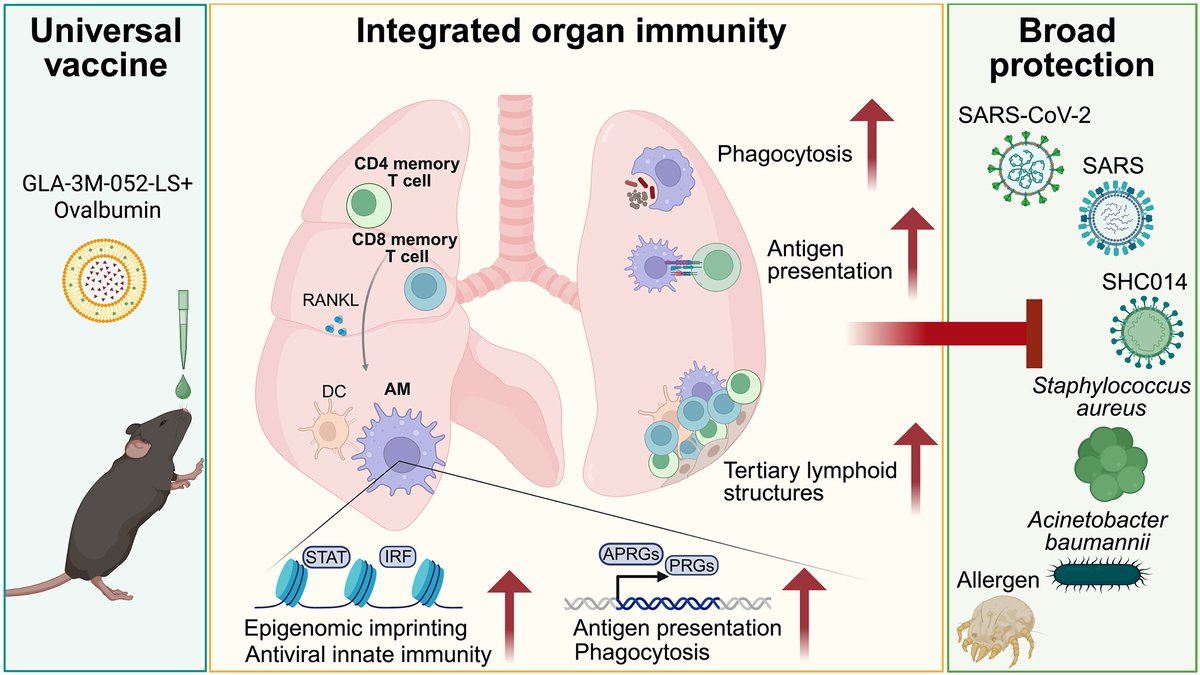
Intranasal vaccine trains the lungs' immune army against viruses, bacteria & allergens — delivering broad defense for months. One spray, layered immunity.
The future of pandemic preparedness just got inhaled.
Science advancing humanity.
A vaccine that could provide protection against multiple pathogens would be invaluable, particularly during pandemics in which knowledge of the causative pathogen is limited.
In a new Science study, researchers found that a nasal vaccine designed to stimulate innate immune cells and T cells provided protection against both viral and bacterial lung infections in mice. https://t.co/SErpKv9RrB
How much do you know about the will and testament of Alfred Nobel?
Watch as Gustav Källstrand tells us about the man and the document that led to the establishment of the Nobel Prize.
In 2031 you will be able to see the will in person at our future home in Stockholm, Sweden.
Learn more: https://t.co/6rmMrweaeb
"We fail much more than we ever succeed. We know that. We accept that. We're amazing at dealing with failure. That's what scientists do."
- 2021 chemistry laureate David MacMillan at the Nobel Prize Dialogue in Brazil
What does failure mean to you?
In the latest issue! Transplantation of encapsulated mitochondria alleviates dysfunction in mitochondrial and Parkinson’s disease models https://t.co/hPFFrxYCNK
The fundamental composition of matter, detailing the hierarchical structure from a macroscopic view down to the most basic known subatomic particles, the quarks.
Calling all teachers! Teach your students about a new form of molecular architecture.
The lesson offers students the chance to learn about the 2025 chemistry prize on metal–organic frameworks. The chemistry laureates have created molecular constructions with large spaces through which gases and other chemicals can flow.
All teacher material is available here: https://t.co/ROk802MDRK
#NobelPrize
Your brain might be tuning into intelligence – not generating it.
Biophysicist Douglas Youvan believes intelligence isn’t something the brain creates, but something it connects to. His hypothesis is that intelligence is a fundamental, non-local property of the universe – existing outside of biology, waiting to be tapped by structures complex enough to interface with it.
This idea draws from quantum theory, where certain properties of a system remain undefined until observed. Much like Schrödinger’s cat being both alive and dead until measured, Youvan suggests that intelligence exists as potential – not locked in the brain, but in an underlying “informational substrate” of the universe.
To explore this, Youvan looks at how biological and artificial systems behave. Enzymes, neurons, and even neural networks in AI often exhibit patterns that are not just reactive but predictive – suggesting they may be linking into rules or information beyond their own architecture. In particular, he notes the fractal geometry of neurons, which mirrors patterns found throughout nature, from river deltas to galaxies. These recursive structures, he argues, may be optimized to interface with information embedded in the fabric of reality.
["The Universe Is Intelligent—And Your Brain Is Tapping Into It to Form Your Consciousness, Scientist Says." Popular Mechanics, 18 April 2025]
From the Biggest to the Smallest: A Dive into the Quantum RealmThe quantum world begins where chemistry ends: molecules—the intricate assemblies of atoms that encode DNA, power enzymes, and sustain life. Zoom inside an atom, and you’ll find electrons dancing in probabilistic clouds around a dense nucleus, a core a hundred thousand times smaller than the atom itself. That nucleus is a bustling microcosm of protons and neutrons, tightly packed and held together by the strong nuclear force—the mightiest interaction in nature. But protons and neutrons aren’t fundamental: each is a trio of quarks, bound by gluons, the massless messengers that glue the strong force together. Yet the journey doesn’t stop. String theory proposes that quarks, electrons, and gluons are not true endpoints but vibrating loops of energy—one-dimensional “strings” smaller than any measurable scale. The way these strings oscillate determines a particle’s mass, charge, and behavior, potentially unifying gravity with quantum forces. From molecules to strings, each layer reveals not just smaller size but deeper complexity. The quantum realm isn’t a quiet void—it’s a symphony of probability, energy, and unseen dimensions. At the smallest scales, we don’t just find particles. We find the code of the universe. Inspired by quantum field theory, the Standard Model, and string theory research.
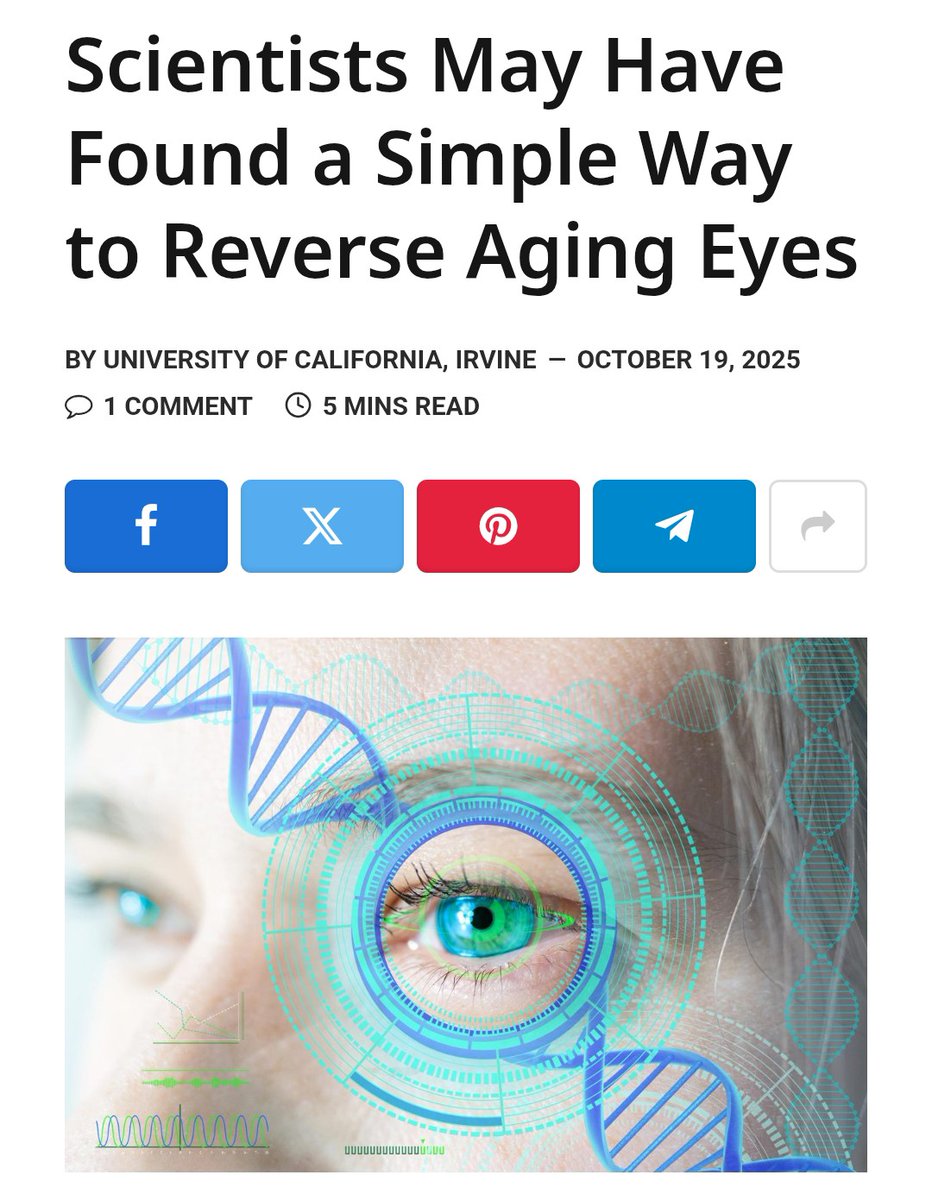
"Scientists at UC Irvine have found a way to restore vision in aging eyes by targeting how the body processes certain fats."
One day - eyes, other day heart, month after that - skin. Full body rejuvenation era is coming.
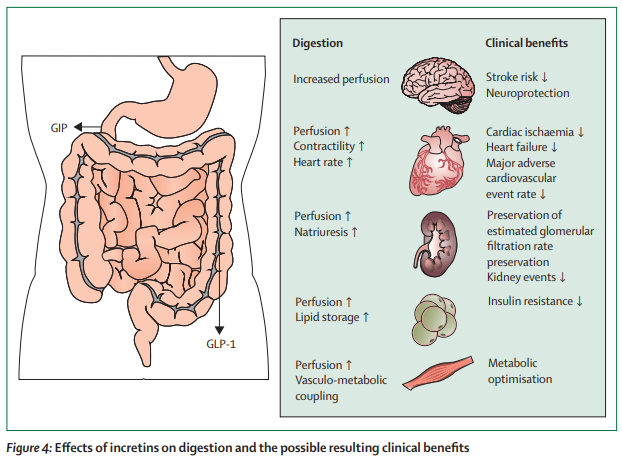
#Incretin hormones—glucagon-like peptide-1 (GLP-1) and glucose-dependent insulinotropic peptide (GIP)—act as a critical link connecting digestion, metabolism, and cardiovascular function, supporting physiological adaptations to nutrient intake https://t.co/6Vaei6pUqb
#GLP-1 #GIP
The low-cost, scalable technology can seamlessly integrate high-speed gallium nitride transistors onto a standard silicon chip. https://t.co/DfWlugo2bj
Today is Global Handwashing Day! Medicine laureate Jules Bordet's discoveries related to immunity helped identify the bacterium that causes whooping cough.
This can be prevented with vaccines, and its spread slowed by washing hands with soap and warm water for 20 seconds.
A newly found organism is challenging our definition of life itself.
Called Sukunaarchaeum mirabile – named after a tiny Japanese deity – this strange organism doesn’t fit neatly into biology’s rulebook. It’s not quite a virus, but not a fully independent cell either. Instead, it appears to live in the grey zone between life and not-life.
Scientists from Canada and Japan stumbled on it while analyzing DNA from a marine plankton species. Within the data, they found a genetic sequence unlike anything they’d seen before. Closer analysis showed that Sukunaarchaeum belongs to the domain Archaea – ancient microbes that are thought to have given rise to all complex life, including us.
Like a virus, it relies heavily on its host for energy and most metabolic functions. Its stripped-down genome suggests it has evolved to focus almost entirely on replication, outsourcing nearly everything else.
That makes it a biological paradox: part virus, part cell, wholly unique.
["A cellular entity retaining only its replicative core: Hidden archaeal lineage with an ultra-reduced genome.” bioRxiv, 2025]
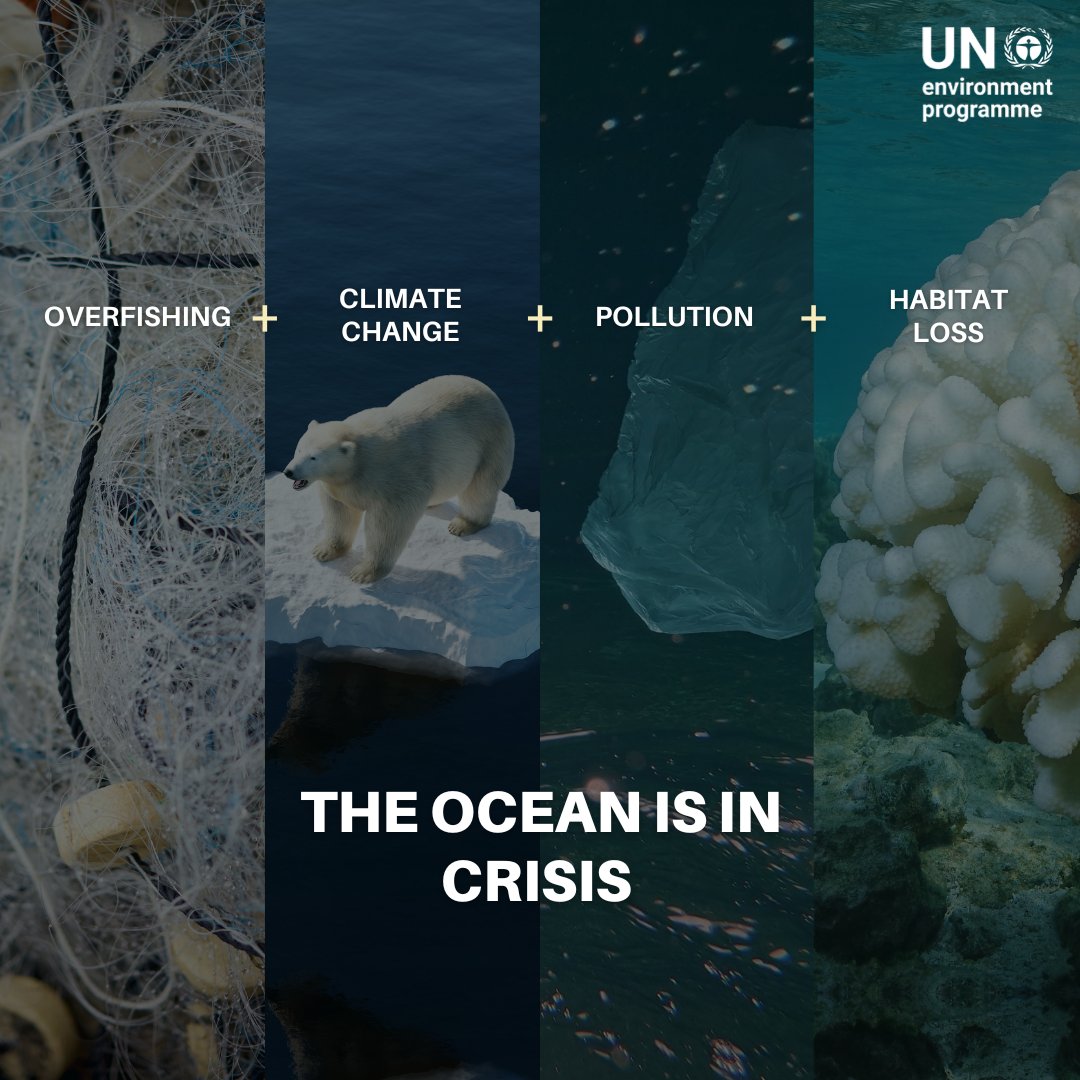
A healthy ocean is vital for people and planet.
Yet, it faces several threats —from pollution and global warming to overfishing.
When our ocean is in crisis, so are we.
We still have the power to protect it. We all have a role to play.
https://t.co/2dShOsQuiz via @UNEP
BREAKING NEWS
The Royal Swedish Academy of Sciences has decided to award the 2025 Sveriges Riksbank Prize in Economic Sciences in Memory of Alfred Nobel to Joel Mokyr, Philippe Aghion and Peter Howitt “for having explained innovation-driven economic growth” with one half to Mokyr “for having identified the prerequisites for sustained growth through technological progress” and the other half jointly to Aghion and Howitt “for the theory of sustained growth through creative destruction.”
#NobelPrize






![Rainmaker1973's tweet photo. Your brain might be tuning into intelligence – not generating it.
Biophysicist Douglas Youvan believes intelligence isn’t something the brain creates, but something it connects to. His hypothesis is that intelligence is a fundamental, non-local property of the universe – existing outside of biology, waiting to be tapped by structures complex enough to interface with it.
This idea draws from quantum theory, where certain properties of a system remain undefined until observed. Much like Schrödinger’s cat being both alive and dead until measured, Youvan suggests that intelligence exists as potential – not locked in the brain, but in an underlying “informational substrate” of the universe.
To explore this, Youvan looks at how biological and artificial systems behave. Enzymes, neurons, and even neural networks in AI often exhibit patterns that are not just reactive but predictive – suggesting they may be linking into rules or information beyond their own architecture. In particular, he notes the fractal geometry of neurons, which mirrors patterns found throughout nature, from river deltas to galaxies. These recursive structures, he argues, may be optimized to interface with information embedded in the fabric of reality.
["The Universe Is Intelligent—And Your Brain Is Tapping Into It to Form Your Consciousness, Scientist Says." Popular Mechanics, 18 April 2025]](https://pbs.twimg.com/media/G4HhBIbWYAAFGIP.png)


![Rainmaker1973's tweet photo. A newly found organism is challenging our definition of life itself.
Called Sukunaarchaeum mirabile – named after a tiny Japanese deity – this strange organism doesn’t fit neatly into biology’s rulebook. It’s not quite a virus, but not a fully independent cell either. Instead, it appears to live in the grey zone between life and not-life.
Scientists from Canada and Japan stumbled on it while analyzing DNA from a marine plankton species. Within the data, they found a genetic sequence unlike anything they’d seen before. Closer analysis showed that Sukunaarchaeum belongs to the domain Archaea – ancient microbes that are thought to have given rise to all complex life, including us.
Like a virus, it relies heavily on its host for energy and most metabolic functions. Its stripped-down genome suggests it has evolved to focus almost entirely on replication, outsourcing nearly everything else.
That makes it a biological paradox: part virus, part cell, wholly unique.
["A cellular entity retaining only its replicative core: Hidden archaeal lineage with an ultra-reduced genome.” bioRxiv, 2025]](https://pbs.twimg.com/media/G3Eit_sWcAAFbrx.png)