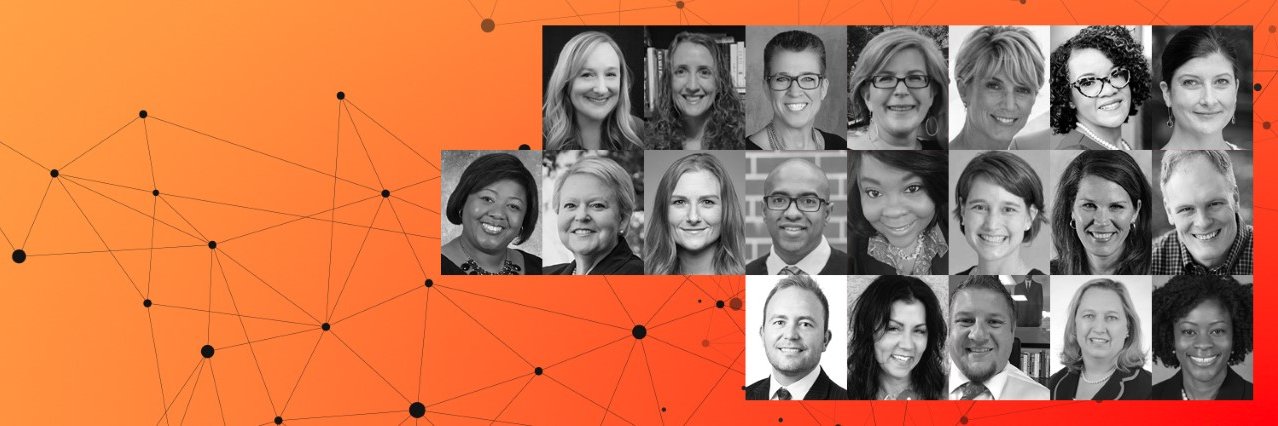
Our Professional Learning Network has been growing!
We're thrilled to introduce a number of new additions to our Squad in recent months – a reflection of the growing use of high-quality curriculum in districts across the country.
#CurriculumMatters
I don’t know who needs to hear this, but I don’t know a single teacher who doesn’t believe in the importance of inquiry and critical thinking. You’d be hard-pressed to convince me otherwise.
What many teachers also understand, rightfully so, based on decades of evidence, is that novices cannot successfully engage in deep inquiry or critical thinking without first building a strong base of domain-specific knowledge.
The problem becomes time.
Course guides, pacing guides, and standards dictate the scope and sequence of instruction, and by the time students have built enough knowledge to meaningfully engage in inquiry and critical thinking, it’s already time to move on to the next unit, concept, or standard.
And yes, I understand that elements of inquiry and critical thinking can and should be embedded into the knowledge-building process. But when students are still in the acquisition and fluency-building stages of the instructional hierarchy, the focus should primarily be on building and strengthening knowledge to the point of fluency and automaticity. Only then can students meaningfully engage in deeper inquiry and critical thinking.
One of the most common practices I use to embed these elements into my instruction, when appropriate and applicable, is visible thinking routines. But again, I only have students engage in these routines when the knowledge necessary for the thinking and inquiry involved has been automated in long-term memory and retrieval strength is high. That allows students to devote their limited working memory capacity to the actual thinking and inquiry demands of the task, rather than to simply recalling background knowledge.
“They were not merely reading words. They were building knowledge.”
@SusanBneuman’s latest is a timely reminder that comprehension grows when students build vocab, language, & knowledge alongside reading skills. Knowledge isn’t extra. It’s essential.
🔗 https://t.co/csxNeZRDhM
Really good summary of the broad research into the cognitive benefits of writing by hand for students by @YoukiTerada at @edutopia.
Some highlights:
The slower, more deliberate pace of capturing ideas by hand, on paper, translates into a sharper recall of details—even days later.
Handwriting notetakers, however, are forced to slow down their minds and focus on broader principles and big ideas, rather than isolated facts, allowing them to connect new knowledge to existing knowledge they’ve already processed.
A deeper analysis revealed that handwriting notetakers were much more likely to add drawings, diagrams, and charts of the material being learned: a sketch of the water cycle, for example, or visual annotations linking concepts together.
https://t.co/UT7WCIHWBk
Something exciting is in the works at TWR. 👀
Our self-paced training is taking off, putting the Hochman Method within reach of more educators than ever. But we know the real revolution happens inside actual school and district buildings, led by the people who know their teachers best.
That's why we are developing a new Facilitator's Guide to help school and district leaders guide their teachers through the self-paced training and turn PLC time into some of the most impactful PD of the year.
We are piloting it in schools right now. Stay tuned. ✍️
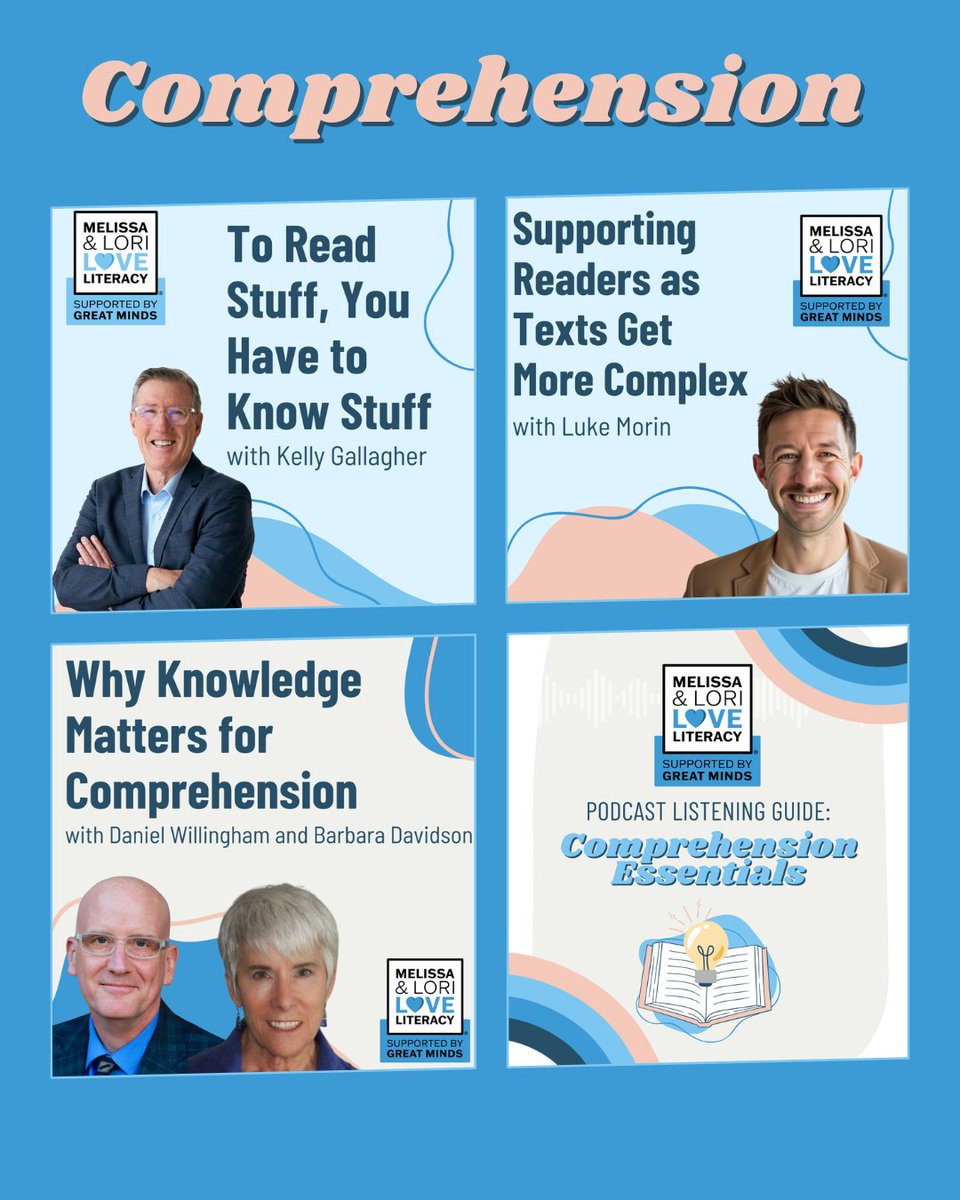
We spent this month exploring one big question: What actually helps students understand what they read?
We created a Comprehension Listening Guide that highlights key ideas from some of our best episodes on reading comprehension. 🎧📚
https://t.co/ltUXi2MJ1L
Another post related to refining curriculum coherence. More issues with curriculum providers.
From my understanding, one of the key characteristics of a true knowledge-rich curriculum, not just in the buzzword sense, is how knowledge intentionally builds and connects throughout units, lessons, and chapters. Today’s lesson is not isolated. It is building on knowledge previously learned while also preparing students to learn future knowledge.
Based on my experience with curriculum providers, including the one I currently use, these characteristics are frequently missing. There are often no intentional or explicit connections made between prior knowledge or or lessons, recurring concepts, and understandings embedded throughout the curriculum.
Because of this, one of my current refinement focuses is putting together a reference page for each unit for both myself and my PLC that helps us intentionally make those connections more explicit.
A school that adopts retrieval practice without understanding the testing effect has not adopted retrieval practice, it has adopted a quiz. Understanding the underlying theory underpinning any strategy is absolutely key to avoiding lethal mutations.
I will be talking about the importance of a shared understanding of how learning happens and how leaders need to lead on this. Honoured to be giving a keynote at the Victorian Government Schools Principals Conference today.
Luke Morin describes “lily pads” as the supports that help students move through a complex text.
Too few lily pads and students struggle to stay afloat.
Too many and they never grow stronger.
In this video, Luke shows what that looks like in practice. https://t.co/8T3QQqcEla
Last week, I highlighted how minimally guided instruction negatively impacted the students I taught. I wish I would’ve known the research on direct instruction and what that actually looks like in the classroom. I hope this post helps clear that up.
https://t.co/xZgXiXJ3zK
My students would love to know an author's purpose question broke the internet.
This book is narrative nonfiction- of course it's illustrated in this (transfixingly!) realistic way.
Glad I added it to the stack 🦋
@natwexler latest edition of Minding the Gap is all about clarity for educators!
Learn about the new AI Evidence Checker and the second edition of @deansforimpact Science of Learning Report!
https://t.co/9Ik0uE9ZDs
Two new resources can help educators navigate the confusing world of education research. @deansforimpact@nsachdeva2019
That's important. But to make real progress, we also need to take a systemic, curriculum-focused approach.
More in my new post:
https://t.co/MdypQskQxE
“For learners w/ lower prior knowledge, explicit instruction should precede inquiry to support schema acquisition, whereas for more knowledgeable learners, inquiry can activate existing schemas…”
This was discussed in S3 of the #knowledgematters podcast!
https://t.co/Q0gzETJHif
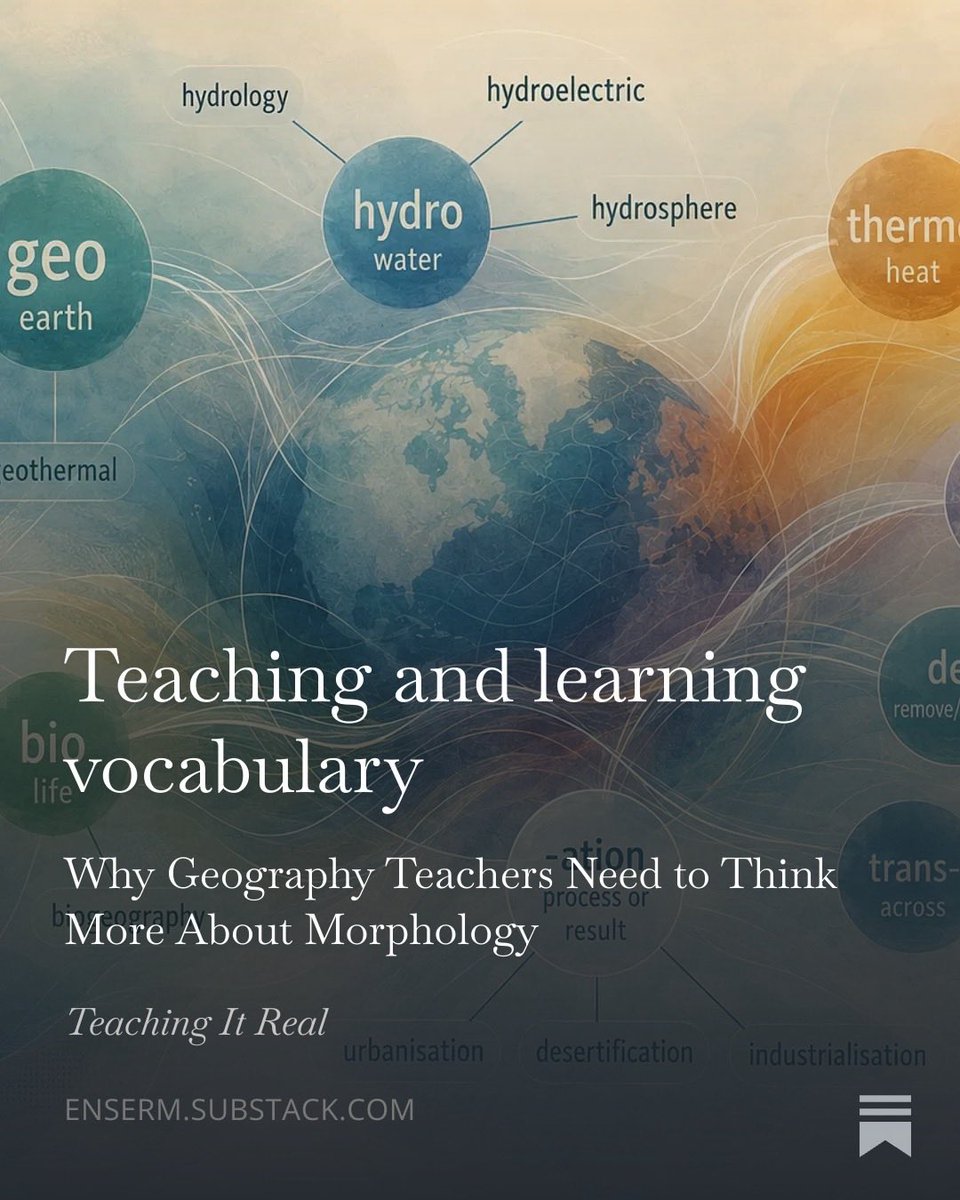
An excellent blog by @EnserMark on ‘Teaching and learning vocabulary’ in geography.
“Once we begin to look for morphology in geography, it becomes impossible not to notice how saturated the discipline is with these patterns.
https://t.co/QpLtdoKFHg
Honored to be a featured guest on Amplify's latest Science of Reading Essentials episode—focused on the science of learning and how its key tenets can improve literacy instruction.
Listen here: https://t.co/88ZVMoZeHn
Knowledge-building and vocabulary-building are not separate goals. The words students learn are tied directly to the content, concepts, and ideas they encounter.
Knowledge matters because language grows through it.
🔗https://t.co/s2rfLOSnQf
As @natwexler recently shared, one of the biggest myths in education is that young kids aren’t interested in “big” topics.
Knowledge-building curriculum keeps proving the opposite.
🔗 https://t.co/03jRr3gzzN