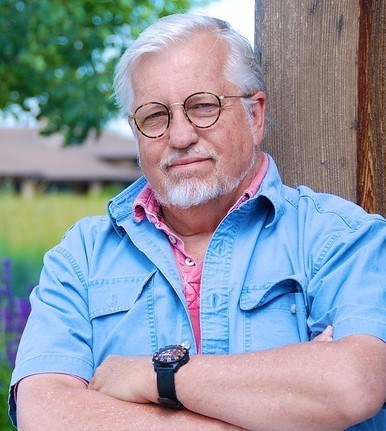
@lesliemack That's an Army JAGC pin. Does not match whatever crest is on his shirt in that AI-enhanced picture. Stop spreading nonsense. Source: I am a retired Army JAG attorney.
@armondboudreaux Bravo! I'll be teaching sections of this (and the Iliad, and other foundational works) to my intro to creative writing class this fall with the premise that good writing is inherently intertextual. Would love to sit in on what you're doing and take notes!
Nolan's Odyssey is in cinemas. Go see it. Then remember this. In 1354 Petrarch was handed a Greek manuscript of the poem and could not read a single word of it. "I am deaf to him," he wrote. Latin Europe had lost its Greek centuries earlier.
The text only survived because Byzantine scribes kept copying it. It only became readable again around 1362, when Boccaccio housed a Greek-speaking scholar from Calabria and had him grind out a Latin version. That is what heritage actually is. Not something you are born holding. Something other people kept for you while you were not looking, and that you still have to learn to read. I hold in high esteem those who cherish their heritage and are able to reproduce the words with passion and conviction.. Here is Boris Johnson reciting the Iliad.
If you have dedicated your life to words and books and literature and language, you have my respect and I will be collegial in all my relations and interactions with you. I think we owe each other that in this strange age, in which our trade, our passion, goes so against the tide
My short defense of Harold Bloom:
I've seen many posts lately about how Bloom was overrated or pompous or elitist or flat out wrong when it comes to literary criticism. All these criticism might be true, at least to an extent. However, my short defense of Bloom is that for the last 40 years of his life, Bloom was in the position of defending the Western Canon completely on his own.
This isn't to say that other academics didn't defend the canon in their small corners of academia. But Bloom was the public defender - and he defended it with gusto. He wrote the books, several books. Hundreds (if not thousands) of articles for national and international newspapers and magazines. He did television appearances and gave public lectures; often as the only person on the dais defending the Western canon against absurd attacks. He didn't have to. He was a well-paid tenured professor at Yale. He could have taught his courses and wrote academic papers no one would read and enjoyed a quiet life in Connecticut. Instead, he willingly embraced his public platform and took cheap shots from charlatans, and in his responses provided the rest of us arguments (or at least the framework for arguments) to take back to our little corners of academia.
In all areas of life, there are people who align themselves with a cause. But there are few who are so dedicated that it becomes their entire personality. Few who dedicate endless pages to the cause.
While some might point to an obscure article written by an obscure academic who made a better defense of the canon than Bloom, my only response would be to note that this person was never seen nor heard. This person did not do the work Bloom was willing to do to put the canon at the center of serious public discussion.
Do I agree with everything Bloom said or wrote or did? Of course not. But he used his popularity, personality, intelligence, and wit to help guide the rest of us in our defense of the Western Canon. I will never have his platform (nor would I ever be able to accomplish what he did), but I do have my little corner of academia. Using the arguments and framework he provided, I am better equipped to defend the canon in my little corner of the world.
End.
At one point we talk about writers' signatures and the stamp you leave on your work and because I am deeply inarticulate and a bit of a hoser I yell with my whole chest "FUCKIN' LET IT RIP BUD" and that's my advice for voice in fiction, you're welcome
Hooly Seint George his hors smote on the syde
Whane he the dragoun sawe lyft up his hede,
And towardes him he proudely gan to ryde
Ful lyche a knight with outen fere or dreede...
Japanese friends! Can you tell me about hanafuda cards? Specifically, any history of divination, or fortune telling, or use of the cards in esoteric settings? Are there scholarly or popular books you can recommend on the subject?
As a Classics undergrad in the US in the late 90s, these editions were rare artifacts, status symbols, flaunted like trophies. We sneered at the Loebs, preferred the OCTs, but coveted the Teubners.
The decline of standards in Western humanities is largely a product of the abandonment of Latin and Ancient Greek proficiency as a basic quality filter.
100%
Carver was revolutionary (or at least reactionary), but aping him is now the default setting in MFAs everywhere. Phil Spector defined at least two decades of pop music production. Hitchcock invented the grammar of suspense in film.
DFW called it. "What the hell is water?"
Wallace is interesting as a stylist because of the way that he attempts to metabolise technical and professional/bureaucratic language. This voice has become so dominant on the internet that I suspect it's hard for younger people to realise how strikingly unusual it was.
Timely reminder of when this guy reviewed that guy...
Iggy Pop on Gibbon's Decline and Fall (Classics Ireland, 1995):
Caesar Lives by Iggy Pop
In 1982, horrified by the meanness, tedium and depravity of my existence as I toured the American South playing rock and roll music and going crazy in public, I purchased an abridged copy of The Decline and Fall of the Roman Empire (Dero Saunders, Penguin).
The grandeur of the subject appealed to me, as did the cameo illustration of Edward Gibbon, the author, on the front cover. He looked like a heavy dude.
Being in a political business, I had long made a habit of reading biographies of wilful characters — Hitler, Churchill, MacArthur, Brando — with large profiles, and I also enjoyed books on war and political intrigue, as I could relate the action to my own situation in the music business, which is not about music at all, but is a kind of religion-rental.
I would read with pleasure around 4 am, with my drugs and whisky in cheap motels, savouring the clash of beliefs, personalities and values, played out on antiquity’s stage by crowds of the vulgar, led by huge archetypal characters.
And that was the end of that. Or so I thought. Eleven years later I stood in a dilapidated but elegant room in a rotting mansion in New Orleans, and listened as a piece of music strange to my ears pulled me back to ancient Rome and called forth those ghosts to merge in hilarious, bilious pretence with the Schwartzkopfs, Schwartzeneggers and Sheratons of modern American money and muscle myth. Out of me poured information I had no idea I ever knew, let alone retained, in an extemporaneous soliloquy I called ‘Caesar’.
When I listened back, it made me laugh my ass off because it was so true. America is Rome. Of course, why shouldn’t it be? All of Western life and institutions today are traceable to the Romans and their world. We are all Roman children for better or worse. The best part of this experience came after the fact — my wife gave me a beautiful edition in three volumes of the magnificent original unabridged Decline and Fall, and since then the pleasure and profit have been all mine as I enjoy the wonderful language, organization and scope of this masterwork.
Here are just some of the ways I benefit:
I feel a great comfort and relief knowing that there were others who lived and died and thought and fought so long ago; I feel less tyrannized by the present day.
I learn much about the way our society really works, because the system-origins — military, religious, political, colonial, agricultural, financial — are all there to be scrutinized in their infancy. I have gained perspective.
The language in which the book is written is rich and complete, as the language of today is not.
I find out how little I know.
I am inspired by the will and erudition which enabled Gibbon to complete a work of twenty-odd years. The guy stuck with things. I urge anyone who wants life on earth to really come alive for them to enjoy the beautiful ancestral ancient world.
Hyperion is, without exaggeration, a far better and more "literary" book than most literary fiction published in the 21st century. RIP to one of my writing heroes.
My dear friend & incomparable author Dan Simmons died Saturday from a stroke at age 77. He defied literary norms, exploring historical fiction, horror, crime & other genres. His must-read titles include THE SONG OF KALI & HYPERION. He was one of a kind.
https://t.co/NcBFT4hBc6