They contained the host. I still had the network.
My CODE BLUE 2026 talk "Pass-the-Device" is now public: slides (EN/JA), 5 recon tools, experimental Sigma + KQL detections.
https://t.co/i9GOCnUofD
The idea: device trust is not device binding.
From one compromised, enrolled laptop there are two routes off the host:
A) copy existing state: cert, cookie, client config
B) enroll a new client with the user's SSO
Both end on a machine with no EDR. Each leaves a different record to revoke.
The goal is practical: to know where the trust boundaries are, to know the limits of what your VPN/SASE solution can do, and to understand which configuration you need.
Two real cases, Cisco and Zscaler: host isolated, account disabled, and the second session stayed alive. A fresh VPN/SASE enrollment is persistence outside EDR.
Three checks for defenders this week:
1. Do your VPN/SASE, enrollment and IdP logs reach the SIEM at all?
2. Compare every device enrolled in the last 90 days with your managed-device inventory.
3. Add one line to the IR playbook: end the user's VPN/SASE sessions and revoke the enrollments, not only the host.
Thank you @codeblue_jp.
#codeblue_jp #codeblue2026
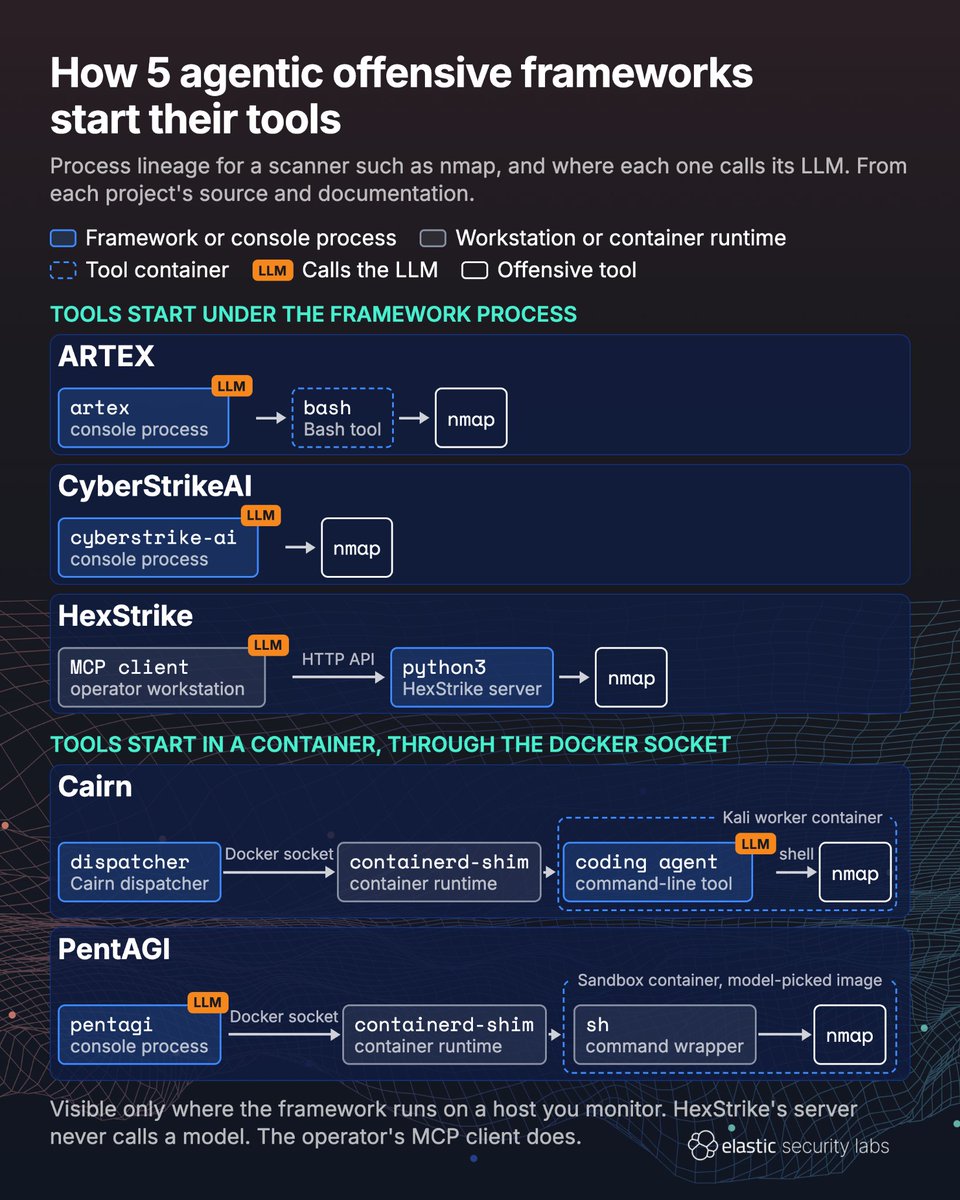
5 agentic offensive frameworks skip in-code authorization by default.
ARTEX, CyberStrikeAI, Cairn, PentAGI, and HexStrike put an LLM in the planning loop around familiar scanners, shells, and cloud CLIs, and GTIG observed ARTEX acting in bursts of roughly 2 to 25 seconds.
All 5 have already turned up in real intrusions, across reporting from GTIG, Mandiant, Microsoft, and our own research.
We read their source and the public incident reporting to work out what reaches defender telemetry. Research by @stryker0x: https://t.co/PPBzAI94hF
• Why IOC and User-Agent detections go stale while behavior-based rules hold up
• Tempo and sequence signals per identity for short bursts and long campaigns
• An ES|QL hunt for tool-family bursts across web, proxy, and cloud audit logs
• Why blocking a source IP must be paired with credential/session revocation
Every action these frameworks take still has to land in telemetry you already collect.
More intel from the @pwnDefend Lab!
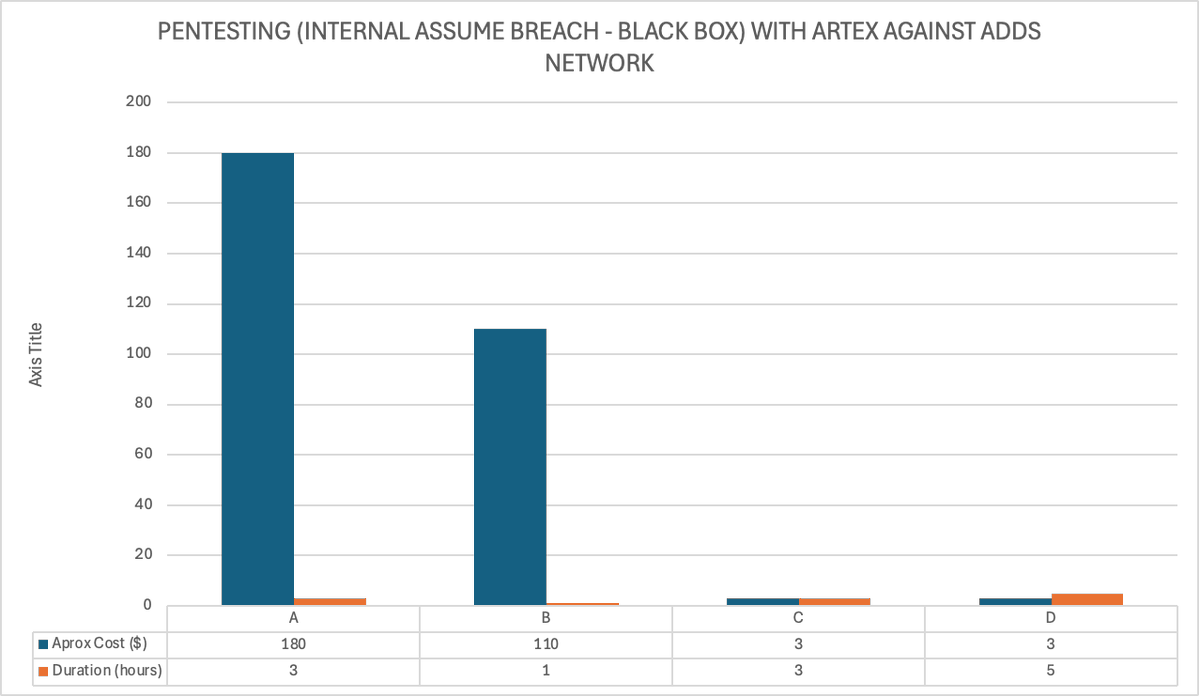
Testing with ARTEX using different models:
Pentest A - OPUS 4.6/4.8
Pentest B - OPUS 4.8
Pentest C - Deespeek Flash (DeepSeek-V4.1-Flash-1017)
Pentest D - Deespeek Flash (DeepSeek-V4.1-Flash-1017)
Basically ignoring the data privacy parts, can you guess what I'm going to say?
My first #ARTEX hunt using @Huntio through its MCP server 🔥
New IP addresses returned by the search:
8.217.226.]218
143.198.221.]211:8787
113.45.22.]170:8787
43.143.238.]204:8888
#ThreatHunting
Security Onion 3.4.0 is now available, including Agentic AI Automations!
This release contains many updates, features, and quality of life improvements - more information in the blog post linked below.
Microsoft wants EDR out of the Windows kernel. We checked the binaries
They even come with public symbols. Full write-up from @zodiacon : https://t.co/9w3mFPIufM
Microsoft's answer is the Windows Endpoint Security Platform (WESP). It's undocumented, but it already ships in Windows Insider builds.
What we found:
• wesp.sys: a Microsoft-built file system mini-filter at altitude 329500
• EspFilterPort: the filter communication port it uses to reach user mode
• espclient.dll: 120 Esp* exports for rules, filters and event queues
We're excited to bring you Flint by @Recursive_SI in LM Studio on day 0!
• 40B MoE, 2.5B active
• 262K token context window
• Apache 2.0
• Trained for local agentic coding model
Requires about 24GB to run locally on your machine, performs impressively on benchmarks.
Two critical PHP RCEs are patched: CVE-2026-109618 and CVE-2026-109619, both CVSS 9.2.
• Fixed in 8.5.12, 8.4.27, 8.3.36, and 8.2.35.
You can still focus on detection coverage today.
Security Labs writeup (coverage + guidance): https://t.co/aBB6g7gCZ5
Most PHP RCEs converge on the same outcome, whatever the bug: a web server process (php-fpm, php-cgi, apache2, httpd) doing something a request-serving daemon almost never does legitimately.
• a shell to confirm access: id, whoami, uname -a
• a second stage pulled in: curl http://... | bash
• a reverse shell: bash -i >& /dev/tcp//
• a webshell written into the web root
The bug class is public now: out-of-memory corruption, and stale state reused by the same worker. The behavior is what you detect.
We recently ran a different PHP RCE end-to-end (wp2shell): apache2 spawning dash to run id; whoami; hostname fired the exact rules that we suspect to catch php2shell. Payload Execution by Web Server kills the shell on the endpoint.
The Suspicious/Unusual Command, Child, and File Creation via Web Server rules stack on top.
(PHP did confirm partial php.ini mitigations. session.upload_progress.enabled=0 blocks the confirmed session paths only. Patch is still the fix.)
Patch to 8.5.12, 8.4.27, 8.3.36, or 8.2.35. Verify that the stack is enabled now.
Guidance + every rule link below.
🚨❤️🔥💀 13 NEW remote RCEs on pfSense CE 2.9.0 💀❤️🔥🚨
These are BRAND NEW and not from Tuesday's earlier drop!
🔥 1. Wireless clone ifconfig
• 🎯 Class: RCE
• 🌐 Remote
• 💀 What an attacker can do: run a root ifconfig command from a stored wireless clone interface
• 🔗 https://t.co/DfrNcAYzLY
🔥 2. Assign Interfaces Add
• 🎯 Class: RCE
• 🌐 Remote
• 💀 What an attacker can do: run a root command from Assign Interfaces Add
• 🔗 https://t.co/xIPm93VJfo
🔥 3. IPv6 gateway %zone
• 🎯 Class: RCE
• 🌐 Remote
• 💀 What an attacker can do: run a root dpinger command from an IPv6 gateway zone
• 🔗 https://t.co/LuAX1oTMn8
🔥 4. Timezone php.ini prepend
• 🎯 Class: RCE
• 🌐 Remote
• 💀 What an attacker can do: run root PHP on the next FPM request via php.ini auto_prepend_file
• 🔗 https://t.co/CYZ4tA9AsF
🔥 5. sshguard THRESHOLD CRLF
• 🎯 Class: RCE
• 🌐 Remote
• 💀 What an attacker can do: run a root sshguard command via THRESHOLD CRLF
• 🔗 https://t.co/zrFtYx0dcL
🔥 6. L2TP RADIUS mpd.conf
• 🎯 Class: RCE
• 🌐 Remote
• 💀 What an attacker can do: run a root mpd helper from L2TP RADIUS
• 🔗 https://t.co/ccAfLJSHZq
🔥 7. PPPoE ptpid crontab
• 🎯 Class: RCE
• 🌐 Remote
• 💀 What an attacker can do: run a root cron job from PPPoE ptpid
• 🔗 https://t.co/cXvV1xA1Ai
🔥 8. PPPoE mpd.secret bang helper
• 🎯 Class: RCE
• 🌐 Remote
• 💀 What an attacker can do: run a root bang-helper from PPPoE mpd.secret
• 🔗 https://t.co/6Xt9Y0PsQ7
🔥 9. Captive Portal HA pfctl
• 🎯 Class: RCE
• 🌐 Remote
• 💀 What an attacker can do: run root pfctl from Captive Portal HA host
• 🔗 https://t.co/oS6zrzjutv
🔥 10. Unbound sock-queue-timeout
• 🎯 Class: RCE
• 🌐 Remote
• 💀 What an attacker can do: inject an Unbound include and run unbound-control as root
• 🔗 https://t.co/6sWHhwvIrJ
🔥 11. Unbound ACL CRLF
• 🎯 Class: RCE
• 🌐 Remote
• 💀 What an attacker can do: inject an Unbound include through ACL CRLF
• 🔗 https://t.co/doorYuqYhF
🔥 12. OpenVPN connect_async eval
• 🎯 Class: RCE
• 🌐 Remote
• 💀 What an attacker can do: eval a RADIUS username as root in OpenVPN connect_async
• 🔗 https://t.co/d34PpQYVxn
🔥 13. OpenVPN learn-address CN
• 🎯 Class: RCE
• 🌐 Remote
• 💀 What an attacker can do: run su -c as root from an OpenVPN learn-address CN
• 🔗 https://t.co/inWzpVqzNY
🧨 First drop (Tuesday) - 5 RCE's - pfSense:
• 🔗 https://t.co/j7JqgS7zfW
🧨 Second drop (Wednesday) - pfSense API:
• 🔗 https://t.co/dDPxvWulwt
📖 Full series:
• 🔗 https://t.co/QbANzj7Abb
🚨 RCE in curl (CVE-2026-92392, HIGH Severity) 🚨
A malicious HTTP/2 server can turn a use-after-free during uploads into remote code execution.
Prerequisites:
● curl -T <file> over HTTP/2 to an attacker-controlled server
● <file> is ~135KB+ and contains <word> <word> <any>\n\n anywhere
● -Z / --parallel for exploitation when PIE/ASLR is on
Affected: 8.12.0–8.22.0
Fix: 8.23.0 (or 8.20.2 / 8.16.2 / 8.14.3)
571 IIS servers hijacked using machine keys from public docs.
@soolidsnakee and @k33b0i break down REF3927 at @virusbtn VB2026
• Today, 15:00 CEST in the Green room.
Talk abstract and kill chain outline: https://t.co/HqODWpz28b
Full blog: https://t.co/3XYkOKR4J5
We identified a malicious npm package, apexacc/cli, which led us to an operation posing as a Web3 accelerator.
Read more about REF8801 by @k33b0i and @DanielStepanic : https://t.co/QPBorc9VJg
The fake accelerator spent months courting crypto founders with free Claude and Gemini credits.
Our supply-chain monitor caught the package. It was malicious from its first published version.
The 2 Apex packages we examined, and what they deliver:
• apexacc/cli: redirects OpenRouter-labeled model requests to an attacker-controlled API
• apexacc/audit: MCP server whose 18 tools return fabricated findings
• macOS payload: CloudSyncD backdoor
• Windows payload: infostealer that exfiltrates to Telegram
We asked the operation's scoring tool to rate a project that doesn't exist. It scored 51 in every category, and said its AI scorer was down.
When Jev came out, this was exactly the kind of use case I had in mind.
I’ve been experimenting with a variation of this in my own incident-review workflow since then, and I finally turned the idea into an open PoC and I'm calling it Jevline.
The concept is pretty straightforward, give it one thing you’ve already confirmed is malicious, like a process, IP, domain, account or host.
It will follow the telemetry from there to reconstruct the incident and timeline.
Instead of asking Jev to reason over millions of events, Jevline only asks it about things actually connected to the incident.
On one real lab intrusion, starting from a single malicious process across 2.3 GB and 1M+ records, it reconstructed 40 of 41 processes in the analyst-built attack chain in 21 seconds for $0.11.
𝗘𝗹𝗮𝘀𝘁𝗶𝗰 𝗗𝗲𝗳𝗲𝗻𝗱
705,017 records / 1.3 GB
→ 33/41 processes
→ 1 wrong decision
→ 10 seconds
→ $0.03
𝗪𝗶𝗻𝗱𝗼𝘄𝘀 𝗲𝘃𝗲𝗻𝘁 𝗹𝗼𝗴𝘀
310,942 records / 1.0 GB
→ 37/41
→ 0 wrong decisions
→ 6 seconds
→ $0.03
𝗕𝗼𝘁𝗵 𝘁𝗼𝗴𝗲𝘁𝗵𝗲𝗿
1,015,959 records / 2.3 GB
→ 40/41
→ 1 wrong decision
→ 21 seconds
→ $0.11
All three runs started from 2.8.exe alone.
The analyst still reviews the result. Jev is deciding whether something belongs to the incident, not whether it is malicious.
The clip below shows it working.
Try it:
https://t.co/NlClcytkvX
Code:
https://t.co/JfMQ0QTjfJ