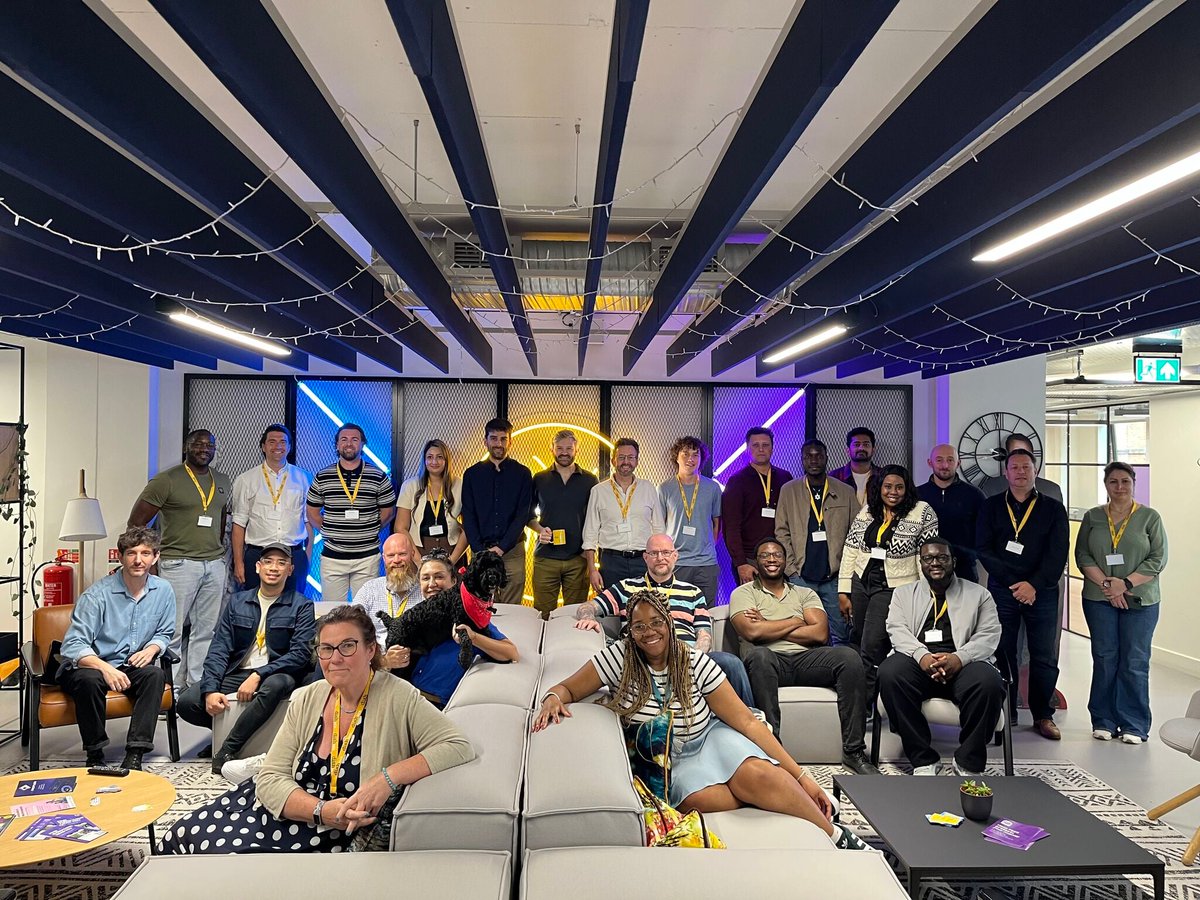
Excited to be a part of the new edition of Gemini Startup Forum: Cybersecurity!
we can't wait to meet the other AI startups in the cyber space and push the boundaries of AI, plus collaborate with experts from Google Cloud Security and Google DeepMind. See you at Google London !
Meet the 33 trailblazing startups joining the second Gemini Startup Forum: Cybersecurity. 🔒💻
This September, these global startup teams will take part in a unique two-day, in-person event in London that offers them a chance to engage in forward-thinking dialogue with AI experts from @Google.
Participants will collaborate directly with experts from across @GoogleDeepMind and @GoogleCloud to explore how AI will redefine the cybersecurity landscape. Founders will leave not just with insights, but with a tangible, actionable AI roadmap for their cybersecurity startup.
Learn more about the cohort in our blog: https://t.co/91RAy6F2Xj
@JumpforJoyce :“Adversaries are poisoning your connectors, injecting prompts, blinding your LLM scanners, & more... The impact could be near real time in multi-agent, AI-enabled campaigns”
The era of protecting CNI with human-centered defense is coming to end.⏰
@GoogleStartups
Introducing GPT-Red
An internal automated red teamer on a mission to find our models’ prompt injection vulnerabilities at scale, helping us build stronger defenses before wider deployment.
https://t.co/GxnmxxcpSk
🚀 Our new DiSH Accelerator is underway, bringing in 20 high-potential startups from across the North West to strengthen cyber resilience, accelerate growth and access customers.
We look forward to seeing what they achieve as we guide them on this journey 👏
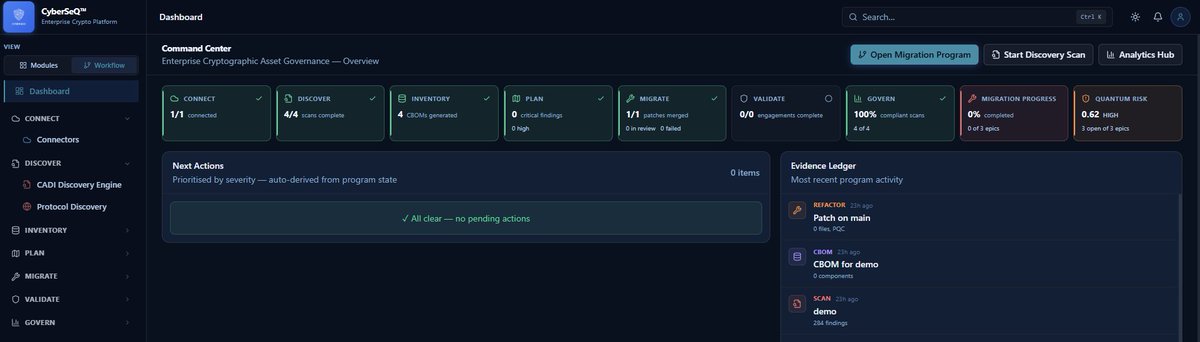
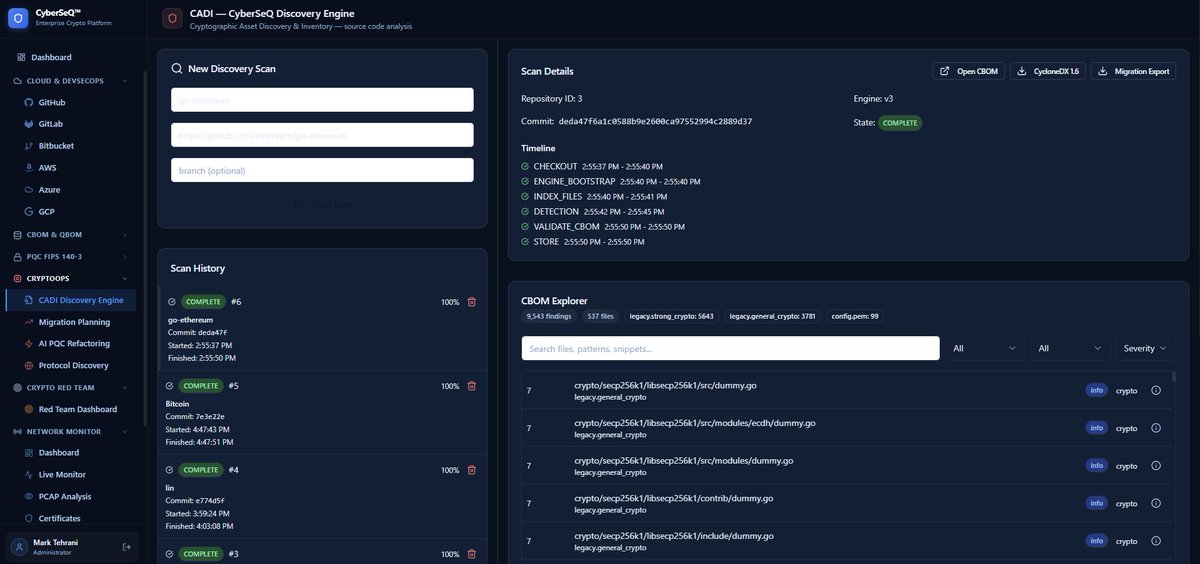
The real question in agentic AI is not whether the agent can do the work. It is where human accountability has to stay in the loop. We are building PostQ as an end-to-end agentic cryptographer. One product, one workflow, covering the full lifecycle: discovery, roadmapping, migration, validation, and red-team / pen-test. We are not anti-agent. We are pro-accountability. Cryptography is one of the few enterprise domains where every decision carries audit weight, regulatory weight, and breach-liability weight, and that is exactly why the design question is not "how much can the agent do" but "where does the human expert have to remain the signer." A few things that are true about the current AI wave, and that we take seriously. A handful of startups have genuinely compressed development cycles by 5 to 10x with serious investment in AI and agents. Small teams now ship in months what used to take a year. Agents code, test, debug and automate continuously, with no shift boundary. Token cost flexes in a way that headcount does not, and it scales faster than hiring. A few things that are equally true, and that the noise often skips over. Agents do not carry accountability. When they fail, root-causing the failure is hard, sometimes intractable. In sensitive domains, robotics, security, system architecture, customer trust, cryptography, a human still has to own the call. Token cost is not a fixed line item either. It can spike, and depending exclusively on a small number of model providers is a real concentration risk. So the real question is not "human or token." It is sharper than that. Which parts of the workflow should be fully automated, and which parts need a human who can be held responsible for the outcome? That is the question we want to answer with PostQ, in the open, alongside the people who do this work for a living. If you are a cryptography consultant with a live client engagement, PQC migration, CBOM/QBOM, key inventory, FIPS readiness, anything in that surface area, and you are open to testing PostQ on a real project under NDA, I would like to hear from you. The goal is not to prove the agent can do everything. It is to map, together, where the agent ends and the expert begins. Better tools for the people who already carry the responsibility. That is the bet.
Once the first RSA/ECC instance is broken by CRQC, the scaling becomes unpredictable. This isn’t the Bombe era, it’s around 2029, and we’re facing a convergence of advanced technologies. This is my last awareness tweet, from here I focus on how to do it.
QRAS: Quantum Adjusted Risk Score
Quantum risk needs more than one metric. In CyberSeQ’s CQRP, we outline leading methods, & PostQ can generate full risk reports from your CBOM.
Explore QRAS here: https://t.co/mIG1nwjiWO
CQRP Phases → Inception Phase → Activities → QRA
We just made the CyberSeQ Quantum Resiliency Process (CQRP™) public: https://t.co/3cGQYvVnY8
A clear pathway for the post-quantum transition, updated weekly.
PostQ™ automates every stage from discovery to deployment.
Test it and share your feedback.
More updates coming.
Harnessing the power of Quantum Machine Learning for #Cybersecurity Defensive Operations with #QSIEM! Our next-gen SIEM leverages Hybrid #QML for proactive threat detection, analysis, and mitigation.
https://t.co/mt1LTDKtfG
🚨Multi-day #DDoS Attack Hits #InternetArchive
The beloved digital library has faced severe disruptions. Our #QSIEM solution, powered by #QuantumMachineLearning, offers superior defense against such threats.
Stay secure, stay resilient.
Learn more: https://t.co/z2tRzZ3E2J
@BSI_Bund Invest in our startup to revolutionize cybersecurity with cutting-edge quantum machine learning for unparalleled data protection.
https://t.co/D3Gj5G0pVy
@TheCyberSecHub Invest in our startup to revolutionize cybersecurity with cutting-edge quantum machine learning for unparalleled data protection.
https://t.co/D3Gj5G0pVy
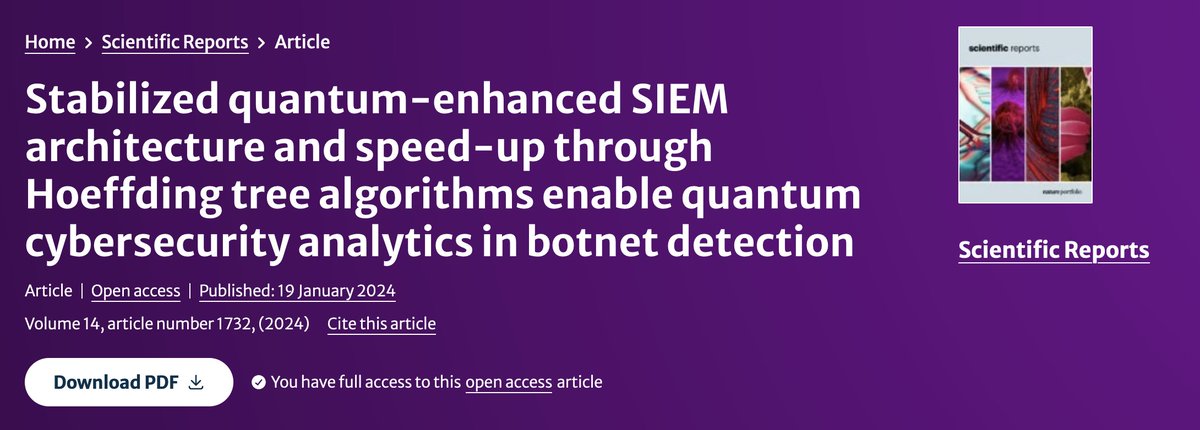
Hot-off-the-press: Researchers outline a new method of running machine learning on quantum comptuers, and open-up the opportunity for its application to cybersecurity applications and botnet detection. Just published in Nature Scientific Reports: https://t.co/gjUZQzDw73
Quantum computers are here and now, and they allow for some applications to be run in a massively pararel way. So here's some new thinking on the use of quantum machine learning and botnet detection ... https://t.co/dtyQqWgXwm
Proud to announce that #IFB Innovationsstarter GmbH has funded the world's first Quantum SIEM. Their crucial support drives us toward redefining the future of cybersecurity. 🌐 #IFBFunded#QuantumSIEM#CybersecurityInnovation#QML
https://t.co/DV9IUCL9nz