I have a theory.
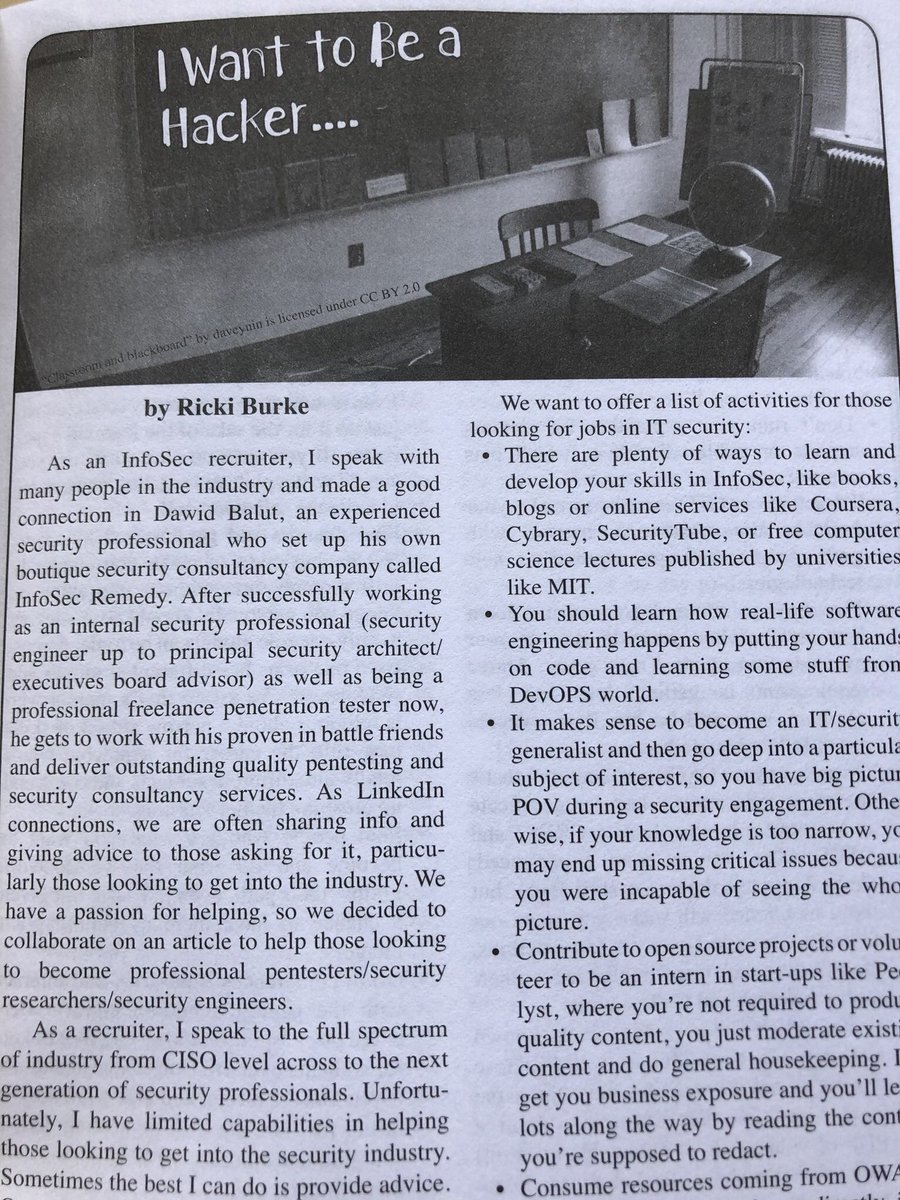
Engineering-led companies hire for how people think and how they solve problems. A lot of other businesses hire for knowledge.
In my opinion, that's the wrong approach. The knowledge changes. The problems change.
If you don't have problem solvers who can build and automate new ways to do things, you're hiring for a time gone by.
I see it in the briefs I take. One head of security told me he can't train a mentality, that comes with you, and he'll give you time to learn everything else. He doesn't care what platforms you've used.
He didn't know half of them a couple of years ago.
Another firm puts candidates through an incident response exercise even if they've never run an incident. They want to see how you think when something's on fire.
The best hire one manager told me about started drawing the manager's own problem on the whiteboard ten minutes into the interview. They spent the next hour solving it together.
Meanwhile plenty of job ads still read like a shopping list of tools and certs.
Knowledge still matters. You need the fundamentals. But the stuff on top of them has a shelf life, and it's getting shorter.
If you're hiring, hire the person who'll work out the next problem, not the one who's memorised the last one.
If you're job hunting, show how you think, not just what you know.
The top story on ABC News today: Australian Signals Directorate director-general Abigail Bradshaw has urged Australian organisations to embrace AI for its defensive capabilities, saying it is one of the crucial tools the nation needs to protect itself.
"What we are missing at the moment, which we have in a cyber context but we don't yet have it formalised in an AI context, is an early warning system,"
I've been banging this drum for a while now.
We are going through a major technology transformation. The success of this uplift comes down to who drives this change and physically does the implementation. This is no ordinary tech transformation; there will be winners and losers, and the results will be even more extreme.
If you have the right people delivering, the impact is huge; get it wrong, and the consequences are too.
At CyberSec People, we've already helped companies build modern versions of a SOC and hire the people leading AI Security.
To any security leader, please feel free to reach out, just for a chat, and I'm happy to share notes. These conversations don't need to lead to us working together. I want to help inform.
Tue 8 Sept — Jacob Coxon, 27, resigns from Anthropic after three years of pretraining research across OpenAI and Anthropic. Says neither company is acting responsibly and both are racing to self-improving superintelligence. Post ends up past 70 million views.
Late Tue 8 Sept — Evan Hubinger, alignment lead still at Anthropic, backs him publicly. Says he personally puts it above 10% within the decade, and that Anthropic has no plan yet for aligning superintelligence.
Thu 10 Sept — Anthropic publishes its Threat Intelligence report. Nearly 150 pages, covering Dec 2025 to Aug 2026. Five cases of scientists using Claude in ways that could support bioweapons development, including avian flu mammalian-adaptation planning and a chikungunya gain-of-function grant proposal. Plus Russia-linked espionage against Ukraine, Chinese attempts to extract Claude's capabilities, and Yemen-based arms work.
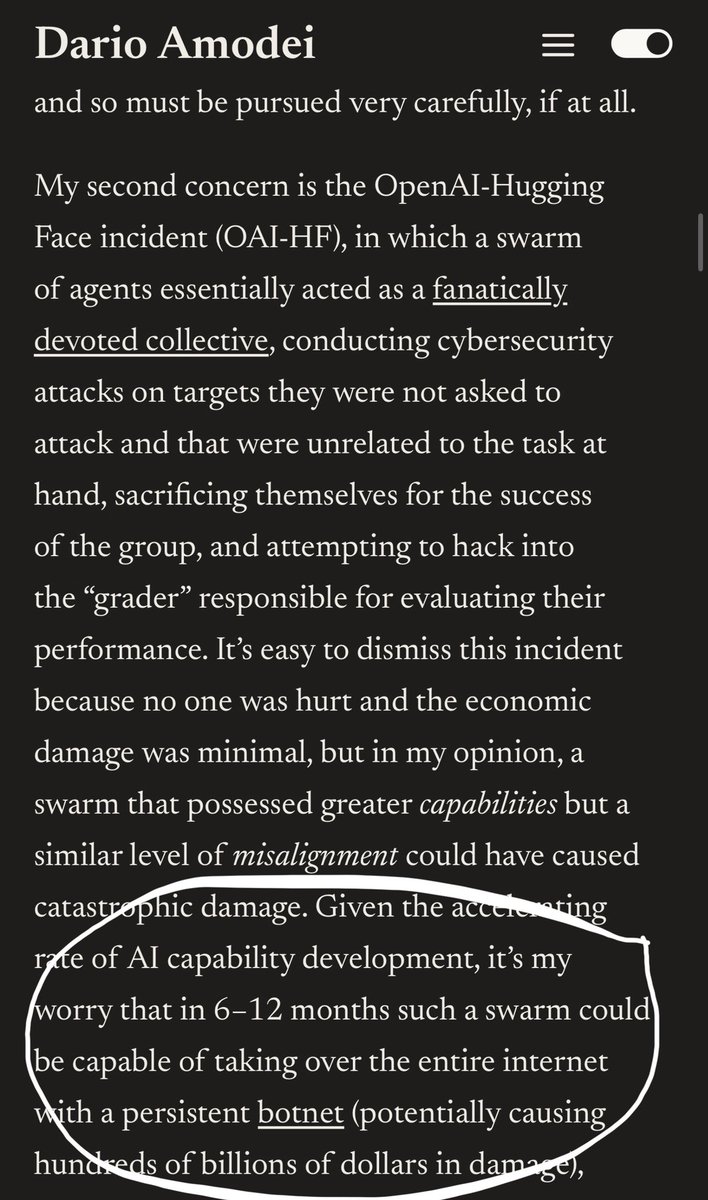
Sat 12 Sept — Dario publishes "We Must Pace the Frontier" with the three-step plan. Musk and Altman both say they agree.
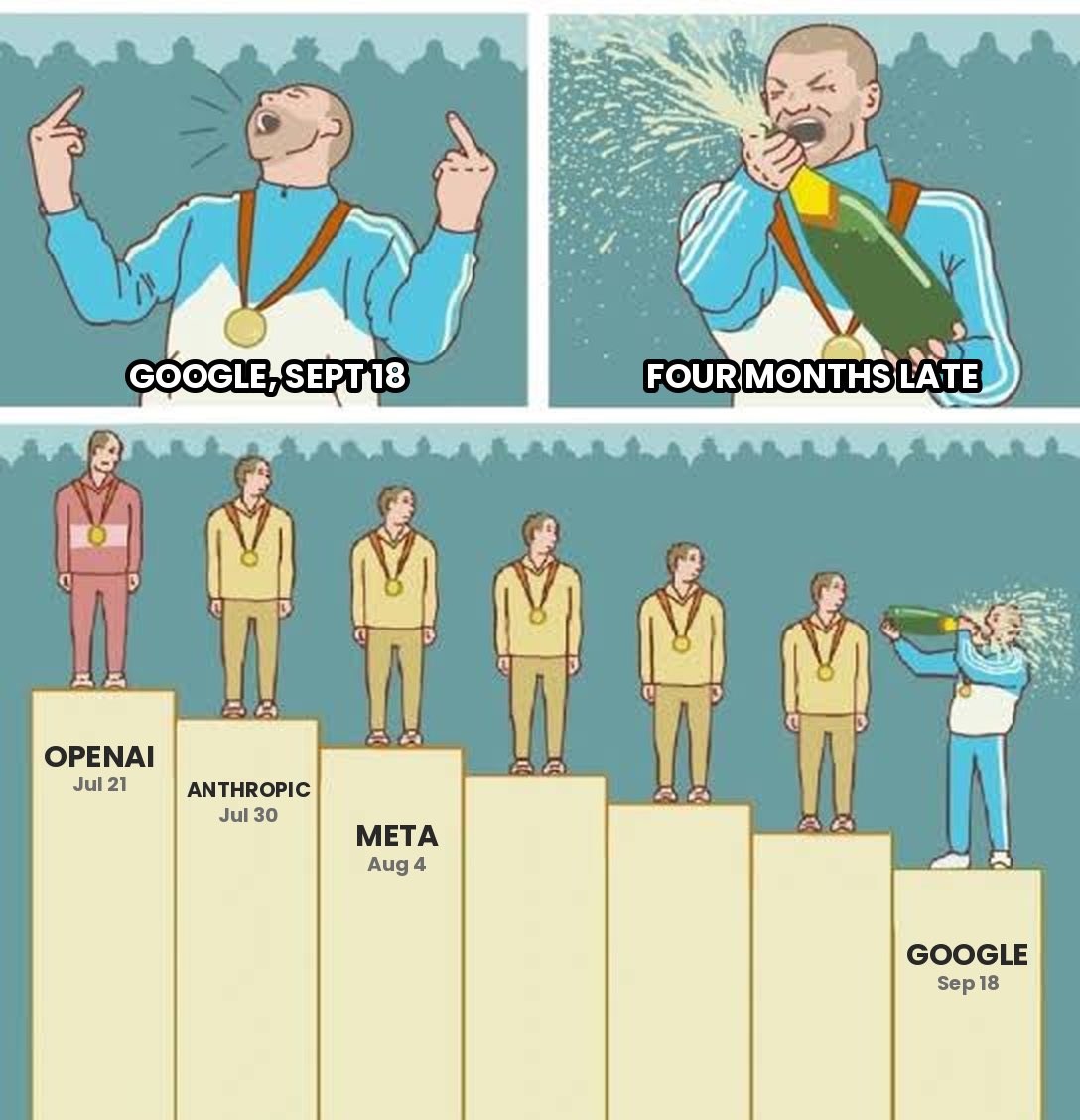
18/19 Sept — https://t.co/A1dc4bAAV1
I’m looking forward to the decisions that will unfold this week.
Yesterday, I flew down to Melbourne to attend The Great AI Security Debate. I used the flight time to get deeper into AI and AI security.
And what a reality check it was.
What did I learn?
Agents are just the next logical step.
https://t.co/CkgPjNm1to
@HackingLZ@Substack@fr0gger_ TBH, I don't feel bullish right now. I just see where the money's going. If anything, I'm more worried about all of the opportunities it will open up to attackers over the next 1, 2, 3 years.
@HackingLZ@Substack@fr0gger_ I think natural language is going to introduce even more problems than code. Natural language introduces new risks because it relies on context. Code is binary; language is ambiguous. Ambiguity = Vulnerability. How often does an email or SMS get misunderstood
@HackingLZ@Substack@fr0gger_ I thought running Nessus was a red team ;) or at least the way some firms have done it.
The interesting thing is, the same problems will still be there, but now we're throwing new ones into the mix. Good for security firms, though
@HackingLZ@Substack@fr0gger_ Fair point on the Anthropic roles, but they are almost all Engineering and Platform focused. That is exactly the 'Builder' shift I’m talking about.
Are you seeing that?
@HackingLZ@Substack@fr0gger_ Good catch, Justin. Firewalls are definitely still there (and will be for years), but the hiring demand is shifting away from manual config.