The internet can make hate feel normal long before society realizes what’s happening.
That’s why spaces like Tel Aviv Pride matter so much.
Last year, amid war and national trauma, Tel Aviv’s Pride celebrations were canceled. In the same period, CyberWell documented a continued surge in online antisemitic narratives tied to real-world events... from conspiracy theories and scapegoating to content denying or mocking Jewish victimhood. CyberWell’s 2025 reporting showed how antisemitic rhetoric increasingly spreads through viral repetition, coded language, and algorithmic amplification online.
That matters because online hate never stays online.
The same digital ecosystems that normalize antisemitism also fuel harassment and dehumanization targeting LGBTQ+ communities and other groups. Different targets. Same machinery of hate.
Pride is not just a celebration. It’s a refusal to disappear. A public declaration that visibility, safety, and community still matter, especially during moments when fear and extremism try to dominate public life.
No algorithm should decide whose humanity deserves protection.
#TelAvivPride #CyberWell #DigitalCulture #LGBTQCommunity #StopHate
CyberWell CEO & Founder Tal-Or Cohen Montemayor is featured in The Campaign, the new documentary by @kinsellawarren, out now.
The film is set to premiere in Tel Aviv at the DocAviv Film Festival, and explores the impact of disinformation in the wake of October 7, including how it has reshaped perceptions, fueled division, and accelerated antisemitism and broader threats to democracy in the West.
Cohen Montemayor was interviewed for the film about CyberWell’s research, touching on how misinformation spreads at scale, the ways bad actors evade moderation, and the role platforms must play in keeping users safe.
We’re looking forward to the conversations that this documentary sparks, including those about the responsibilities of social media platforms to keep their users safe.
Link to trailer: https://t.co/ELVHpt75Q6
One year ago, the attack on Pearl Street in Boulder left a community shaken and eight people injured in what authorities identified as an antisemitic assault. One of those victims, Karen Diamond, later died from injuries sustained in the attack.
In the year since, CyberWell has documented how antisemitic narratives often intensify in the aftermath of real-world violence. Our monitoring shows recurring spikes in online antisemitic content following major incidents, with narratives spreading rapidly across platforms through reposting, remixing, and algorithmic amplification.
As similar narratives appear again and again, they can become normalized in digital spaces, gradually blurring the line between fringe ideology and everyday content.
The Boulder attack is part of this broader reality, where antisemitism operates across both physical and digital environments.
Remembering this anniversary means honoring the victims while also paying attention to how these patterns persist and where they can still be interrupted.
This Shavuot, as we celebrate the giving of knowledge, we’re reminded that information is powerful.
At CyberWell, we fight for the safety of our information space by identifying harmful online content and creating tech-based systematic solutions to stop it.
Because when information spaces are protected, knowledge can be shared with confidence.
Wishing you a meaningful and inspiring Shavuot.
One year ago, the world lost two lives dedicated to diplomacy, dialogue, and connection.
We remember Yaron Lischinsky and Sarah Lynn Milgrim, two diplomats whose lives were taken in an act of violence that deeply affected diplomatic communities, Jewish communities, and all who value bridge-building across divides.
A year later, their absence is still felt. So is the shifting landscape of online hate.
Over the past year, CyberWell has documented how antisemitism online has continued to evolve rather than fade. CyberWell’s monitoring shows a growing reliance on coded language, memes, conspiracy narratives, and viral content that can spread the same ideas as overt hate, but in more normalized forms.
CyberWell data also highlights a recurring pattern: moments of heightened geopolitical tension or major incidents are followed by spikes in antisemitic content online. These narratives move quickly across platforms, amplified by algorithms that reward repetition and engagement.
What is especially concerning is how normalization takes hold. Repeated exposure lowers resistance, and over time, content that once felt clearly extreme can begin to blend into everyday digital life.
Remembering Yaron Lischinsky and Sarah Milgrim means recognizing that violence is shaped by environments where dehumanization is allowed to spread unchecked.
Their memory is a reminder to stay alert to how hate evolves and to confront it before it becomes invisible through familiarity.
Even when content is eventually removed, the damage is already done.
A new report from CyberWell found that just a few hundred AI-generated antisemitic posts amassed over 30 million views and 2.8 million engagements before platforms could fully respond.
What makes this especially alarming is the speed of spread: violent and extremist content was often amplified first, then moderated later, but only after reaching massive audiences.
The report highlights how generative AI tools are being used to produce highly convincing videos, audio, and narratives that blend real footage with fabricated content, making it harder to detect and easier to believe.
Even more concerning: posts calling for or glorifying violence made up 33% of content but drove 41% of total engagement, showing that the most extreme material spreads the fastest and travels the furthest before removal.
As AI-generated content becomes more sophisticated, the gap between creation, virality, and enforcement continues to widen, while the lines between what an AI company is and a social media platform is become increasingly blurry. As companies wielding and developing these technologies, all platforms have a responsibility to step up and strengthen their moderation mechanisms, at the speed of AI.
Read the full report here: https://t.co/9FVWykj2z0
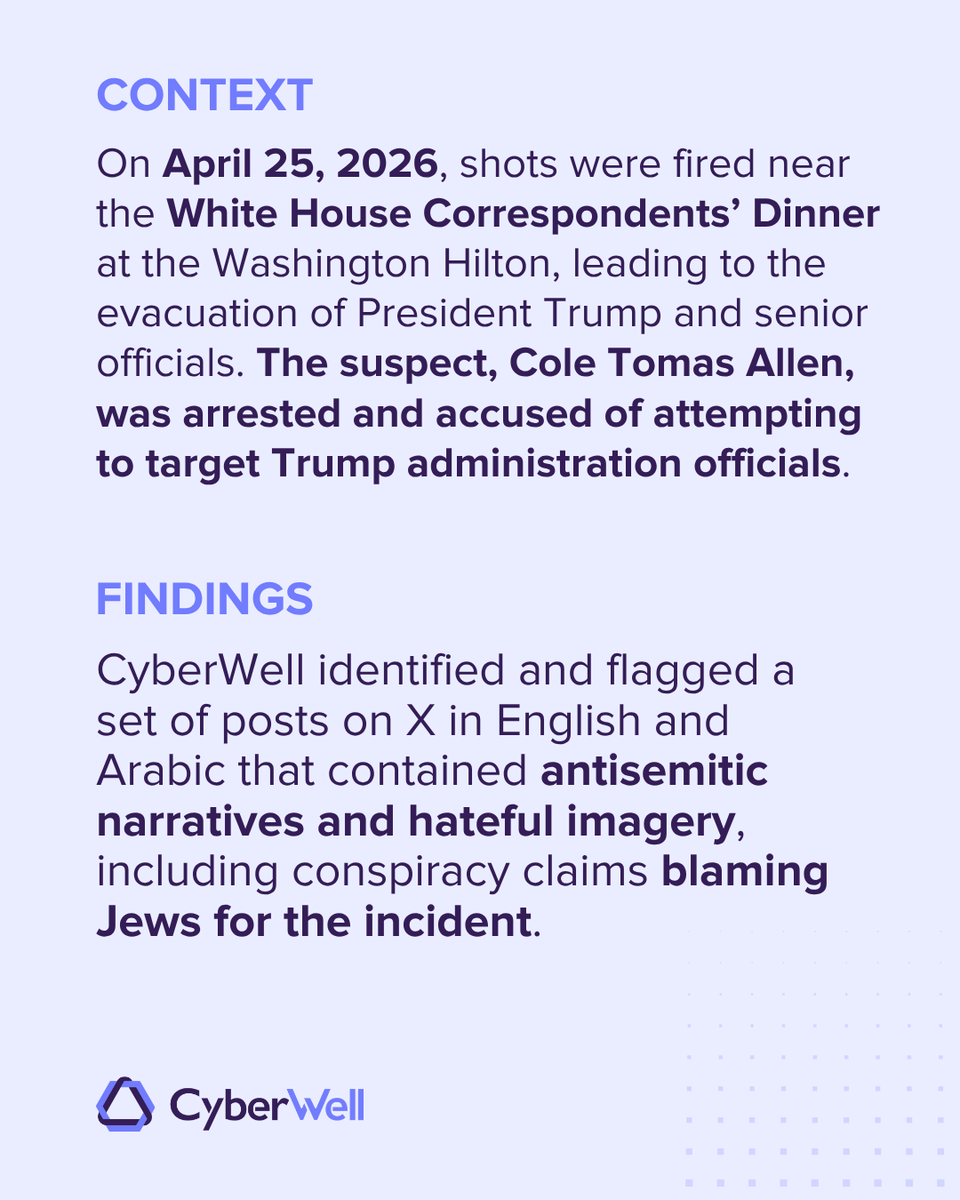
CyberWell identified a surge of antisemitic content on X tied to the recent hantavirus outbreak, including conspiracy theories falsely blaming Jews for the virus and false linguistic claims.
The content echoed longstanding antisemitic tropes portraying Jews as dangerous, contagious, or secretly controlling global events, demonstrating how moments of crisis continue to be exploited to spread hate online.
Platforms have a responsibility to their users to actively enforce their policies and prevent the spread of harmful content. More must be done BEFORE this hateful content spreads to millions of users, including updating their policies to properly address online antisemitism, including harmful narratives such as scapegoating Jews.
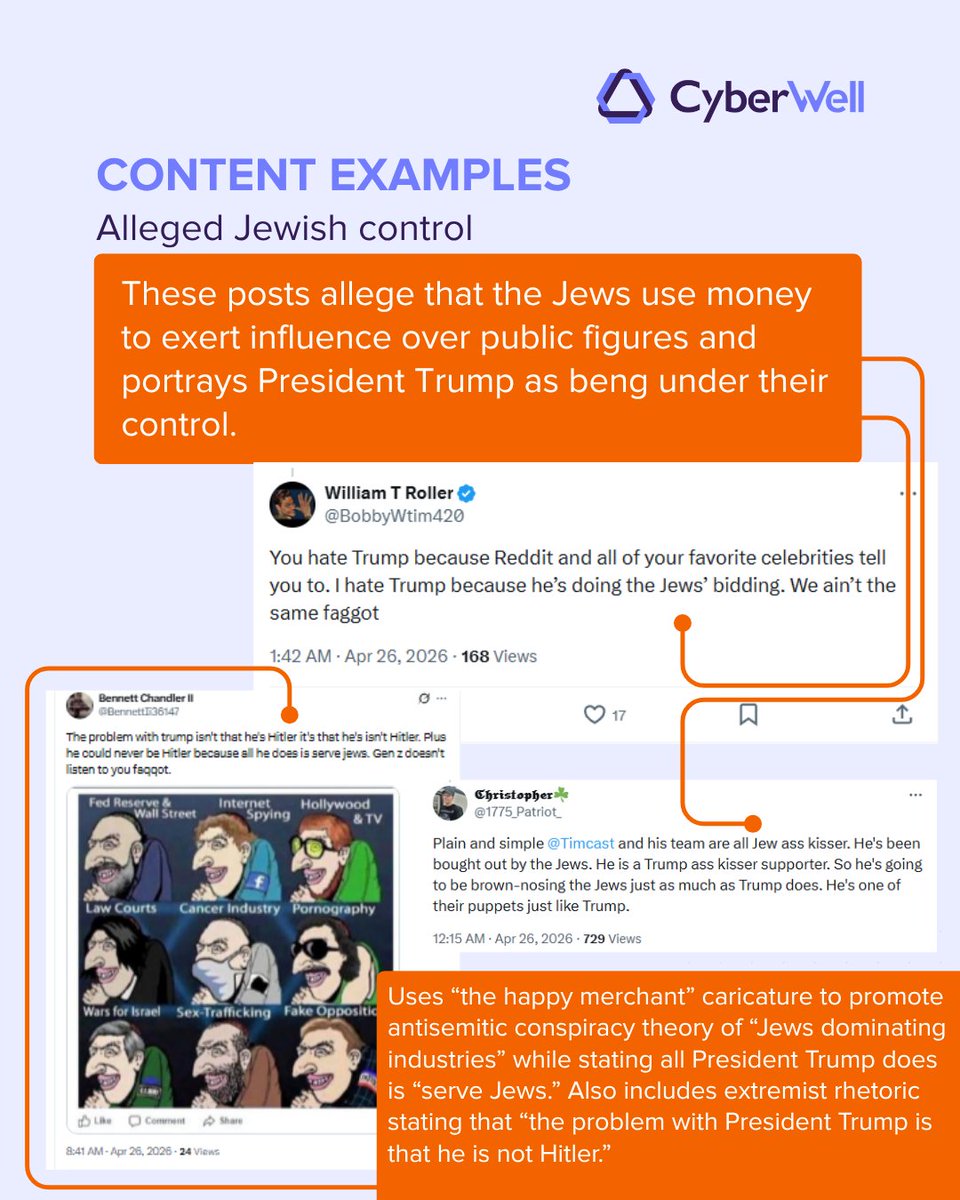
Conspiracy narratives claiming that Jews “control” governments or secretly influence political leaders are a longstanding form of antisemitism. These narratives were identified in posts circulating after the 2026 White House Correspondents’ Dinner shooting.
In the content flagged by CyberWell, users alleged Jewish control over the U.S. government and President Trump’s administration, and in some cases, blamed Jews for the shooting at the WHCD.
These claims are antisemitic because they repeat a centuries-old trope portraying Jews as a hidden, all-powerful group responsible for global affairs. They have no factual basis and often resurface during times of political crisis or major public events, when uncertainty increases the spread of misinformation.
By attributing complex events to a single group, these narratives dehumanize Jews and have historically contributed to discrimination and violence.
During May, Jewish American Heritage Month, CyberWell acknowledges those who choose to share and express their Jewish identity online. However, for many, doing so comes at a cost. And the platforms that promise to keep users and creators safe, routinely fail them.
CyberWell asked four Jewish influencers to tell us about their experiences with online antisemitism. Sadly, they described the barrage of hate that they routinely receive simply for being visibly Jewish online.
Social media platforms made a promise to all of their users to protect them from harm.
CyberWell's goal is to work alongside the world's most influential platforms to help make the digital universe safer for Jews -- and everyone.
@israel_advocacy@streetsmart_x@zachsagefox@montanatucker
Music: Middle Child - Miss You is under a Creative Commons BY-NC 3.0 license.
Online hate isn't always explicit.
As Jewish influencer @zachsagefox of @streetsmart_x shares, online antisemitism doesn’t just show up in words, it shows up in symbols, emojis, and coded language designed to exclude, dehumanize, and incite.
At CyberWell, our research shows exactly how this works: emojis and ‘algospeak’ are increasingly used to spread antisemitism while evading moderation, turning everyday digital language into tools of hate.
From 🐀 and 🐷 to 🧃 and 😈, these symbols aren’t random; they’re part of a growing system of coded antisemitism that targets Jews while hiding in plain sight.
Recognizing it is the first step. Calling it out is the next.
Because online hate doesn’t stay online... and neither does our responsibility to stop it.
As AI-generated content becomes nearly indistinguishable from real photos and videos, its potential to dangerously manipulate our information ecosystem grows, especially when amplified by the reach of social media.
So, how do we ensure transparency and protect users?
As CyberWell’s Tal-Or Cohen Montemayor recently explained to India Naftali on ILTV, the solutions are nascent - but already here. Digital platforms are using tools to automatically identify and label AI-generated videos and images — but bad actors are already finding ways to get around it and evade detection.
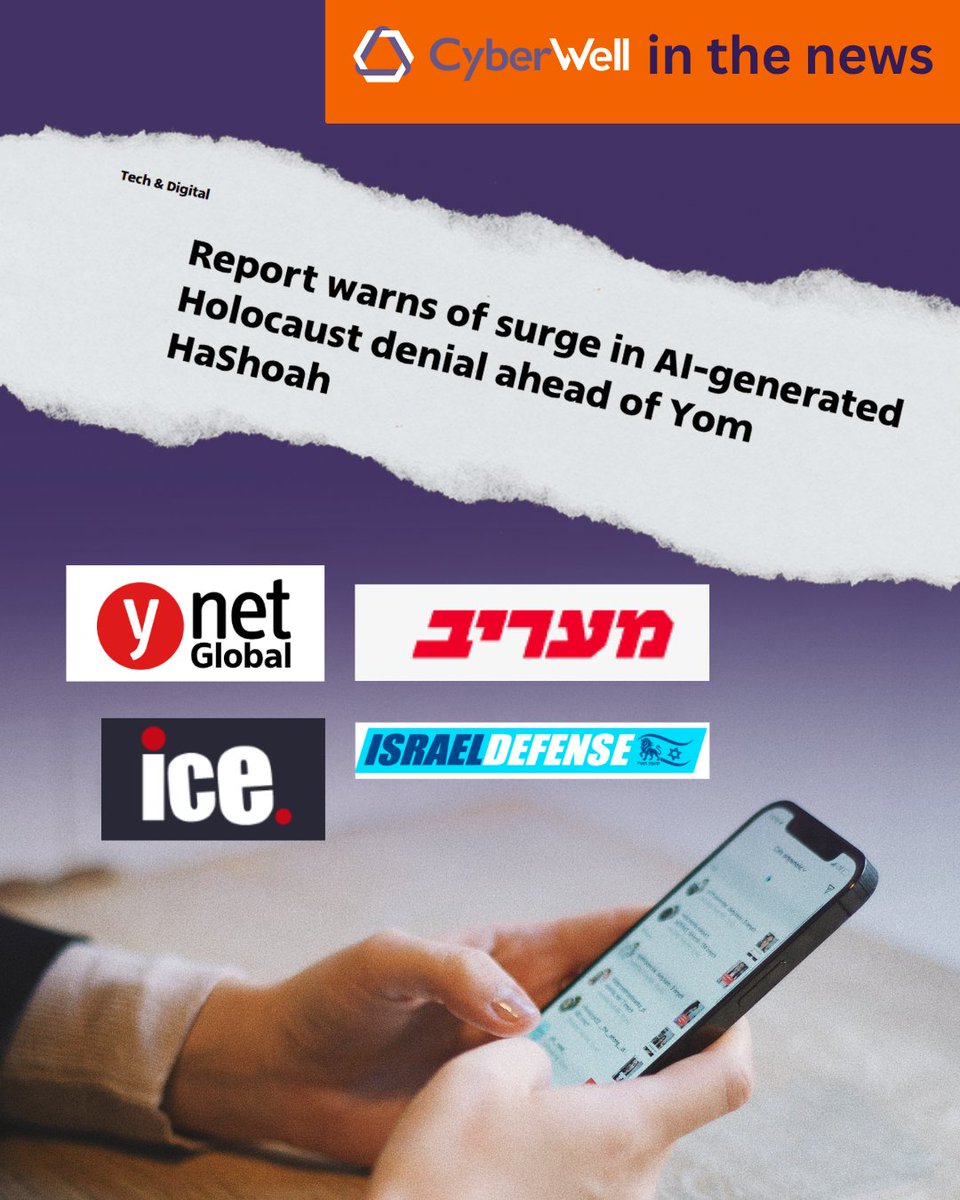
This week of Yom HaShoah, CyberWell’s latest insights on the rise of AI-generated Holocaust denial and antisemitism are gaining significant media attention across multiple publications.
The coverage underscores a critical reality: as generative AI makes it easier to create and spread harmful content at scale, Holocaust denial, distortion, and mockery are evolving and accelerating online.
From AI-generated videos and memes to coded language designed to evade detection, this growing trend is not only being documented, but recognized globally as an urgent challenge.
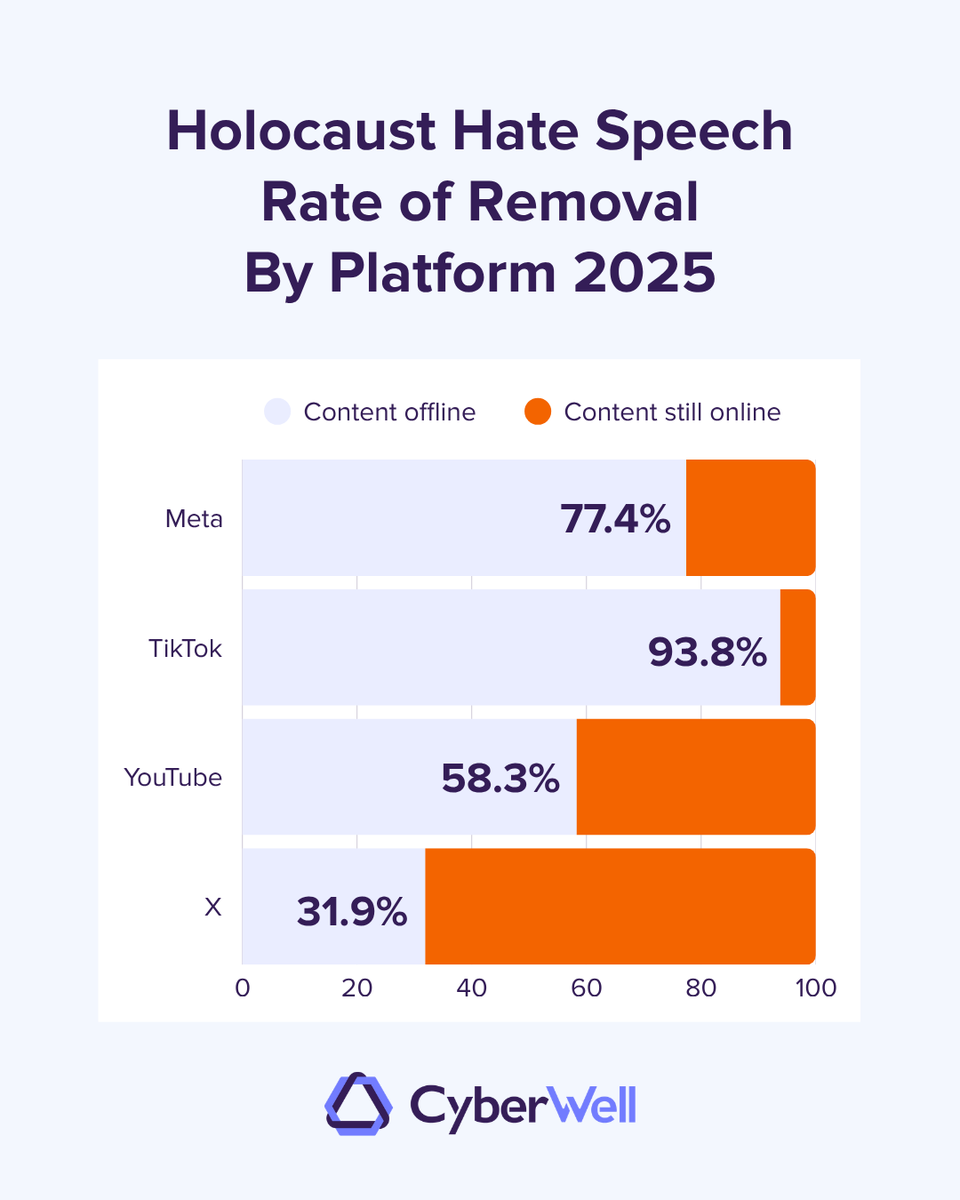
Social media platforms already classify Holocaust denial and distortion as hate speech and misinformation. That standard must be consistently enforced, even when this content is disguised as humor, parody, or AI-generated “entertainment.” Evasion does not change its nature, and it must not exempt it from moderation.
CyberWell CEO Tal-Or Cohen Montemayor sits down with Danny Roup on Israel’s Channel 10 to discuss the growing use of artificial intelligence and coded language online.
Speaking ahead of Yom HaShoah, Israel’s Holocaust Remembrance Day, she warned of a troubling trend: bad actors using AI to create misleading, child-targeted content that blurs or distorts the historical truth of the Holocaust.
Holocaust distortion and denial is prohibited on most digital platforms, yet AI-enabled coded content slips past moderation efforts. Social media platforms and users alike have a responsibility to address this challenge and keep online spaces safe.
That means investing in better ways to detect harmful content disguised as entertainment, and ensuring it is properly moderated before it can spread and influence young audiences.
The Anti-Defamation League’s latest report confirms what CyberWell warned would happen in January 2025 when Meta first announced its rollback of content moderation: more hate speech, more politicized content, more silos and less effective responses from the platforms – all at a time when the terror threat against Western democracies at an all time high.
The report further reinforces patterns we have consistently documented and escalated to our partners at Meta, including tactics of content moderation detection and the sale of extremist group merchandise and apparel.
The alignment between CyberWell compliance data and the ADL’s findings underscores a clear reality: When platforms step back, extremists step in.
CyberWell’s data further shows:
• Spikes in antisemitism tied to real-world events
• Rapid evolution of coded hate designed to evade detection
• Enforcement rates in non-English content, such as Arabic, improve with targeted attention.
We join the urgent and timely call to Meta to reinvest in effective enforcement, restore transparency, and collaborate with data-driven partners like CyberWell to address this growing threat. The tools exist; and with antisemitism moving at the speed of AI, the decision to act quickly is essential.
Read more via Jewish Telegraphic Agency here: https://t.co/HgMgxi74Q3
This week of Yom HaShoah, CyberWell’s latest insights on the rise of AI-generated Holocaust denial and antisemitism are gaining significant media attention across multiple publications.
The coverage underscores a critical reality: as generative AI makes it easier to create and spread harmful content at scale, Holocaust denial, distortion, and mockery are evolving and accelerating online.
From AI-generated videos and memes to coded language designed to evade detection, this growing trend is not only being documented, but recognized globally as an urgent challenge.
Social media platforms already classify Holocaust denial and distortion as hate speech and misinformation. That standard must be consistently enforced, even when this content is disguised as humor, parody, or AI-generated “entertainment.” Evasion does not change its nature, and it must not exempt it from moderation.
Holocaust denial and distortion are making up less and less of the online antisemitism landscape — dropping from 11% in 2024 to less than 8% in 2025, as CyberWell covered in our latest annual report.
Instead, antisemitic denial and distortion is taking on a new angle. Bad actors are increasingly denying other violent events targeting Jews, like October 7th or the Bondi Beach attack. It's an especially dangerous form of denial because it is not treated the same as Holocaust denial by the platforms.
Users are also increasingly turning to coded language and AI-generated content to sow doubt about the Holocaust. These methods, often framed as humor, help them evade detection by moderation tools.
Social media platforms must recognize that denying or distorting violent events committed against vulnerable communities or mocking the victims is hate speech, pure and simple.
Read the full report: https://t.co/B0kGkssxuo...
On Yom HaShoah, we remember the victims of the Holocaust.
Remembrance today faces a new challenge: the rapid evolution of denial online.
Holocaust denial, distortion, and mockery continue to spread, now increasingly powered by generative AI.
From memes to videos to synthetic media, this content is designed to trivialize, evade detection, and scale faster than ever.
These narratives don’t just persist; they surge during moments of geopolitical crisis, revealing how quickly antisemitic rhetoric adapts and spreads.
Even as platforms improve enforcement, gaps remain. Moderation systems are not yet equipped to fully address the scale and sophistication of AI-generated hate.
Remembrance must be matched with vigilance. As technology evolves, so must the policies and tools to confront this hatred.
Read more: https://t.co/DFlghSOaBL
Chag sameach from all of us at CyberWell!
As we celebrate Passover, commemorating the liberation of the Jewish people and the journey to the Promised Land, we are reminded that freedom is not just the absence of physical chains.
It is about being safe to openly and proudly embrace our Jewish identity, whether in our synagogues, at our workplaces and schools, or in our digital spaces. True liberation requires accountability from tech platforms and safe digital spaces where Jewish voices can freely exist.
As CyberWell continues this vital work toward a brighter digital future, we wish you and your loved ones a joyful and meaningful holiday!
“The No. 1 reason we have the antisemitism levels we do today in the United States and around the world is because of the digital space,” says AJC’s Director of Antisemitism Policy @HHuffnagleAJC.
A new AJC report with @Cyberwell_org shared AJC’s State of Antisemitism in America 2025 Report data that 73% of American Jews encountered antisemitism online in the past year, and 21% said these experiences made them feel physically threatened.
The report recommends 9 key actions for tech companies to combat antisemitism, including strengthening enforcement against terror, addressing coded hate and AI-driven content, and improving transparency and reporting systems.
Digital platforms must enforce their rules and policymakers must demand accountability. Urgent action is needed before online hate fuels more real-world violence.
https://t.co/8E6IJFoCFc