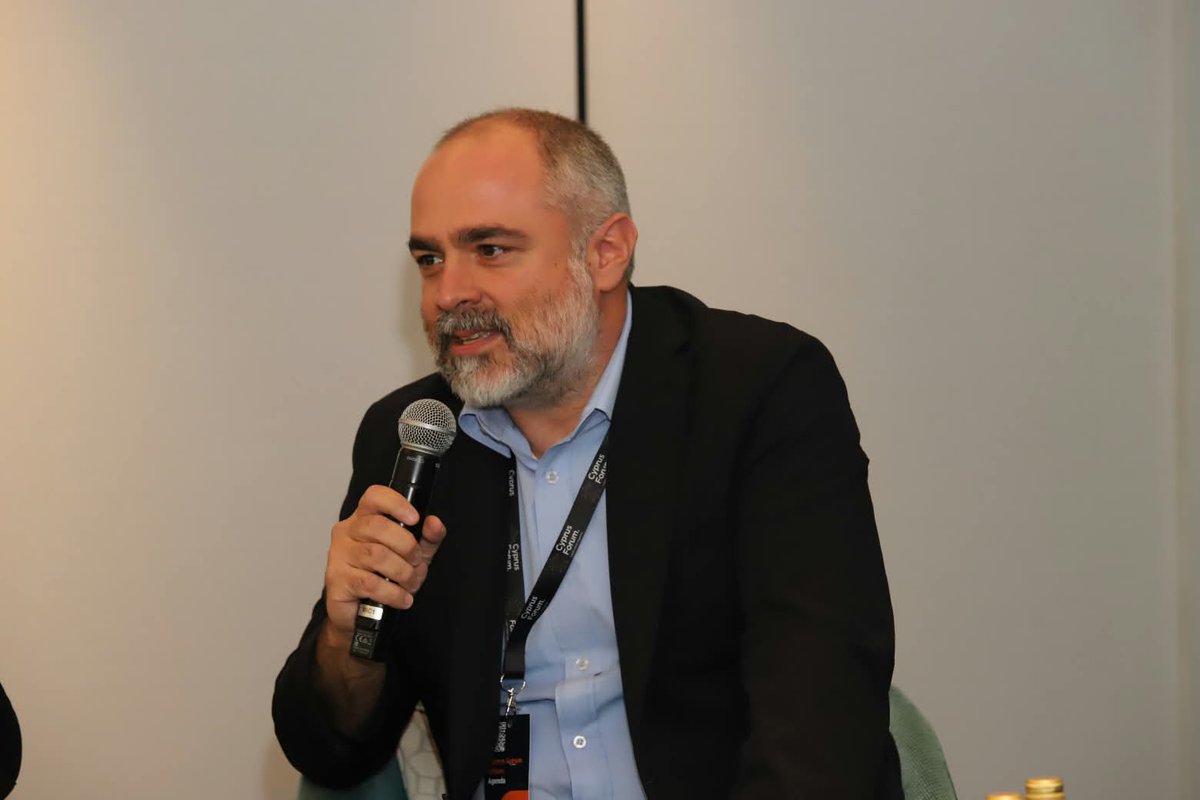
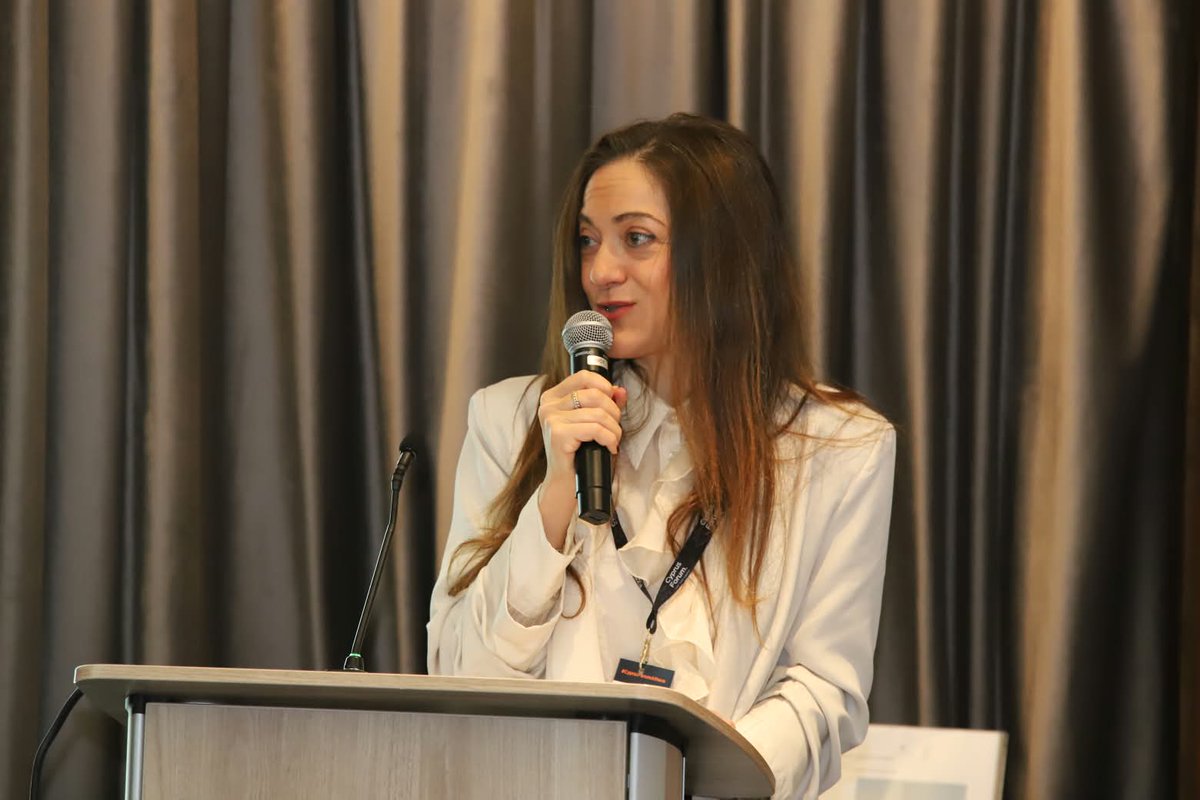
Assya Kavrakova (@AKavrakova), speaker at Cyprus Forum 2026, is featured in a recent interview with Phileleftheros, discussing the growing threats of foreign interference, disinformation, and cyberattacks to European elections and democratic institutions.
Read the full article to discover her insights on safeguarding European democracy, strengthening public trust, and ensuring meaningful citizen participation.
#CyprusForum
"Technology has transformed not only the tools behind hybrid threats, but also the societies in which they operate".
H.E. Dr. Krisztina Lakos (@LakosKrisztina_), Ambassador of Hungary to Cyprus, addressed the evolving nature of hybrid threats, particularly disinformation, electoral interference and other forms of non-military aggression. She argued that although the instruments used to pursue these threats have not fundamentally changed, the environment in which they operate has been transformed. Technological advancements have reshaped not only the methods through which hybrid threats are deployed, but also the societies they target, creating new vulnerabilities that can be exploited and amplified. Against this backdrop, she stressed the importance of coordinated efforts, information-sharing and a broader understanding of how modern societies can be exposed to external interference.
"Neutrality itself is no protection against hybrid aggression during peacetime."
Caitríona Heinl, Executive Director, The Azure Forum for Contemporary Security Strategy (@AzureForum), argued that a state's neutral status means very little when preparing for modern peacetime hybrid warfare. The true crux of the matter is whether a neutral nation's investments and national structures are actually fit for purpose. Specifically, she emphasised the need to hone intelligence capacity so a nation possesses the skill sets to understand exactly what activities are taking place within its borders, the intent behind them, who is responsible, and how to properly attribute them.
"It is very important to identify the strategy behind a hybrid campaign so you can tackle it accordingly."
Inna Torgomyan, Ambassador Extraordinary and Plenipotentiary, Embassy of the Republic of Armenia in the Republic of Cyprus (@ArmEmbCyprus), shared that dealing with multiple hybrid attacks across different spheres—such as disinformation, digital disruption, or supply chain issues—requires looking at the bigger picture. While different ministries often handle separate incidents, she noted that states must pinpoint the overarching strategy to respond effectively. To achieve this, she stressed that seamless communication between internal institutions and partner countries is of crucial importance.
"Without expanding and cooperating to the maximum extent, the Western world will face a major crisis."
Member of Parliament Chrisis Pantelides, representing the Democratic Party, emphasised that the European Union must aggressively expand its networks of cooperation to survive upcoming global shifts. He pointed out that while the EU and the US comprise roughly one billion people, they face a world of six billion others in Asia and Africa who are demanding their share of wealth and prosperity. Chrisis urged the audience to think far into the future, suggesting that just as former bitter enemies France and Germany united to build today's Europe, the EU may eventually need to envision a long-term partnership with Russia to remain globally competitive.
"We must look beyond basic data and surveys to understand what is truly happening politically and socially."
Andreas Theophanous (@AnTheophanous), President of the Cyprus Center for European and International Affairs, questioned the reliance on rigid research surveys, noting that they often miss the broader picture and lack a true political dimension for ordinary citizens. He argued that the European Union is currently missing a critical, unifying political stance, visible not only in its handling of the Middle East but within its own internal society. Andreas concluded that while economic data remains important, the true defining factor for the future of the region is what will happen on a political and social level.
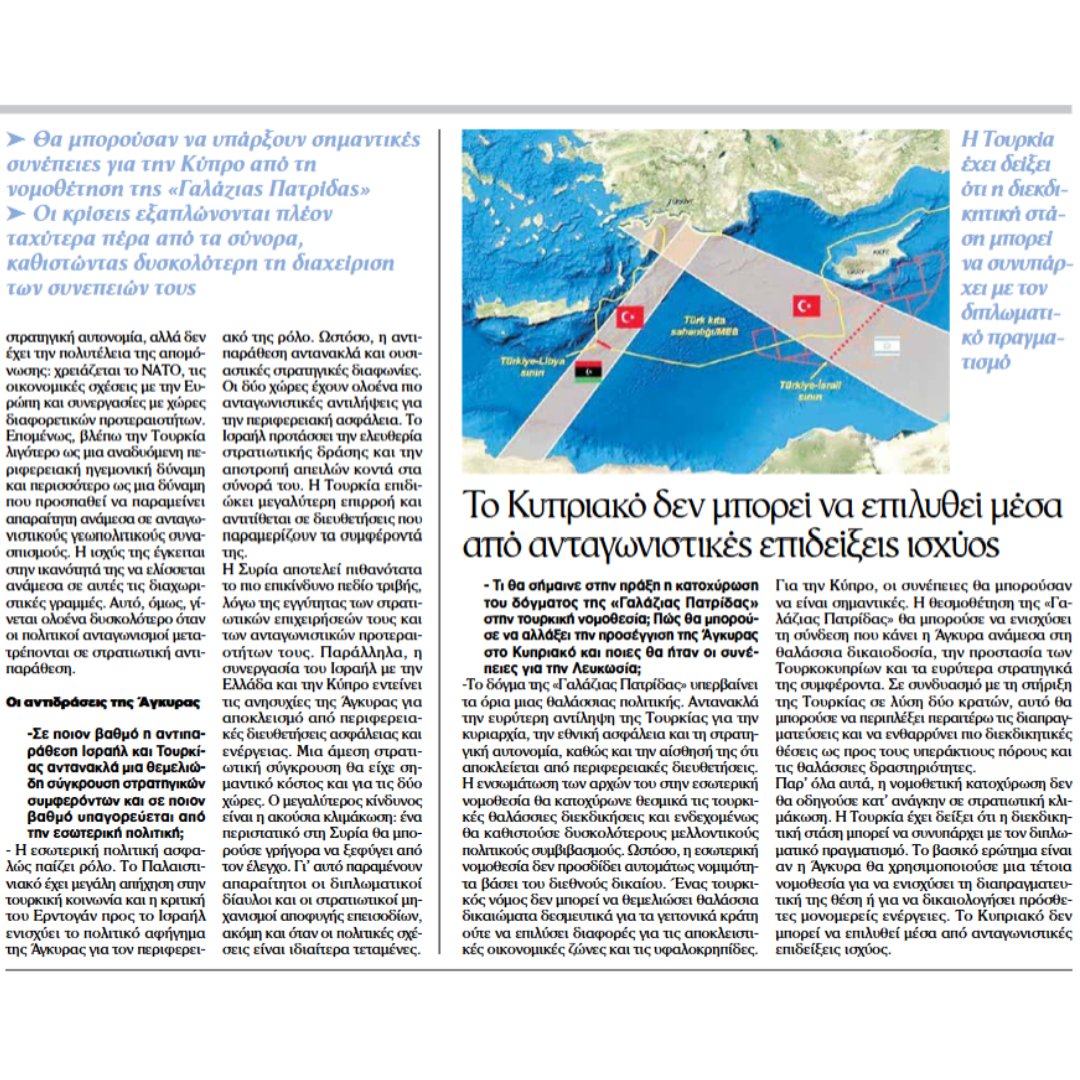
Alessia Chiriatti, speaker at Cyprus Forum 2026, is featured in a recent interview with Phileleftheros, exploring Turkey’s regional ambitions and the broader geopolitical dynamics shaping the Eastern Mediterranean.
Read the full article to discover her insights on the challenges and strategic considerations facing Cyprus.
#CyprusForum
Energy, technology and transport as drivers of economic growth and regional cooperation took centre stage at Cyprus Forum Athens.
Moderated by Evdokia Bakalou, the discussion explored how Greece and Cyprus can strengthen competitiveness through innovation, strategic partnerships and skills development.
Professor Georgios Doukidis highlighted the importance of translating artificial intelligence into practical economic value, particularly in shipping and other key industries.
Philokypros Roussounides (@R_Philokypros) emphasised stronger collaboration between academia and businesses, alongside concrete initiatives connecting the Greek and Cypriot economies.
Pavlos Efthymiou (@PavlosEfthymiou) stressed the need for Greece and Cyprus to approach international markets together, invest in practical AI applications and prioritise workforce upskilling.
Danae Bezantakou (@DanaeBez) highlighted the maritime sector as a priority for technological adaptation, emphasising the need to accelerate AI and digital skills development, with Cyprus playing an important role in these efforts.
The panel underscored the importance of turning technological opportunities and bilateral cooperation into measurable economic benefits and stronger regional competitiveness.
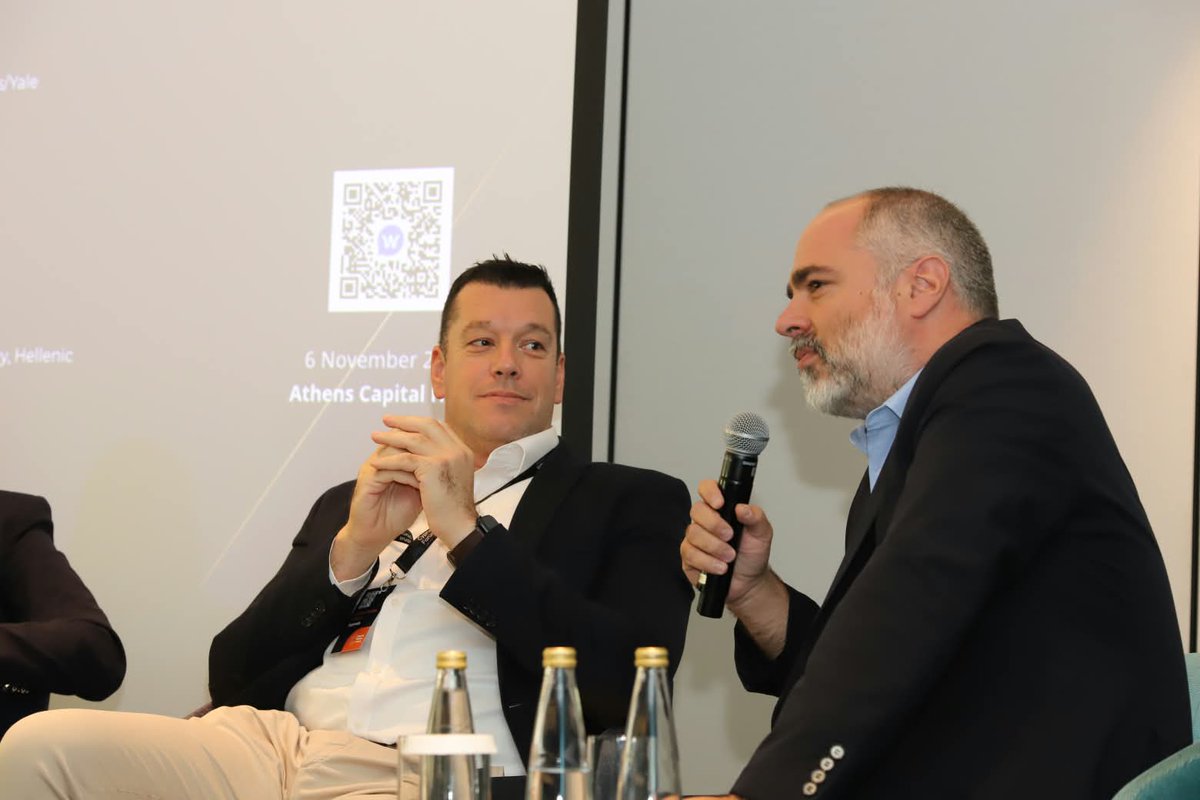
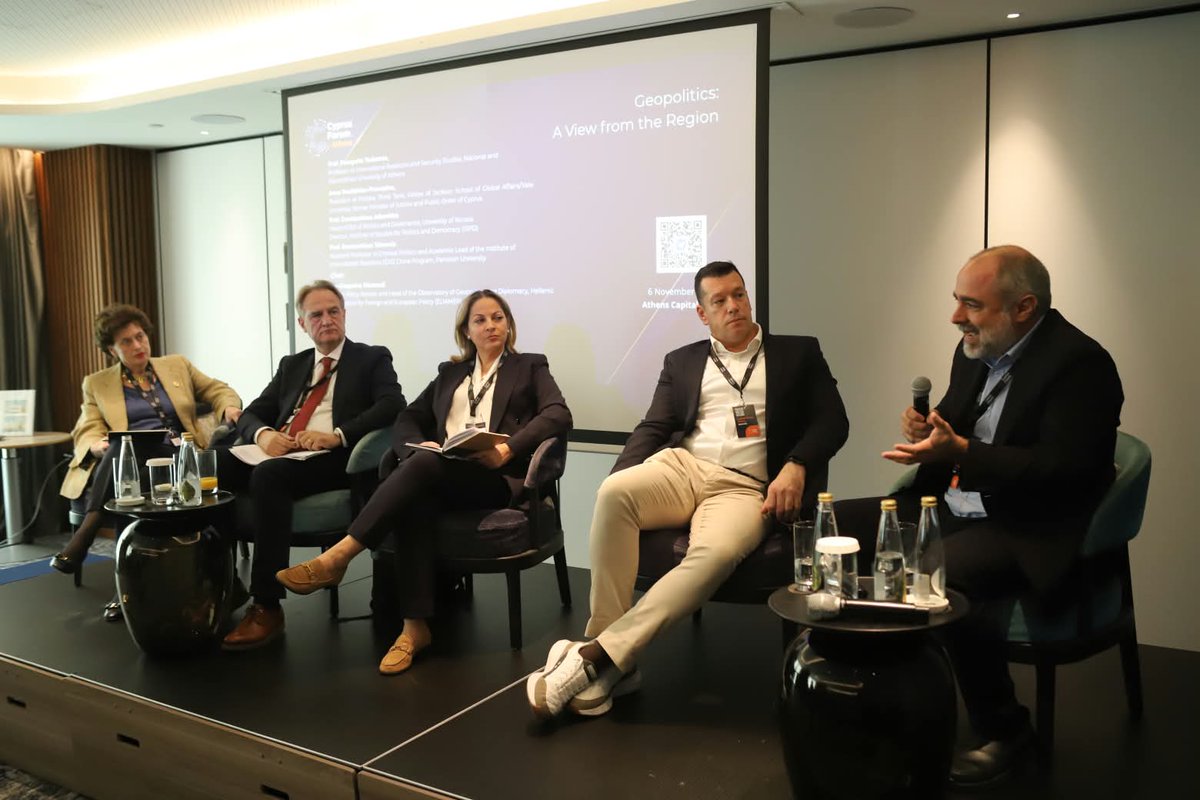
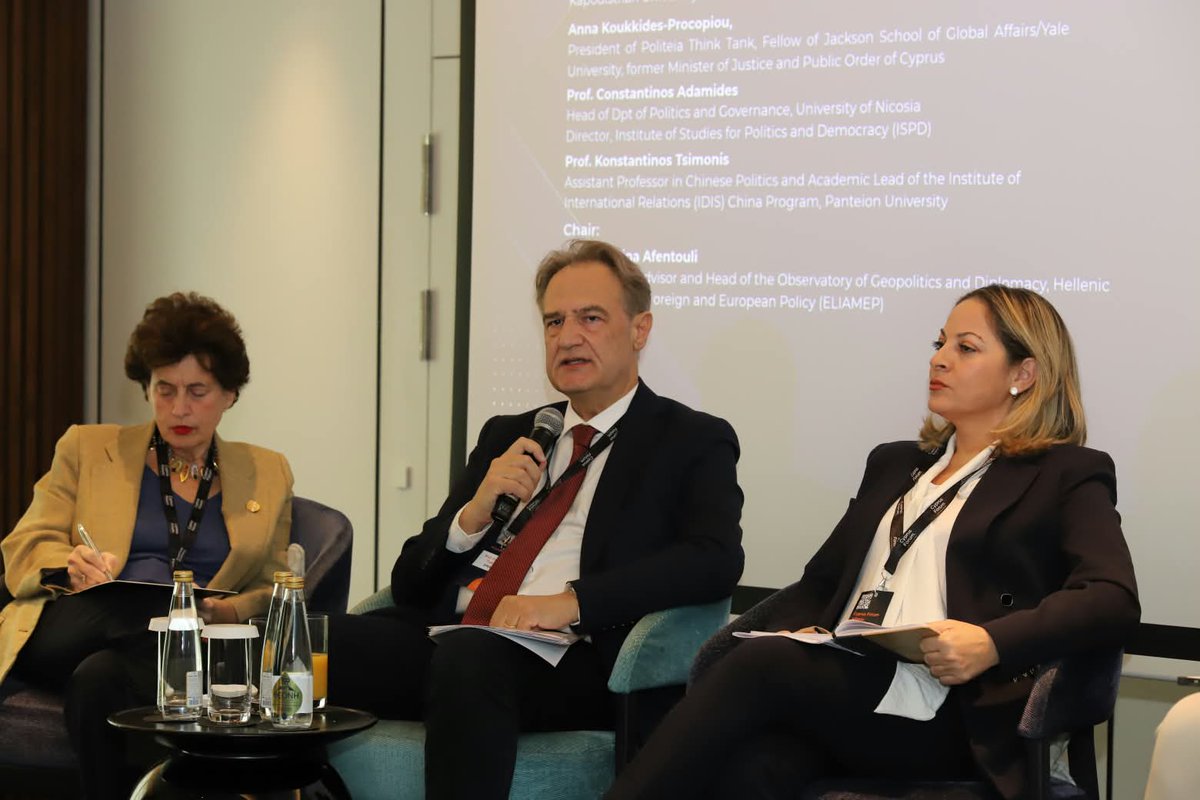
Security, geopolitical uncertainty and the evolving strategic role of Greece and Cyprus in the Eastern Mediterranean took centre stage at Cyprus Forum Athens.
Moderated by Ino-Despoina Afentouli, the discussion explored the need for a more proactive and coordinated approach to regional security.
Anna Koukkides-Procopiou (@AnnaKoukkides) emphasised the importance of developing a comprehensive security strategy for Cyprus, addressing both traditional and emerging threats.
Prof. Panayotis Tsakonas highlighted Europe's need for greater strategic autonomy and stronger security capabilities amid uncertainty in transatlantic relations.
Prof. Constantinos Adamides (@adamidco) examined the interconnected nature of regional conflicts and the growing significance of hybrid threats.
Prof. Konstantinos Tsimonis discussed China's economic and diplomatic influence, stressing the importance of balanced international partnerships.
The panel underscored the need for Greece and Cyprus to strengthen their strategic planning, diversify partnerships and play a more active role in shaping regional security.
At Cyprus Forum Athens, Dr Tasos Chatzivasileiou (@tasos_chatziv) highlighted the importance of Greece–Cyprus cooperation in strengthening regional stability, European security and strategic connectivity.
He reaffirmed Greece’s commitment to a comprehensive settlement of the Cyprus issue based on UN resolutions and a bizonal, bicommunal federation, while emphasising the strategic importance of energy interconnections and regional partnerships in the Eastern Mediterranean.
Looking ahead to Greece’s 2027 Presidency of the Council of the EU, he outlined priorities including security, competitiveness, resilience, enlargement, migration and maritime policy.
He also stressed the need for an ambitious EU budget that balances emerging strategic priorities with cohesion, agriculture and fisheries.
The keynote underscored the shared role of Greece and Cyprus in promoting a stronger, more resilient Europe and a stable Eastern Mediterranean.
Europe’s competitiveness, investment landscape and strategic autonomy took centre stage at Cyprus Forum Athens.
Agathi Pafili (@agathiP) highlighted Europe's substantial savings but limited ability to channel them into productive investment, pointing to fragmented capital markets and regulatory barriers.
Prof. Spyros Blavoukos emphasised the need for greater European strategic autonomy, stronger political coordination and a more integrated Single Market.
Yannis Mastrokostas stressed the importance of regulatory stability and predictable investment frameworks to encourage innovation and long-term business growth.
Dr Fay Makantasi examined Greece's investment recovery, highlighting its dependence on tourism and real estate, while identifying artificial intelligence and innovation as opportunities for future growth.
The discussion underscored the need for Europe to translate its economic potential into investment, innovation and stronger global competitiveness.
Cyprus Forum Athens returned for its second year, strengthening dialogue between Greece and Cyprus on public policy, regional cooperation and Europe's strategic future.
In his opening remarks, Mr Nicolas Kyriakides (@NicKyriakides) emphasised the importance of moving beyond traditional diplomatic ties towards structured cooperation, knowledge exchange and joint policymaking.
He highlighted the role of Cyprus Forum Athens in connecting policymakers, researchers, universities and businesses, while recognising the growing collaboration with ELIAMEP and Greece's academic community.
He also announced that Cyprus Forum is expected to join the Delphi Economic Forum network, subject to the completion of the necessary arrangements.
The key message was the importance of transforming Greece–Cyprus cooperation into meaningful policies and initiatives with wider regional and European impact.
Under the theme “Greece and Cyprus in a Changing World: Europe, Transatlantic Relations and the Eastern Mediterranean”, Cyprus Forum Athens brought together policymakers, diplomats and experts to discuss the challenges shaping Europe and the wider region.
In her opening remarks, Elena Lazarou (@ElenLazarou) highlighted the importance of strengthening Greece–Cyprus cooperation amid growing geopolitical uncertainty, including developments in transatlantic relations, Russia’s ongoing war and tensions in the Middle East.
She emphasised the growing role of competitiveness, digital technology, connectivity and transport in shaping international relations, while identifying Cyprus’s 2026 EU Council Presidency and Greece’s upcoming 2027 Presidency as opportunities for closer coordination.
The session underscored the value of policy dialogue, research and diplomatic cooperation in addressing shared challenges and advancing Europe’s strategic future.
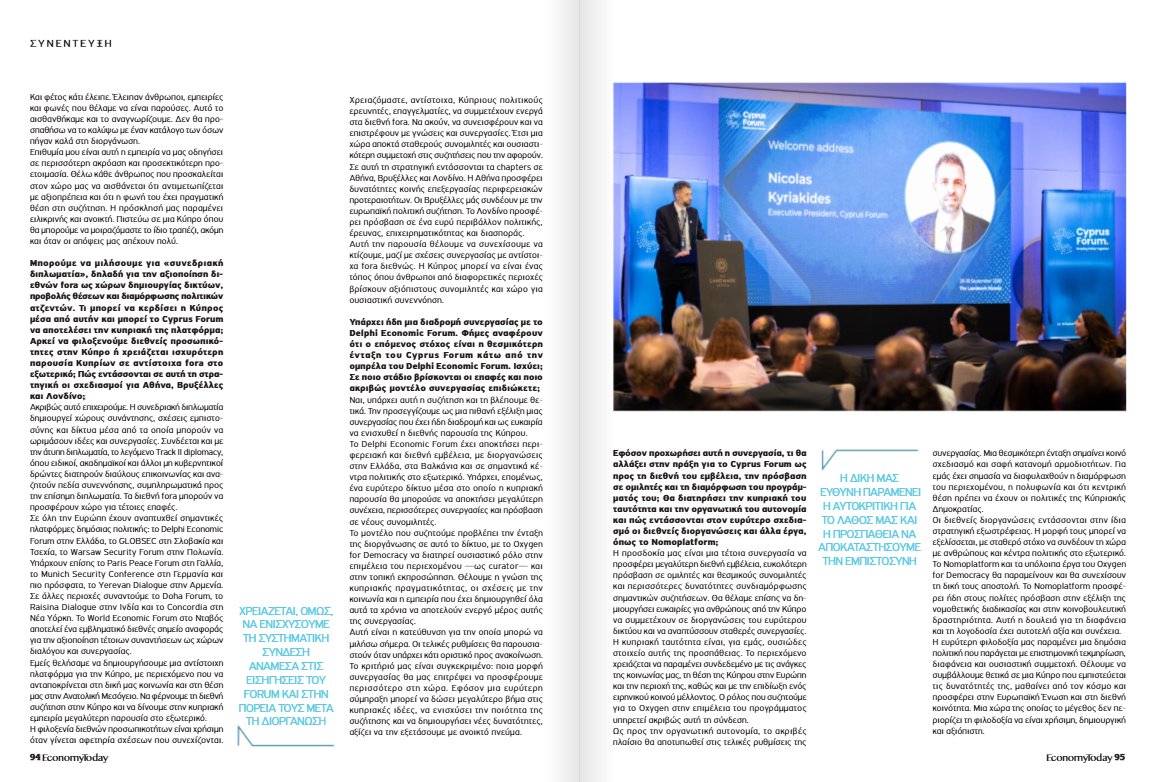
Cyprus Forum: “Bringing the International Conversation to Cyprus”
In an interview with Economy Today, Nicolas Kyriakides, Executive President of Cyprus Forum, reflects on the forum’s growing international presence, its commitment to open and inclusive dialogue, and its ambition to position Cyprus as a meeting point for ideas, perspectives and policy discussions.
From potential cooperation with the Delphi Economic Forum to its reach to Athens, Brussels and London, the vision goes beyond an annual conference: building a lasting platform for dialogue, collaboration and meaningful impact.
At a time when political divisions increasingly challenge constructive debate, Kyriakides also addresses the importance of safeguarding the forum’s independence and ensuring that different voices have a place in the conversation.
Read the full interview in our Commentary section.
https://t.co/9vZujpyOb7
John Breslow (@USAmbCy), US Ambassador to Cyprus, highlighted the lasting impact of educational cooperation between the two countries. Encouraging internships for young Cypriot professionals at innovative American companies operating in Cyprus, he emphasised the importance of collaboration between government and the private sector in creating meaningful opportunities. By investing in education, professional development and lasting personal connections, such partnerships can strengthen bilateral relations for decades to come.
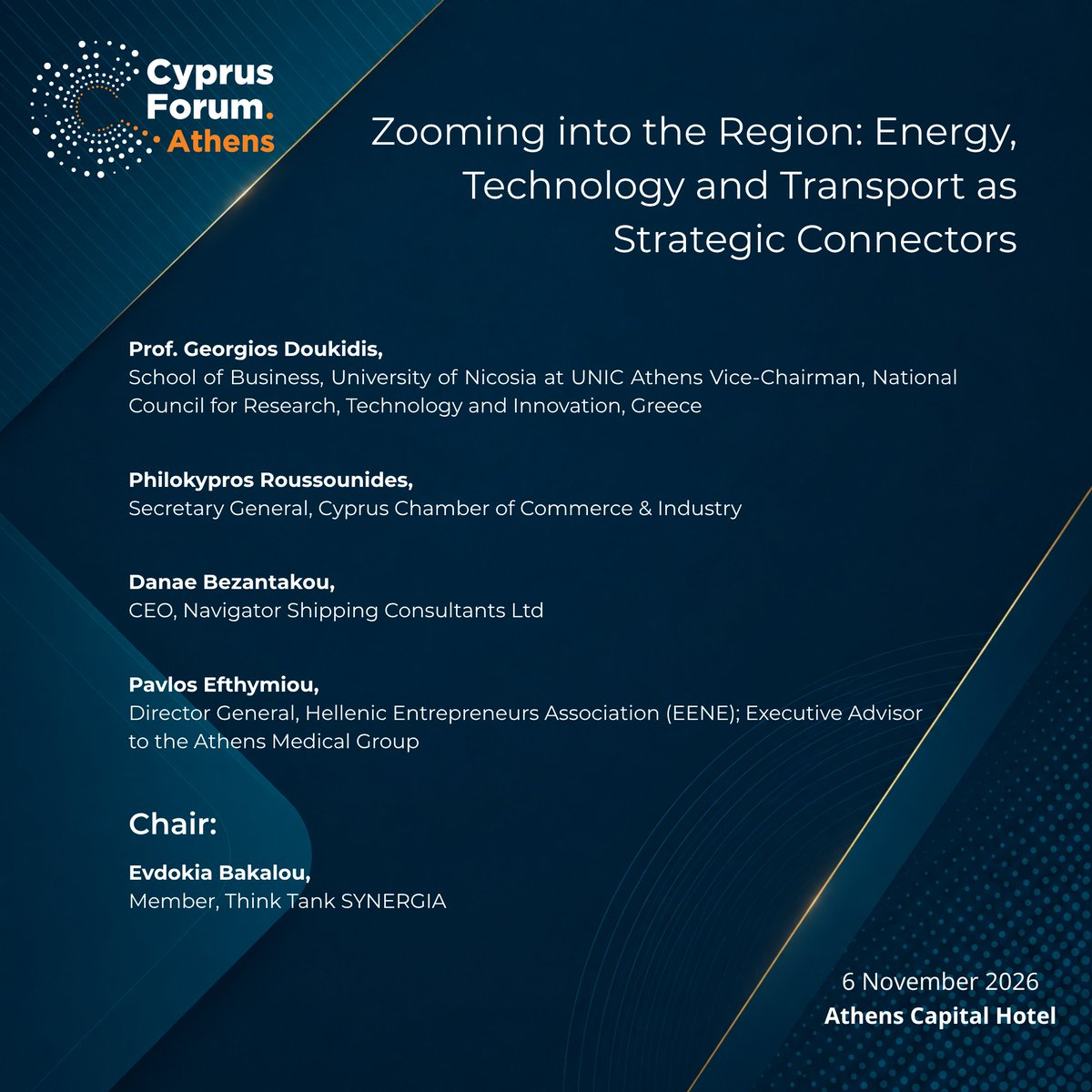
Zooming into the Region: Energy, Technology and Transport as Strategic Connectors
How can energy, technology and transport connectivity unlock new opportunities for Greece, Cyprus and the wider Eastern Mediterranean?
As geopolitical dynamics reshape global markets, energy networks, maritime routes, digital infrastructure and emerging technologies are becoming increasingly important drivers of economic growth, security and resilience.
This panel will bring together experts from business, technology and industry to explore how Greece and Cyprus can leverage their strategic geographical position to strengthen regional connectivity, boost competitiveness and contribute to Europe's energy security and economic resilience.
The discussion will also feature a special presentation on the Strategic Importance of AI by Professor Georgios Doukidis.
Meet our panellists:
▪️ Professor Georgios Doukidis – School of Business, University of Nicosia at UNIC Athens; Vice-Chairman, National Council for Research, Technology and Innovation, Greece
▪️ Philokypros Roussounides – Secretary General, Cyprus Chamber of Commerce & Industry
▪️ Danae Bezantakou – CEO, Navigator Shipping Consultants Ltd
▪️ Pavlos Efthymiou – Director General, Hellenic Entrepreneurs Association (EENE); Executive Advisor to the Athens Medical Group
Moderated by Evdokia Bakalou – Member, Think Tank SYNERGIA
📅 6 November 2026
📍 Athens Capital Hotel – MGallery Collection, Athens
🔗 Register now: Cyprus Forum Athens 2026
#CyprusForumAthens #CyprusForum #EasternMediterranean #EnergySecurity #Technology #Transport #RegionalConnectivity #Greece #Cyprus
Europe’s Competitive Edge: Opportunities in a Shifting Global Economy
How can Europe strengthen its competitiveness and turn global economic challenges into new opportunities?
As geopolitical competition intensifies, shifting trade relationships, technological disruption, strategic dependencies and the green transition are reshaping the global economy.
This panel will bring together leading experts to explore how Europe can boost innovation, attract investment, strengthen productivity and reinforce its position on the global stage, while examining the opportunities and challenges for Greece and Cyprus.
Meet our panellists:
▪️ Agathi Pafili – Senior Vice-President, Capital Group
▪️ Dr. Fay Makantasi – Research Director, diaNEOsis
▪️ Prof. Spyros Blavoukos – Head, EU Institutions & Policies Programme; Senior Research Fellow, ELIAMEP; Professor, Athens University of Economics and Business
▪️ Yannis Mastrokostas – Director Government Affairs, PAPASTRATOS, an affiliate of Philip Morris International
Moderated by: Lucas Velidakis – Journalist, Senior Editor, Athens Voice
📅 6 November 2026
📍 Athens Capital Hotel – MGallery Collection, Athens
🔗 Register now: Cyprus Forum Athens 2026
#CyprusForumAthens #CyprusForum #EuropeanCompetitiveness #EuropeanEconomy #Innovation #EasternMediterranean #Greece #Cyprus
Protecting our marine environment to support the coastal communities that depend on it
Highlighting the profound economic and cultural connections shared through our oceans, Dr. Costas Kadis (@CostasKadis) addressed the mounting environmental and climate pressures threatening marine biodiversity and coastal livelihoods. He championed the European Ocean Pact as the foundational framework needed to protect ocean health, accelerate a competitive blue economy, and bolster maritime security. Achieving these sustainable management goals, however, requires a deeper collective commitment to researching and understanding our marine ecosystems.