Yersinia pestis Interacts With SIGNR1 (CD209b) for Promoting Host Dissemination and Infection: Kun Yang, Yingxia He, Chae Gyu Park, Young Sun Kang, Pei Zhang, Yanping Han, Yujun Cui, Silvia Bulgheresi, Andrey P. Anisimov, Svetlana V. Dentovskaya,… https://t.co/SeEXBEadc0
Kang @Princeton@RutgersCancer & colleagues find that Tinagl1 can suppress triple-negative breast cancer progression and metastasis by inhibiting integrin/FAK and EGFR signaling, implicating Tinagl1 as a candidate therapeutic agent https://t.co/VbPLUMLvz9
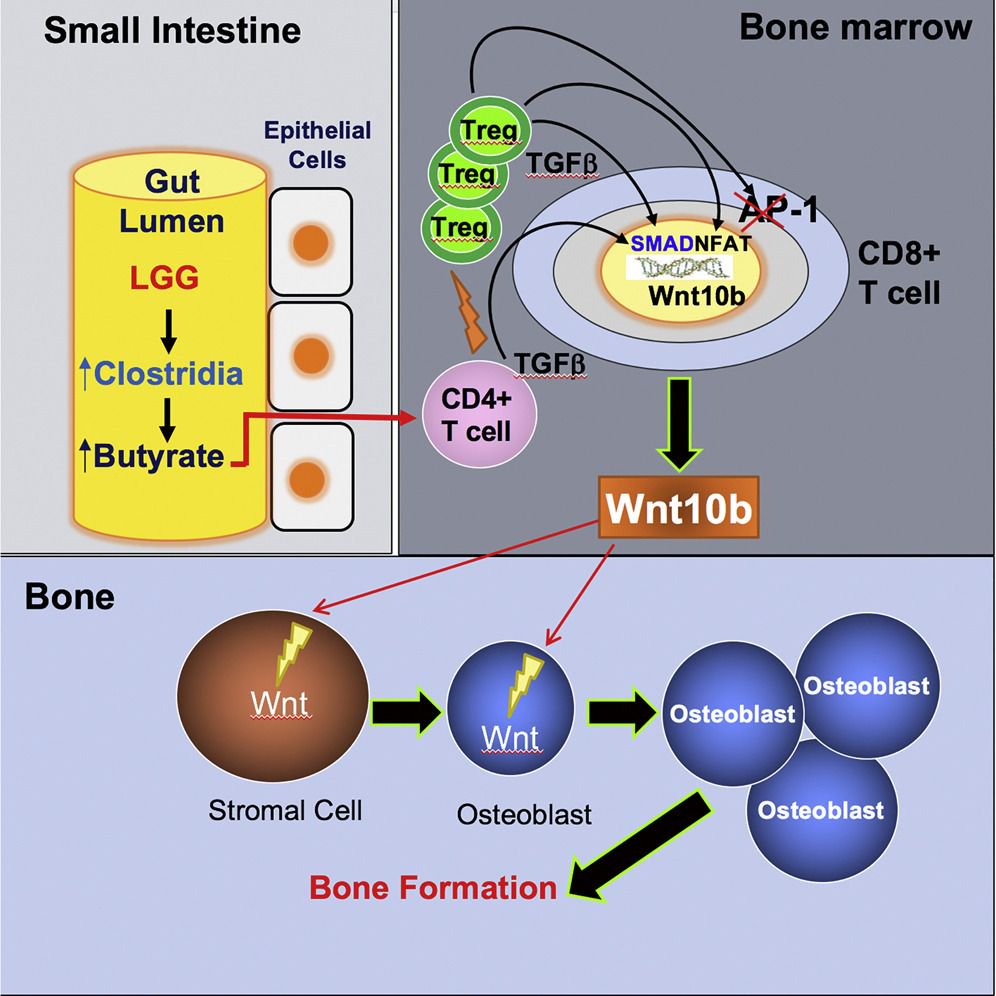
Conventional T #cells (αβ T cells) are known to enhance osteoclast generation and function through release of proosteoclastogenic #factors like IL17 and RANKL.
Read full article here: https://t.co/SUGd5bpsMB
Effect of age on NK cell compartment in chronic myeloid leukemia patients treated with tyrosine kinase inhibitors.: Paulo Rodrigues-Santos, Nelson López Sejas, JaniSofia Almeida, Lenka Ruzičková, Patricia Couceiro, Vera Alves, Carmen Campos, Corona… https://t.co/ubzRI4KmdZ
This video from @IsabellNessel shows neonatal porcine jejunum epithelial cells after scratch test.
Submit an abstract to the recently launched article collection: Sustained Effects of Early Nutrition on Immune Development and Microbiome-Immune Crosstalk
https://t.co/5mB4pIpiAE
It is well established from prior work in #RNA interference that synthetic RNAs can induce a type I interferon (IFN) response that can limit the #application of such methods both in vitro and in vivo.
Read full article here: https://t.co/swEEAar0Bk
The clustered regularly interspaced short palindromic repeats (CRISPR)/Cas9 #technology has attracted much attention due to its efficacy in #genome editing, and its therapeutic application is a rapidly developing field.
#Macrophages also have a unique phenotype, known as “macrophage activation,” which refers to changes their properties in response to pathogen-associated molecular patterns (PAMPs), various #cytokines, hormones, and other factors acting as both endogenous and exogenous stimuli.
Alterations in the #inflammatory response could improve ligament healing through modulation of ECM deposition in the granulation tissue and remodeling of the health ligament, specifically by increasing type 1 procollagen production, decreasing type III collagen deposition.
The human #genome involves six functional LOX genes and a corrupted pseudogene. 20 years ago it was reported that expression of ALOX15 was specifically induced in human peripheral #monocytes by the classical Th2 cytokine interleukin 4.
Although recent studies have elucidated different aspects of mechanisms of infertility in #patients with CII of reproductive system, many issues related to interactions in pro-/anti-inflammatory and regulatory #cytokines network remain disputable.
Lipoxygenases (LOX) are lipid-peroxidizing enzymes that play a role in #cell differentiation, but have also been implicated in the #pathogenesis of inflammatory, hyperproliferative and neurological disorders.
Type I interferons (IFNs) are a group of many #proteins that play a vital role in mammalian antiviral and antitumoral host defense. The most prominent members of this #family are IFN-a, IFN-b, and IFN-w, which in turn include several proteins.
Macrophages have been shown to play an important role in the clearance of #bacteria in the initial stages of NEC. Activation of #macrophages is characterized by the release of many intercellular mediators including cytokines, growth factors, and chemokines.
During inflammation, neutrophils, M1 and M2 #macrophages, and to a lesser degree, t-lymphocytes infiltrate the wound. Fibroblasts, endothelial cells and additional macrophages accrue thereafter and form granulation #tissue during proliferation.
In humans, IL-33 #expression is highly upregulated in AERD #patient nasal polyps, AR patient nasal secretions, and asthmatic airways (with severe asthmatics demonstrating the highest expression).