A 3 year old named Nevada was kicked out of his i9 Sports soccer league in Winter Park, Florida, and police escorted his family off the field. His parents say the opposing team's parents complained that none of their 5 year olds could take the ball from him and accused him of "trying to put on a show." "They really called the police on a 3 year old because he had the ball too much," his dad said. The family says they got a refund, and neither the league nor police have commented.
https://t.co/rDgdyPn475
16-Year-Old Mexican Student Angela Karime Hernandez Venegas Wins Gold Medal At International Science Fair For Inventing An Experimental Fire Extinguisher That Uses Sound Waves Instead Of Water Or Chemicals! 🏆🥇🇲🇽🔥🔊
The NFL fined 49ers LB Fred Warner $65,673 for two unnecessary roughness violations last week — including $47,762 for this hit on Commanders TE Chig Okonkwo.
Officials threw a flag on the play, but then picked it up.
$16.5 MILLION… for 28 years of his life.
Adam Carmon was locked up in 1994 for a murder conviction a judge later threw out, citing police and prosecutor misconduct and evidence kept from his defense.
Now New Haven has agreed to pay. Connecticut had already paid him $7.9 million.
Even the mayor said it: "I am deeply sorry."
How many more men are still sitting in a cell for something they didn't do?
You can't pay back 28 years. You can only make sure it never happens again.
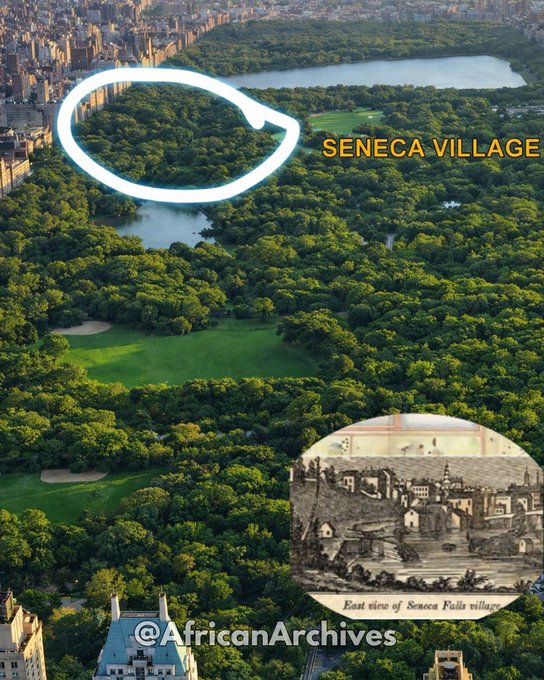
Did you know that an entire Manhattan village owned by black people was destroyed to build Central Park.
The community was called Seneca Village. It spanned from 82nd Street to 89th Street.
Long before these trees, paths, and open lawns existed, this land was home to Seneca Village—a thriving community founded in 1825 by free Black Americans. Located between what we now know as West 82nd Street and West 89th Street, Seneca Village was a place of stability, ownership, and independence during a time when those things were deliberately denied to many.
Families here owned their homes. They built churches, a school, and created a close-knit neighborhood where children were educated and adults exercised civic rights. Property ownership in Seneca Village even allowed Black men to vote, granting a level of political voice that was rare in New York at the time. Later, Irish immigrants also became residents, making it one of the city’s earliest racially integrated communities.
In the 1850s, the land was taken to make way for Central Park. Entire households were forced to leave. Homes were torn down. A living community disappeared so a public space could rise in its place.
Today, millions walk through this park unaware of what once existed beneath their feet. This image is more than a scenic view—it marks a place where lives were built, futures were shaped, and a community once stood proud.
🚨 BREAKING: A Black couple showed up to tour an apartment in Queens... and the broker accidentally texted THEM instead of the owner: "Ugh. They are Black."
They'd just moved from Delaware for her new job. Now they're SUING Douglas Elliman, the agent AND the owners.
"It doesn't change the pain. It doesn't take away the pain you caused us that day."
Think about it. They were judged before they even had a chance.
They only found out because she texted the wrong person. Most people never do.
Ochocinco explains why he refuses to waste money on luxury watches, private jets, and impressing women, revealing he saved around 80% of his $48 million NFL earnings 💰
This image highlights two historical realities that are essential to understanding how the United States was formed.
Before European colonization, Indigenous peoples lived on, governed, and maintained these lands for generations. As the nation expanded, Native communities were pushed off their territories through war, forced removal, and treaties that were frequently violated. The loss of land, culture, and autonomy had lasting consequences that continue to affect Native nations today.
At the same time, millions of Africans were forcibly taken from their homelands through the transatlantic slave trade. Enslaved people were compelled to provide unpaid labor that supported major industries such as agriculture, construction, and transportation. This labor contributed significantly to the country’s economic growth while denying basic human rights to those who were enslaved.
These histories are not competing narratives — they are interconnected parts of the same national story. Land was acquired through displacement, and wealth was built through forced labor. Understanding this does not place blame on people living today, but it does require honesty about how the past shaped the present.
Learning accurate history helps explain modern inequalities, ongoing discussions about justice, and the importance of acknowledging all communities involved in the nation’s development. Education, not denial, is what allows societies to move forward with greater awareness and accountability.