Join DCFPI for our 25th Anniversary Policy Forum & Reception on Monday, November 9, from 4–7 p.m. at AFL-CIO. We’ll gather around the theme “Building the Future We Deserve: The Imperative of a Third Reconstruction.”
Register and learn more: https://t.co/R74QrBk1gK
📷
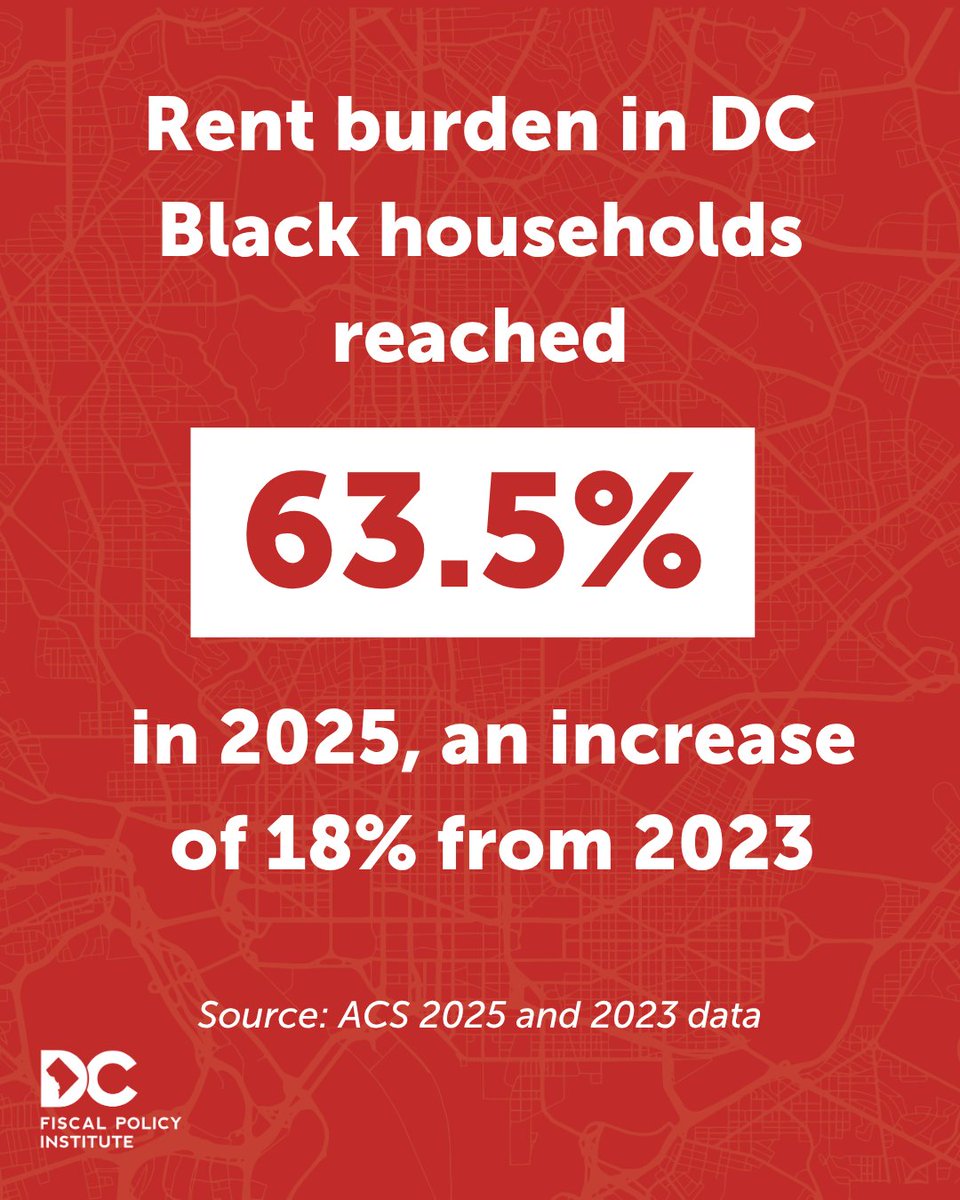
To be considered rent burdened, a household must pay more than 30% of their gross income to rent. This high level of rent burden should be an urgent call to lawmakers to address the affordability crisis.
These persistent disparities reflect systemic racism and unequal access to opportunity, and recent federal policies that harm people with low incomes will exacerbate this gap.
DC is going backward on closing racial disparities. In 2023, Mayor Bowser set a goal to increase Black median hhld income by $25k by 2028 but never followed through with concrete actions. DC needs intentional strategies to shrink racial disparities.
Black households in the District continue to have significantly lower median incomes than white households due to systemic racism, and the divide is only growing wider.
The Census Bureau released annual #ACSData today. The American Community Survey (ACS) covers 3.5 million households, making it a key source for state-level data and tells us how DC residents are faring in regards to poverty, income, and health coverage.
"D.C. may be dubbed the sports capital, but it could be called the sports subsidy capital." said Shira Markoff of the D.C. Fiscal Policy Institute.
DC’s economy is stronger when we invest directly in workers and families, not sports teams.
https://t.co/KaEIJ5qBHP
“The purpose of the BAT is to make sure all businesses are contributing to our shared resources, and right now there are many that are not because of the federal limitation on us,” said @EricaWilli, executive director of DCFPI
https://t.co/u8x5cOTywQ
DC Council shouldn’t let the planned sales tax increase go into effect next October. Residents with low incomes typically spend every dollar they take in and end up devoting a larger share of their income on purchases subject to sales tax.
A Wealth Proceeds Tax would raise nearly $200 million in fiscal year 2027, according to DC’s Office of Revenue Analysis, and would largely apply to very wealthy households.
A Wealth Proceeds Tax would also improve racial equity: Centuries of extractive policies and practices that have stripped BIPOC people of wealth while allowing white people to amass extreme wealth and grow it across generations.
The BAT is not a “double tax” as some opponents have claimed. As proposed, the BAT would be a dollar-for-dollar credit against the franchise tax and targets businesses that are currently paying little or no franchise tax. https://t.co/vUTsOG8oLj
DC should implement a Business Activity Tax. It’s profoundly unfair that the often very high-income lawyers and consultants with clients in DC but not living here aren’t held to the same standard as non-resident owners of DC restaurants and dry-cleaners.
A Business Activity Tax would close a loophole that lets law firms, lobbying shops, and consulting firms with non-resident owners skip DC business taxes entirely. That revenue could make childcare affordable for DC families and help end chronic homelessness.
The irony of this is that the wealthiest DC taxpayers escape a ton of taxation at death b/c of existing tax breaks that advantage wealth & capital gains, hence the need for a Wealth Proceeds Tax
@dcfpi explains more in this “buy, borrow, die” infographic. https://t.co/6xBRclAC5X