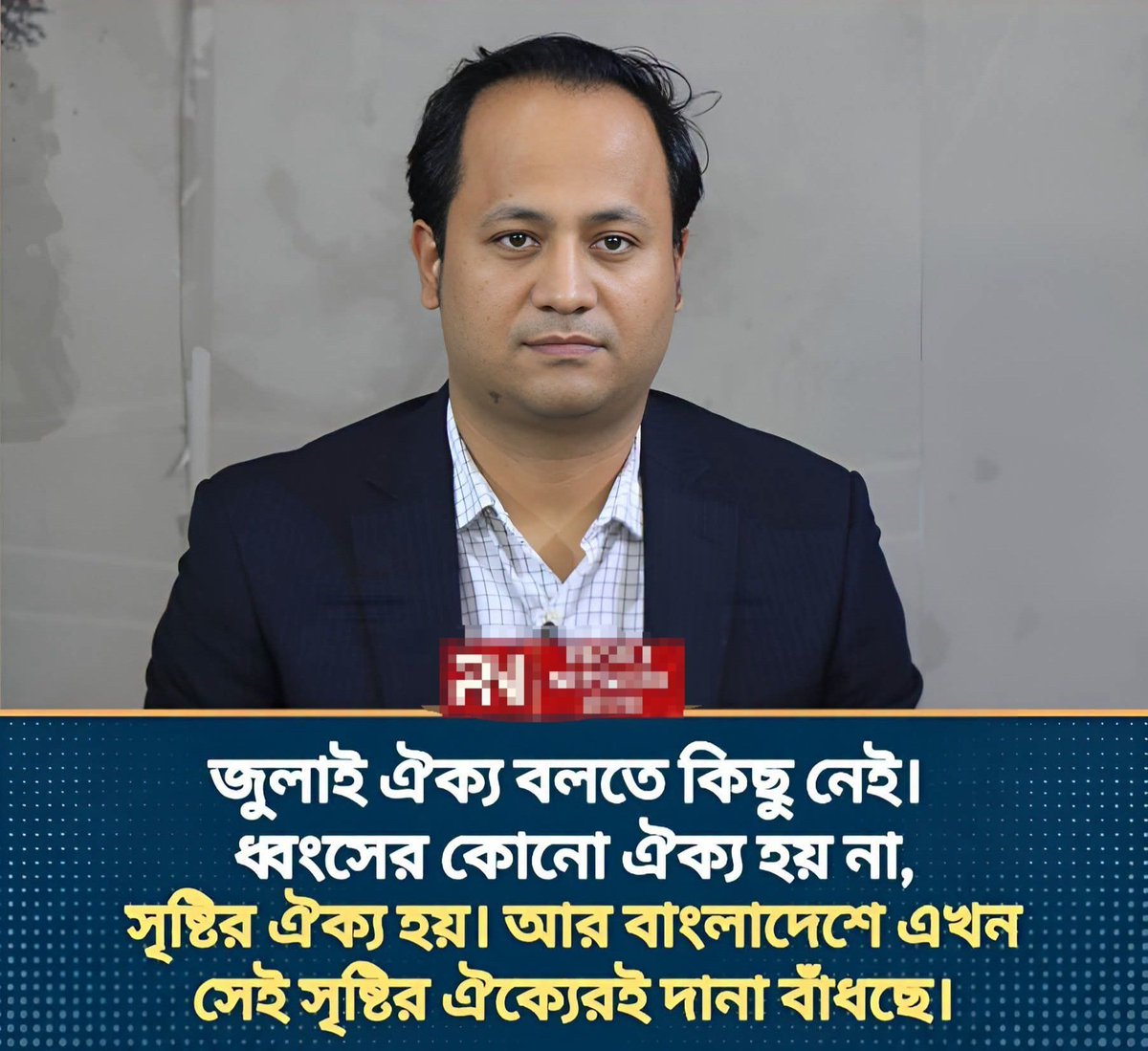
The conduct of a disgraceful officer of the #Bangladesh ARMY towards the country's citizens is utterly shameful.
It is impossible to entrust the defense of the nation to an ARMY that indulges itself at the public's expense and harbors an inflated sense of its own importance.
হা হা হা হা '😂😂
লন্ডনে গণধোলাই 😁
এটাই কি স্বাভাবিক নয়...?
যেখানে পাওয়া যাবে জুলাই জ*ঙ্গি
সেইখানেই ধইরা পি*টা* বি।
গণশত্রুর অপর নাম গণ-ধোলাই।।
#JulyConspiracy#JulyCDI
Bangladesh Sending Officers Accused of Human Rights Violations Abroad as UN Peacekeepers — Where Is the Accountability?
@UN@UNHumanRights@hrw@amnesty
Serious questions have emerged about Bangladesh’s international reputation, its participation in United Nations peacekeeping operations, and the accountability of its security forces. A recent report published by The Diplomat raises a deeply concerning question: Are members of Bangladesh’s security forces accused of human rights violations being sent abroad to serve as UN peacekeepers?
This is an issue that deserves serious international attention.
The responsibility of UN peacekeepers is to protect civilians in conflict zones, uphold human rights, and contribute to international peace and stability. However, when individuals facing serious allegations of enforced disappearances, torture, or extrajudicial killings are deployed in international missions without proper investigation and screening, the credibility of the entire peacekeeping system comes into question.
Changing the Name of RAB Is Not the Same as Reform
According to the report, on September 15, the Bangladesh government dissolved the Rapid Action Battalion (RAB) and replaced it with a new force called the Special Response Battalion (SRB).
But an important question remains: Does changing the name of an institution erase its past allegations and responsibility?
RAB was established in 2004 under the BNP government. Over the years, serious allegations of enforced disappearances, extrajudicial killings, and torture have been raised against the force under successive governments.
In the Narayanganj seven-murder case, 16 RAB personnel were sentenced to death. In 2021, the United States imposed sanctions on RAB and several of its officials over serious human rights concerns.
Following August 2024, a commission investigating enforced disappearances reviewed 1,569 complaints. According to the report, RAB was allegedly implicated in approximately one-quarter of those cases. It also cited preliminary findings identifying 82 officials as potentially involved.
These findings make one thing clear: changing an institution's name is not enough. What Bangladesh needs is independent investigation, accountability, justice for victims, and genuine institutional reform.
Is the United Nations Properly Screening Peacekeepers?
Bangladesh has been contributing to UN peacekeeping missions since 1988. Between 2021 and 2023, it was among the largest contributors of peacekeeping personnel worldwide.
Peacekeeping is not merely a matter of international prestige for Bangladesh. It is also an important source of foreign earnings for the country and its armed forces.
According to the report, Bangladesh earned approximately Tk 8.62 billion from peacekeeping operations during the 2023–24 fiscal year. Over the previous 23 fiscal years, the reported earnings of Bangladesh's armed forces from this sector amounted to approximately Tk 279.41 billion.
However, financial benefits and international recognition must never take priority over human rights and accountability.
The most important question is whether individuals selected for international peacekeeping assignments have clean and credible human rights records.
In 2019, the UN Committee Against Torture expressed concern about the deployment of RAB personnel in peacekeeping missions. In 2024, an investigative report by Germany's DW raised questions about more than 100 former RAB officials who had reportedly served in UN missions.
UN records have also documented four substantiated cases of sexual exploitation and abuse involving Bangladeshi peacekeepers, including an incident involving an underage victim.
These matters cannot simply be ignored.
A New Government, But the Same Questions
Perhaps most concerning is that questions surrounding accountability within Bangladesh's security forces have continued despite the change in government.
Citing human rights organizations, the Diplomat report states that at least 40 alleged extrajudicial killings were documented during the first 14 months of the interim government. According to Ain o Salish Kendra, 11 alleged extrajudicial killings were also recorded during the first six months of 2026.
This raises a fundamental question:
If allegations of human rights violations by law enforcement agencies are not properly investigated and addressed at home, how can the international community be confident that the same officials are suitable for peacekeeping responsibilities abroad?
Human rights do not belong to any particular political party. Whether violations occur under the Awami League, BNP, or any other government, they must be independently investigated, and those responsible must be held accountable.
Accountability Must Come Before Deploying Bangladeshi Peacekeepers to Haiti
The Diplomat report also discusses plans to deploy approximately 1,600 Bangladeshi military and police personnel to Haiti as part of a UN-authorized force tasked with addressing gang violence. The report states that an advance team of 50 Bangladeshi military personnel has already been sent there.
The people of Haiti have suffered enormously from armed gang violence. Protecting civilians and restoring security are undoubtedly important objectives.
However, every individual deployed to such a mission must undergo rigorous background checks, including a thorough review of their human rights records and professional conduct.
The United Nations should not rely exclusively on assurances provided by national governments. It must establish an independent, transparent, and credible screening mechanism.
In particular, officials, both serving and former, associated with RAB and the Directorate General of Forces Intelligence (DGFI) who face serious allegations should be subject to thorough and impartial investigations before being considered for international peacekeeping assignments.
Five Direct Questions for the United Nations
How are officials facing serious human rights allegations being selected for UN peacekeeping missions?
Following the dissolution of RAB and the establishment of SRB, what mechanisms have been introduced to examine the human rights records of former RAB personnel?
Where are the independent and effective investigations into allegations of enforced disappearances, torture, and extrajudicial killings in Bangladesh?
Can the United Nations guarantee that every Bangladeshi personnel member deployed to Haiti has undergone proper and independent background screening?
What action will the United Nations take if allegations of human rights violations against deployed personnel are substantiated?
Final Thoughts
Bangladeshi peacekeepers have made important contributions to international peacekeeping operations over many years. Their service, dedication, and sacrifices deserve recognition and respect.
However, serious allegations involving individual officials must not be overlooked simply because they are part of a national security institution. The credibility of Bangladesh's peacekeeping contributions depends on transparency, accountability, and respect for human rights.
Bangladesh deserves to stand with dignity and respect on the international stage. But that respect must begin at home—with human rights protections, the rule of law, independent investigations, and accountability for those who violate the law.
Changing the name of a security force cannot erase its past. Genuine reform requires transparency, justice for victims, and institutional accountability.
The United Nations peacekeeping system must never become a safe haven for officials facing credible allegations of human rights violations. Those entrusted with protecting peace around the world must demonstrate a commitment to human rights, professional integrity, and accountability in their own conduct.
The international community deserves answers, and the people of Bangladesh deserve justice.
The questions must be answered—not ignored.
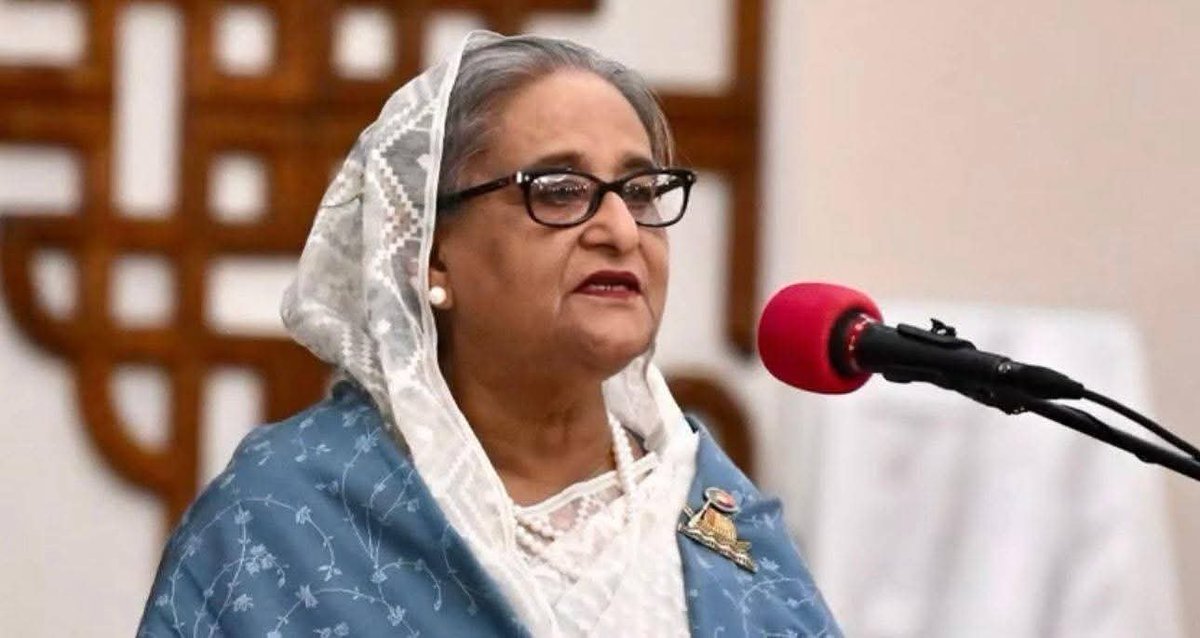
Sheikh Hasina is set to return to the country in #December .
While the BNP, Jamaat & NCP claim that she will face trial upon her return,
the government—fearing that her arrival would inevitably lead to the end of their own hold on power—is refusing to issue her a #PASSPORT.
ফাঁসির রায় জাতিরজনক বঙ্গবন্ধুরও হয়েছিল,
কিন্তু, সেই রায় কার্যকর হয়েছে বঙ্গবন্ধুর পরিবর্তে ভুট্রো খানের।
এটা ভুলে গেলে হবে না।
জননেত্রী দেশরত্ন শেখ হাসিনা" সেই বঙ্গবন্ধুরই কন্যা।
কাজেই-- ফাঁসির দড়ি কার জন্য ঝুলে আছে তা সময় বলে দিবে ⛔
#StandWithSheikhHasina#December
বিএনপি যে কত নিচে নামতে পারে তা বারবার প্রমান করে দিচ্ছে।
কোন কিছুই অতিরিক্ত ভালো না। নিজের পায়ে নিজে কুড়াল দিলে পা আর পায়ের জায়গায় থাকে না।
মনে রেখো বাংলাদেশ
Where Are Human Rights Now?
Arresting innocent minors under political labels, threatening their education and destroying their futures - while mothers cry outside prison gates in the middle of the night.
In Munshiganj, reports say 37 people, including 35 minors, have been arrested. With final examinations approaching, their education and future are now at risk. Their mothers are left in despair, desperately waiting outside prison gates.
Is this justice? Where are the human rights organisations?
Release the innocent minors immediately and unconditionally. Protect their right to education and their right to a future free from political persecution. Children must never become victims of political vengeance.
#Bangladesh #HumanRights
The Return of a Statesman: India's Principled Stance and Dhaka's Double Standards
----
More than two years have passed since 5 August 2024. Throughout this long period, Sheikh Hasina, daughter of Bangabandhu Sheikh Mujibur Rahman, Bangladesh's founding leader and Father of the Nation, and five-time elected Prime Minister of Bangladesh, has had to remain away from her beloved homeland. In July, she told Reuters that she would return home in December. She stands firm on that commitment today. Her application to the Bangladesh mission in New Delhi for a passport and national identity card shows that this is no mere rhetoric. Drawn by her bond with the land and its people, a leader of the masses is preparing to come home.
The decision to return is Sheikh Hasina's own. She has never practised a politics that waits for anyone's permission. Still, it matters how India, the country that has stood by her in this difficult time, views the question. On this issue, both New Delhi's principled stance and Dhaka's double standards are now plain to see.
▪️ A Relationship Tested by History
Sheikh Hasina's relationship with India is not an arrangement with any single government. Whether the Congress, the Janata Party or the BJP has governed in New Delhi, the course of this relationship has not changed. It began in 1971. Just three months after victory, Indian troops withdrew from Bangladesh at Bangabandhu's request, and with that, the relationship's first principle was written: respect for sovereignty.
After 15 August 1975, Sheikh Hasina and Sheikh Rehana, orphaned overnight, had no way back home. In those dark days, the then Government of India stood by them and arranged for them to live in New Delhi. Nearly six years later, in 1981, she returned to Bangladesh by her own decision, defying the reluctance of the military ruler of the time. India stood by her in hard times, but it never set her course. Today, history has come full circle.
▪️ India's Principled Stance Towards a Guest Statesman
A report by BBC Bangla's New Delhi correspondent, published on 12 November and citing policymaking circles, paints a clear picture. Sheikh Hasina's position rests on two points: she will return home, and once back, she will face the legal battle head-on. She has never practised a politics of hiding. On both questions, New Delhi agrees with her.
In December 2024, the interim government sought her return through a diplomatic note. India has yet to say either yes or no to that request. New Delhi's position is that this is a legal matter and will be resolved through legal means. Behind this lies a long-standing principle of diplomatic ethics: a guest statesman on one's soil cannot be handed over as a prisoner to political opponents. When Sheikh Hasina arrived in India, she was not a convicted person. She was the recently departed Prime Minister of a sovereign nation. India has upheld the dignity and respect due to her.
When Bangladesh's State Minister for Foreign Affairs cites precedents of returning prisoners "in handcuffs", it is no longer the language of diplomacy but the language of vengeance. No responsible state can respond to such language.
▪️ India's Expectations: A Safe and Dignified Return, and Standards of Justice
In his 12 November report, BBC Bangla's New Delhi correspondent Subhajyoti Ghosh wrote that government officials in New Delhi have indicated to the BBC that India has two principal expectations regarding Sheikh Hasina's return.
First, according to the BBC report, Sheikh Hasina arrived in India aboard a Bangladesh military aircraft. India therefore believes that the responsibility for bringing her back should also rest with the Bangladesh Army. This could be done by sending a military aircraft, or she could be received at a point along the land border. The report also notes that New Delhi is ready to make the necessary arrangements.
Second, the BBC reports that Bangladesh must guarantee that Sheikh Hasina will be allowed to appeal against her death sentence and that her trial on the charges relating to the events of July will begin afresh. An official in New Delhi told the BBC: "We can never knowingly send her forward to be hanged." In his words, India would want that trial to take place under the scrutiny of the international community and the global media.
The same report states that India is extremely careful to ensure these expectations are not seen as foreign interference in Bangladesh's judicial system, which is why it has made no public comment on the matter. This reflects respect for Bangladesh's sovereignty.
Nor are these conditions anything new. Article 36 of our Constitution guarantees every citizen the right to re-enter Bangladesh. Article 12(4) of the International Covenant on Civil and Political Rights (ICCPR) protects the right to enter one's own country, and Article 14 guarantees the right to a fair trial. Bangladesh itself is a state party to this covenant. India, therefore, is imposing nothing. It is simply reminding us of commitments we have made ourselves.
▪️ Why India Holds This Position
India's stance is not a favour to any particular individual or political party. It reflects the diplomatic courtesy of one of the world's largest democracies and a principled position towards a long-standing friendly nation, one rooted deep in history and shared ideals.
Solidarity with the forces of the Liberation War. In 1971, India stood by nearly ten million Bengali refugees, and soldiers of the allied forces gave their lives on this soil. India's relationship with the party that led the Liberation War is therefore no passing political calculation. It springs from the history of both nations' birth.
A shared belief in secular politics. Secularism is one of the four founding principles of Bangladesh's 1972 Constitution, born of the Liberation War, alongside nationalism, socialism and democracy. It is a cornerstone of India's Constitution as well. Since 5 August, the neighbouring country has watched with concern the attacks on minorities and the spread of extremism in Bangladesh. It naturally regards the principal political force of a secular Bangladesh as essential to the balance of the region.
Regional security. Under Sheikh Hasina's government, militant and separatist strongholds were firmly rooted out of Bangladesh's soil. This was not done to please anyone, but for Bangladesh's own security, and the entire region reaped the benefits.
Diplomatic reliability and international standing. For India, consolidating its position on the global and regional stage and retaining the international community's trust as a dependable diplomatic partner is vitally important. Honouring principled commitments in a moment of crisis is the true test of that trust and reliability. This stance is therefore not only about preserving a friendship; it is about safeguarding India's diplomatic dignity, credibility and international standing.
▪️ A Friendship of Equal Dignity and Mutual Respect
Sheikh Hasina's diplomacy proves that friendship and national interest can be protected together. The 1996 Ganges Water Sharing Treaty stands among her most notable diplomatic achievements. In 2015, under her leadership, the Land Boundary Agreement was implemented, and the residents of the enclaves gained citizenship and a nation to call home. In 2014, the delimitation of the maritime boundary with India through international arbitration secured Bangladesh's rights over a vast area of sea. She never gave up the demand for a fair share of the Teesta's waters at any meeting. Advancing friendship while upholding national interest: this is the strength of Sheikh Hasina's diplomacy. The relationship between these two sovereign nations rests on equal dignity and mutual respect.
▪️ Dhaka's Double Standards
The BBC Bangla report of 12 November reveals another significant point. Several officials from India's Ministries of Home and External Affairs told the BBC that, in their assessment, however loudly Dhaka demands her return, it is in fact not interested in opening the way for Sheikh Hasina to come home. Citing those officials, the report says the government is already under pressure from an energy crisis and garment workers' protests, and fears that Sheikh Hasina's return could heighten political instability in the country.
Publicly, demands for extradition, diplomatic notes and threats of handcuffs. Yet when Sheikh Hasina herself wants to come home, the government quietly does not want her back. This is the double standard.
▪️ Final Word
Sheikh Hasina's return is a statesman's own decision, and the constitutional right of every citizen. Just as after 1975, India today has stood by her in difficult times, but has not set her course. The friend of 1971 has held firm on principle: it will not hand over a guest statesman as a prisoner, nor will it interfere in Bangladesh's judicial system. All it has asked for is a safe and dignified return and a guarantee of justice, which Bangladesh has already promised through its own Constitution and international human rights treaties.
The question now rests entirely with Dhaka. Sheikh Hasina is ready, and India respects her decision. The current government demands her return in public while working behind the scenes to block her path home. The time has come for that mask to fall.
Bangabandhu's daughter has never bowed to fear. She who returned after the tragedy of 1975 cannot be stopped by any malign force.
Roudra Rudra
Political & Security Analyst
#SheikhHasina #Bangladesh
যখন মা-তার একমাত্র সন্তান সহ প্রতিবাদ বি'ক্ষোভ জানাতে #রাজপথে নামে তখন বুঝতে হবে,
বিগত আড়াই বছরের স'ন্ত্রাস-জুলুম-অবিচারের বিরুদ্ধে নারী-শিশু-বৃদ্ধ সকলে ক্ষোভে ফুঁসে উঠেছে।
সাধারন #জনতার এই ক্ষোভের নামই স্বৈরাচার পতনের #আন্দোলন।
বিজয় আসবেই খুব দ্রুত ইনশাআল্লাহ।
জয় বাংলা✌️
Puestion for People of Bangladesh,As well as for leaders & judges worldwide: If SHEIKH HASINA—a prominent national leader—cannot obtain a travel pass & passport,How did Tarique Rahman manage to get one, 17 years after fleeing the country upon signing a written undertaking (bond)?
@mdaytulla@BobLancia@LanciaForRI@PDebsarkar@CJBdingo25 What did they write....?
Who enjoyed the sweets...?
And whom did they pin the blame on....?
Ever since the War of Independence, those who oppose Bangladesh have been working to destroy this country.
Denying Sheikh Hasina's Right to Return: Bangladesh in Breach of Its Constitution and International Law
---
A passport is not a favour granted by any government. Under the Constitution and international treaties, the right to return to one's own country belongs to every citizen.
Sheikh Hasina, five-time Prime Minister of Bangladesh and daughter of Bangabandhu Sheikh Mujibur Rahman, the founding architect and Father of the Nation, has been compelled to remain outside the country since August 2024. The trial held in her absence has raised serious concerns internationally: the UN High Commissioner for Human Rights expressed regret over the sentence, and Human Rights Watch stated that the trial failed to meet international standards.
Her resolve, however, remains firm. Determined to stand beside a people in distress, she has decided to return in December. On 9 November, through lawyers at London-based Matrix Chambers, she applied to the Bangladesh High Commission in New Delhi for a new passport and national identity card.
Yet State Minister for Foreign Affairs Humaiun Kobir has declared that Bangladesh does not give "a passport to a terrorist". The Delhi-based Rights and Risks Analysis Group (RRAG) has described this position as a violation of fundamental rights and has called on the United Nations to intervene.
The question, then, is a single one: can a citizen be denied the right to return to their homeland without any basis in law, solely on the word of a minister? The Constitution, the higher judiciary and international law give the same answer: no.
▪️ What the Constitution says
• Article 36: Subject to reasonable restrictions imposed by law in the public interest, every citizen has the right to leave and re-enter Bangladesh.
• Article 7: All powers of the Republic belong to the people, and may be exercised only under, and by the authority of, the Constitution. The Constitution is the supreme law of the Republic; no ministerial declaration or executive decision stands above it.
• Article 31: To enjoy the protection of the law is the inalienable right of every citizen "wherever he may be". Even while abroad, Sheikh Hasina remains within this protection.
• Article 27: All citizens are equal before the law.
• Article 32: No person shall be deprived of life or personal liberty save in accordance with law.
• Article 26: Any law inconsistent with fundamental rights is void.
▪️ Judicial precedent
In Durnity Daman Commission v. G.B. Hossain and Others [74 DLR (AD) 1], decided on 27 September 2021, the Appellate Division held that restrictions under Article 36 may be imposed only through enacted law and only where reasonably necessary in the public interest; restricting freedom of movement by executive order without the backing of law is unconstitutional. Since then, the higher judiciary has applied this principle as settled law.
There is no law in Bangladesh prohibiting a citizen from entering the country, and the government has so far cited none. On what legal basis, then, can a state minister's verbal declaration strip a citizen of a constitutional right?
▪️ The national identity card: recognition of citizenship
Sheikh Hasina is a citizen of Bangladesh by birth; no legal process has ever been initiated to revoke her citizenship. A national identity card is not a favour; it is the state's recognition of a citizen's identity. To withhold it while her citizenship remains intact is to deny a citizen the state's recognition of who she is.
▪️ What international law says
• Universal Declaration of Human Rights (UDHR), Article 13(2): Everyone has the right to leave any country, including their own, and to return to their country.
• UDHR, Article 15: No one shall be arbitrarily deprived of their nationality.
• UDHR, Articles 10 and 11: The right to a fair hearing by an impartial tribunal, and to be presumed innocent until proved guilty.
• ICCPR, Article 12(4): No one shall be arbitrarily deprived of the right to enter their own country. Bangladesh acceded to the Covenant in 2000 and is legally bound by it.
• UN Human Rights Committee, General Comment No. 27: The right to return includes the right to obtain a passport; there are few, if any, circumstances in which depriving a person of this right could be reasonable.
• ICCPR, Article 14: The state is obliged to guarantee every person a fair trial in full.
▪️ The extradition treaty is no excuse to withhold a passport
According to RRAG's analysis, the India-Bangladesh Extradition Treaty contains no provision allowing a state to refuse a passport to a person subject to an extradition request. On the contrary, Article 20 of the treaty provides that it shall not affect the rights and obligations of the two states arising from international conventions. Both countries are parties to the ICCPR, so the right to return remains intact even in the context of extradition. Moreover, issuing travel documents to a citizen who wishes to return home is established international practice.
▪️ The state's contradiction
On 5 August 2024, Sheikh Hasina was flown to India under military arrangement, aboard a Bangladesh Air Force C-130 aircraft. Since 23 December 2024, first the interim government and then the BNP government have sought her extradition, repeatedly blaming India.
Yet when she herself announced her return and her intention to take part in the legal process, the same state refused her the documents to come home. The question arises: does the government genuinely want a legal process, or does it simply want to prevent her return? From a government that came to power promising to restore human rights and the rule of law, yet under whose watch people are remanded on allegations of chanting "Joy Bangla", it may be hard to expect respect for a former Prime Minister's rights. But it is essential to demand it.
▪️ The right to return: the role of the international human rights system
Without a passport and national identity card before December, Sheikh Hasina's right to return will be rendered meaningless in practice. As a State Party to the ICCPR, Bangladesh is bound to protect this right; where the state fails, the international human rights system must act swiftly. The following is expected of the relevant institutions:
• Office of the UN High Commissioner for Human Rights (OHCHR): Under its mandate pursuant to General Assembly resolution 48/141, to engage with the government before December and, through public statements, remind it of its obligations under Article 12(4) of the ICCPR and General Comment No. 27.
• UN Special Rapporteurs: For the Special Rapporteur on the independence of judges and lawyers to issue an urgent appeal asking under what law the application is being refused, and how the state will guarantee the fair trial standards of Article 14 of the ICCPR.
• UN Human Rights Committee: To include the matter in the List of Issues and Concluding Observations in its review of Bangladesh under Article 40 of the ICCPR.
• UN Human Rights Council: Within the Universal Periodic Review established under General Assembly resolution 60/251, to recommend that Bangladesh guarantee its citizens' right to return.
• The Commonwealth: In light of the human rights and rule of law commitments of the Commonwealth Charter (2013), to open an immediate dialogue with Bangladesh.
• The European Union: Given that the "Everything But Arms" trade preferences (Regulation (EU) No 978/2012) are linked to compliance with the ICCPR, to raise the matter urgently in the EU-Bangladesh dialogue and in the European Parliament.
• Amnesty International and Human Rights Watch: To monitor and document, impartially, the handling of the application in light of the right to return and international fair trial standards.
These expectations take no side on any verdict; they stand for a universal right. If the international community does not act now, a citizen's right to return will yield to executive decision, setting a troubling precedent for the international human rights system itself.
▪️ Final word: law or power?
For nearly two years, the state, first under the interim government and now under the BNP government, has sought Sheikh Hasina's return while blaming India. Today, when she herself seeks to come back, that same state stands in her way. No law has been cited so far; there is only a state minister's word and a demeaning label. This is the face of governance today: people are remanded on allegations of chanting "Joy Bangla", lives are lost to mob violence, and arbitrary arrests are used to suppress dissent.
It is from this reality that Sheikh Hasina has decided to return. She will not walk away from her duty to stand beside people who today feel unsafe and voiceless. As the daughter of Bangabandhu, her bond with this land and its people cannot be severed by an executive declaration.
Articles 7 and 36 of the Constitution are on her side. The principle laid down by the Appellate Division is on her side. Article 12(4) of the ICCPR is on her side. Against her stands only the obstinacy of power. If the government does not abandon that obstinacy and return to the path of law before December, it will bear responsibility not only for depriving a citizen of her rights, but for breaching its own Constitution and its international commitments. The world is watching, and so are the people of Bangladesh.
Returning to one's own country is no one's favour to grant; it is a right. And it is with that right that she seeks to return, head held high, to her own people.
— Roudra Rudra, Political Analyst
References: Reuters (9 November 2026); Associated Press (9 November 2026); Rights and Risks Analysis Group and Asian Centre for Human Rights (9 November 2026); Human Rights Watch (5 October 2026); Constitution of the People's Republic of Bangladesh; Durnity Daman Commission v. G.B. Hossain, 74 DLR (AD) 1; UDHR; ICCPR; UN Human Rights Committee, General Comment No. 27; India-Bangladesh Extradition Treaty (2013); Regulation (EU) No 978/2012; Commonwealth Charter (2013).
References:
• Reuters, 9 Nov 2026: https://t.co/o7ax5L3Kj1
• Associated Press, 9 Nov 2026: https://t.co/PnZSOOZfyR
• RRAG & Asian Centre for Human Rights, 9 Nov 2026: https://t.co/ThxxH1CVry
• Human Rights Watch, 5 Oct 2026: https://t.co/SxXb7YrVz4
• Constitution of Bangladesh: https://t.co/MJ3UgK89zL
• ACC v. G.B. Hossain, 74 DLR (AD) 1: https://t.co/GVXoQBfcug
• UDHR: https://t.co/vmjXynBrJF
• ICCPR: https://t.co/agUzZhiGtu
• UN Human Rights Committee, General Comment No. 27: https://t.co/LuIYrlyoIt
• India-Bangladesh Extradition Treaty, 2013: https://t.co/tynp03KdFP
• Regulation (EU) No 978/2012: https://t.co/O6Of61nfxA
• Commonwealth Charter, 2013: https://t.co/vLwBpKrL2w
#SheikhHasina #Bangladesh
July 2024.
Sheikh Hasina—whom Yunus, BNP & Jamaat conspired to oust from power & even attempted to kill in an effort to destroy #Bangladesh—
Has today become the center of global attention & is hailed as a courageous woman.
This is Sheikh Hasina,
The daughter of Bangabandhu.
July 2024.
Sheikh Hasina, who was overthrown and attempted to be assassinated by Yunus, BNP and Jamaat in a conspiracy to destroy Bangladesh,
is today the center of the world's discussion and a brave woman.
This is Sheikh Hasina,
The daughter of Bangabandhu.
#SheikhHasina