In honor of next month's EV Reunion (+@SCE Dean Taylor's retirement), and to prove my veteran California EV advocate bonafides, I'd like to share the following embarrassing clip. I miss that hair!
https://t.co/O9nISwolIK
NEW: Senate Republican lobbies Pentagon on stalled wind permits. Armed Services Chair Roger Wicker said today he's working to "get some resolution to the problem" that Dems say is a top barrier to reaching a permitting reform deal. w/@ameliadavidson_ https://t.co/UH9yn2oP8J
@Google is the first named customer in @voltusinc' bring-your-own-capacity program, a 100 MW VPP deal in PJM, and the first instance of a hyperscaler directly funding a virtual power plant.
@maevemallsup: https://t.co/sdIDZpym48
Massive, unprecedented load growth is coming to the U.S. grid.
@Dr Ingmar Ritzenhofen (@RWE_Americas), Kleber Costa (@TheAESCorp), @DC_Kyle (@CEBAPower), @Rikki Seguin (@Interwest), Tristan Doherty (@LG_ensol) discuss how clean energy and energy storage can meet these new, specific needs.
🎉 House lawmakers just passed the bipartisan Geothermal Energy Advancement Act!
"Corporate clean energy buyers are increasingly looking to procure geothermal resources to supply their operations. Enacting policies that can help transform this regional power source into a national energy security asset is paramount to future economic growth." -CEBA CEO @powellrich
This package includes geothermal-specific permitting and lease sale reforms—which are complementary to the broader permitting and transmission reforms currently under consideration by Congress.
More information ⤵️
https://t.co/7Q9VySg85Y
The House just passed this geothermal package by voice vote 🚨. "At a time of extreme political polarization, this package shows that Congress can still come together on commonsense solutions to better the lives of the American people,” @RepAOC told me
📰 Big news out of Texas today!
ERCOT just approved a transformative new initiative: a voluntary, market-based Energy Attribute Certificate (EAC) system designed to accelerate advanced energy development & economic growth across the state.
EACs are tracking instruments that provide customers with detailed information about where and when their electricity was generated & the resources used to produce it.
Learn more ⤵️
“The proposal is just smart policymaking. Working on behalf of the largest corporate energy buyers in the U.S., we are excited about the enormous prospects for geothermal to help meet their growing energy needs, boosting the technology from a regional resource to a national reliability asset.”
-@REnglandDC
Recent polls show that 92% of voters support modernizing America’s electric grid. Reliable, affordable power starts with stronger infrastructure. ⚡️
Learn more: https://t.co/JaDsEGnU3o
#EnergySecurity#GridModernization
SCOOP: House plans vote on bipartisan geothermal energy permitting package next week upon return from recess. Add it to the obligatory “geothermal is so hot right now” file https://t.co/8IfRoRrFKg
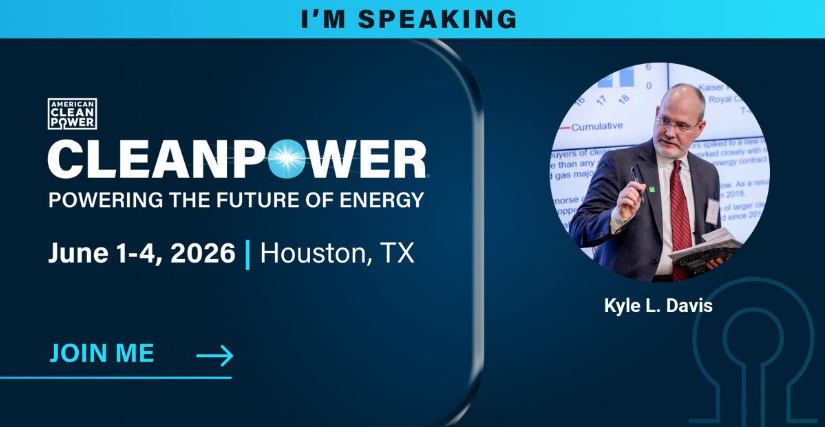
I'll be speaking in Houston on June 2! Looking forward to connecting and sharing insights on clean energy powering datacenters. https://t.co/7hUHU9aMVU
We’re leveraging the full potential of American innovation to modernize Federal permitting.
CEQ invites innovators to share tech solutions that will accelerate federal environmental review and permitting.
Learn more about @WHCEQ47's Permitting Innovators Call for Solutions here: https://t.co/UCWoJsTAdk
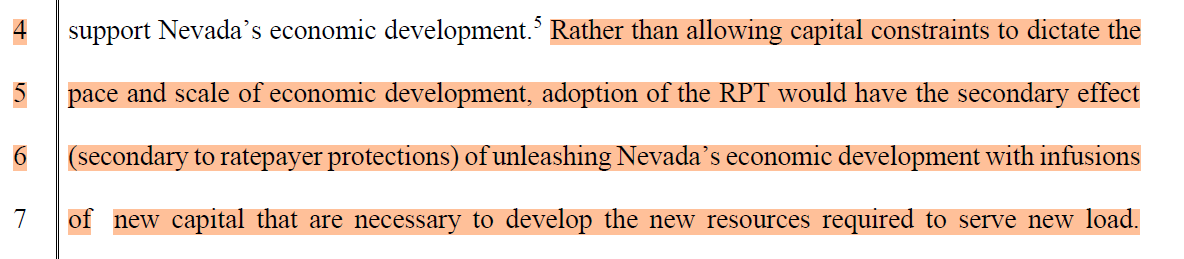
.@Microsoft has proposed to the PUC of Nevada what it's calling Ratepayer Protection Tariff and it's...really good actually.
It would have @NVEnergy undertake a 'but for' test identifying particular assets needing to be built to serve a new large customer.
The costs of those assets would be separately accounted for. The data center would either prepay for them, or convert those costs into a separate facilities charge, subject to credit requirements.
But don't some of these assets have spillover benefits? Yes, as they always do. The utility contemporaneously runs at least 3 scenarios that evaluate the usefulness of these investments to other customers. That provides an evidentiary record that -- if the utility/data center want to try to make that showing -- could lead certain joint costs being assigned to the rate base everyone pays for through a full Commission proceeding. But the "speed to power" option is for the data center simply to accept full cost responsibility, thereby avoiding regulatory litigation.
If, later, a scenario actually materializes where other consumers are realizing benefits of the infrastructure build, the utility can go back to the well to urge a reallocation of costs -- but at that point there will be both forecasted data from the time of the grid expansion + actual facts-on-the-ground to justify that...or not.
It also allows, should the large customer no longer use the capacity, a pathway to clearly remarket the capacity at net cost (while the prepayment/collateralized facilities charge is a clear protection against stranded costs).
Finally, the large customer additionally pays the same embedded cost rate other customers pay -- an acknowledgment that in addition to causing incremental costs, that they are using the legacy grid as well.
Hard to disagree with Microsoft's characterizations below. This seems like a tariff where cost-shifting concerns are mitigated, and it achieves that while getting "speed to power".
NEW: Permitting reform: Washington's elusive bipartisan dream. My look at state of play on negotiations over an energy affordability issue with broad support that can never quite get over the finish line. Can that change in a contentious election year? https://t.co/o68lOb3lqo
We updated our State Energy Portal with new analysis and quick facts for:
▶️ American Samoa
▶️ Guam
▶️ Commonwealth of the Northern Mariana Islands
▶️ Puerto Rico
▶️ U.S. Virgin Islands
https://t.co/3d1m0V2W9P