$1.7B a year 😲
That’s the cost soilborne diseases and nematode pests to Aussie grain growers
WA is investing in research to protect yields and strengthen farming systems. We’re leading WA’s role in a national project with @GRDCWest
Learn more 👇
@DPIRDbroadacre, with @theGRDC and national collaborators, is leading Research Area 3 (Integrated Management) of the Soilborne Disease Initiative—tackling Sclerotinia, Rhizoctonia, crown rot and root lesion nematodes with integrated, economic solutions for WA growers. #SBDIP3
GRDC has launched a 5-year national Soil-Borne Disease Initiative, announced by Chair Sharon Starick at the Adelaide Grains Research Update.
The program coordinates research nationwide to improve soil-borne disease management for growers.
🔗 https://t.co/FaS6xvq9vG
🎬 NEW VIDEO
#Rhizoctonia is a soil borne disease that has a huge impact for Australian farmers, particularly in the low and medium rainfall zones. In this video, @DHuberli and Dr Ahmed Saad from @DPIRDbroadacre and grower @mark_paganoni discuss on-farm impact and management research upderway.
Watch ▶️ https://t.co/uUnNV1dGwL
With @theGRDC investment, @DPIRDbroadacre, @CSIRO, & @SA_PIRSA are developing cost-effective strategies to help growers manage rhizoctonia. Watch @DHuberli & @Ah_Saad2 discuss the project, while grower Mark Paganoni shares the disease's impact on his farm. https://t.co/9ytTXqfdY6
🎙️ NEW PODCAST
With GRDC investment, @DPIRDbroadacre is developing disease risk and management strategies to reduce the impact of #rhizoctonia in the southern and western cereal growing regions. @DHuberli
Listen now 🎧 https://t.co/qTFNgsOSle
#GRDCPodcast
Listen to @theGRDC Podcast where Daniel Huberli @dhuberli from @DPIRDbroadacre explains the integrated and cost-effective approach of cultural, chemical and biological management strategies for Rhizoctonia that the #RhizoLMRZ research team is creating https://t.co/GsX0sx9h2Q
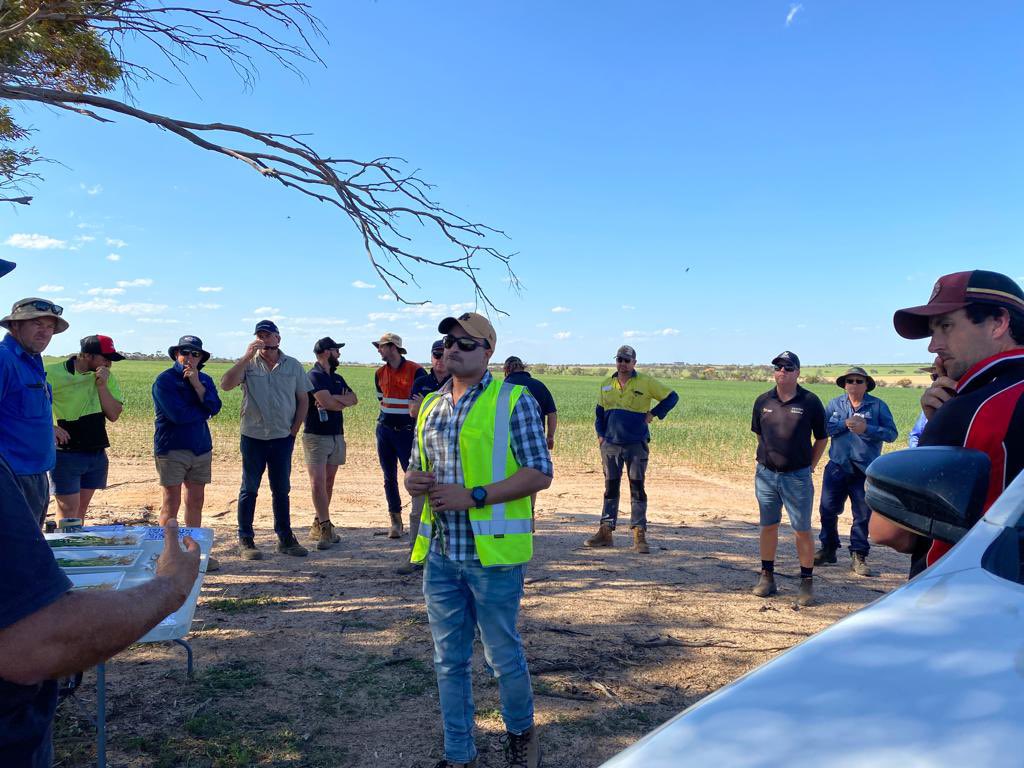
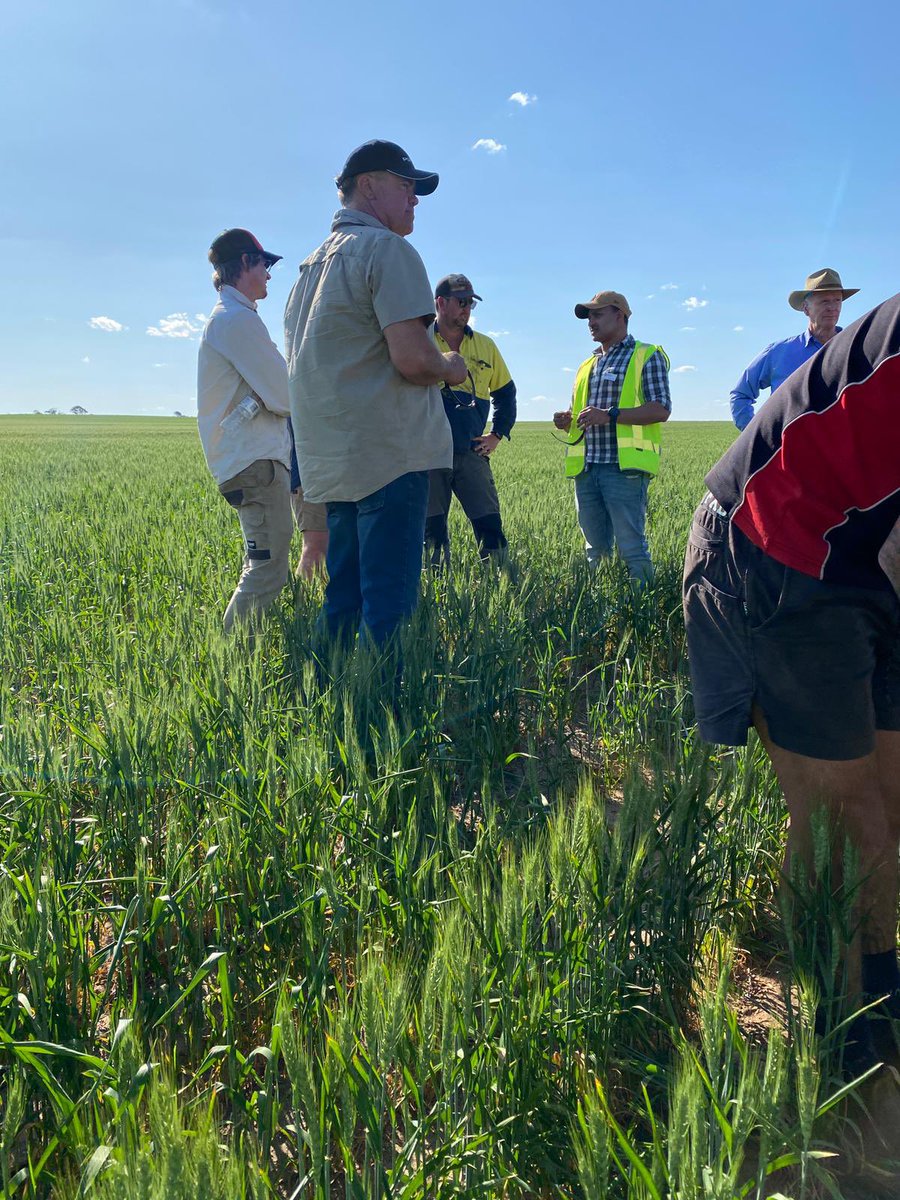
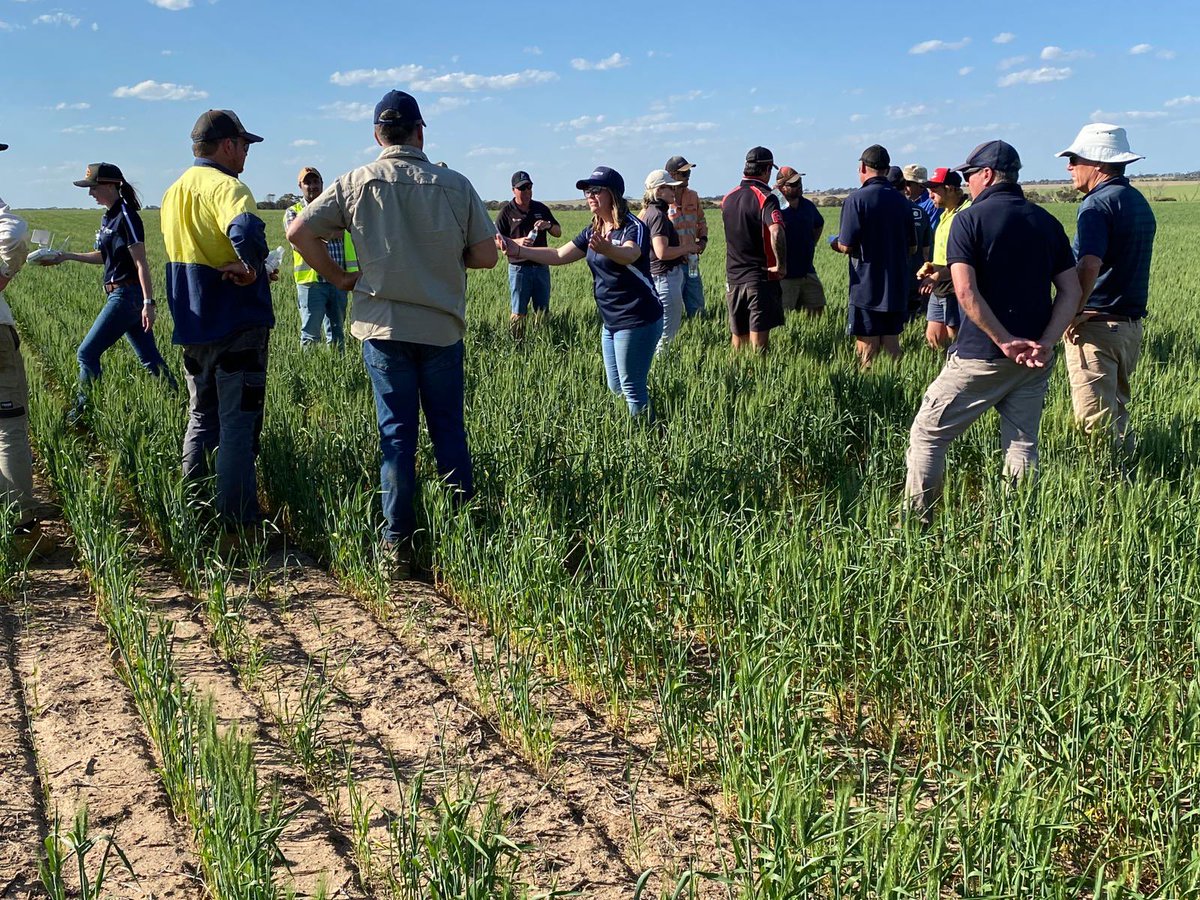
🌾 Get ready for the Narembeen Field Walk on Sept 11! 🌱
There will be insightful presentations from @DPIRDbroadacre's very own Ahmed Saad, farmer Jake Cole, and a UAV flight and discussion with Veronika Crouch of @CFIG_AG. 🌱
Contact @CFIG_AG for details.
Two reasons to invest on a soil penetrometer with an automated inserter?
1) To get constant insertion velocity (a must)
2) Adoptability to hard soils not much limited by strength and weight of operator (Hura !!)
Kalannie trial soil pentration resistance measurements @azam_gaus
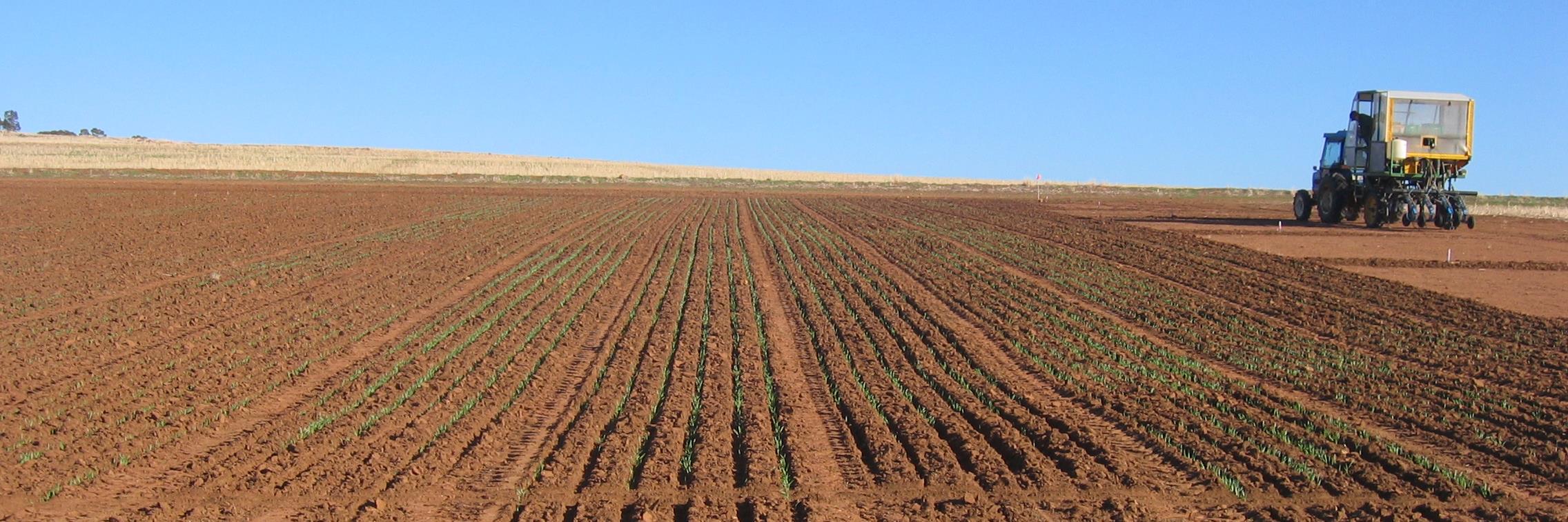
Our first plant emergence counts for this year in the new Rhizoctonia @MADFIG14 demo trial looking at sowing depths at east Merredin as part of the national #RhizoLMRZ project with @DPIRDbroadacre and @theGRDC. How will Rhizo behave in the different depths? #ProtectingWACrops
Two paddocks in Hyden, Holt Rock Group, and Corrigin, @CFIG_AG, were sampled by @DPIRDbroadacre for testing for Rhizoctonia DNA, catabolic diversity & nutrients from 150 GPS points per site for national @theGRDC#RhizoLMRZ project. Now we check for patches. #ProtectingWACrops
On #IDPH the @DPIRDbroadacre Crop Protection team shows how we contribute to improving the agricultural industry and the environment through plant protection. #ProtectingWACrops
DPIRD’s group of world-class scientists work with WA farmers and agricultural industry to research and apply the very best innovations in technology and science to protect crops from destructive forces. Learn more about how DPIRD’s Crop Protection team keeps your food safe.
Collecting the start of season soil samples to test Rhizoctonia DNA and nutrients in the Grizzly ploughed and unploughed areas of the @CFIG_AG demo trial North of Corrigin as part of the national #RhizoLMRZ project with @DPIRDbroadacre and @theGRDC#ProtectingWACrops