An interdisciplinary and global network of early career researchers (ECRs) actively conducting research into dissociation and dissociative experiences.
Data collection has started!
If you’re a mental health professional that fulfils the criteria – we’d be grateful if you could spare a few minutes for this survey.
We’re proud to support this body of work, which aims to improve the landscape for care for DPDR.
📅FNDS is pleased to highlight the Placebo, Hypnosis, and Functional Disorders Conference 2026 (Nancy, France, Oct 14-16).
FNDS members are invited to participate and submit their work open until May 31.
For more information visit the conference website: https://t.co/88bPzvcs4W
We’re excited to share this study for UK-based mental health professionals to take part in — as it aims to explore barriers to the recognition, diagnosis and treatment of Depersonalisation Derealisation Disorder (DDD).
https://t.co/LQoZsI9e15
What drives #dissociation? In adults with #PTSD (some with #DID), extreme negative beliefs like “there’s something wrong with me as a person” were linked to dissociation. When these beliefs decreased during treatment, so did dissociation. Free article: https://t.co/X01AjHUNvR
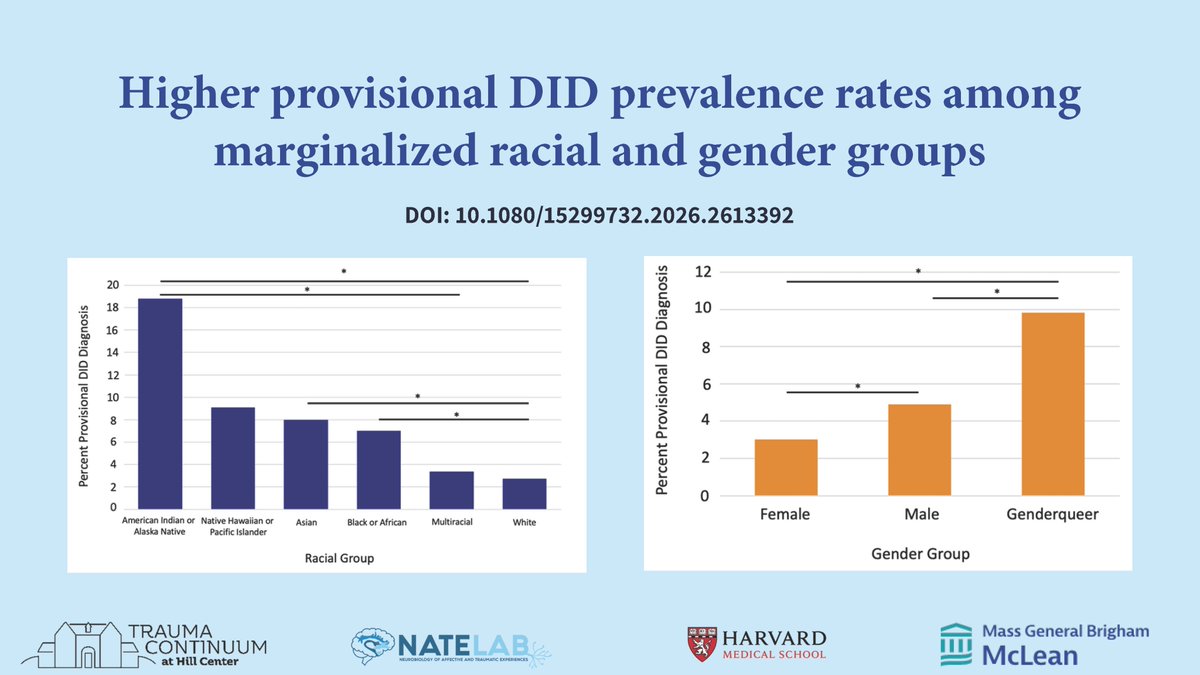
Today is #DIDAwarenessDay. DID isn’t rare-& who bears the greatest burden of dissociative symptoms isn’t random. Our new paper finds higher provisional DID prevalence among marginalized racial groups and gender-diverse people. 50 free copies: https://t.co/cD99DSltgY
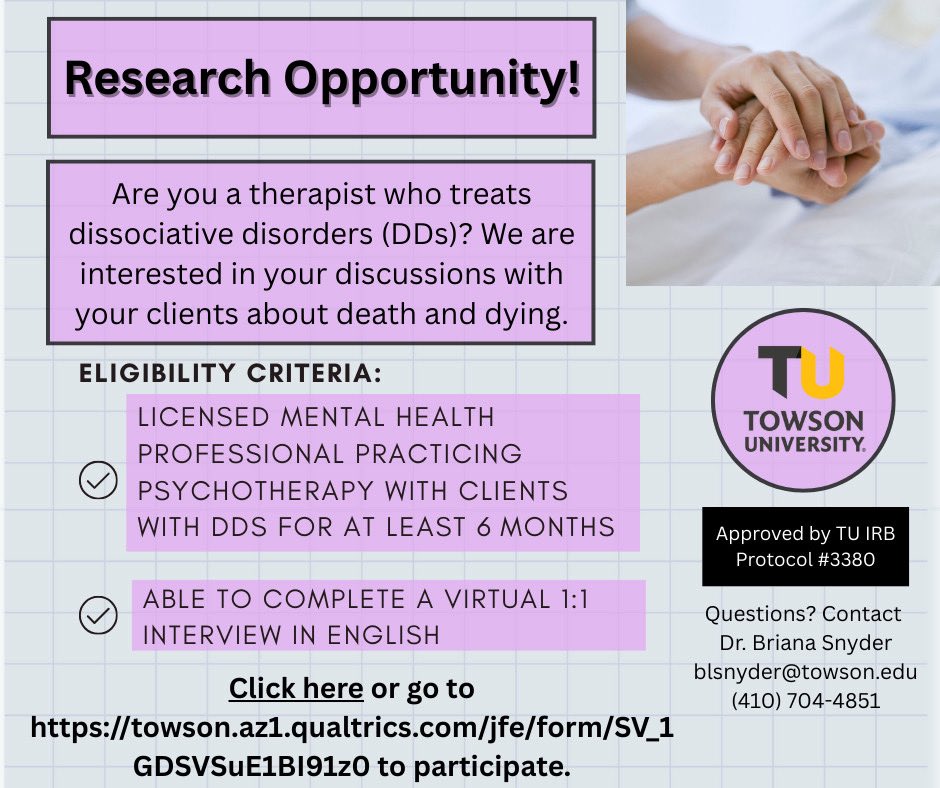
Are you a therapist who treats clients with dissociative disorders? See the attached recruitment ad for more details about a study on therapists’ experiences working with these clients around themes of death and dying!
Is the "Sense of Reality" in the physical world actually different from the "Sense of Presence" in VR? 🧠🥽
I’m thrilled to announce my first lead-author, theoretical paper is out now in Perspectives in Psychological Science!
We argue: No. Presence IS Reality.
A thread 🧵👇
📣📣New preprint! We show that hyper-reflexivity — an intensified self-focused attention — is strongly linked to depersonalisation & derealisation symptoms, more so than general rumination. Suggests a more specific cognitive mechanism for Depersonalisation-Derealisation Disorder
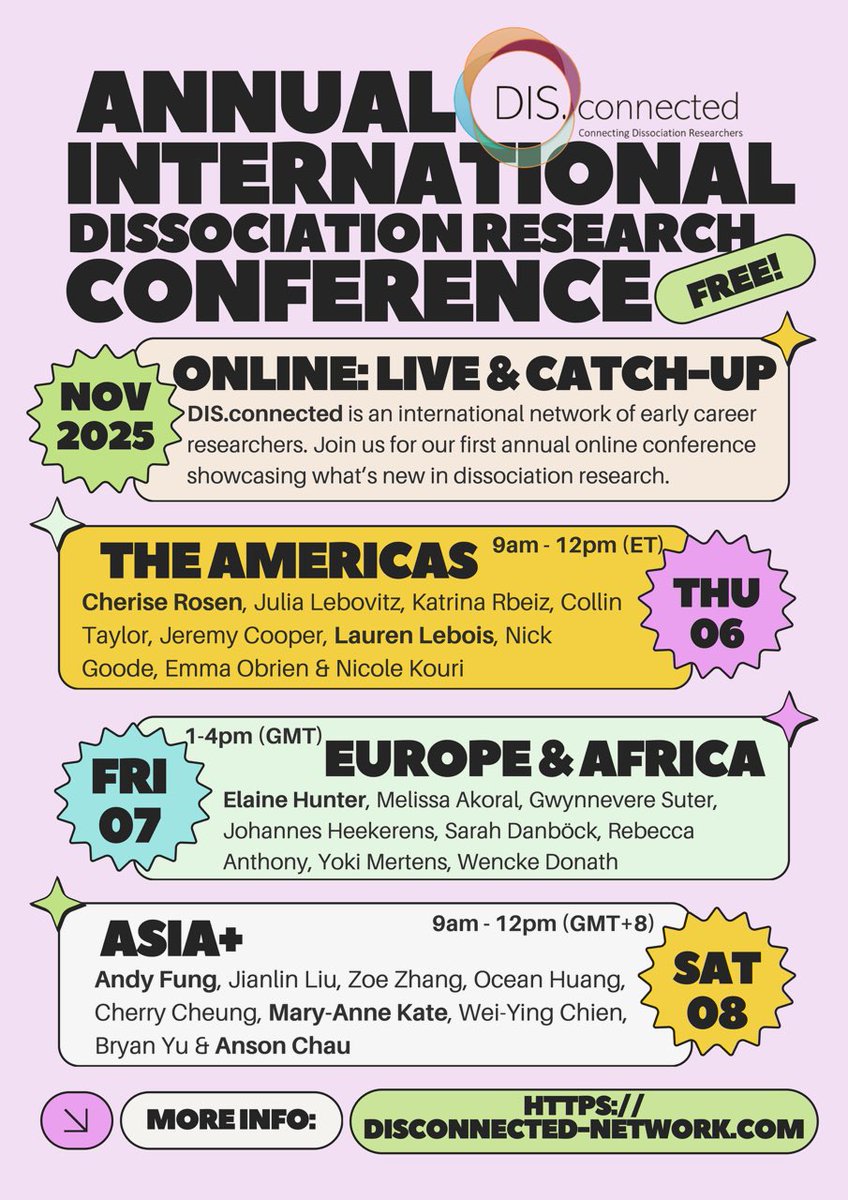
Join us this week for our first international dissociation research conference! Free, online and featuring some fantastic keynote speakers with talks taking place across 3 time-zones! Register here: https://t.co/O5RDg6ezEO
Some academics still seem to be here... I have no idea where (online) everyone is gathering these days, so I'm going to shout into every void about our fantastic new paper, authored by our brilliant grad student, analysed by our superb CompSci colleagues: https://t.co/wcdb1guE3N
👀Are you interested in the causal effects of #dissociation on #intrusions and #memory? Or are you looking for a method to experimentally induce dissociation?➡️Check out our new preprint: https://t.co/kf7lST7yjv 🤗
@DISconnectedECR@Klips_UniMa
Are you based in London?
Wanna take part in a study to know more what’s happening in your body and brain when you detach from your self ?
Please take part in our study!
Full info here 👇🏼
Tune in tomorrow at my talk @SinaiCCP
It’s Movement all the Way Down: Transparent Self-Modelling and Depersonalisation
Full info 👇🏼 below
Thank you for having me !
Cold hands, altered ownership? We link disturbed body ownership in stroke patients to reduced hand temperature and impaired thermoception. The right Insula & Parietal hubs are key players. We are excited to share our new findings @NatureComms ➡️https://t.co/irprsp3eJO
There are five days remaining to register for #ISSTDAC2025 with early bird pricing! Register now to ensure you don't miss out! Save your spot now: https://t.co/z0Zyagzcn7
Learn more about the different things to do and see in Boston here: https://t.co/uYXoJ0p9hd
New publication alert ⭐️ We conducted a thematic analysis of therapists’ experiences working with clients with DID. They had unique experiences in and relationships to their practice. This group needs more attention!
Open access here: https://t.co/PKQfW2d2QC
Happy to share our new paper on the inhibition of memory retrieval in dissociative amnesia, with @dcdace, Hirokazu Kikuchi, Nobuhito Abe &, Jun Kawaguchi, Mike Kopelman & @Memory_Control!
https://t.co/Qnp3aSf9rJ
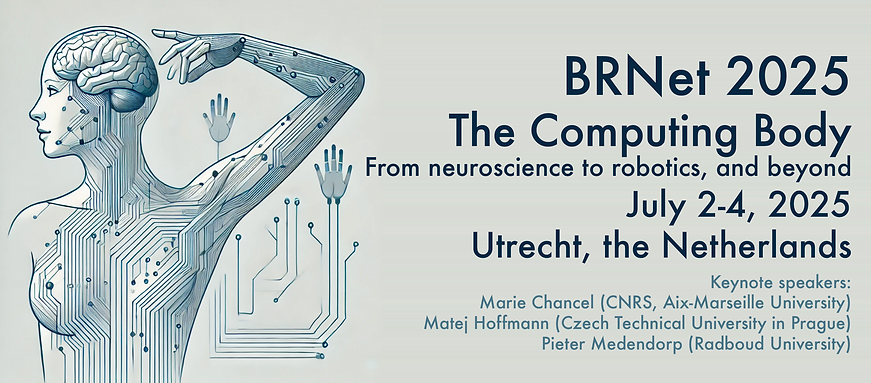
🚀 Ready for #BRNet7? 🚀
Join us in vibrant Utrecht to explore how the #brain represents the #body using #computational approaches! 🧠💡
🔗 Submit your abstract by March 1st! https://t.co/f0udgN2jIa
Don't miss out on shaping the future of body representation research! 🌍✨