Dear funders,
This is a long overdue conversation!
In this PLOS Global Public Health article authors make a case for reform in global health funding.
In brief: the funding system is skewed, still favouring large well-established organizations, exerting an undue burden on smaller less established ones.
The process is sometimes opaque and not transparent. Fundraising comes with a cost that is easily borne by large well-resourced organizations and can be a source of stress and burnout for staff in less resourced ones.
“The hidden costs are real, smaller Global South institutions spend enormous senior staff time just learning Western-centric procurement norms, duplicating compliance requirements across funders, and writing full proposals for calls that were never truly open. When they lose, that effort is simply lost — unrecoverable, un-reusable. That's research waste at scale”
What struck me most is the critique of credibility proxies: “Funders are rewarding institutional reputation and publication history over actual implementation capacity and contextual knowledge. A local organization that deeply understands the community it serves can lose out to a well-branded Northern institution that knows how to write a proposal. That's a system measuring the wrong things”
As more people live longer, the demand for long-term care is growing, exposing critical gaps in healthcare, social protection, and support systems for older persons. With traditional family-based care under increasing strain from urbanization, migration, and changing social dynamics, the need for structured, sustainable care systems has never been more urgent.
"The real test of Africa's development will not be only how it empowers the young, but also how it protects those who have built today's societies."
✍️ As written by #IamAPHRC’s @GloriaLangat2 , @ndonyesarah , and Joash Ntenga Moitui in Africa's Aging Moment: Long-Term Care Can No Longer Wait, new evidence shows that many older adults across Africa are living with functional limitations, yet access to formal care remains limited.
��� Read the full article in the latest APHRC Newsletter (Issue 1, 2026).Page 12-13
👉 https://t.co/LIiVDqMruF
#ChartingNewFrontiers #IamAPHRC #WeAreAfrica
@CKyobutungi , @DMdiarafa , @amveyange ,
@RatemoJuliet , @williamsila ,@deborahndlovu , @ndonyesarah , @dorcas_odhiambo @dia_diama,@MuliDavis ,@CharityWaweru,
@AswaniStella ,@Waithaka_KE ,@isabelmutuku1
The foundations of gender attitudes are often laid long before harmful behaviors become visible.
As written by #IamAPHRC's Michelle Mbuthia, early adolescence is a pivotal stage where young people begin shaping their views on gender, identity, and power. Yet, interventions often come much later—after these beliefs have already taken root.
“In Kenya, adolescents are growing up amid shifting social expectations, peer influence, online content, and personal transitions. Without timely, evidence-based support, harmful gender norms can become deeply embedded, influencing how young people perceive and express masculinity and femininity throughout their lives.”
📖 Read more in the latest APHRC Newsletter (Issue 1, 2026), pages 10–11: 𝐖𝐡𝐚𝐭 𝐖𝐞 𝐌𝐢𝐬𝐬 𝐖𝐡𝐞𝐧 𝐖𝐞 𝐖𝐚𝐢𝐭: 𝐖𝐡𝐲 𝐄𝐚𝐫𝐥𝐲 𝐀𝐝𝐨𝐥𝐞𝐬𝐜𝐞𝐧𝐜𝐞 𝐢𝐬 𝐚 𝐁𝐥𝐢𝐧𝐝 𝐒𝐩𝐨𝐭 𝐢𝐧 𝐆𝐞𝐧𝐝𝐞𝐫 𝐚𝐧𝐝 𝐇𝐞𝐚𝐥𝐭𝐡 𝐑𝐞𝐬𝐞𝐚𝐫𝐜𝐡 𝐢𝐧 𝐊𝐞𝐧𝐲𝐚.
👉 https://t.co/LIiVDqMruF
#ChartingNewFrontiers #IamAPHRC #WeAreAfrica
@CKyobutungi , @DMdiarafa , @amveyange ,
@RatemoJuliet , @williamsila , @deborahndlovu ,
@ndonyesarah , @DorcasOdhiambo , @dia_diama ,
@MuliDavis ,@CharityWaweru , @AswaniStella , @Waithaka_KE , @isabelmutuku1
Strong evidence alone is not enough!
Months, sometimes years, go into generating high-quality research; yet far too often, findings sit on shelves while critical decisions are made without them. The reality? Evidence does not automatically translate into policy or practice.
“The assumption that strong evidence will speak for itself rarely holds true in real-world policy environments where decisions are influenced by political cycles, institutional interests, and social pressures.”
So how do we bridge the gap? @doris_omao and @MangwanaVJ explore this critical question in our latest APHRC Newsletter (Issue 1, 2026) — 𝗙𝗿𝗼𝗺 𝗘𝘃𝗶𝗱𝗲𝗻𝗰𝗲 𝘁𝗼 𝗜𝗺𝗽𝗮𝗰𝘁: 𝗣𝗹𝗮𝗰𝗶𝗻𝗴 𝗘𝘃𝗶𝗱𝗲𝗻𝗰𝗲 𝗮𝘁 𝘁𝗵𝗲 𝗛𝗲𝗮𝗿𝘁 𝗼𝗳 𝗗𝗲𝗰𝗶𝘀𝗶𝗼𝗻-𝗠𝗮𝗸𝗶𝗻𝗴 𝗶𝗻 𝗔𝗳𝗿𝗶𝗰𝗮.
Head to page 6-7 to read more.👉 https://t.co/LIiVDqMruF
#ChartingNewFrontiers #IamAPHRC #WeAreAfrica
@CKyobutungi@DMdiarafa@amveyange@RatemoJuliet@williamsila@deborahndlovu@ndonyesarah@DorcasOdhiambo@dia_diama@MuliDavis@CharityWaweru@AswaniStella@Waithaka_KE@isabelmutuku1
🩸 Menstrual health and hygiene are essential for dignity, health and equality.
On 28 May, the world marks #MHDay2026 under the theme #PeriodFriendlyWorld — calling for stronger action on menstrual health, education and WASH services.
https://t.co/L90W9pdsYU
In 2021, Benin amended the sexual and reproductive health act, thereby making abortion more accessible to girls and women.
While access has improved, women and girls still face formidable barriers such as stigma, knowledge of the law by both providers and the public, technical capacity and the costs.
It is for this reason that APHRC conducted a six-month ethnographic study to get a contextual perspective of the impact of the amended law on the lives of Benin’s women and girls, particularly in accessing SRH services.
This week, the study team together with @Abpf_ippf and @RutgersNL, are meeting with a number of health stakeholders, including the @MSbeninOfficiel and funder-organizations, to share their findings and sketch out a roadmap on the way forward to make essential SHR services more accessible.
🔗 Read more here: https://t.co/xMxzwtueyz
#IamAPHRC #APHRCResearch
@b_veracruz@WenceslasTOGNI1@MAJBenin@FillesActions@JVSAssociation@BeninBouge@unfpa_benin@osv_jordan@Ippf@njerimbuthia
Weekend Plans? Watch the latest episode of #InsideTrack . Together with @RBaptistaLeite and @GarryAslanyan we ask the big questions:
1) Are we prepared for the next big pandemic? Do you know what happened to the medical oxygen plants, ICU beds set up in your country?
2) Are e-cigarettes carcinogenic?
https://t.co/smP6warWeR
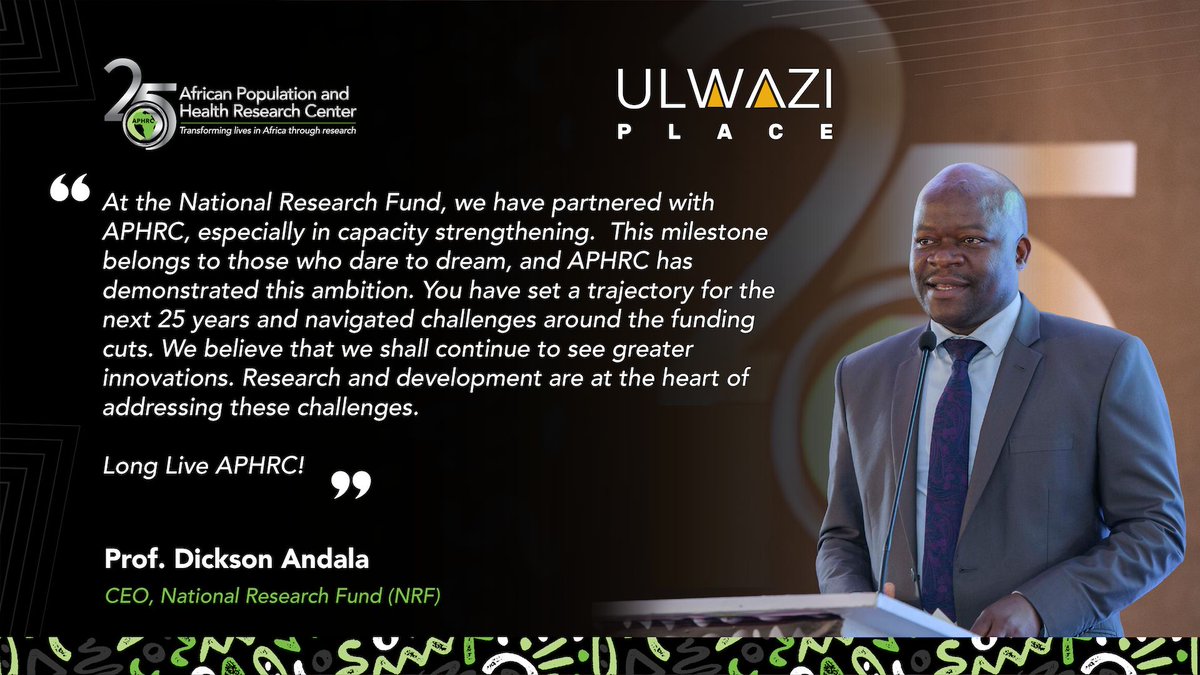
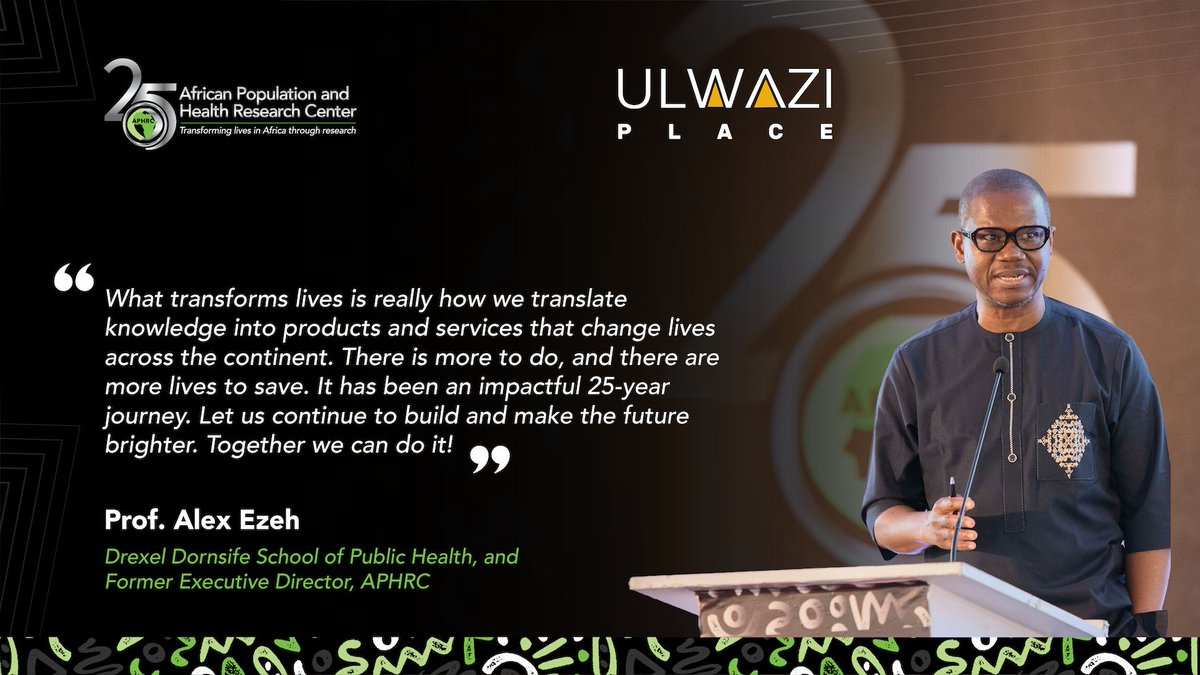
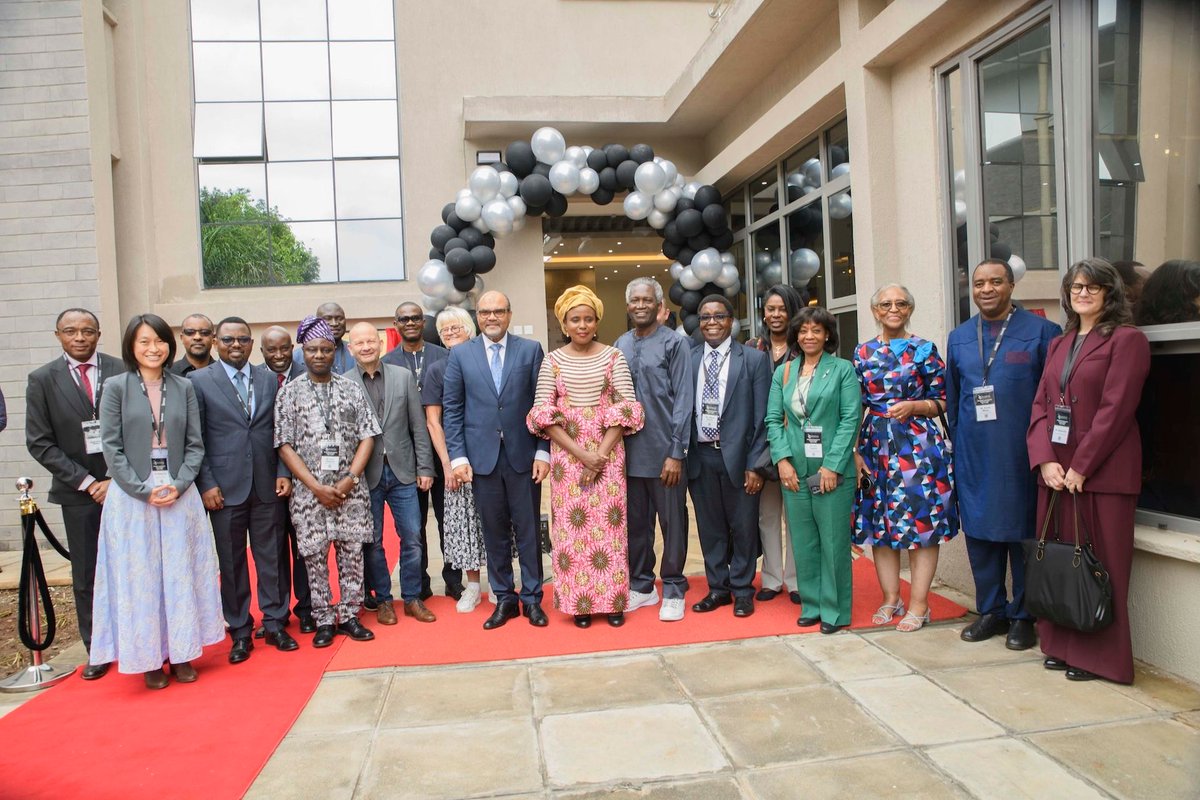
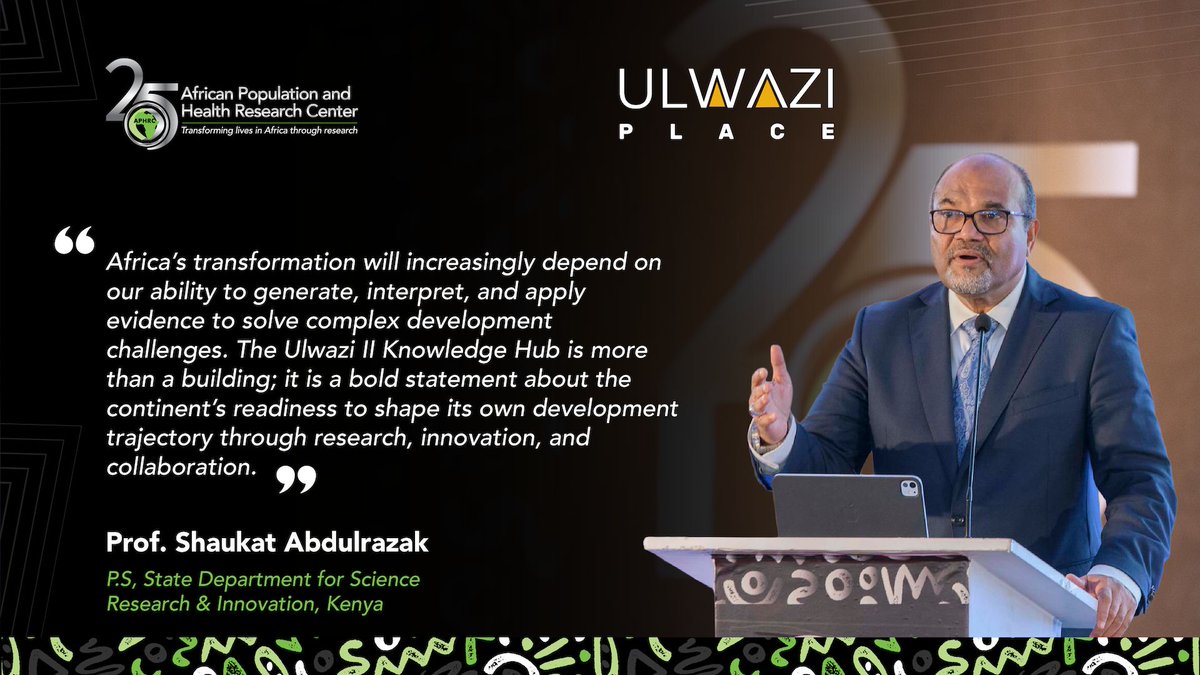
ICYMI: A nice piece about the launch of Ulwazi Place phase II as part of #APHRCis25 celebration.
"This building will be the nerve center of our vision for a truly African knowledge system."
https://t.co/x4Zn9cFNVv