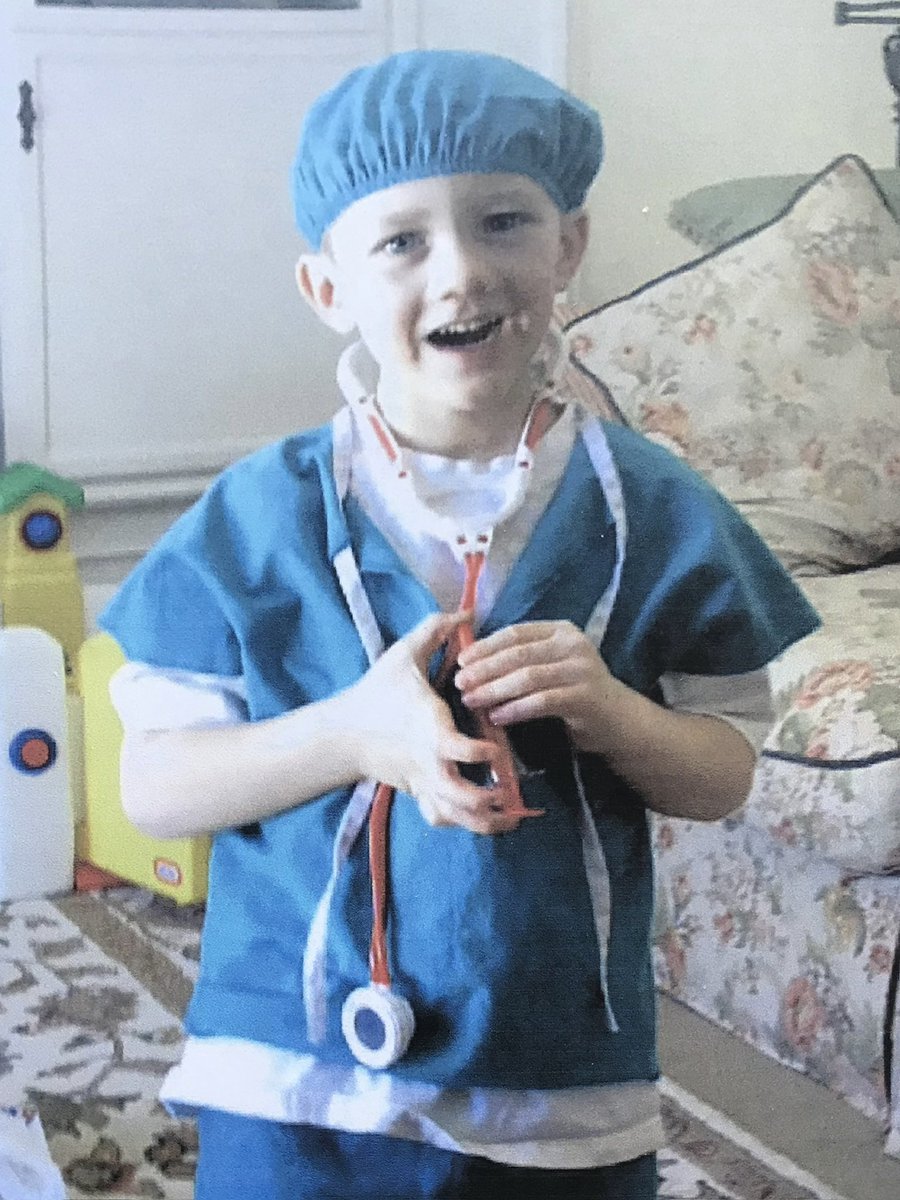
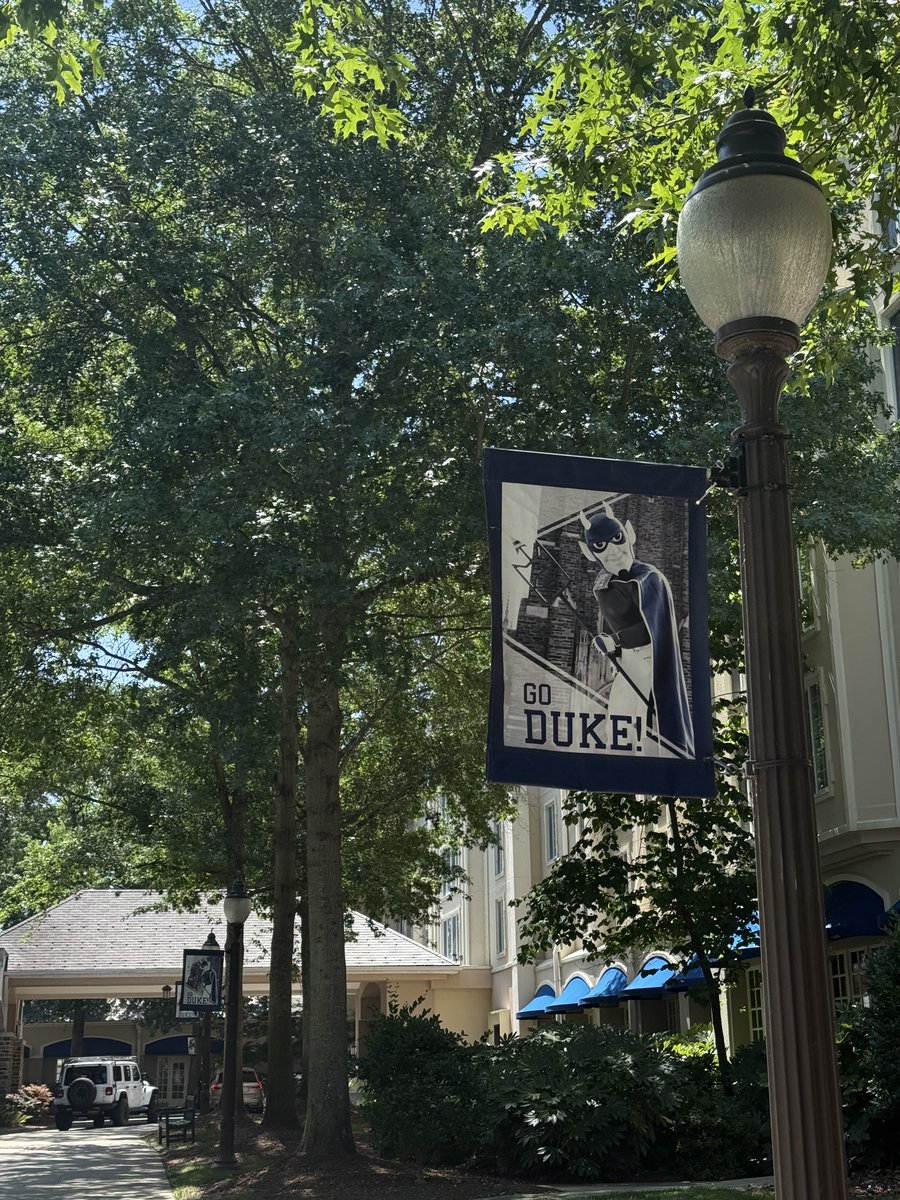
I matched @Duke_Anesthesia!!!!
Praise the Lord! I’m deeply grateful to the friends, mentors, and family who have played an instrumental role in shaping my journey.
Thank you all for your support!
💙💙🫶
#Match2025#anesthesiamatch#NRMP
Our new study shows that 79% of patients with dizziness are eager for wearable monitors to help bridge the diagnostic gap for episodic dizziness. Check out the full study here: https://t.co/ELexjpzt5F
Our new study shows that large language models can generate accurate anesthesia-specific post-op instructions for knee replacement, but big gaps in readability and real-world validation highlight how much work still lies ahead.
https://t.co/td9BKEOCyu
@c_mensching Yes! Chronic migraine is linked to increased cognitive workload, even between attacks. Studies show deficits in attention, memory & task-switching. PubMed, OpenEvidence, and Google Scholar are great places to start. Happy to email papers if helpful!
Our new study examines cognitive workload in adults with persistent symptoms after mTBI. Finding that how patients feel can diverge sharply from how they perform.
Designing better care starts with empathy.
🔗 https://t.co/UVrK9OTZ9I
#BioDesign#MedTech#HumanCenteredDesign
Hey everyone! I’m helping a team develop a first-of-its-kind QBank that uses AI + adaptive spaced repetition across both questions and flashcards.
It’s called Ora AI, and it’s built to make med school way smarter. Be one of the first to try it out: https://t.co/VcZO6ycRWA
What’s better than having a lung transplanted robotically? How about TWO? Our Fantastic Four did it again! Another great team effort with @DukeSurgery@DukePACC and @Duke_Anesthesia https://t.co/BlWWdx9SS0
👏Congratulations to the 16 residents and 37 fellows who graduated from Duke Anesthesiology’s nationally-acclaimed residency and fellowship programs on June 7 and 8 in Durham. 🎓🎉View the event highlights and learn about future plans for the graduates. 🔗https://t.co/16aniAEh59
Duke University School of Medicine researchers have developed two pioneering studies that offer a new approach to ensuring that AI systems used in clinical settings meet the highest standards of quality and accountability.
Read more ⤵️
https://t.co/FOSWSUfjNl
💉Applying #Anesthesia#MATCH2026?
🏡Check out upcoming Residency Program Open Hosues! https://t.co/aW6D7wN9SR
🧐For more resources, visit the Medical Student Component page at https://t.co/OR8duyaBhK
#MSCGC#medstudents#MedTwitter
The IARS Annual Meeting is the place where people are absolutely committed to moving the anesthesia specialty forward, through discovery and scientific innovation. #AnesthesiaCommunity#AnesthesiaResearch#IARS2026@IARS_Journals https://t.co/2NzWpQmTjM
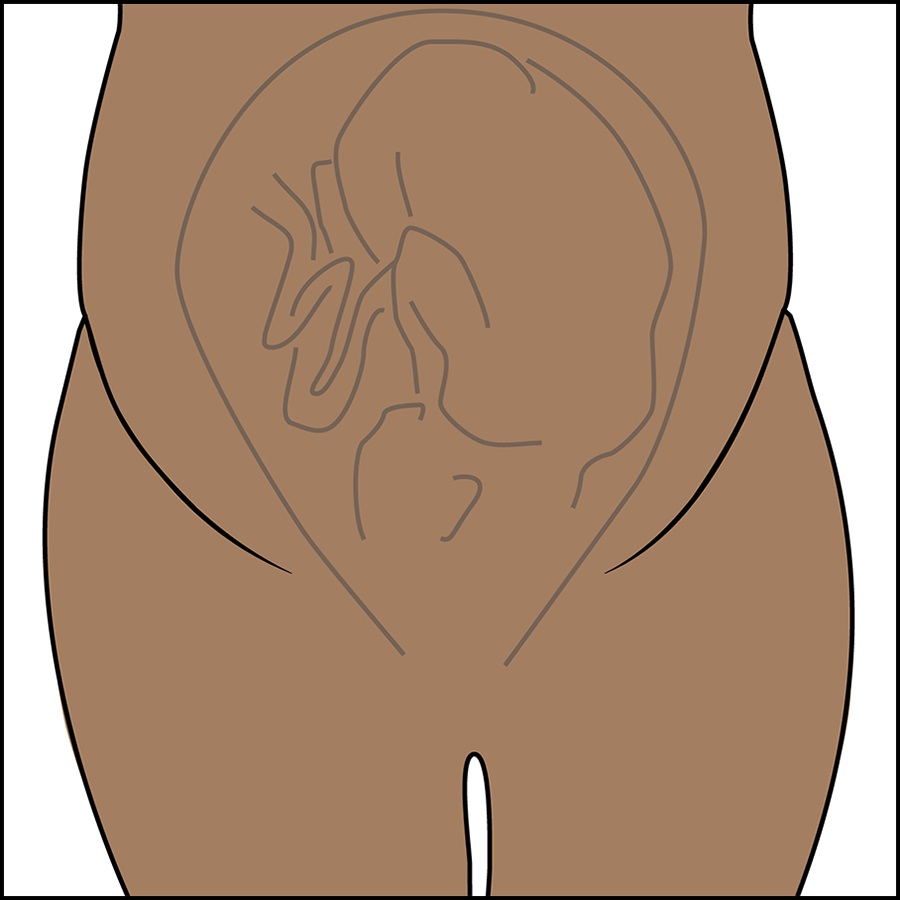
Postpartum hemorrhage is the leading preventable cause of maternal mortality. In a new article, Koons et al. hypothesized that a lower uterine tone numeric rating scale would be strongly associated with progression to major postpartum hemorrhage: https://t.co/50vJ3AQ57s
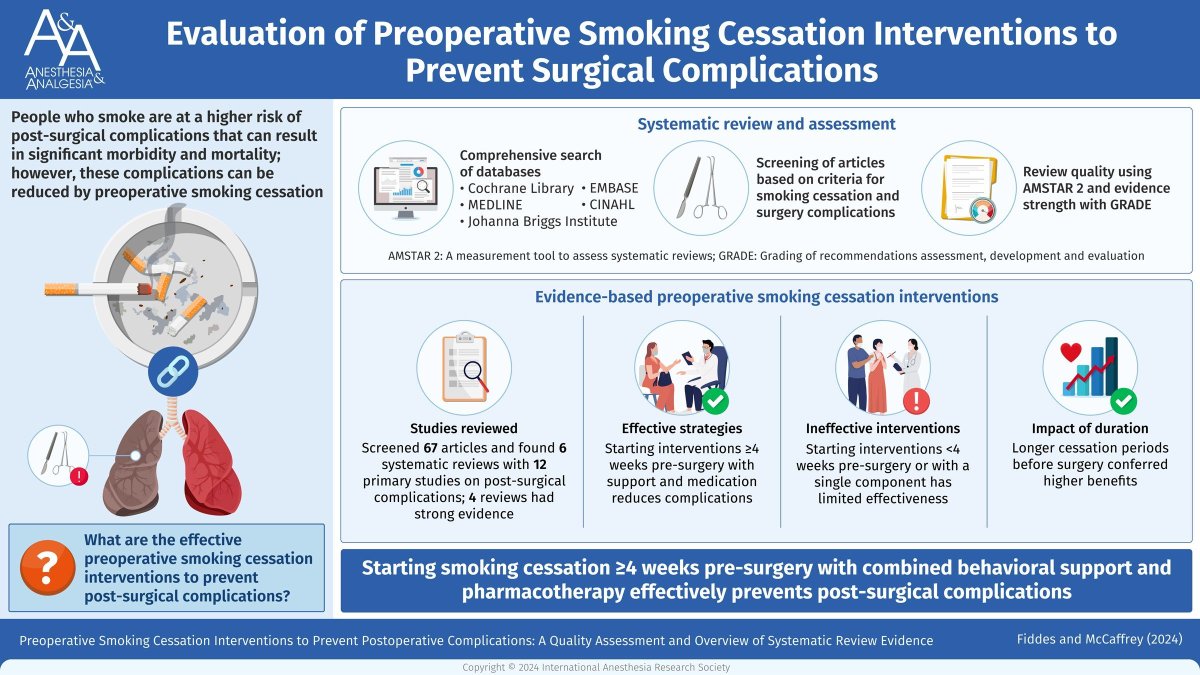
Preoperative Smoking-Cessation Interventions to Prevent Postoperative Complications: A Quality Assessment & Overview of Systematic Review Evidence
🚭 Anesthesiologists need to work w/ PCPs & surgeons to optimize smoking-cessation before surgery.
https://t.co/ppTBFAJhOJ
AI models can pass medical board exams, but they struggle with basic clinical math. A Stanford study found that equipping AI with the same calculators doctors use—rather than improving its raw math skills—boosted accuracy from 33% to 95%. https://t.co/uTVk9xxjju
Happy #DoctorsDay25!
As we remember the first use of ether #anesthesia on this day in 1842, FAER would like to thank the incredible #FAERgrantees (2021–2024) pictured for their work to continue the specialty’s growth through #research!
Grantee abstracts: https://t.co/Del0MSCL3t