@EAcarbonmarkets is approaching and today we had very uplifting conversation with @xcenneth and Dr. Sam Mugume for Ministry of Finance (Uganda) about carbon markets.
As we prepare for the East Africa Carbon Markets Forum 2025, it’s clear that we are standing at a turning point—not just for Uganda, but for the entire region. This forum is more than a conference. It’s a bold declaration: East Africa is ready to lead its own carbon future.
Uganda has emerged as one of Africa’s most promising carbon market leaders. This didn’t happen by accident—it’s the result of deliberate policymaking, credible project development, and a growing ecosystem of local and international actors committed to climate justice and sustainable growth.🤍
With the upcoming Climate Change Mechanisms Regulations, 2025, Uganda is about to unlock a new era. These regulations will bring long-awaited clarity for project developers and investors. They will formalize benefit-sharing mechanisms, define host country approvals, and align our national framework with global standards under Article 6 of the Paris Agreement. Importantly, they will help protect local interests while encouraging responsible, long-term investments.
Carbon markets in Uganda are no longer abstract—they are tangible engines of development. They are creating green jobs, enhancing biodiversity, scaling clean energy, and enabling sustainable land use. We’re seeing carbon finance directly fund schools, health clinics, tree nurseries, water points, and agricultural training programs. It’s real impact—and it’s growing.
That said, integrity and equity must be at the heart of our progress. Transparency challenges remain—from MRV systems to benefit distribution—but we are addressing them head-on. Uganda is building capacity, investing in registry systems, and empowering local authorities to regulate with confidence.
The Forum is also a space for connection. It fosters partnerships between governments, developers, financiers, civil society, and—crucially—communities. Because when smallholder farmers and indigenous communities become stakeholders in climate action, the results are more just, more resilient, and more lasting.
As Uganda continues to define its role in the global carbon economy, we aren’t just selling credits—we’re exporting a model: a blueprint rooted in high-integrity, community-first carbon development.
We still have work to do. But the direction is clear. And the momentum is real;))
East Africa is not waiting to be invited to the table—they are building their own.
You know what guys.. Capacity building is not a checkbox. It’s an ongoing investment.
We need climate finance readiness programs that are sustained—not one-off workshops please🔑
2025 is a make-or-break year for climate finance.
it’s clear: money alone won’t solve the climate crisis—we need bold action, smart investments, and real accountability. The pressure is on to move from words to impact.
Today, I had a triggering call and wrote down a few thoughts to clear my head.
Development banks have the power to unlock capital for just transitions, scale up local financing, and de-risk climate investments. Yet, too many remain off-track on Paris alignment. The solution? Stronger governance, transparency, and clear impact measurement.
There’s a massive shortfall in climate finance, especially in emerging markets. Guarantees and blended finance remain underused, often due to complex applications and high-risk perception. PDBs and MDBs must simplify processes, increase transparency, and create bankable pipelines to mobilize private capital.
I’ve seen firsthand how local climate solutions can drive global impact. National financing strategies must integrate energy transition, resilience, and social equity.
South Africa’s Just Energy Transition Partnership (JET-P) is a great example—leveraging local expertise, international finance, and inclusive stakeholder engagement. PDBs should help bridge local climate goals with global funding.
PDBs can help develop credible carbon markets, support domestic policies, and ensure environmental integrity in emissions reduction projects. Debt-for-climate swaps also hold potential, but need better risk coverage and stronger credit enhancements.
;)) bottomline is clear- We need governments, PDBs, investors, and society to work together to turn climate finance into real, lasting change. ;)
For quite some time, I have known Davis & Shirtliff to be selling shirts and probably some crazy designer pants, actually @DayliffUG sell water heaters.
@AneteGaroza@EAcarbonmarkets I genuinely think carbon markets are very scalable. With both government and local actors actively involved, policies can be drafted.
Listen to @PoorvaKarkare explain the concept and context of the political economy and how intertwined it is to politics, commerce and policy and strategic choices. Click link for the full podcast interview https://t.co/SJZ8aAaobq and visit https://t.co/hn75qRPIyh for more
#rareearthselements
#mineralexplorations
#REEtrade
#resourcenationalism
@UNIDO@ECDPM
Don't stop learning.:)
1. The Paris Agreement on Climate Change as a Development Agenda: https://t.co/kOyGkrnTR4
2. Integration of the SDGs into National Planning: https://t.co/1v2lcsZj12
3. Green Marketing Challenge: https://t.co/eRLpifbXyS
4. Impact Measurement & Management for the SDGs: https://t.co/yHRC5uXoEo
5. Integrated Approaches to Mainstreaming, Acceleration and Policy Support for the SDGs: https://t.co/kRIIfSGYUP
6. Digital4Sustainability Learning Path: https://t.co/l1gemS2mIh
7. What is the Net-Zero Standard: https://t.co/Ftfa3M6YPI
8. Setting Science-Based Targets to Achieve Net-Zero: https://t.co/25GYfSFWk6
9. Sustainable Consumption and Production in Africa: https://t.co/JKsq42rDzN
10. Introduction to risk-informed, conflict-sensitive and peacebuilding programming: https://t.co/jkl2AKf6P1
@AneteGaroza Happy to be listening in on this discussion. You Ms Garoza are an excellent crusader on carbon free practices. Perhaps it's also an opportunity to emphasise adequate policies across private and government actors.
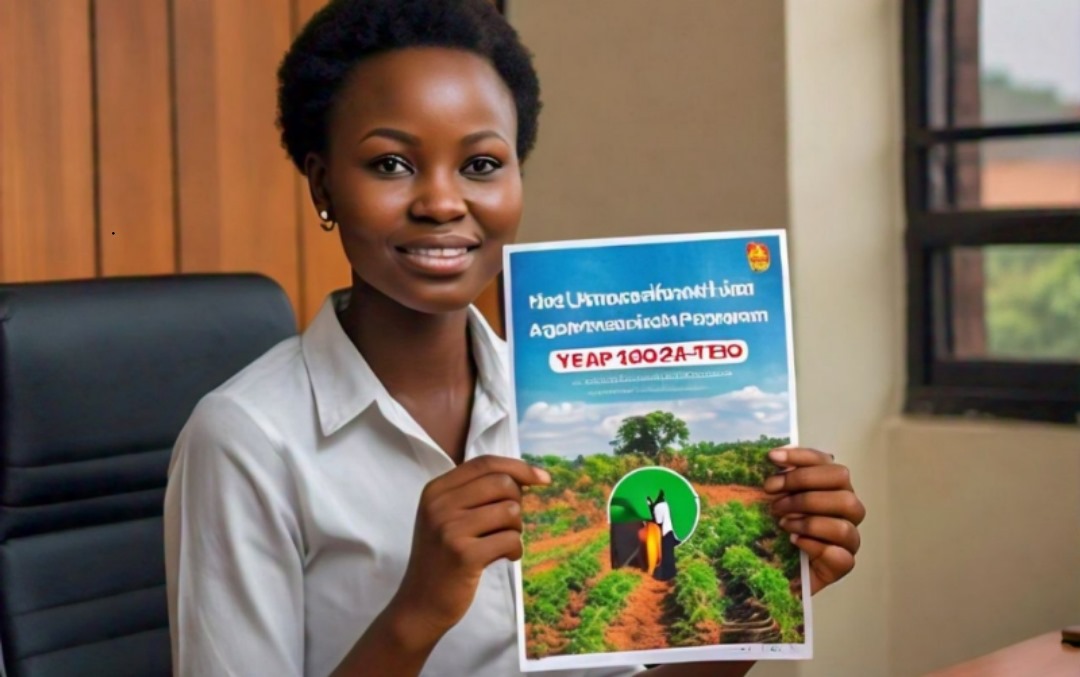
Busitema University Agro Entrepreneurship Centre invites applications for Youth Empowerment in Agripreneurship Programme (YEAP-100-2024 TESO) to train 100 youths from Teso sub-region in various agricultural value chains, aged
18-35, completed O-Level, and possess National ID.
After 6 years of designing ESG strategies for EU banks, businesses, and even public institutions, one thing I’ve learned: sustainability isn’t just about tracking metrics—it’s about telling the right story. 🌱
Yes, measure your energy use, carbon footprint, and waste, but also show the impact behind those numbers. Use real data, but pair it with human stories that highlight the change you're making.
Remember📌People connect with authenticity.
#ESG #Sustainability #MyExperience
@AneteGaroza Agreed. Reflections from IPCC. AR6 already showing positive projections (but with much focus in Europe). Africa however may require some wet handshakes in terms of incentives and right fiscal policies.