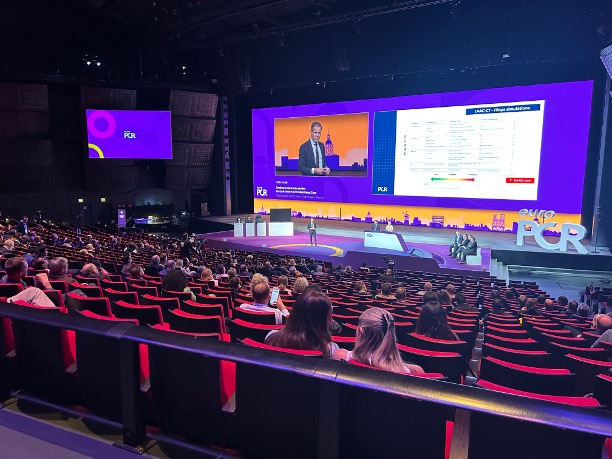
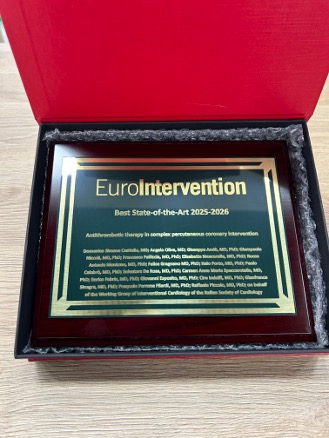
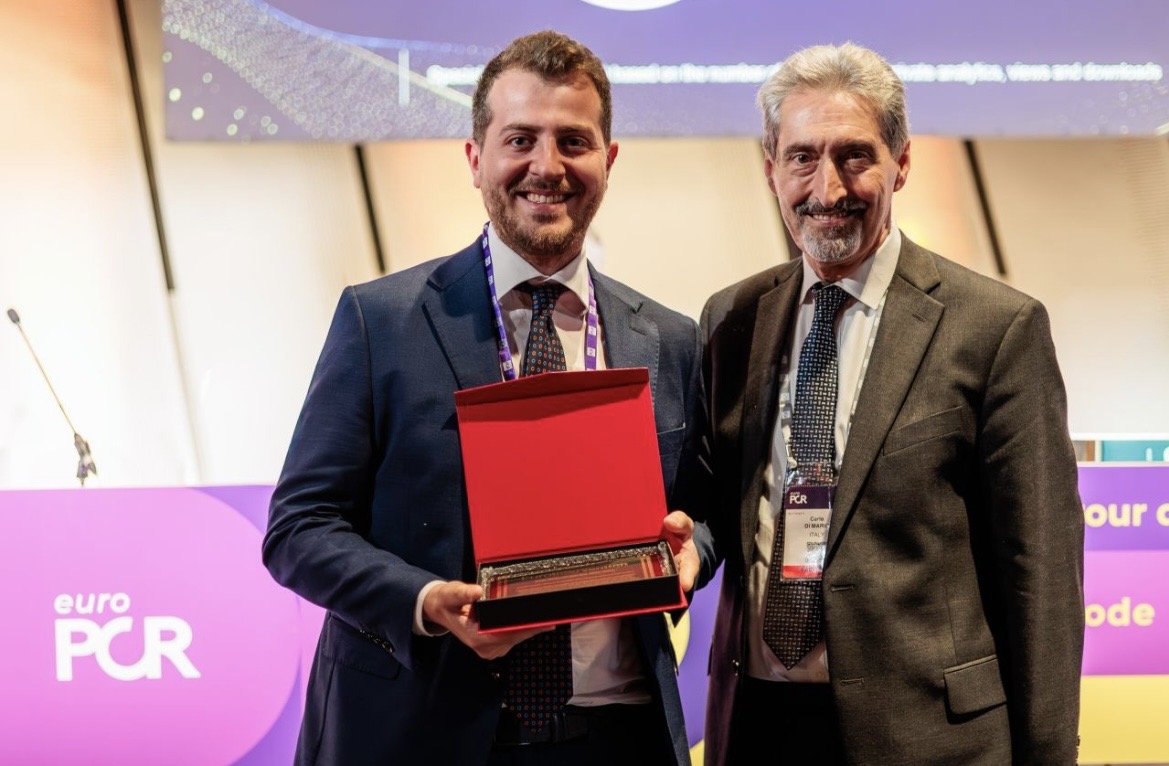
Honoured and deeply grateful to have received the award for the Best State-of-the-Art Review published in 2025 from the journal @EuroInterventio during EuroPCR 2026 in Paris @PCRonline.
Looking forward to the next challenges and opportunities.
#EuroPCR2026#EuroIntervention
🏆 Proud moment at #EuroPCR 2026 with the EuroIntervention Award Ceremony celebrating excellence in scientific publishing.
Honouring the best editors, reviewers, and papers of the year for their outstanding contributions to innovation, research quality and the advancement of interventional cardiology.
“And the winner is...”
- Best #EIJonAir: @sbrugaletta & @G_Tarantini01 for “High-risk PCI in surgically ineligible patients”
- Best Flashlight: “Concertina effect mimicking plaque rupture in a patient presenting with acute coronary syndrome” by Nitin Chandra Mohan, Tom Johnson et al.
- Best central illustration: @fra_bendandi in “Development and validation of the D-PACE scoring system to predict delayed high-grade conduction disturbances after transcatheter aortic valve implantation”
- Cory’s Innovation Award: "Single-view angiographic microcirculatory resistance index after primary PCI: the EARLY-MYO-AMR study" by @ZhiwenZhang
- Best Editor: Joanna Wykrzykowska
- Best Reviewer: @FeliceGragnano
- Best Original Research: “Direct oral anticoagulants or warfarin in patients with left ventricular thrombus after ST-elevation myocardial infarction: a pilot trial and a prespecified meta-analysis of randomised trials” by Yaser Jenab, P Sadeghipour, et al.
- Best State-of-the-Art: “Antithrombotic therapy in complex percutaneous coronary intervention” by @DSCastiello, Angelo Oliva et al.
- Most Impactful Paper: “Acute outcomes for the full US cohort of the FLASH mechanical thrombectomy registry in pulmonary embolism” by @CatalinPToma, et al.
👏 Congratulations to our winners!
#InterventionalCardiology #AwardCeremony #EuroIntervention @PCRonline@DFCapodanno@dmylotte@NievesGonzalo1@robebyrne
🔥 SIMULTANEOUS PUBLICATION #EuroPCR
This post hoc analysis from the NEO-MINDSET trial explored whether PCI complexity influences outcomes with potent P2Y12 inhibitor monotherapy versus DAPT in patients undergoing #PCI for ACS.
Across complex and non-complex PCI strata, PCI complexity did not significantly modify treatment effects on 12-month ischaemic or bleeding outcomes. Monotherapy was associated with lower rates of clinically relevant bleeding, although no clear net clinical advantage emerged.
🔗 https://t.co/q6y2lDE5Vq
@PCRonline #CardioEd #InterventionalCardiology
🔥 #EuroPCR 2026 Major Late-Breaking Trials: Long-term mortality following PCI with DES versus CABG for left main disease
An individual participant data meta-analysis of the SYNTAX, PRECOMBAT, NOBLE and EXCEL trials presented by Brian Bergmark showed no significant difference in all-cause mortality between DES PCI and CABG over 10-year follow-up in patients with left main coronary artery disease suitable for revascularisation.
Read the press release here: https://t.co/IWwgQBtbbU
@NievesGonzalo1@CuissetDr@nicolasdumonte1
#LeftMain #PCI #CABG #CoronaryArteryDisease #InterventionalCardiology #ClinicalTrials
Presented at #ACC26:
Among patients with a preserved ejection fraction at least 1 year after myocardial infarction, stopping beta-blockers was noninferior to continuing therapy with respect to major clinical outcomes. Full SMART-DECISION trial results: https://t.co/dZS03RaTcA
@ACCinTouch
Presented at #ACC26:
Among patients with intermediate coronary lesions, angiography-guided revascularization was noninferior to pressure-wire–based guidance with respect to death, myocardial infarction, or revascularization. FAST III trial results: https://t.co/lKLehrrpm1
Editorial: Redefining Physiology in the Cardiac Catheterization Laboratory https://t.co/tSiweN2Yjo
@ACCinTouch
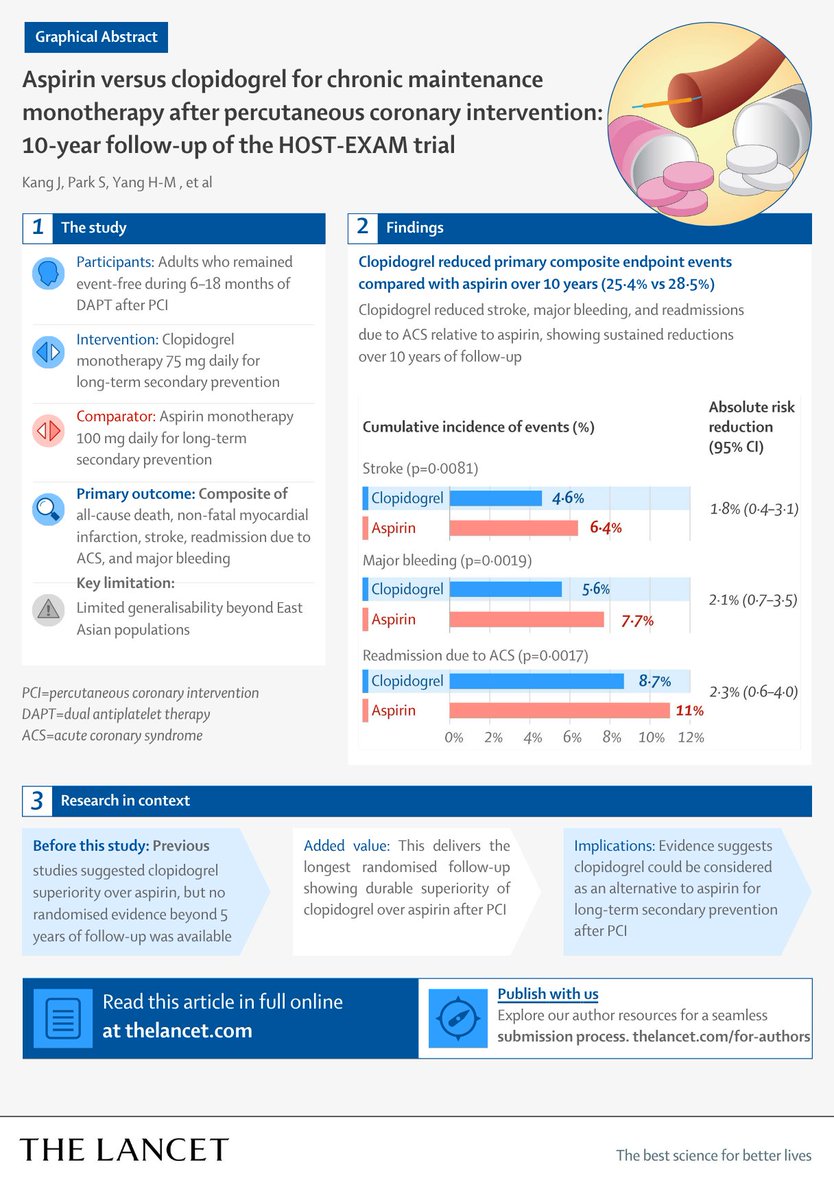
Clopidogrel vs aspirin after PCI:
10-year HOST-EXAM follow-up shows lower ischemic and bleeding events with clopidogrel—but no difference in mortality.
Read more: https://t.co/lJxVcoJxzW #ACC26
Among patients with anterior myocardial infarction, adding low-dose rivaroxaban to dual antiplatelet therapy did not significantly reduce left ventricular thrombus formation at 1 month but increased minor bleeding.
https://t.co/lSxD7zhy3L
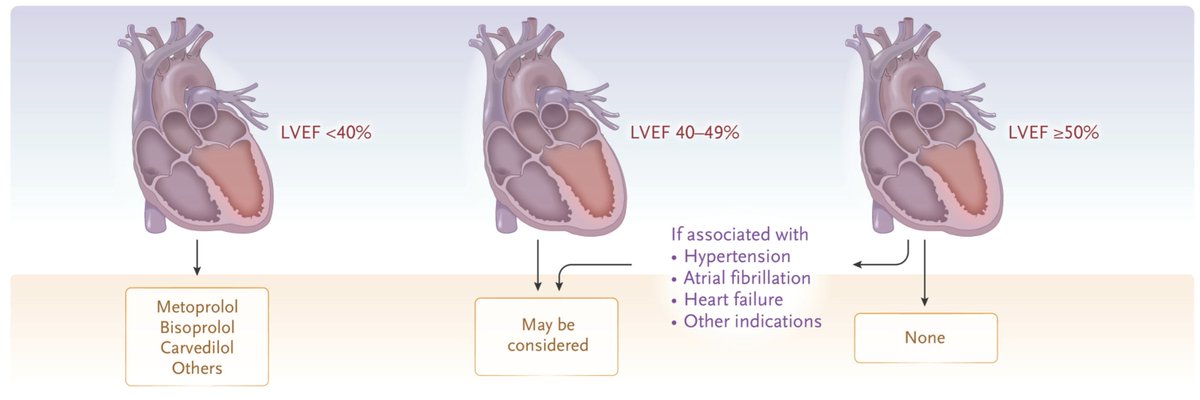
After the two recent meta-analyses published in The Lancet and NEJM, one could argue that the case is settled: following myocardial infarction, beta-blockers should be prescribed to patients with an LVEF <40%, may be considered in those with an LVEF of 40–49%, and in patients with an LVEF ≥50% only if there are other indications, such as hypertension, atrial fibrillation, or heart failure. The guidelines are partially misaligned with the emerging evidence and will most likely be updated in the near future.
🫀 First-in-human valve-in-valve TAVI in mechanical prostheses
Bench-to-bedside study: disc dislodgement & retrieval followed by successful TAVI.
Published in European Heart Journal.
👉 https://t.co/tORjwdmhy6
@escardio@PCRonline@secardiologia@CNIC_CARDIO@sacyl@TCTMD
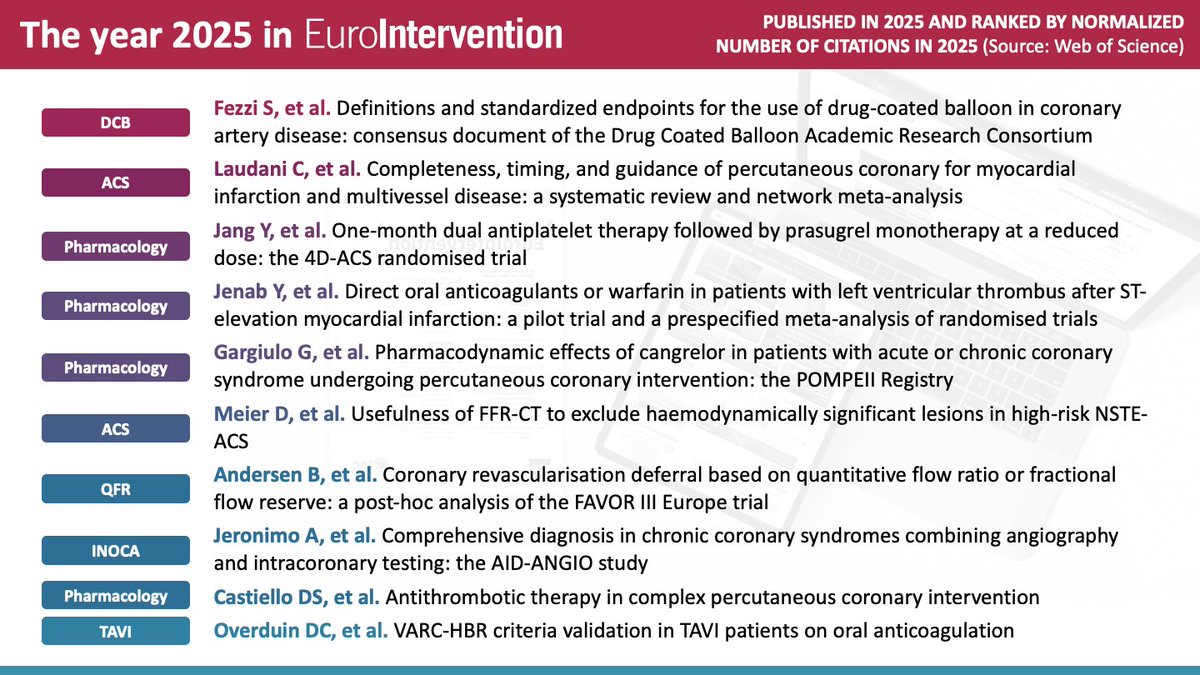
Here is the usual overview of the papers that attracted the most attention in EuroIntervention in 2025.
I'm pleased with this year’s statistics. The steady increase in the journal’s impact factor over recent years (now 9.5) is translating into a higher volume of submissions, making the selection of the limited proportion of articles we can publish increasingly competitive. The practical consequence is a progressive rise in average quality. Studies that only a few years ago might have been published elsewhere are now appearing in EuroIntervention. A virtuous cycle that we hope to sustain in 2026, with the continued contribution of our reference community of interventional cardiologists, which the journal aims to reflect both academically and in daily practice.
Coronary is back? Among the most cited themes this year are standardization of definitions and endpoints, acute coronary syndromes, physiology- and imaging-guided decision-making, optimization of antithrombotic strategies, and the management of complex patient subsets.
#DAPT after valve-in-valve #TAVR may be associated with a lower 1-yr incidence of stroke. In contrast, no significant difference was observed for other major ischemic and bleeding outcomes or for premature valve deterioration. https://t.co/2QUhtuN2H8 #JACCINT@saia_francesco
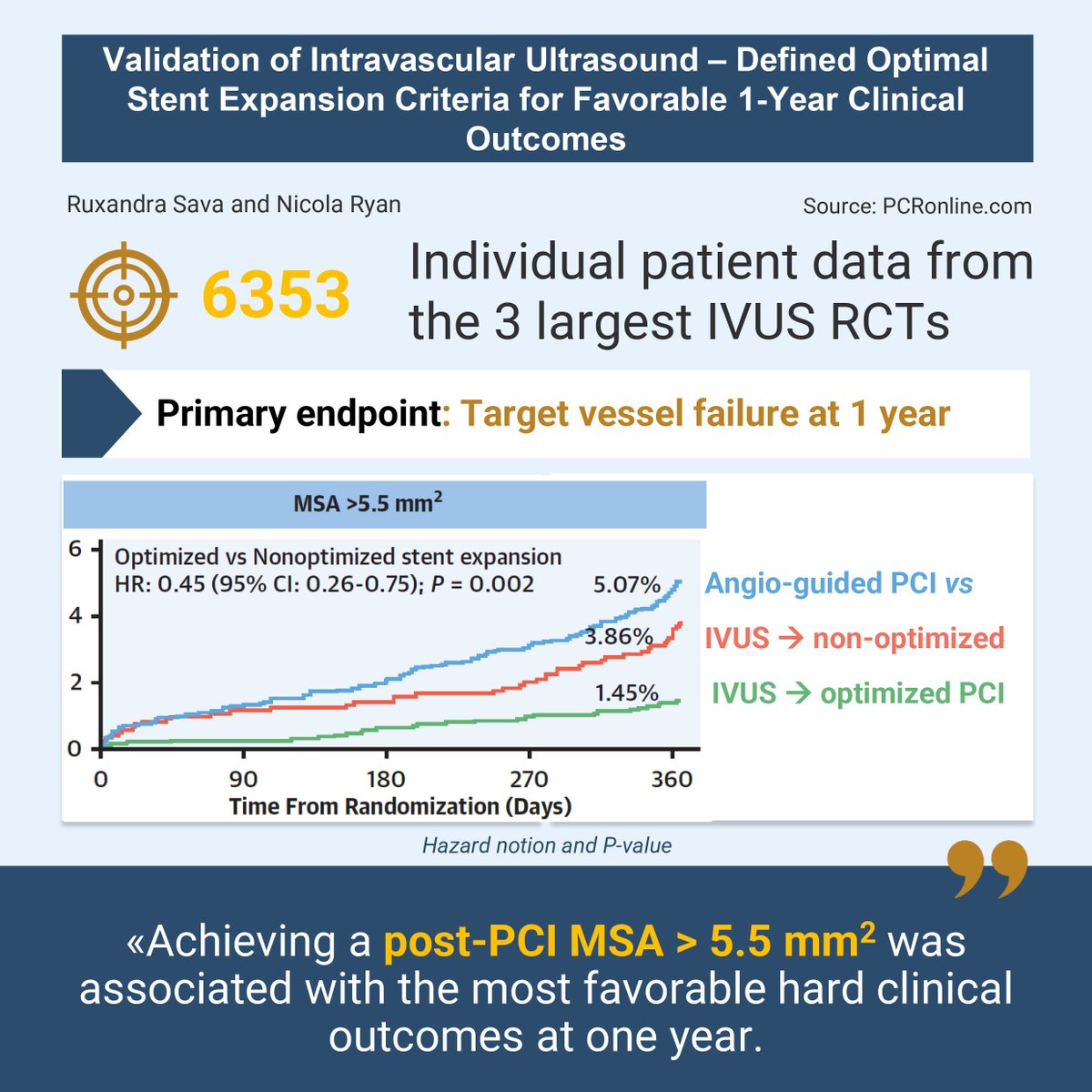
Validation of IVUS-defined optimal stent expansion criteria for favorable 1-year clinical outcomes
🔗https://t.co/JO2Fr7hqAy
This individual patient data analysis 🔎 of the 3 largest RCTs evaluating IVUS-guided stent optimisation showed that an MSA > 5.5 mm2 was associated with reduced TVF at one year.
Read this new journal club review ✍️ by @RuxSava and @NicolaRyanI1
#interventionalcardiology
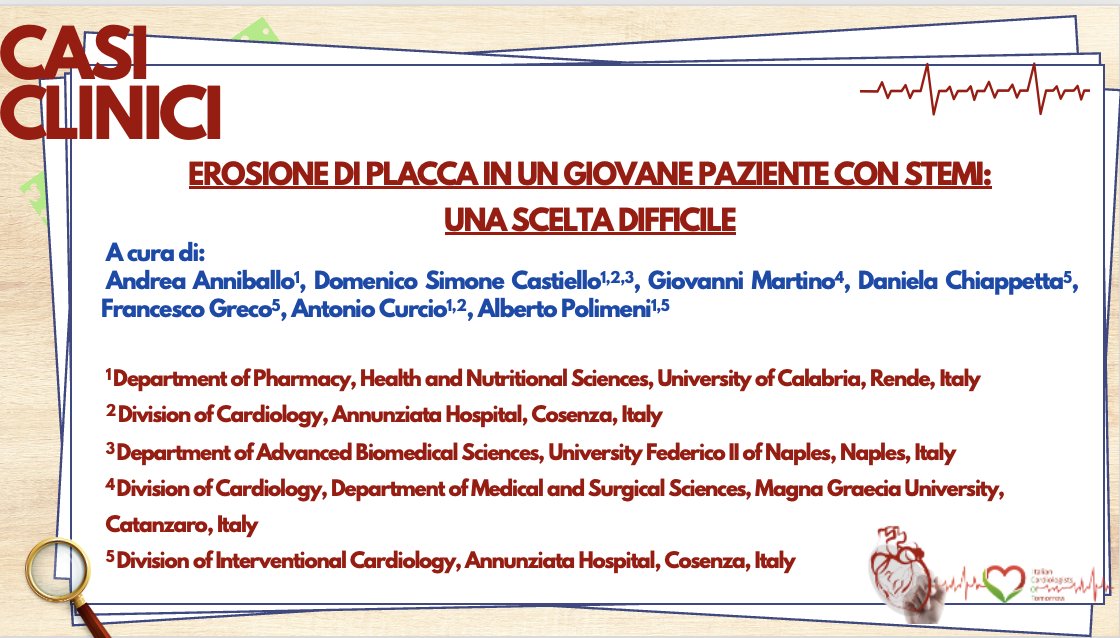
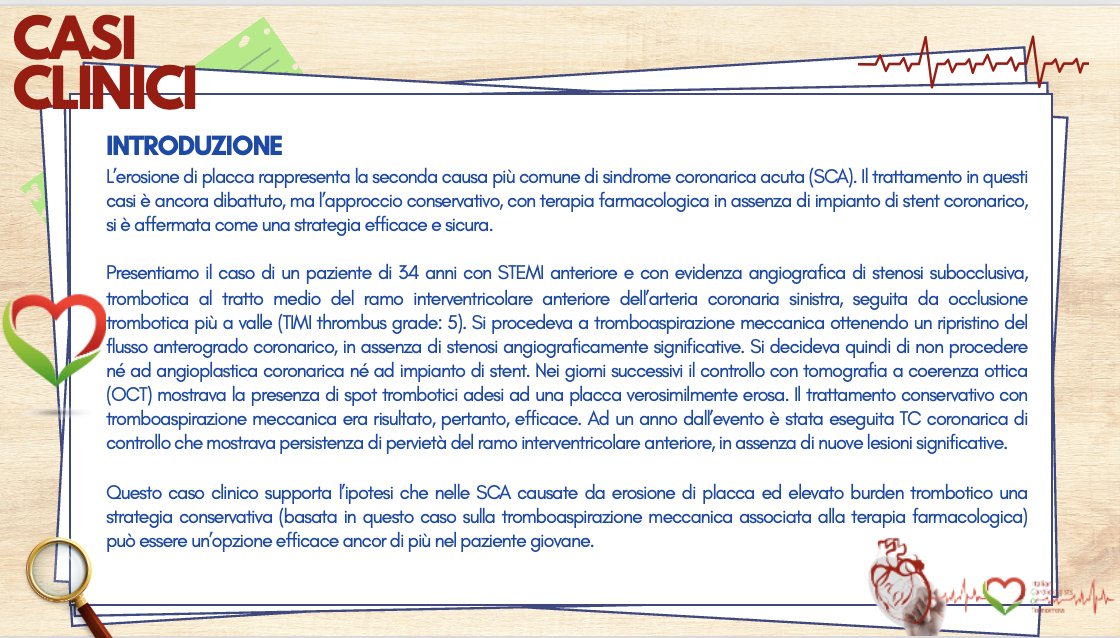
📢Prosegue la Rubrica dei Casi Clinici dalle Scuole di Specializzazione Italiane
📍Università della Calabria - Cosenza
📌Erosione di Placca in un Giovane Paziente con STEMI: una Scelta Difficile
@Albertopolimeni@DSCastiello
📖 Leggi il caso completo sul nostro sito!
After CORMICA trial comfirmed the benefit of tailored, stratified therapy, the PROMISE trial shows consistent results in MINOCA.
In-depth diagnosis re-classified significantly the diagnosis of epicardial spasm (13.3% -> 35.6%).
A strickling reminder: Ach test is not negligible.
In this first randomized trial of treatment strategies in #MINOCA, a stratified treatment, based on comprehensive diagnostic assessment and aetiology-guided therapy, led to a significant improvement in angina. Read the results of the PROMISE trial just published in #EHJ 👉 https://t.co/DaLw0Jpt36
@RoccoMontone@ehj_ed #TCT2025