Had an interview with Sherwin Bryce-Pease on the presidential delegation visit to Silicon Valley. We have 3 @uptuks staff/students in the delegation. 2 are from our lab/institute.
The interview 🎬 Experts warn that AI could deepen inequality in SA https://t.co/1Ql6fBACM2
I always get questions about data and why we don't just use data from source x or y. Please read my chapter for MISTRA from 2020 titled "Why African natural language processing now? A view from South Africa #AfricaNLP"
https://t.co/iPs4tAgkHg
They made it free to access.
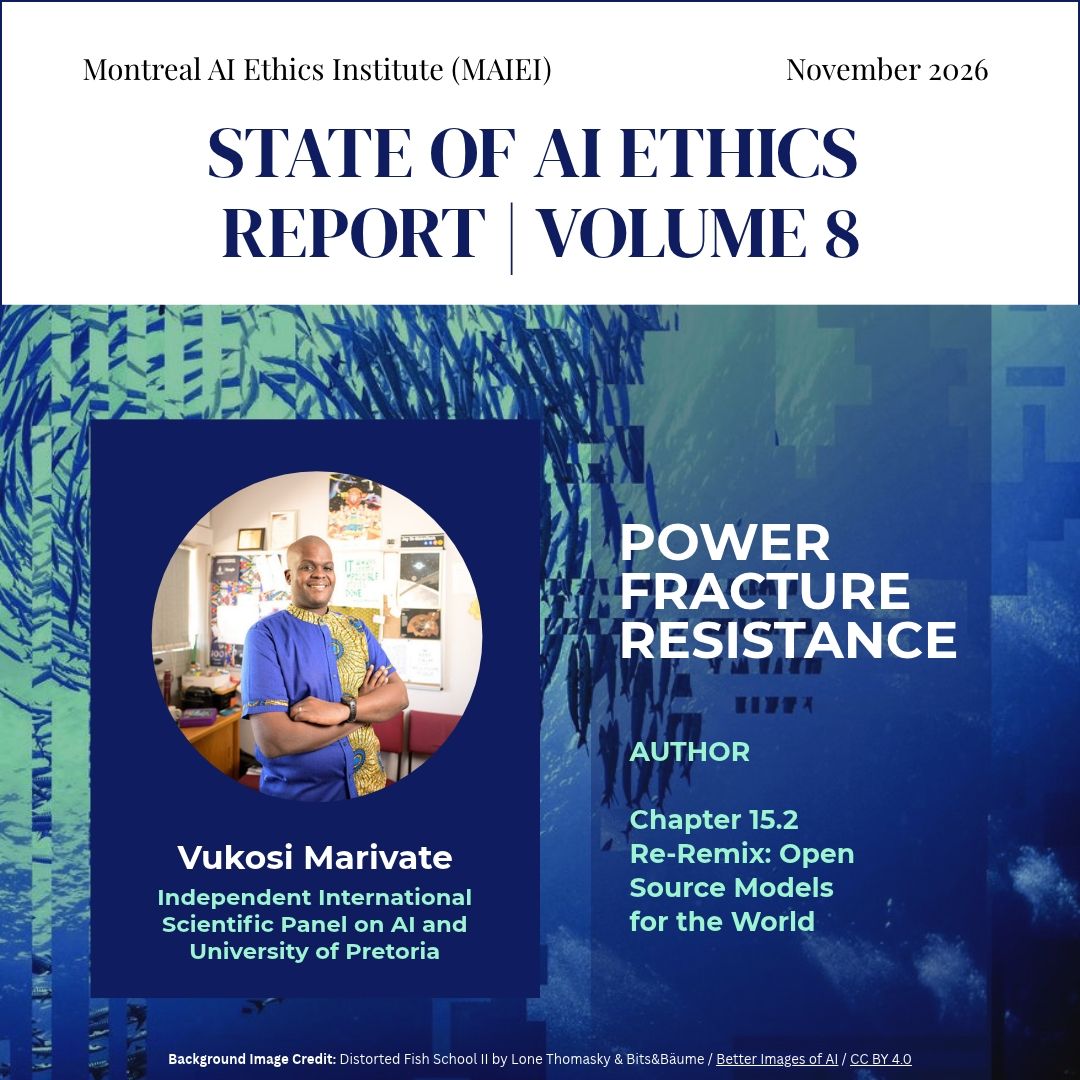
I’m proud to share our contribution to the State of AI Ethics Report (SAIER) Vol. 8, “Power, Fracture, Resistance,” published by @MontrealEthics! 🌍
With 91 global contributors, Vol 8 explores AI power and resistance.
We can do both. A revolution does not mean matching or fast catchup but a goal we set for ourselves. The challenge we have a lot of times is we measure ourselves against others, instead of choosing our own path. Agree, gov should take care of foundations (even for data &ICT).
Starting in an hour at #AACL2026@aaclmeeting: our tutorial on Measurement Science for Language Model Evaluation, with @sangttruong, @_rodolfocorona_, and Serena Wang.
We take six claims people often make about benchmarks, spanning three kinds of error (sampling, specification, strategic), and ask the room to vote:
1. Averaging safety benchmarks robustly measures safety
2. To compare models fairly, every model must answer the same full test
3. A well-translated benchmark measures the same thing in every language
4. The leaderboard winner will fit my product best
5. Evaluation gaming is mostly cheating or data leakage
6. A private, uncontaminated test set stops gaming
Most of these are partly right. We’ll show where each one holds, where it breaks, and a better claim to make instead.
14:00, Muhe Hall B, Hengqin
Reading list: https://t.co/v54EJ4u3D8
(slides uploaded after tutorial)
@AfrilangAi 2026: Bridging Low-Resource Gaps in African Languages is open.
Most languages spoken across Africa still have little or no support in today’s AI tools. The second AI for African Languages Conference, hosted by Sunbird AI, brings together the people working to change that.
On 10 December in Kampala, researchers, engineers, industry teams and policymakers will come together to share learnings on African language technology from across the continent.
Registration is still open.
If you haven’t signed up yet: https://t.co/BgcWdhcaNe
#AfriLangAI #AIForAfricanLanguages #SunbirdAI
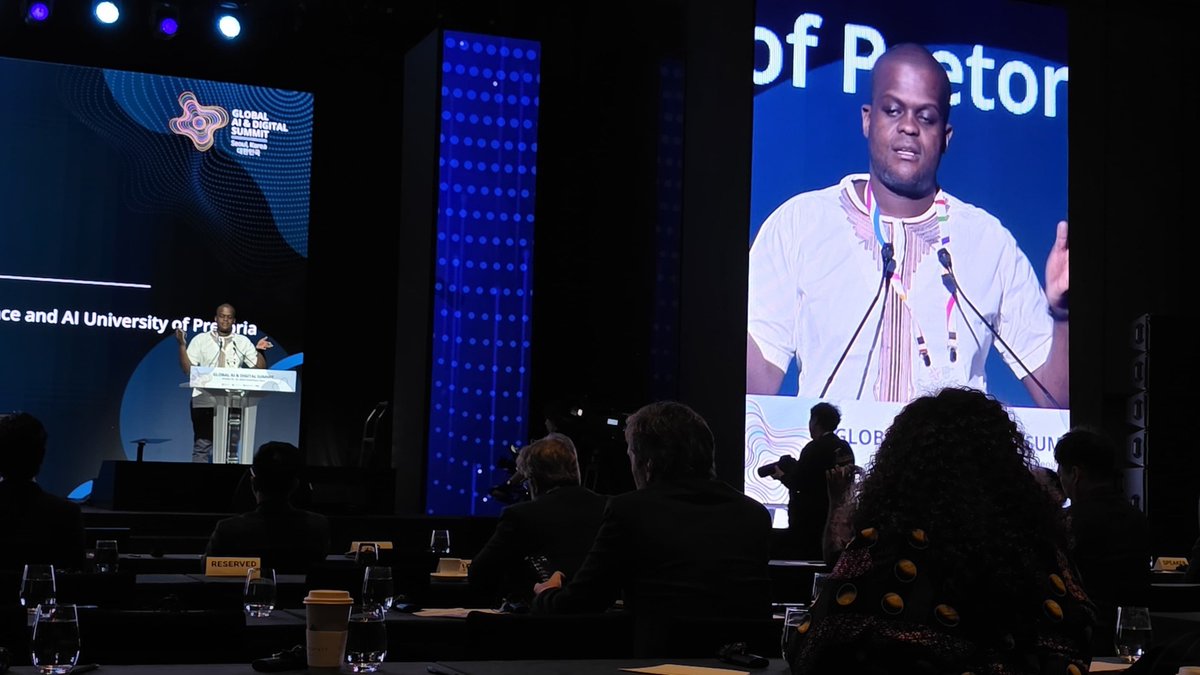
UP congratulates Prof Vukosi Marivate on being recognised by https://t.co/EpzSYgVOvY as one of 100 individuals worldwide for innovative, life-changing research in Artificial Intelligence. This recognition highlights the global impact of UP research and innovation:
https://t.co/aE1GUN3w39
Photo: Nasdaq Tower, Times Square, New York City
#UniversityOfPretoria #ProudlyUP #AI
New publication - AfriScience-MT: Towards Decolonizing Science in Africa through Text Translation <> A parallel corpus covering six African languages (Amharic, Hausa, Luganda, Northern Sotho, Yorùbá, and isiZulu) across 11 scientific domains. https://t.co/i216XMwBLp #EMNLP2026
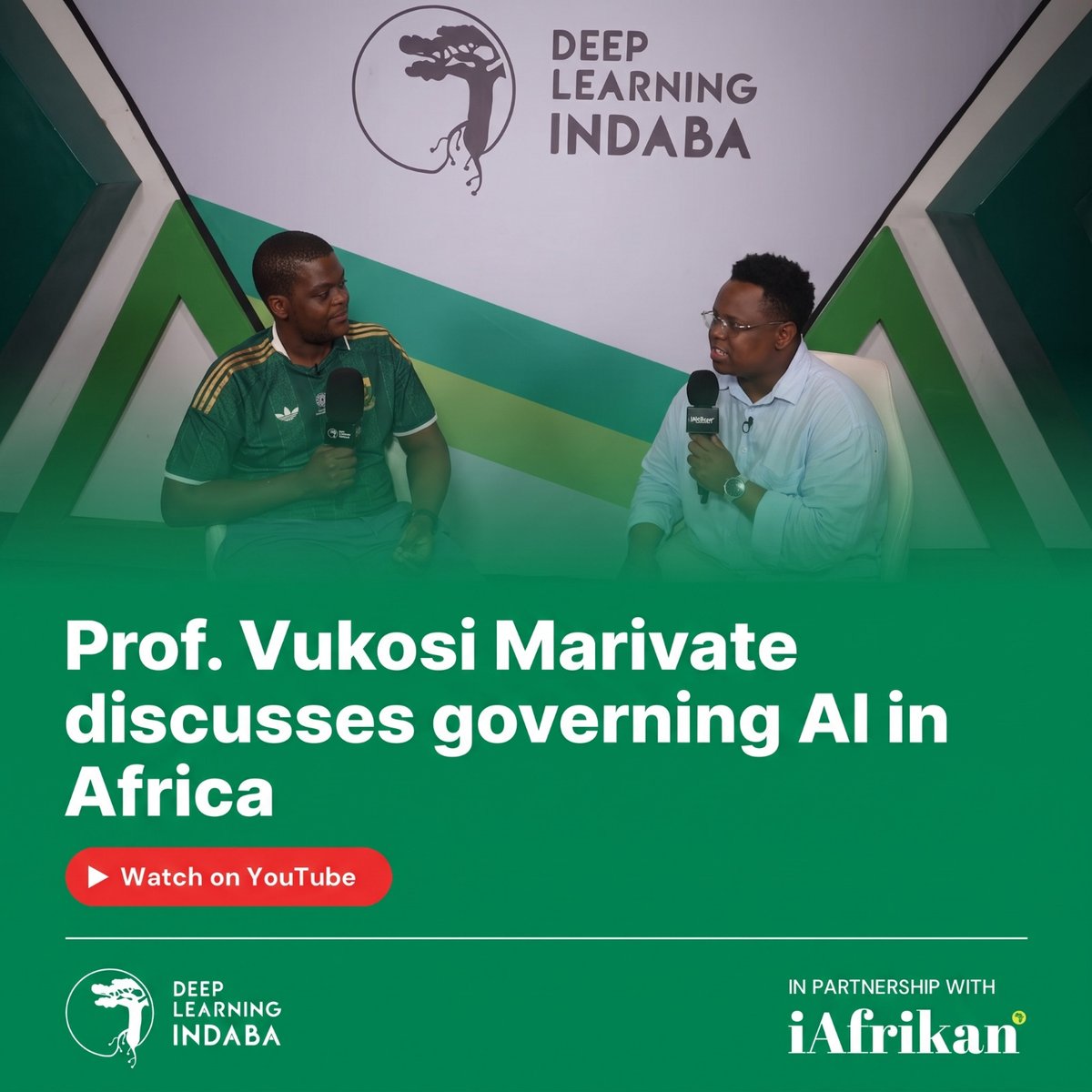
Indaba Insights | Episode 2 🔥
What does advising governments on AI actually look like?
Prof. Vukosi Marivate (@vukosi), co-founder of the Deep Learning Indaba, @MasakhaneNLP P and @LelapaAI , sat down with our media partner @iafrikan at #DLI2026 in Lagos. He was recently named one of 40 experts on the UN Independent International Scientific Panel on AI, and awarded the Order of Mapungubwe in Silver. He talks about:
🔹 Advising on AI, from the UN to South Africa’s ministries
🔹 Whether governments can keep up with frontier AI
🔹 What a degree is worth in the age of AI
🔹 Moving from brain drain to brain circulation, plus the Indaba 2027 rumour
▶️ Watch: https://t.co/ClNiRDj7X5
This is the second in our Indaba Insights series with @iafrikan.
#DLI2026 #AIGovernance #AfricanAI
Do you know the difference between misinformation & disinformation & the impact they can have on your democratic right to vote?
Find out in Ep12 of IEC Podcast with Prof @vukosi at University of Pretoria.
Available on:
@Spotify and @SABCPlus
YouTube: https://t.co/9YqfPiIWSL
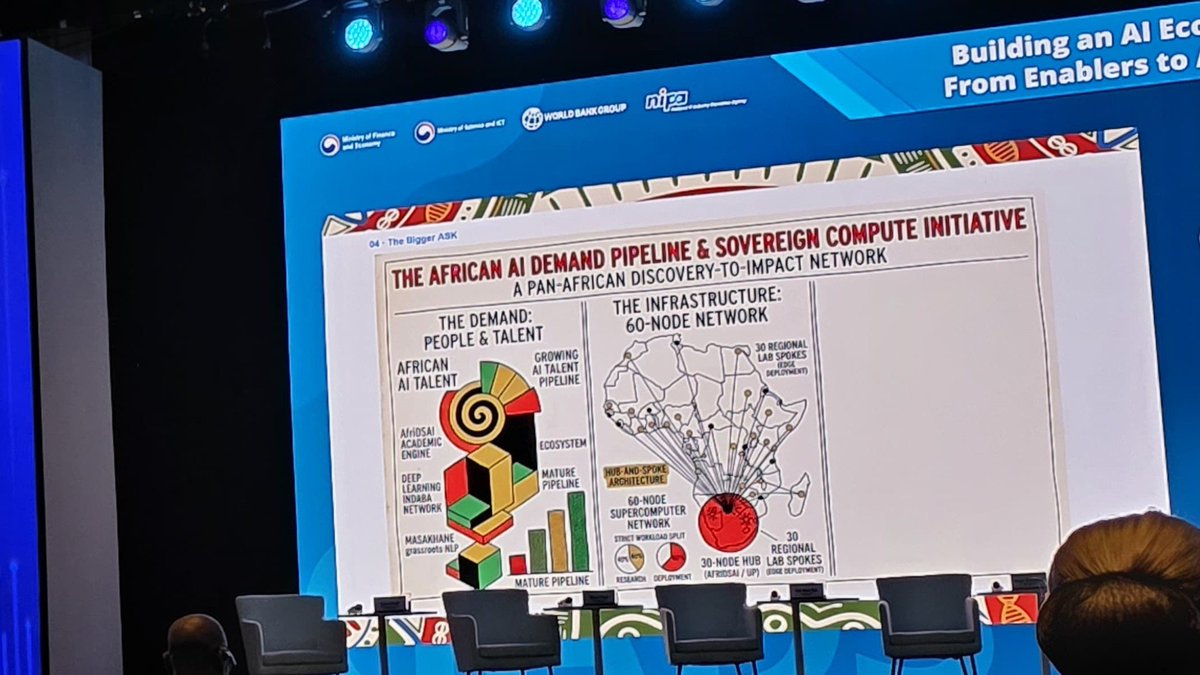
Wrapping things up. Great to talk about what we have been doing in building African AI ecosystem and @DeepIndaba and also what we are doing at @DSFSI_Research@UPTuks
Across both visits: real room for MCAAI, RAIL and DSFSI to collaborate on sign-language datasets, speech and language tech, and responsible AI.
#AI4D#SignLanguage#SASL#ResponsibleAI#AfricanNLP
🤟 Sign language AI across Africa: Kenya → Ghana
DSFSI PhD student Thapelo Sindane, who builds translation tech for South African Sign Language (SASL), visited two African AI labs with AI4D Africa support. He wrote a two-part series. 🧵 3/
He presented "From Grassroots to Frontiers: Building Capacity for SASL". Key feedback: SASL data collection must be community-centred, not just data acquisition.
https://t.co/wJXggV8js4 5/
Indaba Insights | Episode 1 🔥
How do you bring 842 people from 47 African countries to Lagos?
Our General Chairs, Aisha Alaagib (@AishaAlaagib), Albert Njoroge Kahira (@ankahira) and Chinazo Anebelundu (@rKyrian), sat down with our media partner iAfrikan on the second-to-last day of #DLI2026 to talk about:
🔹The visa struggle, and why it matters for Sovereign AI
🔹 What Sovereign AI means, and why it was this year’s theme
🔹 Why the Founder’s Stage: Africa telling its own stories
🔹 The Indaba’s legacy in Nigeria, plus a hint about 2027
▶️ Watch: https://t.co/2oYBLI1cZH
This is the first in our Indaba Insights series with @iafrikan. The inaugural Founder’s Series is coming soon.
#DeepLearningIndaba #DLI2026 #SovereignAI #AfricanAI