In a #IOTKI and #SABR era, what is the role of surgery in oligoprogressive #RCC?
We explored:
🔬 Biology of progression
📖 Guideline recommendations
🔪 Surgical outcomes (& CN)
🤝 MDT decision-making
🚧 Research gaps & future directions
@BJUIjournal@grantissimus@BlackmurJames
Great to hear from senior leadership @IntuitiveSurg@CMRSurgical@MoonSurg about tomorrow’s OR
🤖we‘re entering the digital era of surgery w/ AI & machine learning
🦾 robotics will be part of ORs not just a specialist tool
🦿the future must bring scale & democratise training
Thrilled to share our open-access article:
“Digital twins assisted surgery: A conceptual framework for transforming surgical training and navigation”
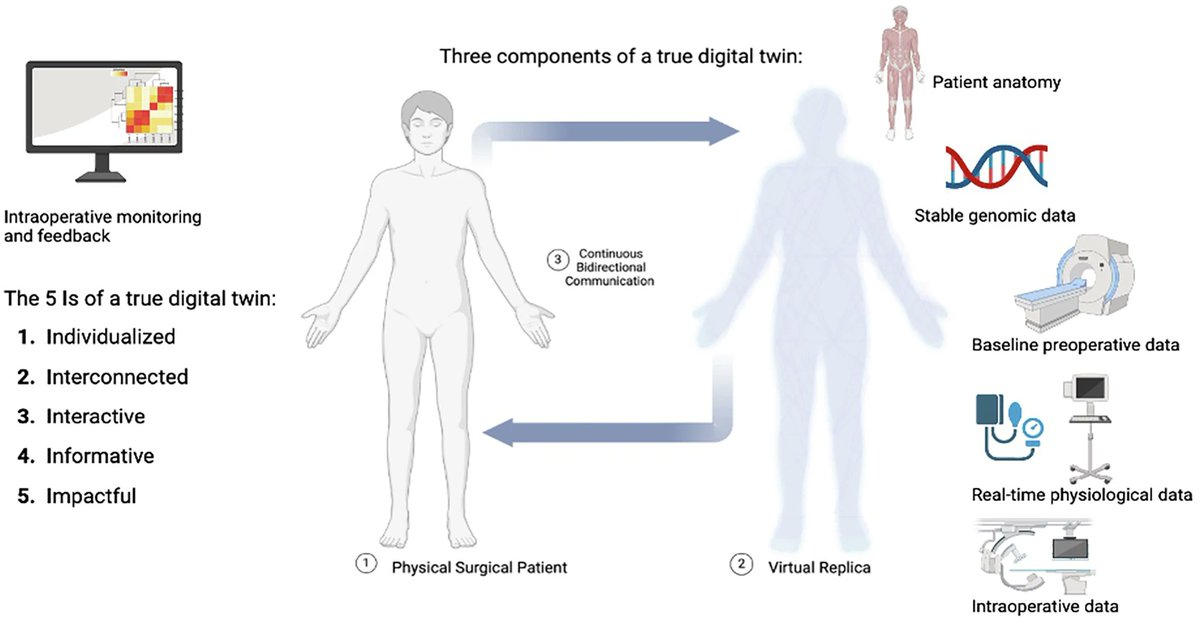
We outline how #DigitalTwins can revolutionize surgical training & intraoperative decision-making.
#BioMedEng25 gave us a chance to share what DTAS can really mean for patients. In his keynote, Prof. Shu spoke about how DTAS could move us closer to truly personalised operations!
The conversations that followed showed how much interest there is in making this vision a reality!
We’re excited to share our latest research in Elsevier’s Computer Methods and Programs in Biomedicine:
“A numerical simulation study of soft tissue resection for low-damage precision cancer surgery”
https://t.co/SOKzw97peT
The recent DTAS meeting brought together diverse perspectives and forward-thinking ideas. The exchange of insights reaffirmed our shared commitment to advancing surgical innovation through digital twins.
We’re shaping the future of surgery, one digital twin at a time.
At DTAS, we’re proud to support animal-free surgical research.
One of our postdocs was awarded for creating hydrogel-based kidney models, allowing surgeons to train with lifelike, ethical digital twin simulations. No animal tissue needed.
#DTAS#AnimalFreeResearch#DigitalTwin
@RandlesLab Exciting work from the Duke team! It’s inspiring to see how digital twins are transforming the landscape of personalized medicine. We’re exploring similar directions in surgical planning and prediction through DTAS. It is amazing to witness the field evolving so rapidly.
What if we could simulate a kidney cancer surgery before making the first incision?
Digital twins make that possible! Virtual replicas of patient anatomy can help surgeons plan, personalize, and predict outcomes with precision.
Is this the future of cancer care?
The impact of cardiac #DigitalTwins: Steven Niederer, Mission Director for Cardiac Digital Twins, explains how this tech is transforming our understanding of:
🫀 The heart
🫀 Treatment development
🫀 Individual & population-level physiology
This year’s World Kidney Cancer Day is all about helping patients and carers around the world keep their kidneys healthy. Show your kidneys some love. (1/2)
A digital twin in surgery is a dynamic virtual replica of an individual’s physical and physiological state, integrating both bodily systems and healthcare interactions.
https://t.co/6yyJ66sK8V
Behind every surgery is a story, a person, and a choice.
DTAS is developing digital twins to help surgeons see better, plan smarter, and operate safer.
#PatientFirst#DTAS#SurgicalInnovation