This work from the Epp Lab builds off of a previous study, where we identified sex-specific, early, dysfunction among PV-IN populations in the RSC during AD pathogenesis: https://t.co/1PYQMG8HgQ
Continued learning, sociability and exercise promote resilience to memory impairment in AD
These factors also increase the activity of the RSC, an early site of dysfunction in AD
Here we perform an RSC deep-dive to examine this interaction (PNNs matter)
https://t.co/WcHoAGkfAp
A little late posting this, but I defended my PhD thesis earlier this year! Big thanks to Jonathan Epp for his mentorship and support over the years - I can’t recommend his lab enough 🇨🇦
Also excited to share that I’ve started a postdoc at @inmed_u1249 with the Cossart Lab! 🇫🇷
New ad: Graduate (MSc / PhD) Student Positions – Neurophysiology of Autism Mouse Models – University of Calgary https://t.co/sNpSe844mI @d_sargin#neurojobs
A research team led by Dr. Jonathan Epp and Dr. Derya Sargin at the University of Calgary, funded by Brain Canada and Women’s Brain Health Initiative (WBHI), has identified a promising target for new Alzheimer’s disease treatments. https://t.co/uj9oGLck28
🚨New paper from the Epp and Sargin Labs!🚨
We identified early sex- and region-specific impairments to parvalbumin interneurons (PV-INs) during Alzheimer’s Disease (AD) pathogenesis
https://t.co/1PYQMG9f6o
Simplified highlights below:
🧵/15
📣New Paper Alert! Beautifully illustrating why using females in research leads to better translation! It’s got it all- behaviour, spatial transcriptomics, ephys, immuno in an age appropriate model for AD 👀
Female brain holds the key to understanding Alzheimer’s disease. Epp-Sargin lab collaboration led by @DTerstege featuring @LiisaGalea is out in @ScienceAdvances. We uncover the mechanisms that make females more vulnerable to Alzheimer’s - in mouse models and human brains
This wouldn’t have been possible without the contributions of my incredible lab mates and collaborators.
Many thanks to Yi Ren, Kabirat Adigun, the @UCalgaryMed ASOC (Heewon Seo & Bo Young Ahn), @LiisaGalea, @d_sargin, and Jonathan Epp.
15/15
In summary, we:
Found sex-specific impairments in RSC PV-IN presentation in AD 👫
Characterized consequences locally and brain-wide 🌎
Demonstrated the clinical relevance of this phenotype 🏥
Improved cognitive performance by promoting the activity of RSC PV-INs 🎓
14/15
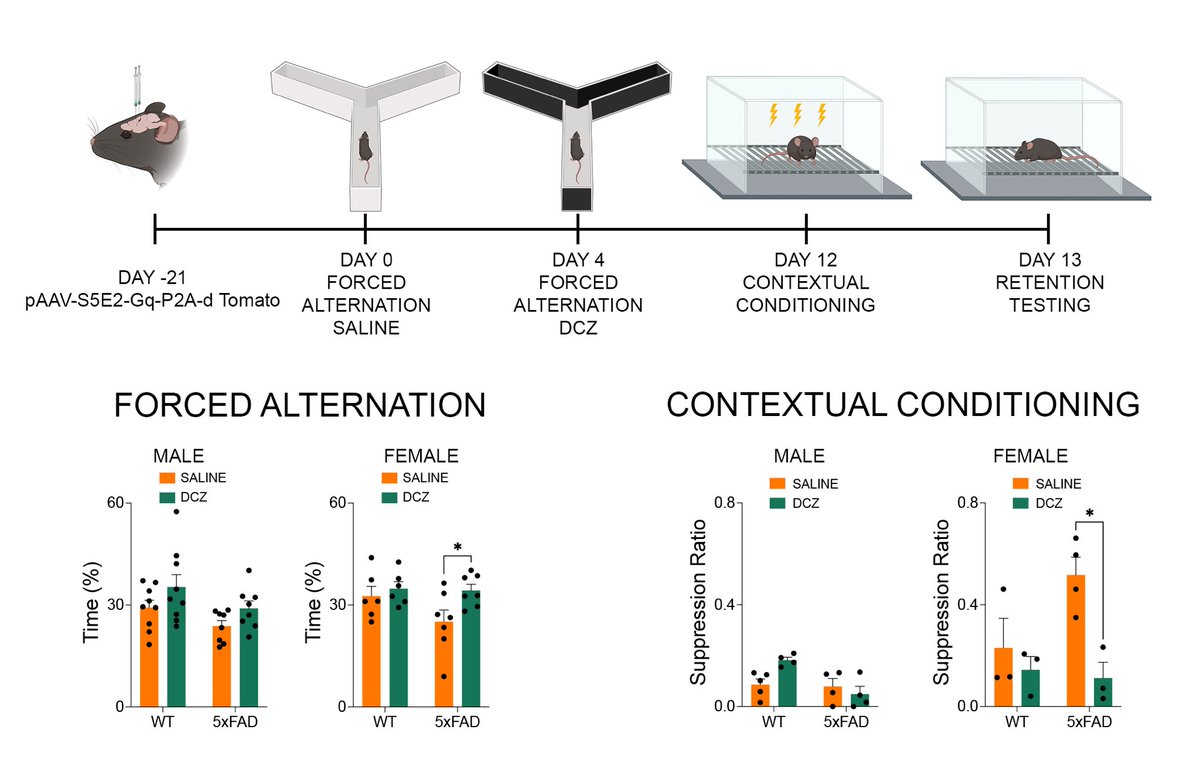
If dampening RSC PV-INs impairs cognition, can we improve memory performance by increasing the activity of these cells? 📈
By chemogenetically promoting the activity of RSC PV-INs, we improved contextual memory performance in aged female 5xFAD mice
13/15
How does this carry over to the clinic?
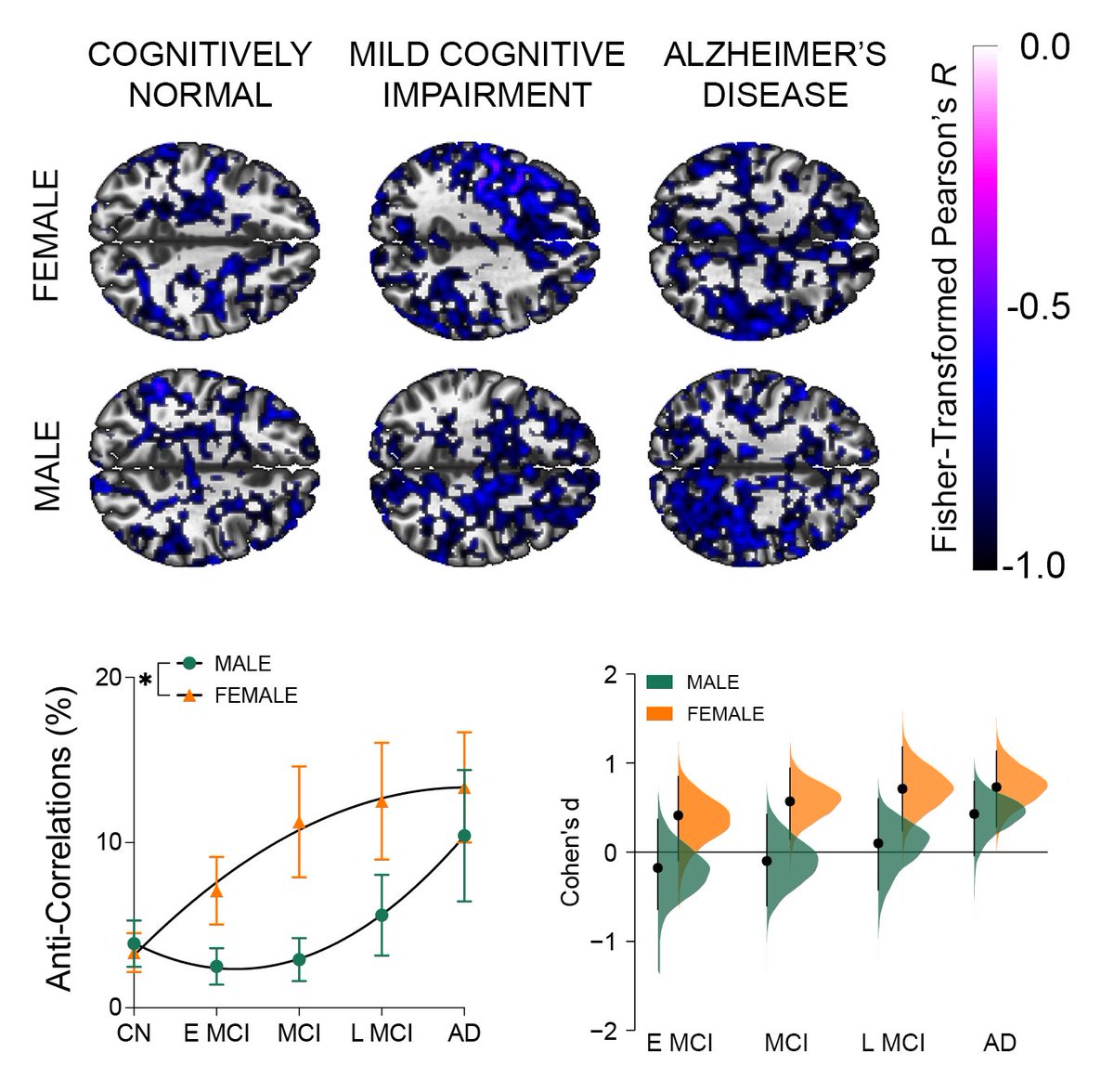
At rest, RSC activity should be highly correlated with the rest of the DMN. Via clinical rs-fMRI scans, we noted increased density of anti-correlated RSC connections in AD.
(👀 the slopes of males vs females…)
12/15
Does dampening the activity of these cells induce similar changes to those seen in AD? 📉
Turns out, yes. With chemogenetic dampening, we impaired memory performance and increased the density of RSC anti-correlations (shown here in 🟢)
11/15
With c-Fos as a proxy of neuronal activity, we can study brain-wide functional connectivity (see: https://t.co/jcxyyDan1I).
In female 5xFAD mice, the density of anti-correlated RSC functional connections increases drastically (shown here in 🟢)
10/15
Let’s focus on memory impairments, such as those observed in 5xFAD mice.
Memory processes depend on networks of brain-wide activity. The RSC is involved in many such networks. PV-IN dysfunction may alter RSC connectivity - but how can we study this? 🤔…
9/15
But what about in freely-behaving mice? 🐁
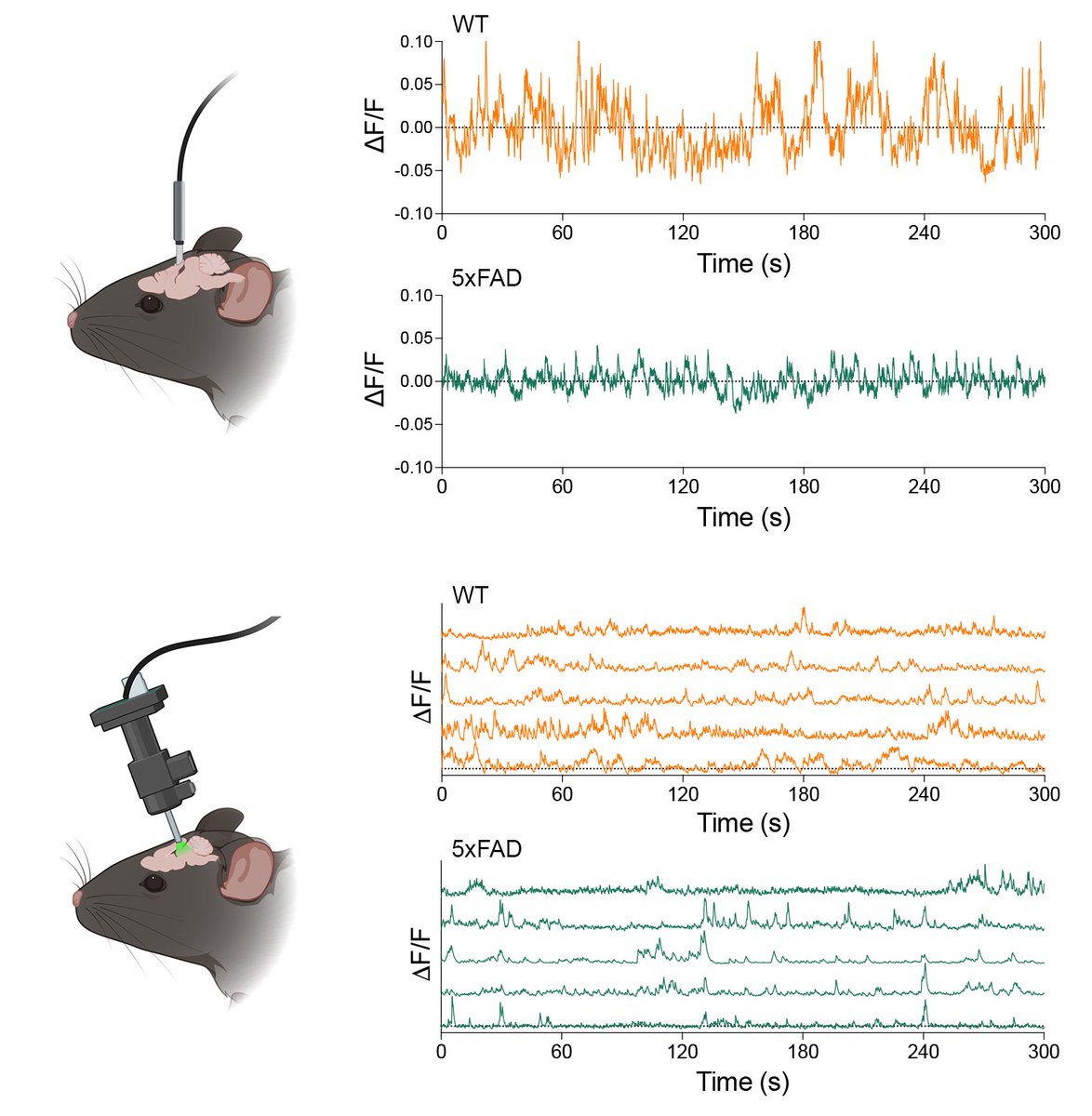
In vivo, my lab mate Yi Ren and I examined RSC PV-IN dynamics at both a population- and single cell-level. During a working memory task, we identified impaired RSC PV-IN activity in 5xFAD mice.
8/15
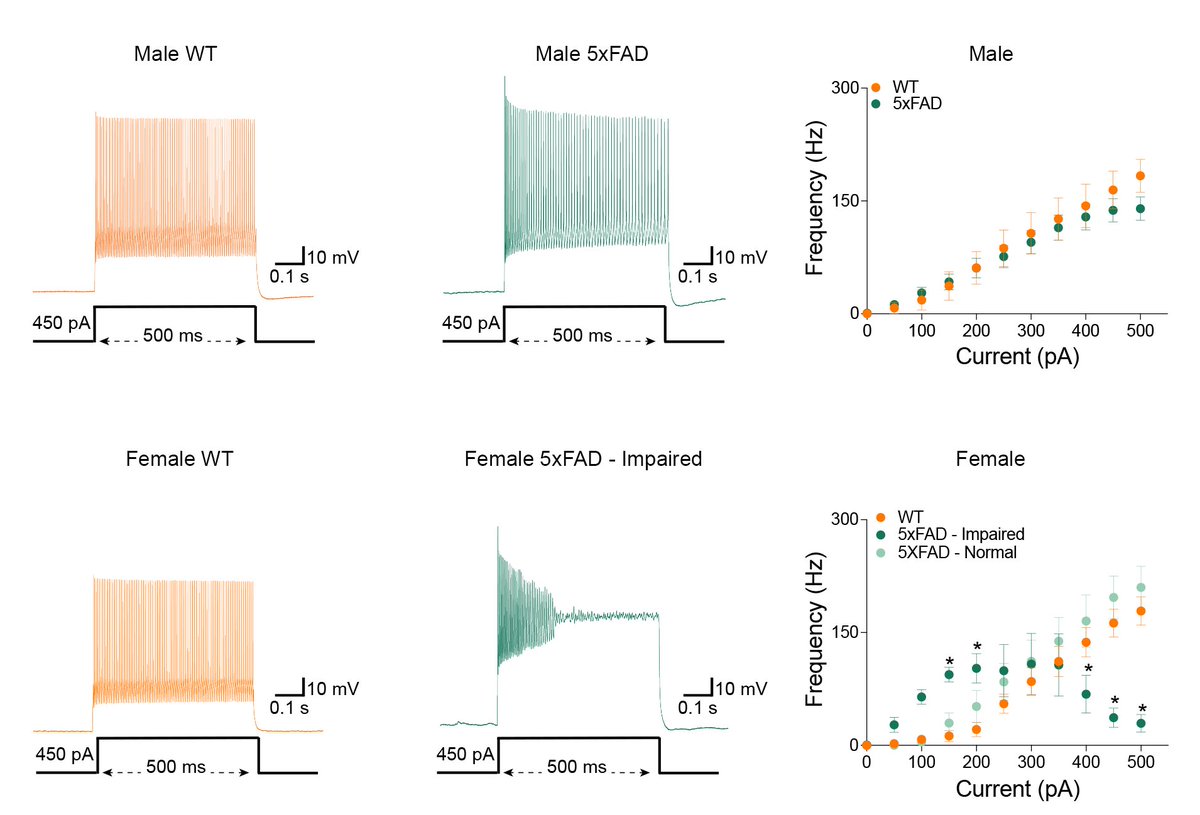
These transcriptional changes prompted electrophysiological characterization of RSC PV-INs ⚡️
These experiments were conducted by @d_sargin, who found impaired inhibitory control in RSC PV-INs of female 5xFAD mice.
7/15