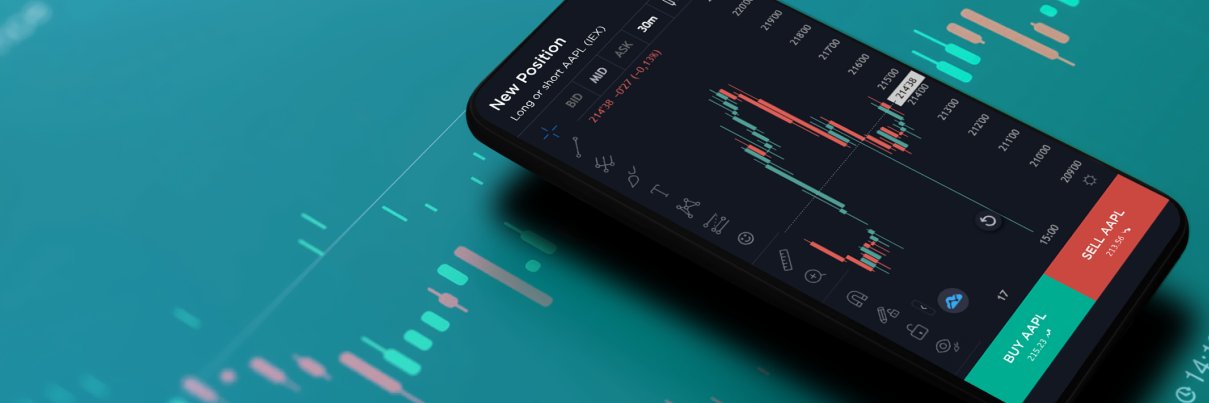
Trade 100s of markets directly from your Web3 wallet. Commodities, stocks, indices, forex & crypto or earn as a liquidity provider **trade at your own risk**
@InvestWithDiego A screenshot is a claim. A ledger entry is a record. DXS Terminal is designed to log every trade it routes to external liquidity on BSV.
The original DXS liquidity engine began with one bet: the trader across from you could be another trader, not a market maker.
Get enough traders into one pool and they become each other's liquidity. Your trades stay private unless you choose to share them. We made that case on Medium, article after article.
In April 2025 we chose to move anyway. DXS would bring in external liquidity, market makers included, the very thing our pool was built to do without.
It put our founding goal on hold, so DXS could grow again.
https://t.co/p7k69K436Q
Today on DXS there are no market makers, trading profits are paid out of trading losses and pool, autonomously. Profit deductions are the pool's last resort, the risk disclosed from day one in the sign-up disclaimer and the terms. For years deductions rarely happened. Then the pool thinned with BSV's price, and they became frequent.
April 2025. BSV's price fell again, past every scenario we had planned for, and it stayed there. Liquidity on DXS became even thinner. Our growth hung on a price we did not set.
Two roads were left. Wait for traders to fill the pool, however long BSV stayed low. Or bring liquidity in from outside.
https://t.co/bwQZTMyyJ6
@5omni True that the previous posts could be confusing, and also fitting the whole road since 2021 onto one page was the hard part 🙏 Glad it read as a recap. Thank you for staying to the end.
@realTonalDrum Ha, a crescent moon over teal ridges would make a good desktop. There's no wallpaper file, so it only lives at the top of the Article. Screenshot it before the moon sets 😄 P.S. We'll DM it to you, Sir!
Devil is in the detail. And when liquidity becomes commodity (=DEX's value prop in a nutshell), our bet is the risk-first trading flow we've been polishing over the years, resulting in much higher profitability odds. E.g. in DXS Terminal's design, every entry gets its own isolated collateral and P&L, a stop loss takes 2 clicks and your total risk shows in one figure, on every venue it connects to. We think traders stay where they feel in control.
Crypto runs on stablecoins, mostly USDT and USDC. Anyone who wants to grow in this market has to let their holders in without friction. DXS is no exception.
The catch: DXS runs on BSV, and BSV has no native stablecoin. Back then it had no infrastructure for one either.
We could have issued our own stablecoin. We didn't: too costly, too heavy a regulatory load, and not a job for a trading app.
So we took the other road: a bridge that carries the stablecoins people already hold over to BSV, so they can trade on our BSV-powered pool with the money they already hold.
https://t.co/GjBx9zkGaF
We've been quiet since May this year.
Starting tomorrow, one chapter a day: how we got stuck, and the solution we're building to (1) get DXS growing again, (2) raise payouts to liquidity providers and (3) bring profit recovery closer for affected traders.
Growth of DXS stopped, but volumes remained stable. Over the past 12 months, DXS averaged $700k in volume a day and paid its liquidity providers about $60 a day.
@_79b_ USA bans CFDs, but DXS Terminal is not a CFD -- so it will depend on the US adopting Hyperliquid and other on-chain pools Terminal is connecting to.
Where the fees go: 100% of DXS Terminal fees are converted into BSV for the DXS liquidity pool and its liquidity providers, to repay liquidity stakes and bring profit recovery closer for affected traders.
DXS Terminal is designed to record every trade on the BSV blockchain, even trades filled by external liquidity. Whatever the liquidity, BSV stays the source of truth.
The original BSV-powered pool keeps running as it does today -- on the same https://t.co/pUieJjmDMD domain. Terminal with external liquidity gets a sub-domain https://t.co/ASOJMJIYBh or https://t.co/W8XPI7t94j (TBD) -- fees back to BSV.
https://t.co/mz2EU79mt4
Here is the solution we found, and what we have been building: DXS Terminal.
One app, one gateway to on-chain venues. On-chain no longer means crypto only: stocks, commodities and forex trade on-chain too. DXS Terminal puts them behind one risk-first screen, with external liquidity behind it.
We did not abandon the liquidity engine without market makers -- on the contrary -- 100% of DXS Terminal fees route back to BSV pool. Original liquidity engine needs more traders and a growing BSV community to stand on its own. Until then, external liquidity carries it.
DXS Terminal is not live yet. We will announce the launch date within 2 weeks.
https://t.co/3eVxCiVvJk
@InvestWithDiego That's the part we kept intact: the original pool still runs on BSV, with no market makers in it. DXS Terminal is the new standalone app. It's designed to bring in third-party on-chain liquidity, market makers included, with BSV keeping the record of every trade.
@KirProzorov Not yet. You read it right: April 2025 is when we started building DXS Terminal, the separate app that will bring external liquidity. "No market makers" still holds for the original pool, which keeps running as it does today. Wednesday's Article covers why we made that call.
@MetanetPlatform Ha, the "however" went out on Sunday: DXS Terminal, the app we're building so DXS can grow again. Its fees? 100% converted into BSV for the DXS Original pool and its liquidity providers. The full road lands in one Article on Wednesday, every twist included.
Ethereum. Polygon. Tron. TON, the chain behind Telegram.
We connected DXS to all four, so stablecoins could reach our BSV-powered pool. The first stablecoin traders came.
But while we built those bridges, BSV's price kept falling. Our pool's depth moves with BSV's price, so the longer we built, the thinner liquidity on DXS became.
Stablecoin traders need deep liquidity from day one. By the time they could reach us, the pool couldn't offer it.
https://t.co/sbZALYDaW3
Bridging sounds simple. On BSV it wasn't.
The stablecoins we wanted live on account-based chains like Ethereum. BSV is a UTXO network: it moves coins like cash, not account balances. The two don't fit together without a token layer on BSV.
So we joined forces with the team behind STAS, a token protocol on BSV, and contributed significantly to the infrastructure around it: a STAS wallet, an indexer, and the smart contracts that connect stablecoins from other chains.
That layer is what lets a stablecoin from another chain arrive on BSV. The tech worked, but it was not enough. To be continued...
https://t.co/F1qje1tEKE
Liquidity can be brought in. A way of trading cannot. So the DXS Terminal retains the risk-first approach.
Every entry gets its own stop loss, set in 2 clicks. Your total risk across every open entry, in one figure. One clutter-free screen: the trade, and nothing else.
It shows in who stays profitable. "Day Trading for a Living?", a University of São Paulo study, found 3% of Brazilian day traders who persisted were profitable. On DXS, 28% of traders are profitable, all-time, deductions included.
Different group, different study. We believe the risk-first flow is part of why. Our plan takes it to third-party on-chain liquidity, where one pool's thin liquidity no longer holds it back.
Tomorrow: the whole road, in one Article.
https://t.co/gs0eD2KSbI
Where the fees go: 100% of DXS Terminal fees are converted into BSV for the DXS liquidity pool and its liquidity providers, to repay liquidity stakes and bring profit recovery closer for affected traders.
DXS Terminal is designed to record every trade on the BSV blockchain, even trades filled by external liquidity. Whatever the liquidity, BSV stays the source of truth.
The original BSV-powered pool keeps running as it does today -- on the same https://t.co/pUieJjmDMD domain. Terminal with external liquidity gets a sub-domain https://t.co/ASOJMJIYBh or https://t.co/W8XPI7t94j (TBD) -- fees back to BSV.
https://t.co/mz2EU79mt4
@mentz_matt49774 Hi Matthew and we appreciate your loyalty.
DXS Terminal won't affect or change the main https://t.co/TA9dEXdYkh application. You can keep using https://t.co/TA9dEXdYkh as usual.
Complete announcement is yet to be posted in a form of a long read.
Here is the solution we found, and what we have been building: DXS Terminal.
One app, one gateway to on-chain venues. On-chain no longer means crypto only: stocks, commodities and forex trade on-chain too. DXS Terminal puts them behind one risk-first screen, with external liquidity behind it.
We did not abandon the liquidity engine without market makers -- on the contrary -- 100% of DXS Terminal fees route back to BSV pool. Original liquidity engine needs more traders and a growing BSV community to stand on its own. Until then, external liquidity carries it.
DXS Terminal is not live yet. We will announce the launch date within 2 weeks.
https://t.co/3eVxCiVvJk
The original DXS liquidity engine began with one bet: the trader across from you could be another trader, not a market maker.
Get enough traders into one pool and they become each other's liquidity. Your trades stay private unless you choose to share them. We made that case on Medium, article after article.
In April 2025 we chose to move anyway. DXS would bring in external liquidity, market makers included, the very thing our pool was built to do without.
It put our founding goal on hold, so DXS could grow again.
https://t.co/p7k69K436Q
Today on DXS there are no market makers, trading profits are paid out of trading losses and pool, autonomously. Profit deductions are the pool's last resort, the risk disclosed from day one in the sign-up disclaimer and the terms. For years deductions rarely happened. Then the pool thinned with BSV's price, and they became frequent.
April 2025. BSV's price fell again, past every scenario we had planned for, and it stayed there. Liquidity on DXS became even thinner. Our growth hung on a price we did not set.
Two roads were left. Wait for traders to fill the pool, however long BSV stayed low. Or bring liquidity in from outside.
https://t.co/bwQZTMyyJ6
Ethereum. Polygon. Tron. TON, the chain behind Telegram.
We connected DXS to all four, so stablecoins could reach our BSV-powered pool. The first stablecoin traders came.
But while we built those bridges, BSV's price kept falling. Our pool's depth moves with BSV's price, so the longer we built, the thinner liquidity on DXS became.
Stablecoin traders need deep liquidity from day one. By the time they could reach us, the pool couldn't offer it.
https://t.co/sbZALYDaW3