BM @base community..listen to a wholesome conversation we had with @base founder @jessepollak on his on-chain vision for the base ecosystem & an interesting segment on how @base actually started out .. remember to mint on @zora
https://t.co/aD72mAqZni
50th Hackathon Win!
Making my total hackathon earnings $100,000+
I won $500.
Not a pitch deck. Not a maybe. A real check. Proof that a kid who kept shipping can make it on @StellarOrg
There were nights the build broke. Nights the wallet would not connect. Nights nobody was watching. I still opened the laptop. Receipts. Claims. XLM. Mainnet. Again. Again. Again.
That $500 is not just money. It is the first door. The first time the universe said: your work counts. Dreams do not arrive as a miracle. They arrive as commits at 3 am.
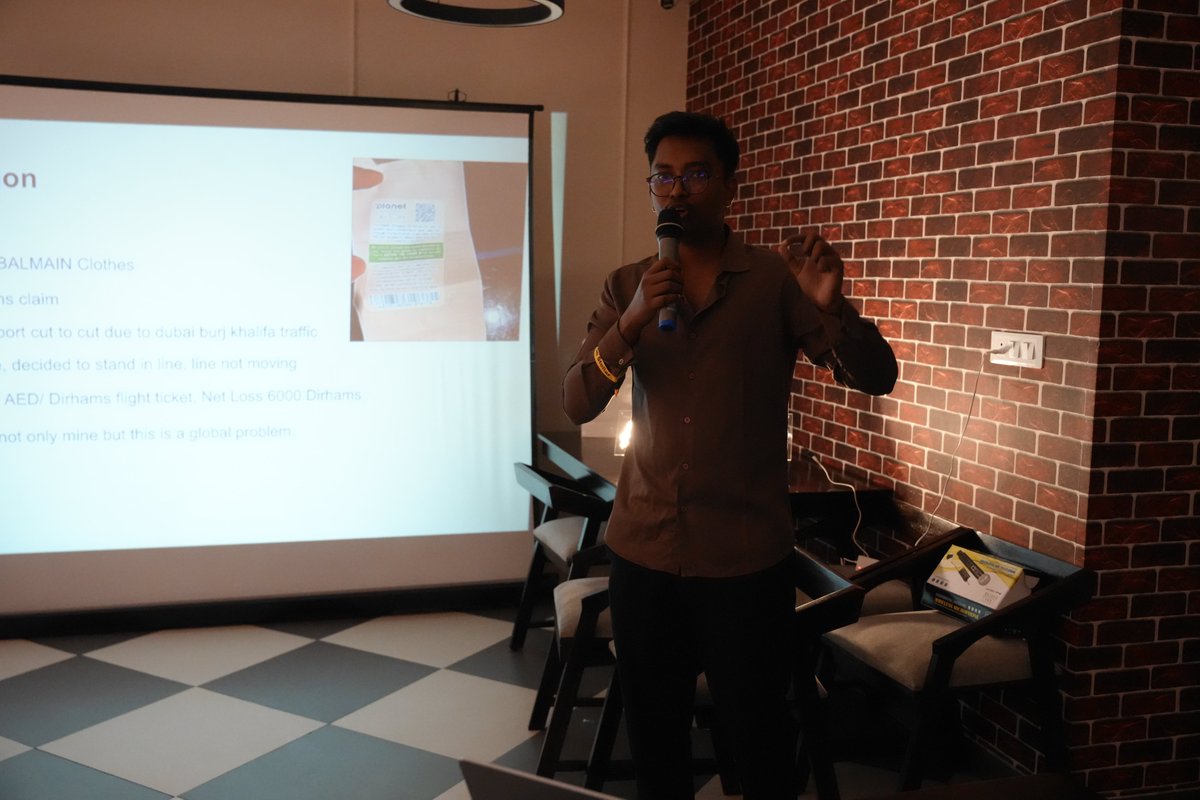
Gemetra is tourist VAT refunds on Stellar. Instant payouts. On-chain claims. A product for real people who lose real money at airports. I did not wait for permission. I built.
If this can happen for me, it can happen for you.
How you win a Stellar / @riseinweb3 hackathon:
1. Pick a real problem. Not a clone. A wound.
2. Ship live. Testnet. Then mainnet. A GitHub with no URL is a diary.
3. Use Stellar for what Stellar is: payments, anchors, contracts, seconds not days.
4. Record proof. Demo video. Explorer hash. Tests. README. Judges cannot love what they cannot see.
5. Stay in the Discord. Ask. Help others. Mentors notice builders who show up.
6. Finish. Ugly and live beats perfect and private.
Thank you to the people who made this ecosystem feel like home:
@StellarOrg@BuildOnStellar@IND_stellar@riseinweb3@DebanjannnYaps@thebhupii@SahityaRoy07@ektaamd@gulcan_yayla@0xkaankacar@jricetweets@gwd2000@StellarEmir@DenelleDixon@cemarcann@yashnuff@JoseFDaPonte@rajachak75@jasonkarsh@TheContributor@JedMcCaleb@tomerweller@janevherman@TeagueOnChain
You did not just run a program. You lit a fire under builders who had nothing but a laptop and a stubborn heart.
If you are reading this and you feel behind, you are not late. Open the docs. Ship one thing today. Come get your win.
I am just getting started. Next levels. Next product. Next check. Bigger. Louder. On-chain.
Drop a heart if you believe Indian builders belong on the global stage. I want to feel this one.
#BuildOnStellar #Stellar #StellarIndia #RiseIn #Hackathon #Web3 #XLM #Builders #NeverStopShipping
Live: https://t.co/obIZD0ApJY
X: https://t.co/yJFnuOw2JU
Submissions for the Agents at Work Hackathon close Sept 21 at 9am GMT. Now is the best time to pressure-test your build and fix anything broken before submitting it.
🗓️ Join our team for Office Hours this Thursday from 12pm GMT
Sign up now: https://t.co/9wiAjuY0mn
Call for Applications - AEYA Local Connecting Event, Nairobi (11-12 November 2026)
Are you a young leader aged 18-30 passionate about innovation, Al, and youth employment?
The Africa-Europe Youth Academy invites you to apply for the Nairobi Local Connecting Event, where youth, policymakers, and practitioners will co-create solutions for inclusive digital economies and sustainable jobs.
Deadline: 21 September 2026
Mandatory uploads: CV (max 2 pages), ID/Passport, and
Letter of Motivation (max 1 page).
▶️ Apply now: https://t.co/FxI9EYNUCn
I think it’s about time we build solutions like @P2Pdotme that work with the existing markets interacting of trying to change the markets for crypto.
Crypto users get to keep use their crypto and fiat users get their fiat
A win win
Tokenized US stocks don't sleep. Build an agent for the hours humans sleep.
$50,000 USDT prize pool ·
Submit by Sep 21 Submit your project = you're in. 👉https://t.co/Gq4tHm7Iz3 AI Hackathon S2 is open now! Backed by@bitget@Alibaba_Qwen@alibaba_cloud
Opportunities here for Devs y'all can explore this thread. Follow for more
$407K+ open in hackathons, ai grants and web3 grants.
@monad Metropolis Hackathon
$250,000+
https://t.co/DL14ApX3ff
GWDC 2026 Korea Hackathon
$100,000+
https://t.co/L7ujeQqtqP
Decentralize AI Hackathon (Round 1)
$51,750+
https://t.co/v7xpgB9WoP
@XAgent_official AI MCP Hackathon
1,000 USDT + X-Points
https://t.co/ll8ZmqweYU
@Starknet Seed Grants
up to $25,000
https://t.co/r5VxVCjmvs
@SolanaFndn Foundation Grants
pool not listed
https://t.co/Xwg4wkxD9c
Ethereum ESP Wishlist / RFPs
pool not listed
https://t.co/B0AxudE6mi
Indonesia Web3 Hackathon 2026
$5,000
Octant Grant
100 ETH in matching funding
On @OctantApp
tips from the GOATED @shelleymaeph
Opportunities here for Devs y'all can explore this thread. Follow for more
$407K+ open in hackathons, ai grants and web3 grants.
@monad Metropolis Hackathon
$250,000+
https://t.co/DL14ApX3ff
GWDC 2026 Korea Hackathon
$100,000+
https://t.co/L7ujeQqtqP
Decentralize AI Hackathon (Round 1)
$51,750+
https://t.co/v7xpgB9WoP
@XAgent_official AI MCP Hackathon
1,000 USDT + X-Points
https://t.co/ll8ZmqweYU
@Starknet Seed Grants
up to $25,000
https://t.co/r5VxVCjmvs
@SolanaFndn Foundation Grants
pool not listed
https://t.co/Xwg4wkxD9c
Ethereum ESP Wishlist / RFPs
pool not listed
https://t.co/B0AxudE6mi
Indonesia Web3 Hackathon 2026
$5,000
Octant Grant
100 ETH in matching funding
On @OctantApp
tips from the GOATED @shelleymaeph
@africablockfest Here's how to win :
Share a tweet with a screenshot of a transaction you've down on minisend while quoting this tweet.
Highest number of impressions get themselves a ticket to attend @africablockfest in Nairobi,plus a merch of choice.
Early this week on Tuesday I just finished my first Class in solana fall school Starting with the fundamentals, getting deeper into how Solana works, and slowly putting the pieces together.
It’s only lesson 1, but I’m already excited for what’s ahead.
@decentra1ized_
Introducing the Metropolis global hackathon
Six weeks to build the next generation of startups on Monad.
4 tracks. Over $250K in prizes for builders.
Submissions end October 13th.
https://t.co/TOL6M5njId
COMRADES niliwaambia egocentric projects pay well. Some days back fuzu ilikuwa inalipa Hadi 1500 per task. Sahii mindrift na Telus zikona hizo projects. Rush there no proxy needed comrades
hey @arkivnetwork hope this is taken into consideration
I spent a good amount of time going through Arkiv’s MCP, docs and the Arkiv Hub throughout the ideathon last month well and also submitted some pretty good ideas and honestly, I think there’s a really strong developer experience buried underneath an onboarding experience that still needs a serious rethink.
Starting with the docs: the problem isn’t a lack of information. There’s actually a lot of it. The problem is that a new developer has to connect too many dots themselves. You can read about entities, attributes, TTL/expiration, queries, SDK clients, wallets, networks and MCP individually and still finish with the question: “Okay, how do I actually build a normal Arkiv application from start to finish?” I’d make the primary Quickstart an actual end-to-end journey: create project → install SDK → connect → create entity → query it → update it → handle expiration → deploy a frontend. One working application that teaches the architecture as you go, instead of making developers jump between multiple reference pages.
The examples also need to be much more copy → run → see-result oriented. I’d love to see complete reference implementations for something like a Next.js app, a React/Vite app, a backend/API integration and an AI-agent application using the MCP. The current documentation is useful for understanding individual building blocks, but more real-world workflows would dramatically reduce the amount of trial and error.
There’s also a network/documentation consistency issue that needs attention. If a network has been retired or the current public network situation has changed, that needs to be impossible to miss inside every affected tutorial, example and tool. Developers shouldn’t discover halfway through a setup flow that the environment they’re following is no longer usable. A prominent network-status banner with “this tutorial targets X / current supported environment is Y” would eliminate a lot of confusion.
The MCP is probably the part I found most interesting. The idea of giving an AI agent access to Arkiv operations like creating entities, querying data, updating entities, extending them, mutating multiple entities and streaming events is genuinely compelling. But the MCP onboarding currently feels like it assumes the developer already understands MCP configuration, wallets, authentication and Arkiv’s data model. I’d add a dedicated beginner path: connect test wallet → verify connection → install MCP → run a read-only query → make a test write → understand exactly what happened. The distinction between read-only operations and wallet-backed writes should also be much more obvious.
I’d also rethink the UX around wallet/private-key configuration. Even with a warning to use a throwaway wallet, putting a private key into an MCP configuration URL is not the kind of pattern I’d want a first-time developer to internalize as normal. The product should make the safe boundary obvious and guide users through a disposable test-wallet flow rather than making the security model something they have to reason about themselves.
The MCP toolset itself is strong, but it could do a better job teaching developers which tool to use when. A simple layer saying “I want to save data → createEntity”, “I want to find data → rawQuery”, “I want to modify data → updateEntity”, “I need multiple writes → mutateEntities”, “I need live changes → streamEntityEvents” would make the power of the MCP much more accessible.
Then there’s the Arkiv Hub UI. This is where I think the biggest product/UX opportunity is. The Hub is trying to be a docs gateway, MCP setup tool, Skills library, Tools directory, ecosystem catalogue, explorer, network dashboard and developer portal all at once. Individually, those are useful. Collectively, the experience can feel overwhelming, especially for someone who has never used Arkiv before.
The UI needs much stronger information hierarchy. When I land on the Hub, I shouldn’t have to figure out whether I should start with Docs, MCP, Skills, Tools, Faucet, Explorer or something else. The interface should answer three questions immediately: What is Arkiv? What can I build with it? What should I do next? Everything else can come after that.
I’d make the primary journey something like: Discover → Install → Create → Query → Deploy. Then make the other sections supporting experiences rather than competing entry points.
The Hub also feels a little too much like an internal developer dashboard in places. Infrastructure information is useful, but it needs to be translated into human-readable product states. Instead of making developers interpret network information, loading states and infrastructure telemetry themselves, show things like “Testnet connected ✓”, “Wallet connected ✓”, “10 test tokens available”, “3 entities created”, “Last transaction confirmed”. The UI should teach you what Arkiv is while you’re using it.
The Skills section is actually one of the ideas I like most. Having patterns distilled from real hackathon submissions is potentially extremely valuable because developers learn much faster from proven implementation patterns than from abstract API references. But I’d push this much further. Every skill should have a very obvious “Try this now” path, with a runnable example and a clear explanation of what problem the pattern solves. If something as fundamental as “Start an Arkiv app” is only a proposed skill, I’d prioritize that heavily because it could become the front door for the entire developer experience.
The Ecosystem section could also become much more than a showcase. Instead of simply showing what people have built, let me say “I want to build an AI agent / marketplace / social app / data-driven dApp” and immediately show me relevant Arkiv projects, the patterns they used, the relevant Skills, the MCP workflow and the code/repository to learn from. That would turn the ecosystem into an actual learning resource.
Overall, I don’t think Arkiv has a documentation problem as much as it has a developer-journey problem. There is a lot of useful information, but too much of the responsibility for connecting it together is placed on the developer.
My five biggest recommendations would be: build a truly end-to-end start your first Arkiv app experience; redesign MCP onboarding around a much clearer security and wallet model; organize the docs around complete developer journeys rather than only individual concepts; simplify and strengthen the Hub’s UI hierarchy so it tells developers exactly what to do next; and turn the Skills/Ecosystem sections into interactive implementation guides.
The underlying primitives are interesting, the MCP has real potential, and the Hub is aiming at something valuable. But right now it feels like several good developer tools living beside each other rather than one coherent developer experience.
The goal should be that someone can arrive at Arkiv knowing absolutely nothing, spend an afternoon with it, and leave with a working application — without needing to constantly ask themselves, “Wait, which part of the ecosystem am I supposed to use now?”
That’s the level of DX I think Arkiv should be aiming for.
also the admin @kiminza_codes is an amazing UI/UX designer shoot her a dm...or shoot a dm here
Hack4freedom is coming to Nairobi 🇰🇪
From Sept 22 to Oct 5, we’re bringing our two-week bitcoin and freedom technology bootcamp + hackathon for women developers to Kenya.
This edition is hosted in collaboration with @DadaDevs, who are helping us bring Hack4freedom to life in Nairobi☺️ Special thank you to @marcelorraine & @wandiology for making this possible.
Women developers in Nairobi, this is for you.
✅Apply: https://t.co/uPrGZCQoh6
📆 RSVP on Evento: https://t.co/CIlerJF9cW
🧡 Sponsored by @btrustteam@SoapboxTech@evento_so