I heard about this Dashboard Design Patterns paper, and man, it's cool. One of the hardest parts of gathering requirements for anything is getting two people to imagine the same end outcome. I'm now realizing how often that's true for dashboards https://t.co/T5kCG4MeXN
LinkedIn Learning is offering all of the tech courses for FREE.
You can learn practical, relevant skills anytime, anywhere.
Here are FREE courses you don't want to miss (Free till Feb 28, 2023):
I'm a Head of Finance at Google.
I've interviewed 100s of candidates in my career and I know my decision within the first 7 minutes.
Do these 5 things to prepare for the interview and I guarantee you'll impress recruiters and hiring managers at your dream company:
Learning Python is easy, here is a simple roadmap 🐍
Different Python Usecases
➡️ Web Development
➡️ Data Science/Analytics/Engineering
➡️ Game Development
➡️ Web Scrapping
➡️ Machine Learning
and many more
3 Simple Steps To Master Python In Any Domain 👇🏻
@chukmimadi Preparation siguro yan for their next script hahaha.I will not be surprise kapag nakakita ako ng ganitong tweets-“Dati ako kakampink pero blah blah blah ngayon Makabbm na ko”
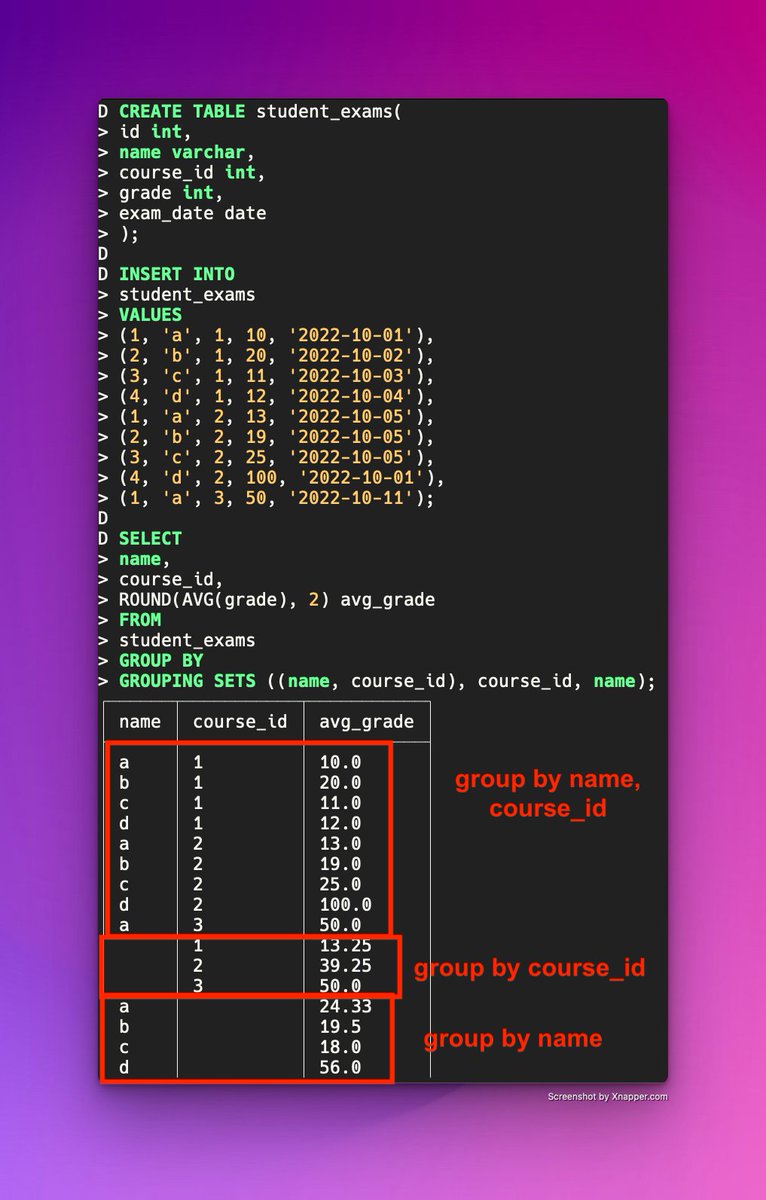
Want to group by different combinations of columns but keep the results in the same output dataset?
You can use one SELECT .. GROUP BY per combination, and UNION ALL, or use GROUPING SETS.
#SQL#datawarehouse#data#database#analytics
Code that is "readable" to beginners is often (not always) naïve for professionals.
If you are a professional, you should write code for professionals (and understand professional constructs).
The best way to learn just about anything is:
1. Toy around with it
2. See what it can (and can't do)
3. Dive deeper, one layer at a time.
Despite that, most courses work by:
1. Starting from the bottom
2. Combining seemingly unrelated ideas
3. Miraculously ending up at thetop