Digital Money should be stable, liquid, digital, and yield-bearing. Bitcoin-backed credit makes that possible. The next wave is not just stablecoins — it is stable-value money with yield, built on Bitcoin. $BTC
Q1 and Q2 2026 are in the tables here. You can really see the amplification kick in with Q2 with multiple jump from 4.01X to 4.41X.
The post you are responding to is a setup. Naysayers don’t know how read or even know Strategy Dashboards transparently show these metrics and they are net positive.
The AI buildout is absorbing capital at historic scale, creating temporary pressure across global markets. That does not weaken Bitcoin. It strengthens the case for scarce, liquid, digital capital. Bitcoin remains the premier asset for the long term. $BTC
@CryptoScout78@thepowerfulHRV 167,000 sats per share in November 2024. Now you have 220,000 sats per share. One things for sure the Fed will print again.
Here’s a simple, plain-English breakdown of what it actually means:
1. “Solely to cover tax withholding obligations”
• When restricted stock units (PSUs/RSUs) vest, they turn into real shares that count as taxable income to the executive — just like getting a big cash bonus.
• The IRS (and state tax authorities) require the company to withhold taxes on that income immediately.
• Instead of writing a huge personal check to the IRS, the company automatically sells a portion of the newly vested shares on the open market and uses the cash proceeds to pay the tax bill directly to the government.
• In this case, Le received 190,740 new shares from the vesting. The company sold 93,738 of them (roughly half) only to cover the taxes owed on the entire batch. He kept the rest (net +96,999 shares after the sale). This is not him cashing out for personal spending — it’s a required tax payment.
2. “Under a pre-arranged Rule 10b5-1 plan”
• Rule 10b5-1 is an SEC safe-harbor rule that lets insiders (like CEOs) set up automatic, pre-scheduled trading instructions in advance — when they do not have any inside information.
• Le set up this specific plan on May 7, 2024 (over a year earlier). It contains written instructions that say: “When these PSUs vest, sell exactly enough shares to cover the tax withholding and nothing more.”
• Because the plan was created long before the vesting date and the current stock price, it protects him (and the company) from any accusation of insider trading. The sale happens automatically on the pre-set schedule, regardless of whether the stock price is up or down that day.
GM.
I get a LOT of things wrong.
Some of my kids think I can't pour piss out of a boot with the instructions on the heel.
But.
I believe this video I did on Bitcoin price right now is spot on.
JP Morgan just released a study that shows 86% of retail is chasing momentum.
It's the SOS Trade.
"Shiny Object Syndrome"
Nothing -absolutely zero-has changed in my thesis on Bitcoin.
This period reminds me of '22. All the buys I made in the $20's and down to $17k are my prettiest moments.
I didn't sell. I bought.
Don't be a victim of SOS.
https://t.co/N6G58abnHr
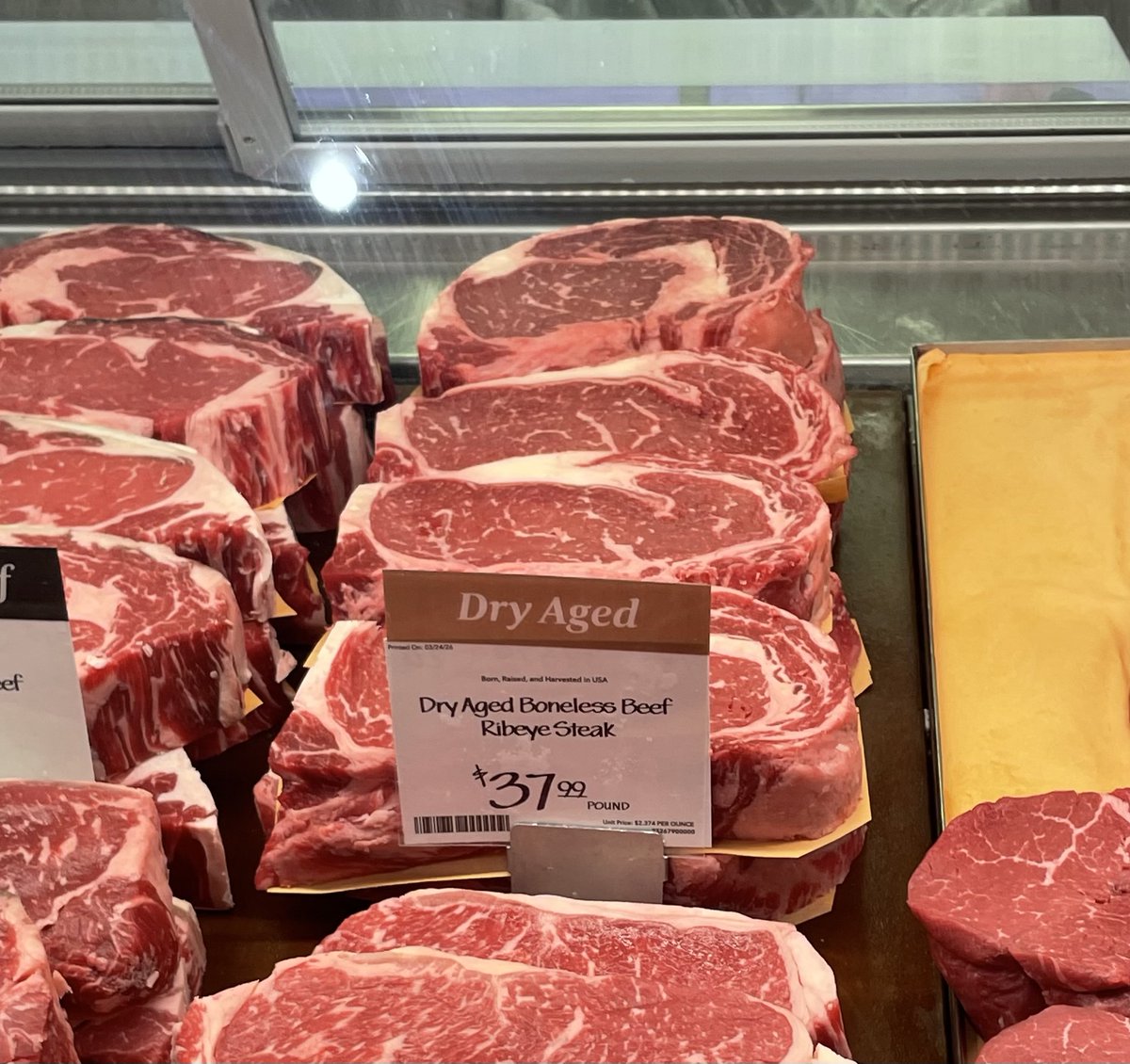
Ribeye inflation index has a big print. New price $37.99/lb. 17% inflation annualized from October. 18.5% annualized since last June. 90% cumulative since 2020. 11.0% compounded annually over 6+ years. Same ribeye, same store. High rates? Don't care. Bitcoin is the only way out!
At ~$4.2M per BTC, @saylor overtakes @elonmusk as the world’s richest man. Saylor’s ~98,800 BTC effective exposure (17,732 personal + 9.9% of MSTR’s 818,869 BTC) needs to reach ~$850B to surpass Elon’s $839B; $850B / 98,800 ≈ $8.6M at 1:1, adjusted lower for MSTR premium.
Heading to Bitcoin 2026 in Vegas?
Join us for the True North Networking Event on Tues, April 28 at the Gatsby Cocktail Lounge inside Resorts World.
Connect with founders, investors, and builders during one of the biggest weeks in Bitcoin.
Get tickets here: https://t.co/aCp41DWeFn
We're watching a financial crisis unfold in real time.
The last time funds started blocking investors from getting their money back, Bear Stearns collapsed six months later.
In 2007, BNP Paribas froze €1.6 billion in funds.
Bear Stearns declared 2 funds "essentially worthless" and gated a third.
Everyone said it was "contained."
6 months later the entire financial system nearly went under.
I'm not saying we're there YET...
But I am saying the pattern is rhyming.
BlackRock just capped withdrawals from its $26 billion HPS Corporate Lending Fund after investors demanded 9.3% of their shares back - nearly DOUBLE the fund's 5% quarterly limit.
Investors wanted $1.2 billion out. BlackRock gave them $620 million and said no to the rest.
BlackRock stock dropped 7%. KKR, Ares, Apollo, Blue Owl - all down 5-6% on the same day. The financial sector ETF is off 9% in a month.
This is the same BlackRock that just slashed a $25 million private credit loan from 100 to ZERO in 3 months. Full value one quarter. Worthless the next.
And they'd already done the exact same thing months earlier with Renovo Home Partners.
But this isn't just a BlackRock problem.
Look at the dominoes:
Last summer, Tricolor and First Brands went unexpectedly bankrupt. $10-15 billion in combined liabilities. Write-offs hit JPMorgan, UBS, and Jefferies.
Then a UK lender called Market Financial Solutions collapsed with a £2.4 billion loan book.
Fraud allegations. Double-pledged collateral. Barclays exposed for £500 million. Apollo, Elliott, Santander - all caught in the wreckage.
Then Blue Owl permanently halted redemptions. Stock cut in HALF.
Then Blackstone's $82 billion flagship fund got hit with $3.8 billion in redemption requests. They had to pump in $400 million of their own money just to meet demands.
Now BlackRock is literally blocking the exits.
Even Apollo's own CEO warned a shakeout is coming.
When EVERYONE at the top is waving red flags - pay attention.
UBS raised its worst-case default forecast to 15%. Defaults sit at 3-5% today. The trajectory is ugly.
Here's the structural problem:
After 2008, regulations pushed risky lending OUT of banks and INTO private credit.
The sector ballooned to $3 trillion. But these funds make 5-7 year loans while promising investors quarterly liquidity.
That works until everyone wants out at once. Which is exactly what's happening.
40% of sponsor-backed loans are tied to the software industry - the same sector AI is threatening to destroy.
The Fed pumped 40% more money into the system after Covid and kept rates at zero.
That easy money funded garbage underwriting. And now there's a $162 billion maturity wall hitting THIS YEAR.
I've been warning about private credit for weeks. The story is always the same:
Opaque valuations. Illiquid assets. Limited transparency. And the false promise of steady returns with no volatility.
The whole sales pitch was equity-like returns with bond-like stability. But you can't eliminate volatility - you can only HIDE it...
Until you can't.
When the WORLD'S LARGEST ASSET MANAGER starts blocking investors from getting their money back, that's not "noise".
That's an alarm.
Get out before the exit gets more crowded.
if you really sit down with the fact that our political system once knowingly asked us to vote between two presidential candidates each deeply affiliated with Epstein, it makes sense that this system must be mercilessly burned to its ash and rebuilt for the sake of our children