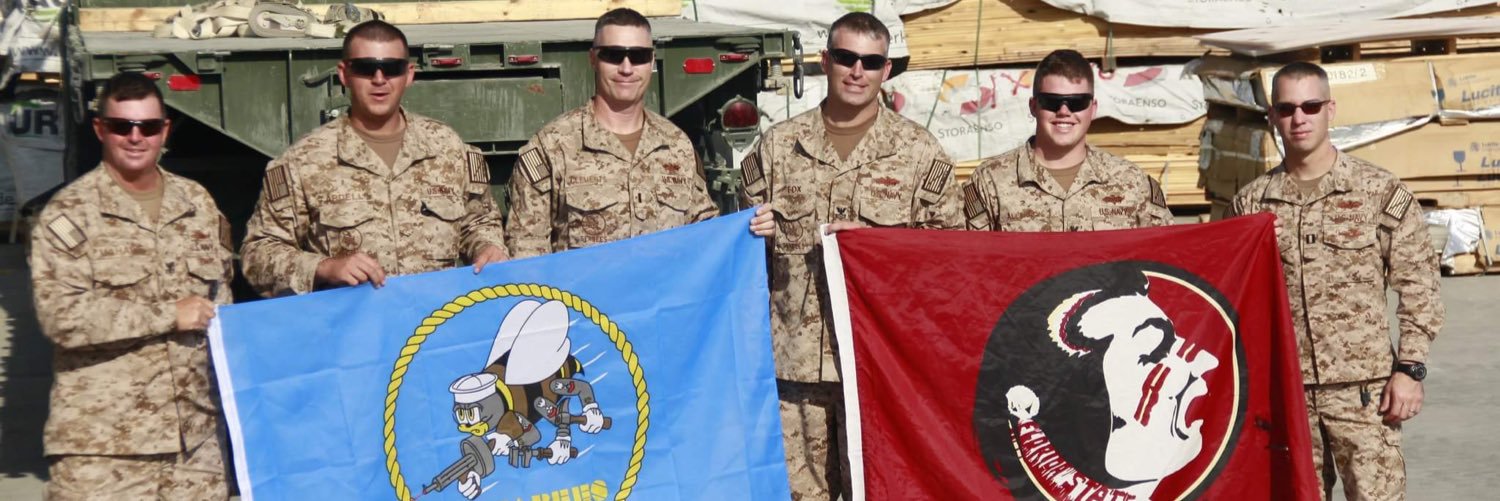
FSU is proud to expand educational and leadership opportunities for those who have served our nation by offering the nation’s first Stamps Scholars Program for undergraduate student veterans. We look forward to the contributions these scholars will make to our campus and beyond.
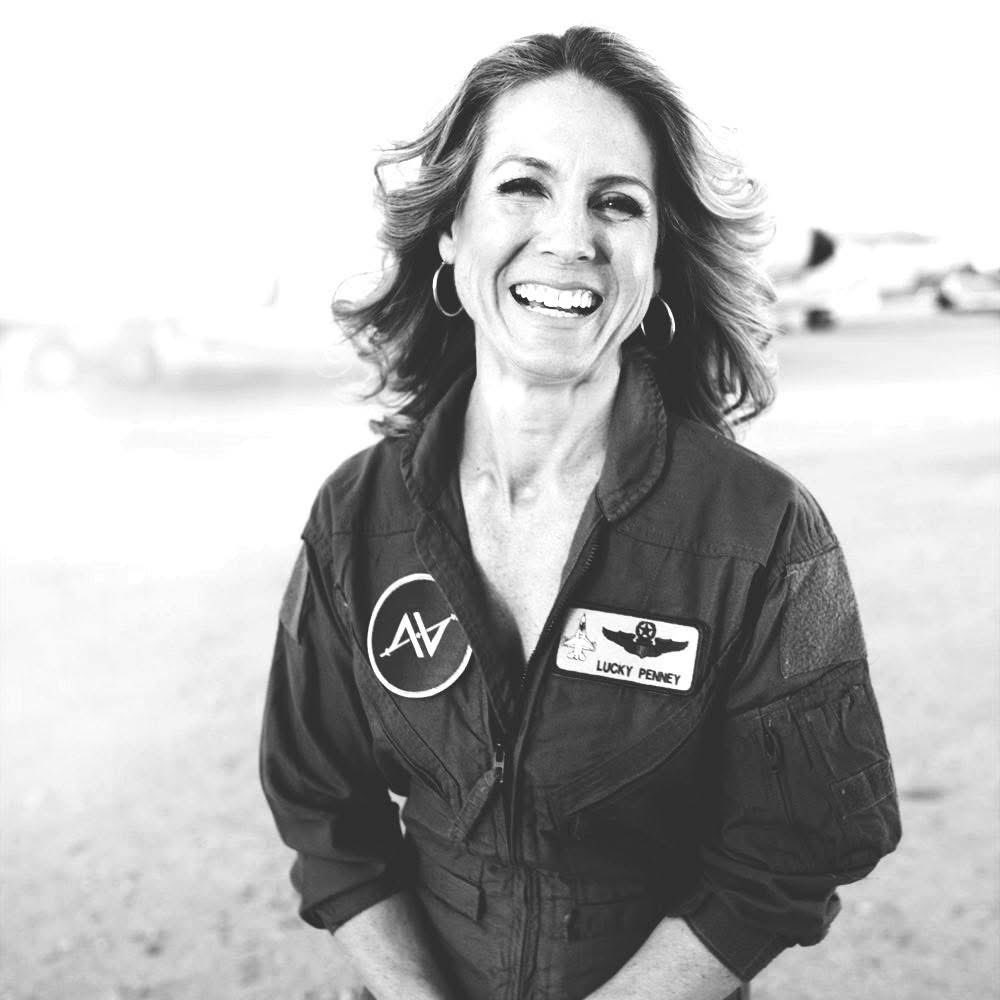
"She climbed into an unarmed fighter jet with orders to ram a hijacked Boeing 757—knowing she wouldn’t survive. She was 26 years old, and she had approximately eight minutes to accept her own death.
Andrews Air Force Base, Maryland. September 11, 2001. 10:00 AM.
First Lieutenant Heather “Lucky” Penney was in the air on a routine training flight when the order came through: return immediately. America is under attack.
When she landed, everything had changed. Both Twin Towers were burning. The Pentagon had been hit. And more hijacked planes were still in the sky.
Then came the worst part—there were no missiles loaded on her F-16. It was a training aircraft. No live weapons. Nothing capable of stopping a passenger jet.
Only one option remained.
“Penney, Sasseville—suit up. NOW.”
Within minutes, she and her commander were sprinting to their jets. Ground crews were still removing safety pins as intelligence came in: another hijacked plane, Flight 93, possibly headed for Washington.
The White House. The Capitol. No one knew which.
But someone had to stop it.
As she climbed into her cockpit, a crew chief looked at her and quietly said, “Good luck, ma’am.” Neither of them said what they both understood.
If they found the aircraft, they might have to ram it.
There would be no second chance. No ejection that could save her. Only impact.
On the radio came the order that defined everything:
“Stop that aircraft by any means necessary.”
She didn’t ask for clarification.
There wasn’t time.
Moments later, her F-16 roared down the runway and lifted into the sky. Within seconds, she was flying over Washington at supersonic speed—sonic booms shaking the city below like distant thunder.
Smoke still rose from the Pentagon.
She searched the sky for a Boeing 757 she might have to destroy with her own jet.
But 200 miles away, something else was happening.
Passengers on Flight 93 had already made their own impossible choice.
They stormed the cockpit.
At 10:03 AM, the plane crashed into a field in Pennsylvania.
All 44 people aboard died—but Washington was saved.
Heather never had to complete her mission.
She circled the capital for hours afterward, protecting a city that had already been spared by strangers who refused to be victims.
When she finally landed, the crew chief was waiting. He looked at her and said quietly, “I didn’t think I’d see you again.”
Neither had she. "
Now anyone can take a look inside the largest and highest-powered magnet lab in the world! 🧲⚡️
Housed at Florida State University, the @NationalMagLab now offers an immersive, interactive virtual tour showing where its transformative research takes place.
The comprehensive tour features immersive, 360° high-resolution views of dozens of lab spaces and nearly 150 points of interest with detailed information.
To take a look, visit: https://t.co/2EljU9ctot
As a nationally recognized leader in supporting student veterans, Florida State University is further empowering those who served through a new merit scholarship offered in partnership with the Stamps Scholars Program.
Launching this fall, the Stamps Veteran Scholars Program will honor the service, leadership and sacrifice of U.S. military veterans by providing transformative educational and leadership opportunities. It will be the nation’s first Stamps Scholars Program designed specifically for undergraduate student veterans.
Read more at https://t.co/CNSaXD79lE
Corpsman Up!
Today, we celebrate and recognize the @USNavy Corpsmen who have stood alongside our #Marines for 128 years.
Since June 16, 1898, Navy Corpsmen have embodied the spirit of #SemperFidelis. From naval hospitals to the battlefield, they remain always faithful, treating our wounded and keeping Marines in the fight.
To the #Corpsmen in our ranks, we thank you for your unwavering dedication to duty and to our Marines.
Semper Fidelis.
✍️ (U.S. Marine Corps graphic by Lance Cpl. Matthew Morales)
📷 (U.S. Marine Corps photo by Staff Sgt. Armando Elizalde)
#Corpsman #Navy #BlueGreenTeam
The founding of Tallahassee
In June 1823, Florida’s territorial council authorized Governor William P. Duval to select the site for the fledging territory’s capital. Two commissioners, one traveling from St. Augustine and one from Pensacola, met at the confluence of the St. Marks and Wakulla rivers. They trekked 20 miles north, arriving at a Native American settlement they deemed a suitable location. The territorial government approved the site and adopted the Muscogee name of “Tallahassee” for the new capital city. More information: https://t.co/E0enHxYgdx
At 36, Admiral James Stavridis (@stavridisj) had his first command, a guided missile destroyer with 350 sailors and a record of winning every award. He figured the streak would hold.
Then came a routine engineering inspection. The ship failed it so badly the inspectors told him he was not safe to operate, and they towed the destroyer back into port, past every other ship in San Diego, with the whole fleet watching.
He went home that night and told his wife his career was over.
The next day, the phone started ringing. The calls weren't from his bosses. They were from the other captains in the fleet. Bad day, they said. What do you need? A working party? Spare parts? Should I send my master chief over to help with training?
That was the day he learned what peers are really for.
"Your peers can save you, because they know you."
@FrancisF1654821@LangmanVince I support the renovation effort - the murky water photos was taken on a windy day, making the water ripple, the right photo is a near windless day, perfectly still water. Rippled water disperses the reflection, poster is 100% correct
Ray’s Rock - Omaha Beach
On the morning of June 6, 1944, 23 year old Staff Sergeant Arnold “Ray” Lambert came ashore with the first wave of the 1st Infantry Division on the eastern side of Omaha Beach. At this small patch of concrete he saved nearly 20 lives:
The division came under intense fire from several German bunkers surrounding the entrance to the Colville Draw (one of two exits off Omaha Beach). Ray, a medic, immediately went to work.
He was shot in the arm. Moments later he was hit by shrapnel in the leg, but Ray kept pulling men to safety. He pulled nearly 20 wounded soldiers to cover behind this 8ft wide obstacle, treating each soldier before going out in search of others.
After several hours under fire, while pulling a wounded soldier from the ocean, he was struck by a landing craft. It dropped its ramp on top of him, breaking his back. He fell face down in the water, drowning. The craft backed up and nearby soldiers pulled an unconscious Ray to safety, eventually evacuating him off the beach.
Remarkably, Ray had already earned two Silver Stars and three Purple Hearts in Sicily and North Africa, prior to landing in France. But here in Normandy his war would end.
He awoke in a hospital back in England a day later. In the next bed over was his brother, who had also been wounded at Omaha.
When asked about his work on D-Day, Ray simply said, “I did what I was called to do.”
Ray Lambert passed in 2021 at 100 years old. He exemplified the best of American grit and why remembering this day is so important.
Today marks the anniversary of the Battle of Midway, the pivotal WWII turning point in the Pacific. We honor the incredible courage and strategy of the Sailors and aviators who turned the tide against all odds. Their sacrifice will never be forgotten.