@SethShostak The researchers working on this discovery, during their press briefing, sounded pretty sure they found something remarkable! How would this affect current mathematical models used for predicting the probability of life outside our solar system?
Researchers staged fights using recreated Bronze Age weapons to better understand how they might have been used in ancient fighting. https://t.co/EGMrp88pWr
@WILDIONYSUS @MrWayland2 Now you have to ask "Why would places that are so sparsely populated not have many missing people and small numbers of Bigfoot sightings?"
The 14th-century Persian poet Hafez, known for a collection of philosophical and mystical verse titled the Divan, is one of Iran’s most celebrated literary figures. https://t.co/NOxKMuCbjh
Who's ready to play March Mammal Madness!? We humbly submit our bracket to Twitter—this year we're all about the Florida panther.
Tonight? Go "mongoose," go.
#2020MMM
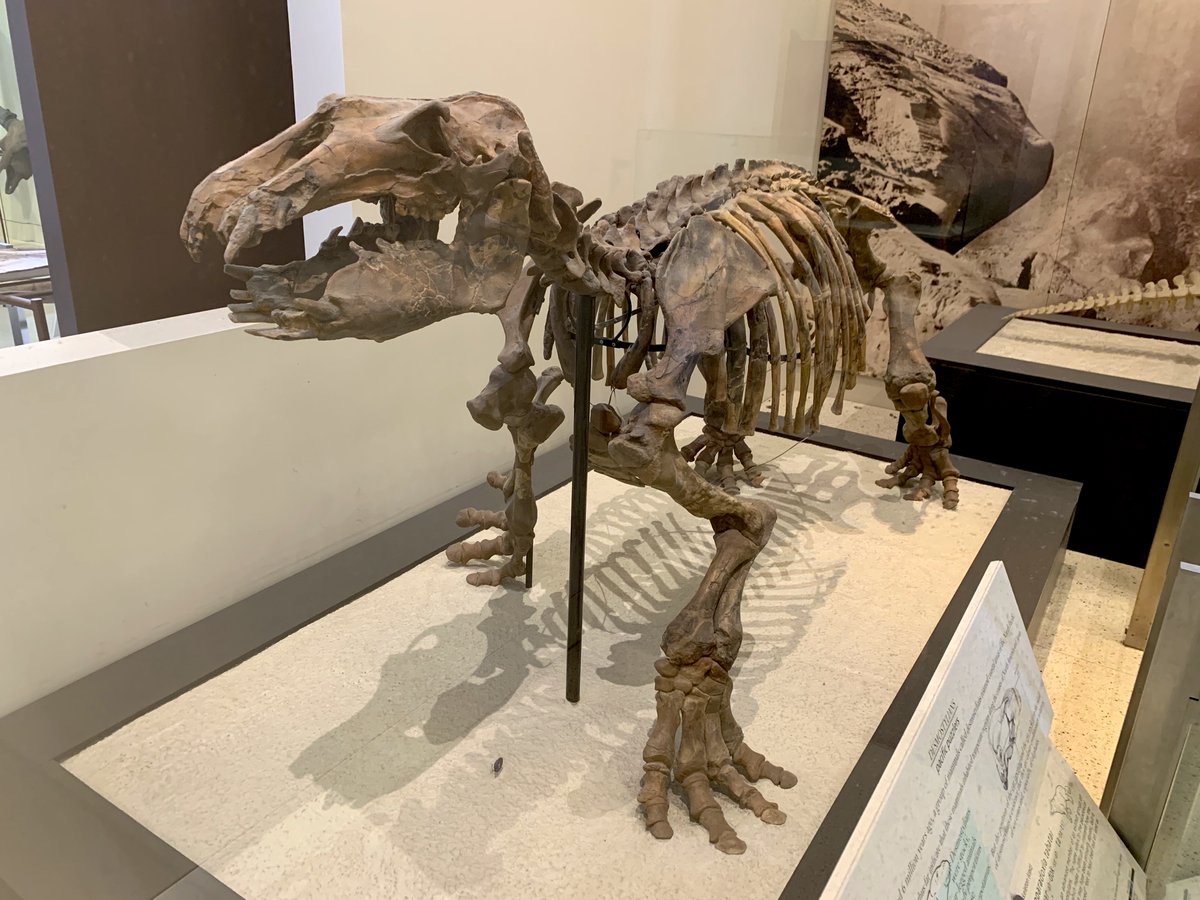
Meet Palaeoparadoxia tabatai, known as the “ancient puzzle” for the paradoxical traits of its skeleton, which make it hard to interpret how it lived. It may have been primarily aquatic, but it may have also used its “pigeon-toed” feet to move on land, like sea lions #FossilFriday
The 4-ft-long jaw. The 6-in-long teeth. The tiny arms. T. rex needs no introduction this #FossilFriday. The first-ever mention of T. rex came in a letter written in Aug. 1902 by Barnum Brown to the Museum, who described his discovery in Montana as a “large Carnivorous Dinosaur.”