DATABASE DESIGN IN SYSTEM DESIGN
→ Database Design defines how data is structured, stored, accessed, and managed to support scalable, reliable, and high-performance systems.
→ A well-designed database is essential for fast queries, consistency, fault tolerance, and long-term maintainability.
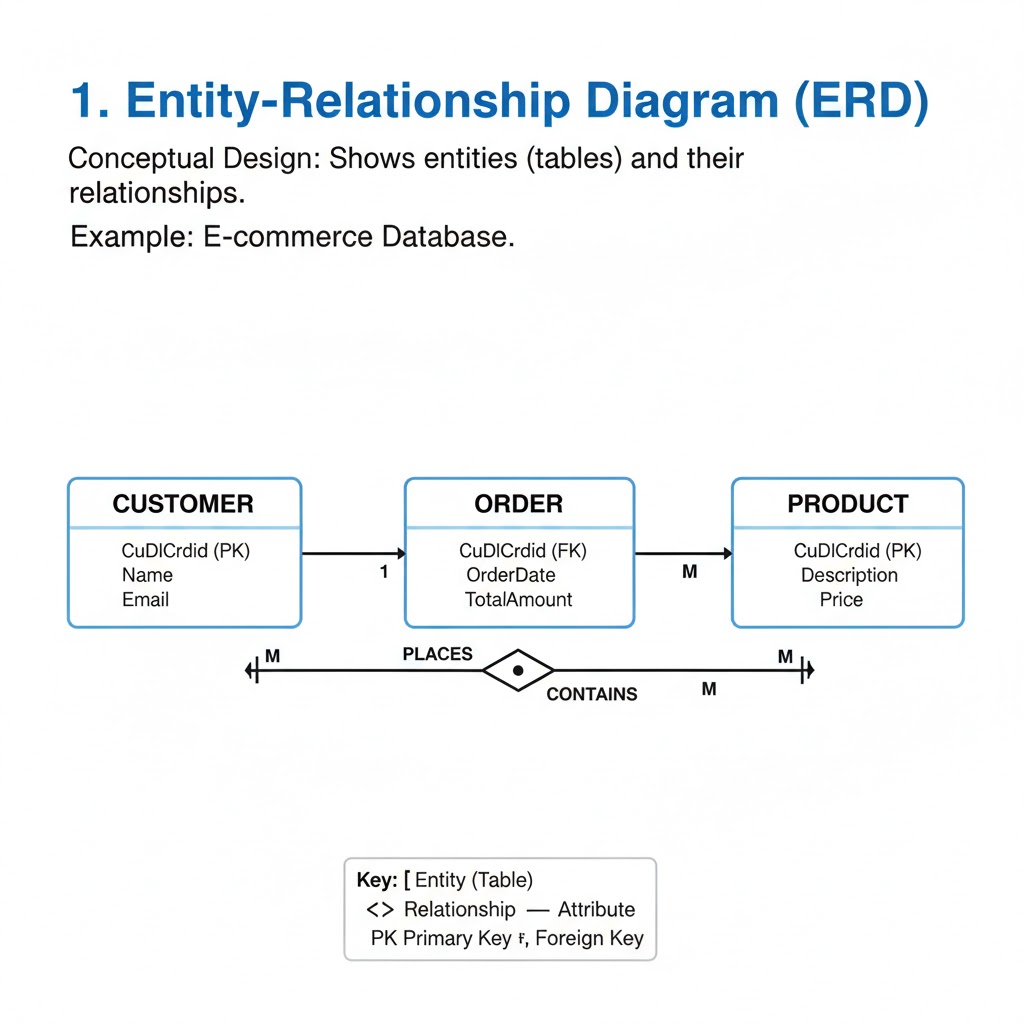
→ 1. DATA MODELING
→ Begin with understanding business requirements
→ Identify real-world entities → convert them into tables/collections
→ Define relationships between entities
→ Common models:
→ Relational Model (SQL) → structured tables + strict schemas
→ Document Model (NoSQL) → flexible JSON-like documents
→ Key-Value Stores → extremely fast lookup
→ Wide Column Stores → scalable column families (e.g., Cassandra)
→ Graph Databases → nodes + edges (e.g., Neo4j)
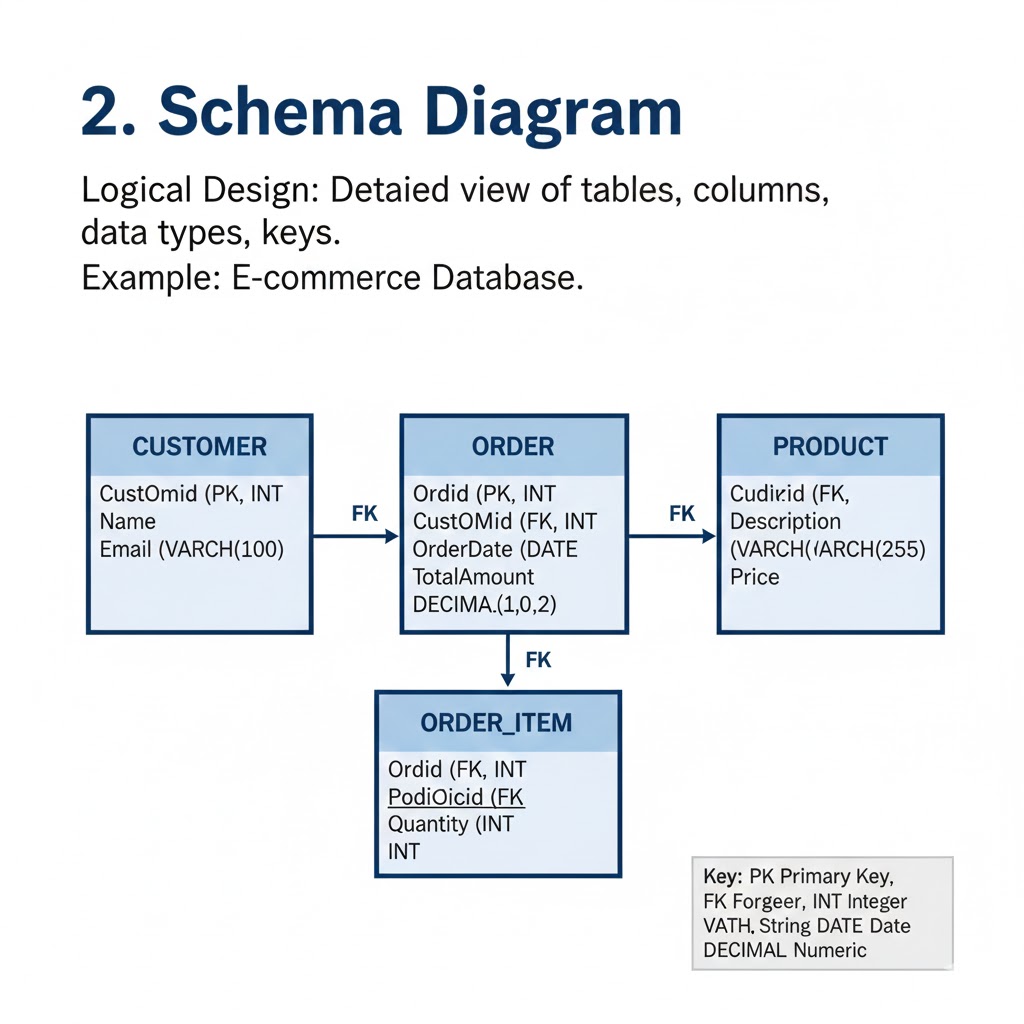
→ 2. SCHEMA DESIGN PRINCIPLES
→ Normalize data to reduce duplicates
→ Use denormalization for high-read systems
→ Choose primary keys that are stable and unique
→ Use indexes carefully to speed up queries
→ SQL Schema Example:
→ Users Table → user_id (PK), name, email, password
→ Orders Table → order_id (PK), user_id (FK), amount, status
→ 3. NORMALIZATION
→ Reduces redundancy and inconsistency
→ Normal Forms (1NF → 3NF) help eliminate duplicate data
→ Good for OLTP systems where consistency matters
But: too much normalization can hurt read performance
→ 4. DENORMALIZATION
→ Combine data into fewer tables
→ Reduces joins → improves query speed
→ Ideal for analytics, dashboards, and read-heavy systems
→ Example:
→ Storing user_name directly inside orders table for faster queries
→ 5. INDEXING
→ Improves query performance
→ Types of indexes:
→ Primary Index → on primary key
→ Secondary Index → for filtering/search
→ Composite Index → multiple fields
→ Full-Text Index → search operations
→ Over-indexing slows down writes → balance required
→ 6. RELATIONSHIPS & CONSTRAINTS
→ One-to-One, One-to-Many, Many-to-Many
→ Foreign key constraints ensure consistency
→ Cascading operations manage dependent data
→ NoSQL platforms may store embedded or referenced relationships
→ 7. SQL VS NOSQL
→ SQL
→ Strong consistency
→ ACID transactions
→ Structured, relational
→ Great for financial & transactional systems
→ NoSQL
→ Flexible schema
→ Horizontal scaling
→ High performance
→ Great for distributed and high-volume systems
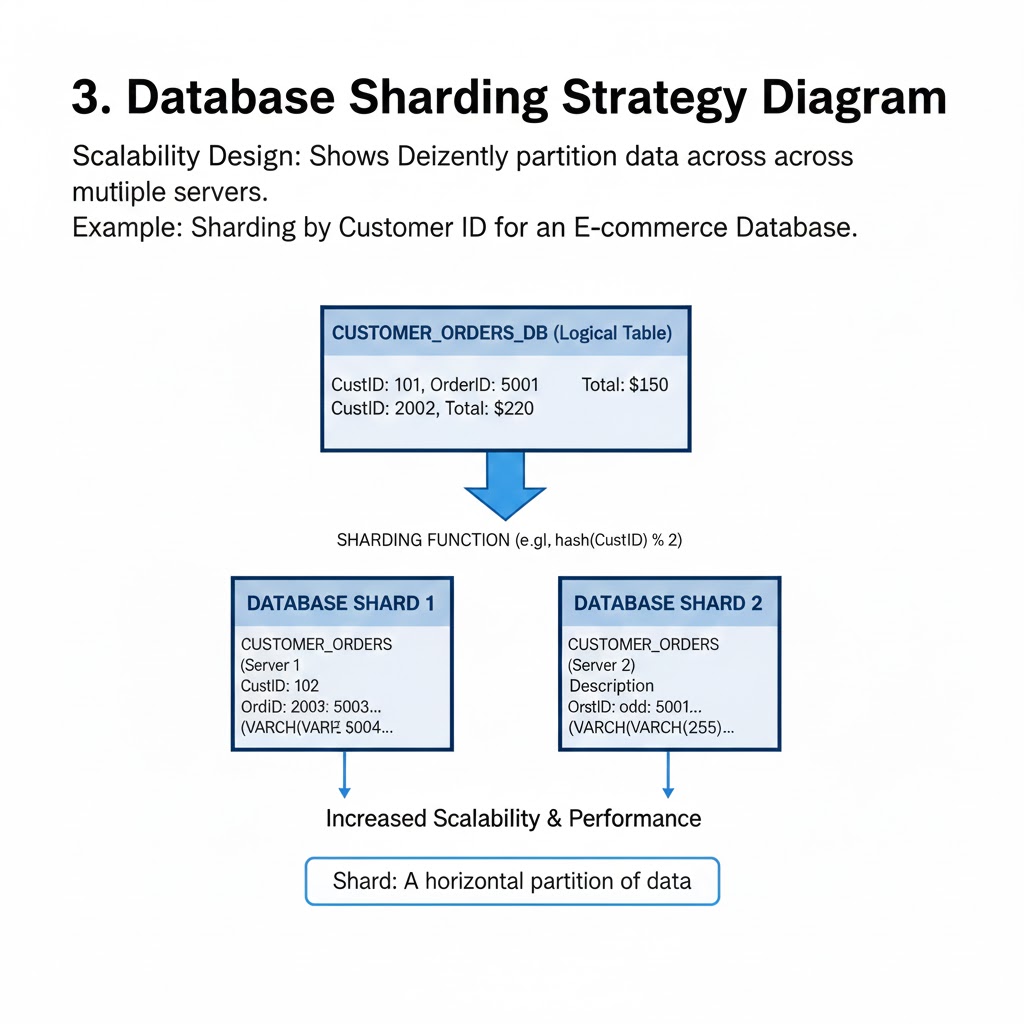
→ 8. DATA PARTITIONING (SHARDING)
→ Divide data across multiple servers
→ Techniques:
→ Range Sharding (A–M, N–Z)
→ Hash Sharding (hash(key) → shard)
→ Geo-Sharding (region-based)
→ Helps scale large databases
→ 9. REPLICATION
→ Copy data across multiple nodes
→ Types:
→ Master–Slave Replication → write to master, read from slaves
→ Master–Master Replication → multi-write configurations
→ Quorum-based Replication → consistency levels adjustable
→ Improves availability and read performance
→ 10. CONSISTENCY MODELS
→ Strong Consistency → always latest data
→ Eventual Consistency → replicas sync over time
→ Read-After-Write Consistency → user sees own updates immediately
→ Used in distributed databases (DynamoDB, Cassandra, MongoDB)
→ 11. TRANSACTIONS & ACID
→ Atomicity
→ Consistency
→ Isolation
→ Durability
→ Guarantees safe & reliable operations in databases
→ NoSQL may use BASE (Basically Available, Soft state, Eventual consistency)
→ 12. DATA SECURITY & BACKUP
→ Encryption at rest & in transit
→ Role-based access
→ Automated backups & point-in-time recovery
→ Disaster recovery via multi-region replicas
→ TIP
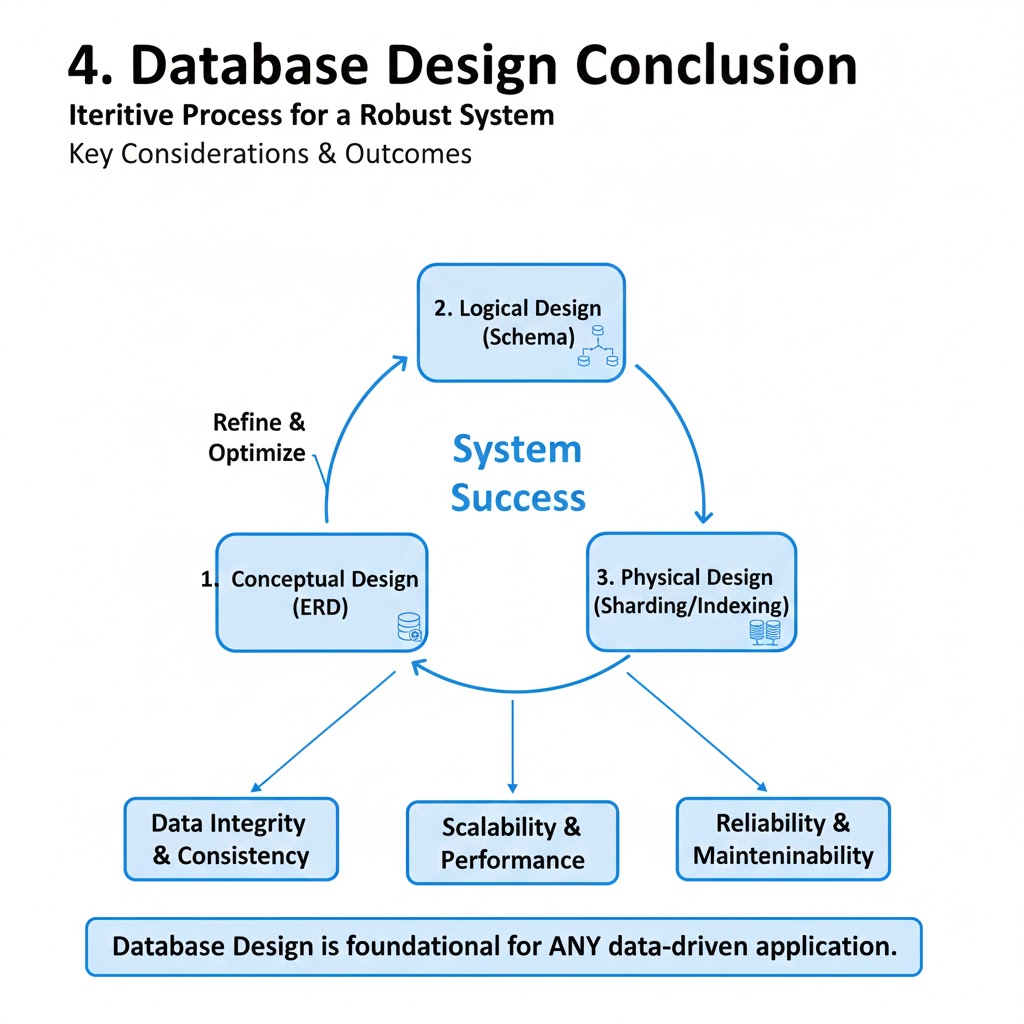
→ Database design ensures:
→ High performance
→ Strong consistency or tuneable consistency
→ Efficient read/write operations
→ Scalability through replication & sharding
→ Maintainability, data integrity, and security
A strong database design is the foundation of robust system architecture.
Grab the full System Design Handbook:
https://t.co/aE1KNO717x
All Paid Courses (Free for First 4500 People)
𝗣𝗮𝗶𝗱 𝗖𝗼𝘂𝗿𝘀𝗲 𝗙𝗥𝗘𝗘 (PART - 3)
1. Artificial Intelligence
2. Machine Learning
3. Cloud Computing
4. Ethical Hacking
5. Data Analytics
6. AWS Certified
7. Data Science
8. BIG DATA
9. Python
10. MBA
(72 Hours only )
To get-
1. Follow @darshal_ [MUST]
2. Like & Retweet to get DM
3. Reply " All "
To the software developers feeling stuck right now:
I see you. You’re building, learning, and showing up... but nothing's clicking.
Maybe it's not about doing MORE.
Maybe it's about changing the story you tell.
Mentoring style answer, but I think this will help many of y'all.
Now more than ever, organizations have adopted #CloudNative .
What do you think are the factors that guide you into choosing a container orchestrator?
Has #kubernetes been one of your tools? If so,how do you like it so far?
To become a senior web developer quickly, focus on mastering JavaScript, React, CSS, and TypeScript. Gain hands-on experience with real-world projects, prioritize web performance, and stay updated with industry trends. Consider structured learning paths like Frontend Masters to accelerate skill development.
The security command center(scc) is important in the following but not limited ways:
-Event threat detection(ETD)
-Cloud Asset Inventory(CAI)
-Vulnerability findings
#googlecloud#Cloud
Proud of myself. Another milestone achieved. Yet, a lot still needs learning, practicing, relearning...and teaching. Just completed my #UX certificate with #GrowWithGoogle. This adds to my #SoftwareEngineer journey that I started with #100Devs. Carry thy logs, soldier!




![darshal_'s tweet photo. All Paid Courses (Free for First 4500 People)
𝗣𝗮𝗶𝗱 𝗖𝗼𝘂𝗿𝘀𝗲 𝗙𝗥𝗘𝗘 (PART - 3)
1. Artificial Intelligence
2. Machine Learning
3. Cloud Computing
4. Ethical Hacking
5. Data Analytics
6. AWS Certified
7. Data Science
8. BIG DATA
9. Python
10. MBA
(72 Hours only )
To get-
1. Follow @darshal_ [MUST]
2. Like & Retweet to get DM
3. Reply " All "](https://pbs.twimg.com/media/G6fE5blbwAAcay0.jpg)


