Senior Developer Advocate at Atlassian | Co-Host of The Programming Podcast | Founder of @commityourcode | Prev Google, AutoZone, and A Local Gas Station.
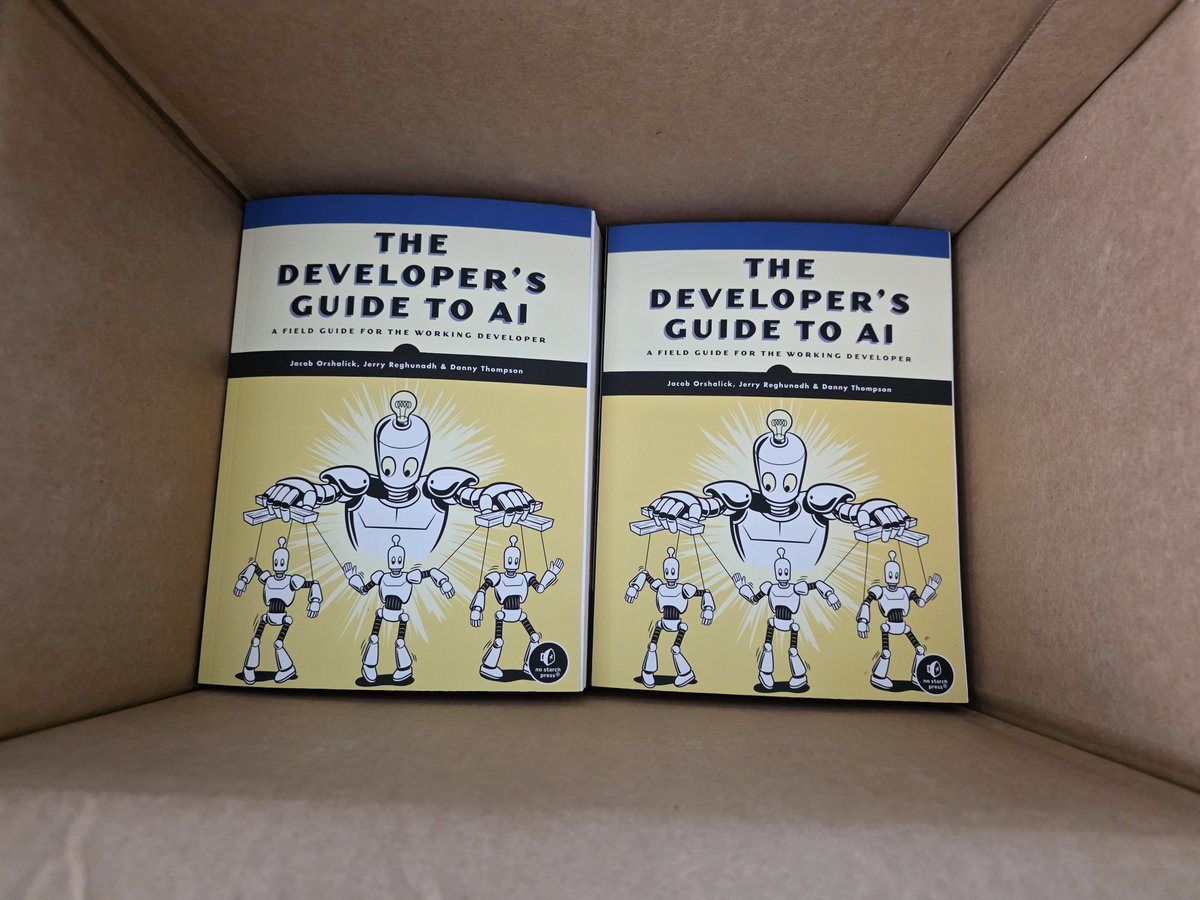
I JUST RECEIVED THE FINAL VERSION OF THE BOOK!🥹
We poured EVERYTHING into this book. Many books focus on AI from the perspective of the highest levels of education but what about the average corporate dev that wants to stay ahead & do well at their jobs?
We wrote this for you!
@saltnburnem if it's anything like CYC, I actually had to reach out to speakers to do talks that didn't have AI in it so we could fill out the rest of the tracks because 99.9% of the applicants all had AI only talks.
If they are trying to have a variety, it's tough.
Software Developers keeping making this same mistake with AI agents, your confusing instructions with enforcement.
You create an AGENTS.md file, you tell the agent to run tests, review its code, clean things up, AND follow your engineering standards.
But... what happens when the agent skips a step?
What happens when it confidently tells you everything is working, but nobody actually verified the results?
If your quality gate is "the AI said it checked," you don't have a quality gate. This is where agentic engineering gets REALLY interesting.
Instead of hoping the model follows instructions, you can build workflows that enforce certain actions, capture results, and prevent the next step from happening until requirements are satisfied.
Another agent reviewing the work can help, but that alone isn't the same as deterministic verification.
We got into this on the latest episode of The Programming Podcast, including how tools like Atomic are approaching verifiable agent runtimes.
The real unlock isn't getting AI agents to do more work.
It's engineering systems that can verify the work they're doing.
This is from the latest episode of The Programming Podcast with our guest cohost @RayFernando1337!
Spotify
https://t.co/zkd4wN7SxN
Youtube
https://t.co/h6TYrmg1mN
You can check out the podcast wherever you currently listen to podcasts!
Spotify
https://t.co/tnBNqDtxrp
Youtube
https://t.co/h6TYrmgzcl
Follow for more!
One of the biggest mistakes developers are making in the 2026 job market is confusing a finished project with proof of engineering ability.
Y'all need to understand something:
Nobody is hiring you because your portfolio has a cool application. They ARE hiring you because of the engineering conversations that application allows you to have.
Think about two candidates walking into an interview with the exact same AI-powered project.
- Candidate #1 explains what the application does, which AI tools they used, and shows off the features.
- Candidate #2 explains WHY they designed it the way they did. Where they used deterministic logic instead of AI. How they handle unreliable model outputs. What happens when the system fails. What tradeoffs they made and WHY.
Same exact project. Two completely different interviews.
One demonstrated that they could produce software.
The other demonstrated that they understood how to engineer it.
And this is why I keep pushing developers to understand the decisions they're generating with AI.
I don't really care if AI wrote 100% of your code. But if you can't explain the architectural decisions, defend your tradeoffs, or identify where things could go wrong, you've missed one of the biggest opportunities that project was supposed to give you.
AI lowered the barrier to building software. It did NOT lower the bar for understanding it and making the right decisions.
We got into this on the latest episode of The Programming Podcast because I think developers need to fundamentally rethink what they're trying to accomplish with portfolio projects.
#code #coding #programming #softwareengineering