Checkout my latest project on Github: 👇
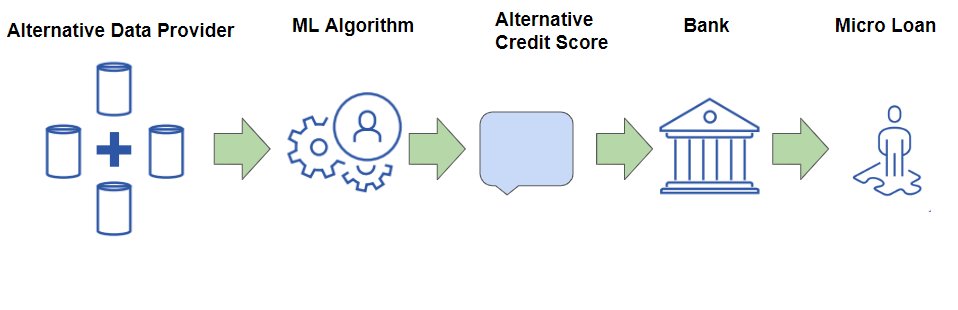
Title: Integrated Credit Risk Modeling and Loan Optimization with Advanced Segmentation.
The project Leverages alternative data source (data-driven lending approach) to enhance credit risk modeling scoring and loan optimization.
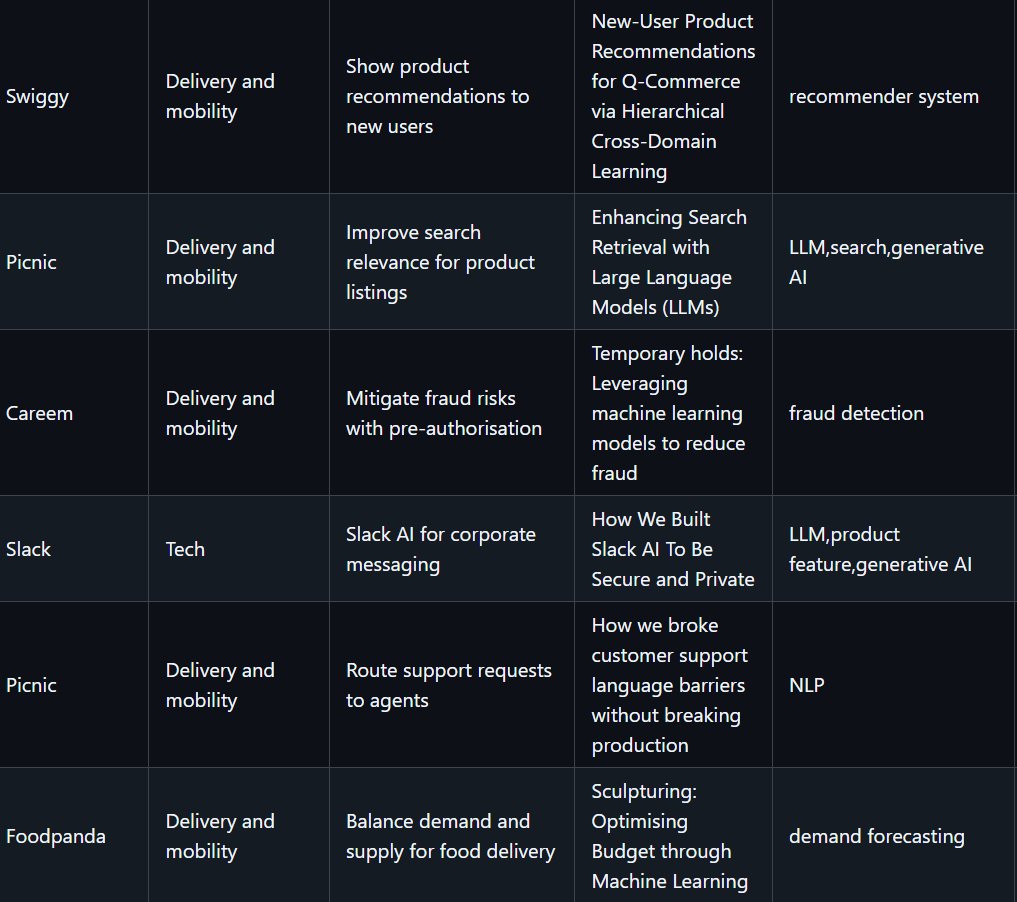
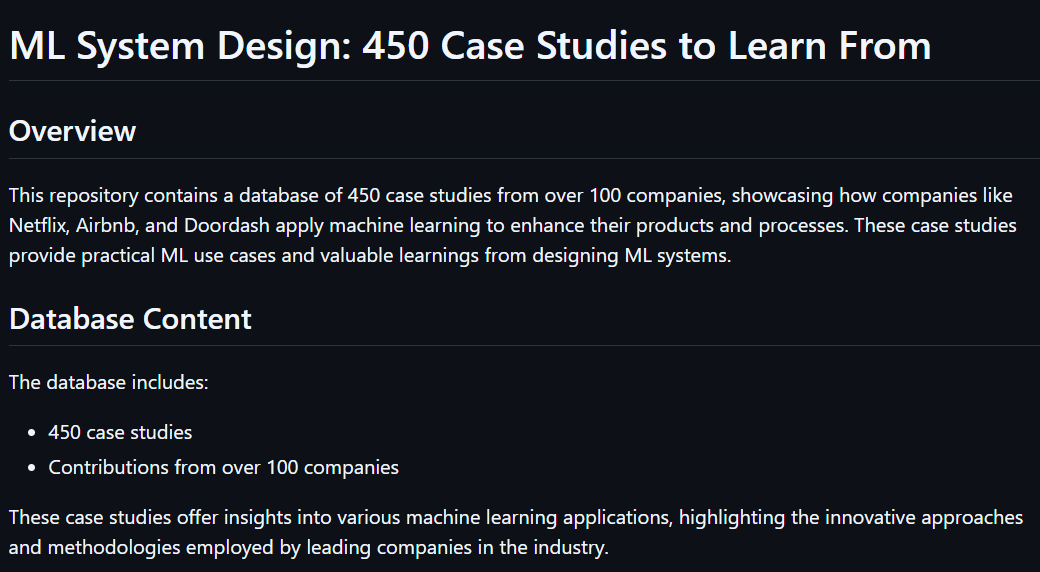
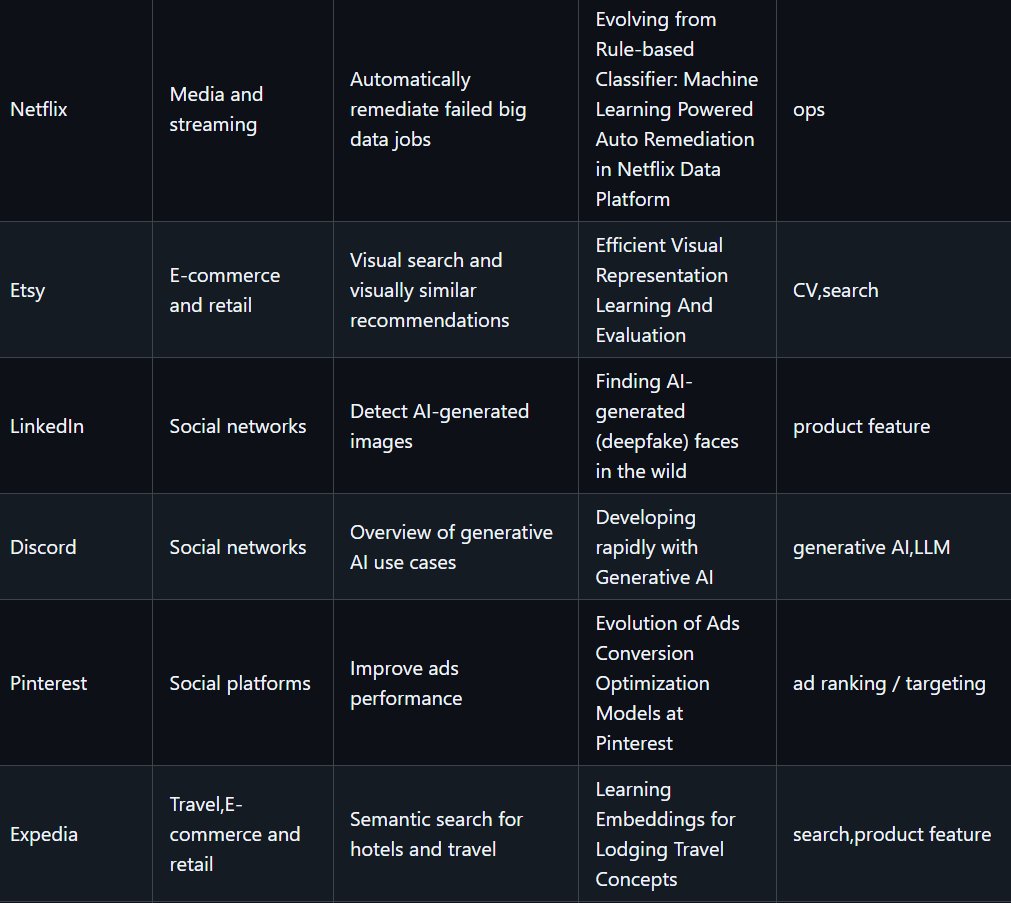
This GitHub contains 450 real-world Machine Learning case studies from 100+ top companies like Netflix, Airbnb, DoorDash, Uber etc. Link in comment
See exactly how top companies implement ML systems for recommendations, fraud detection, search, personalization, and demand forecasting in production.
Building a GenAI app?
Don’t just plug in a model - design it to scale, adapt, and evolve.
Here’s your blueprint for future-ready GenAI systems. 👇
1. Modular Architecture
Separate UI, orchestration, models, and storage to swap parts independently. Use LangChain or LlamaIndex to build pipelines.
2. Context Engineering
Layer system prompts, memory, and retrieved knowledge to optimize generation. Use chunking and summarization to stay efficient.
3. Retrieval-Augmented Generation (RAG)
Connect vector DBs like Pinecone or Weaviate and use hybrid search (dense + keyword) for domain-specific relevance.
4. Low-Latency Design
Cut load times and delay using model distillation, quantization, and async I/O.
5. Agent-Based Systems
Use CrewAI, AutoGen, or LangGraph for task decomposition and tool execution via specialized sub-agents.
6. Tool & Plugin Integration
Enable LLMs to run code, hit APIs, or use external tools through OpenAI function-calling or LangChain routing.
7. Streaming & Feedback
Improve experience with real-time streaming via WebSockets and user feedback for continuous refinement.
8. Memory Management
Support both session and long-term memory using Redis, Postgres, or vector DBs for persistence.
9. Smart Deployment
Use K8s or serverless runtimes (like AWS Lambda) to deploy GenAI apps with dynamic scaling.
10. Observability
Track usage, hallucinations, and prompts using tools like LangSmith or WhyLabs for LLM monitoring.
[Explore More In The Post]
Here’s the takeaway?
Good GenAI apps aren’t just about prompts, they’re engineered for performance, adaptability, and scale.
Confused between ML, NLP, Generative, and other AI models?
Here’s a quick breakdown of the 6 most important types of AI models you must understand in 2025 👇
1. Machine Learning Models
They learn from labeled and unlabeled data to classify, predict, and detect patterns. Think decision trees, SVMs, and XGBoost.
2. Deep Learning Models
Neural networks built for unstructured data like images, audio, and text. Includes CNNs, RNNs, Transformers, and GANs.
3. NLP Models
Focused on understanding and generating human language - used in chatbots, summarizers, and assistants like GPT and BERT.
4. Generative Models
These models create, from text to images to music. Powered by models like GPT-4, DALL·E, and StyleGAN.
5. Hybrid Models
Combine the best of rule-based and neural AI. Perfect for use cases needing both reasoning and context awareness (e.g., RAG pipelines).
6. Computer Vision Models
Built for images and videos. Used in object detection, facial recognition, and medical scans - powered by models like YOLO and ResNet.
Each AI model has its strengths and knowing which one fits your use case is half the battle. Save this guide as your cheat sheet!
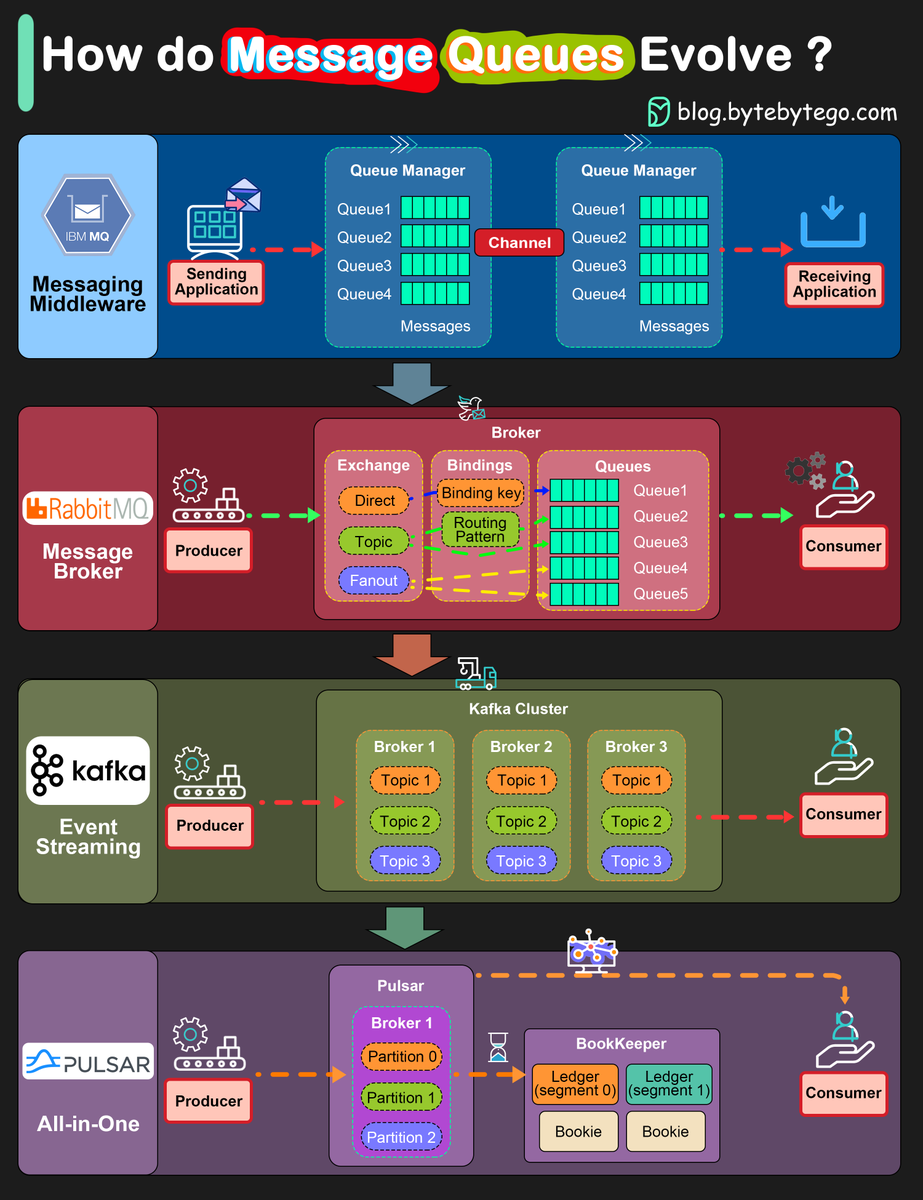
IBM MQ -> RabbitMQ -> Kafka ->Pulsar, How do message queue architectures evolve?
🔹 IBM MQ
IBM MQ was launched in 1993. It was originally called MQSeries and was renamed WebSphere MQ in 2002. It was renamed to IBM MQ in 2014. IBM MQ is a very successful product widely used in the financial sector. Its revenue still reached 1 billion dollars in 2020.
🔹 RabbitMQ
RabbitMQ architecture differs from IBM MQ and is more similar to Kafka concepts. The producer publishes a message to an exchange with a specified exchange type. It can be direct, topic, or fanout. The exchange then routes the message into the queues based on different message attributes and the exchange type. The consumers pick up the message accordingly.
🔹 Kafka
In early 2011, LinkedIn open sourced Kafka, which is a distributed event streaming platform. It was named after Franz Kafka. As the name suggested, Kafka is optimized for writing. It offers a high-throughput, low-latency platform for handling real-time data feeds. It provides a unified event log to enable event streaming and is widely used in internet companies.
Kafka defines producer, broker, topic, partition, and consumer. Its simplicity and fault tolerance allow it to replace previous products like AMQP-based message queues.
🔹 Pulsar
Pulsar, developed originally by Yahoo, is an all-in-one messaging and streaming platform. Compared with Kafka, Pulsar incorporates many useful features from other products and supports a wide range of capabilities. Also, Pulsar architecture is more cloud-native, providing better support for cluster scaling and partition migration, etc.
There are two layers in Pulsar architecture: the serving layer and the persistent layer. Pulsar natively supports tiered storage, where we can leverage cheaper object storage like AWS S3 to persist messages for a longer term.
Over to you: which message queues have you used?
–
Subscribe to our weekly newsletter to get a Free System Design PDF (158 pages): https://t.co/eVEdOFSYPY
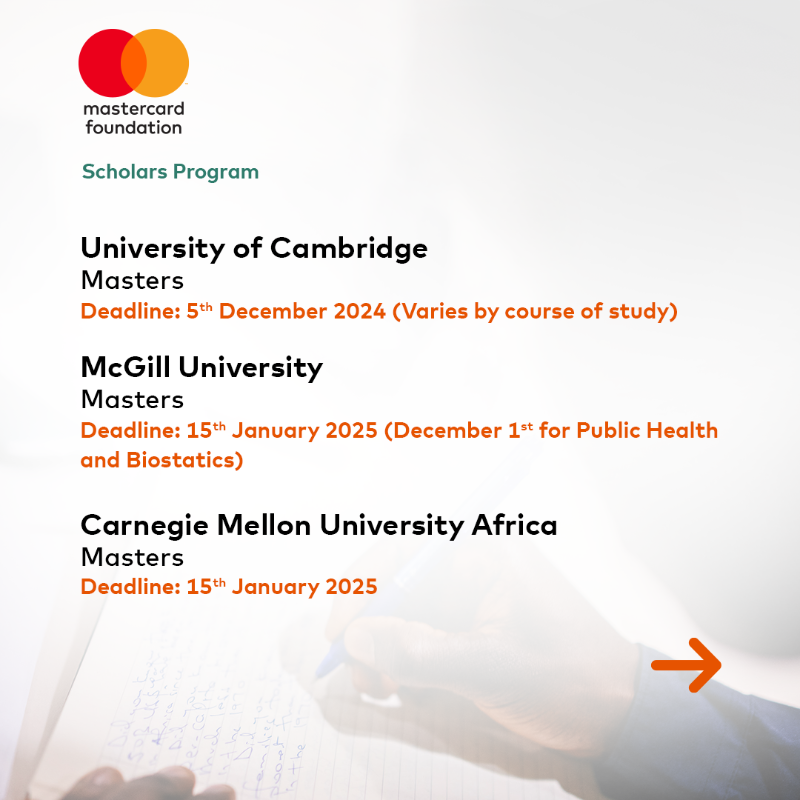
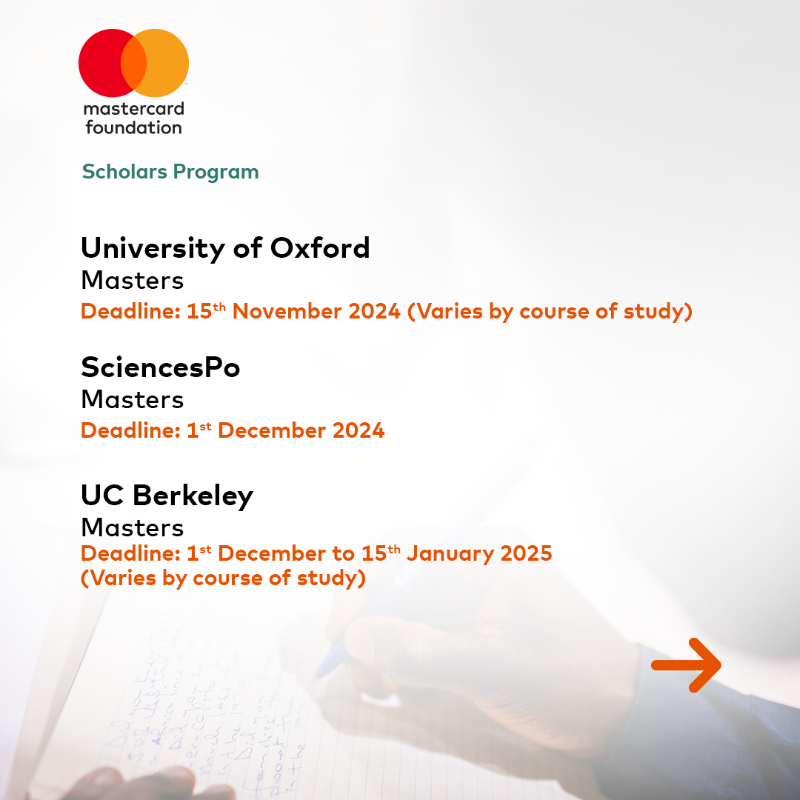
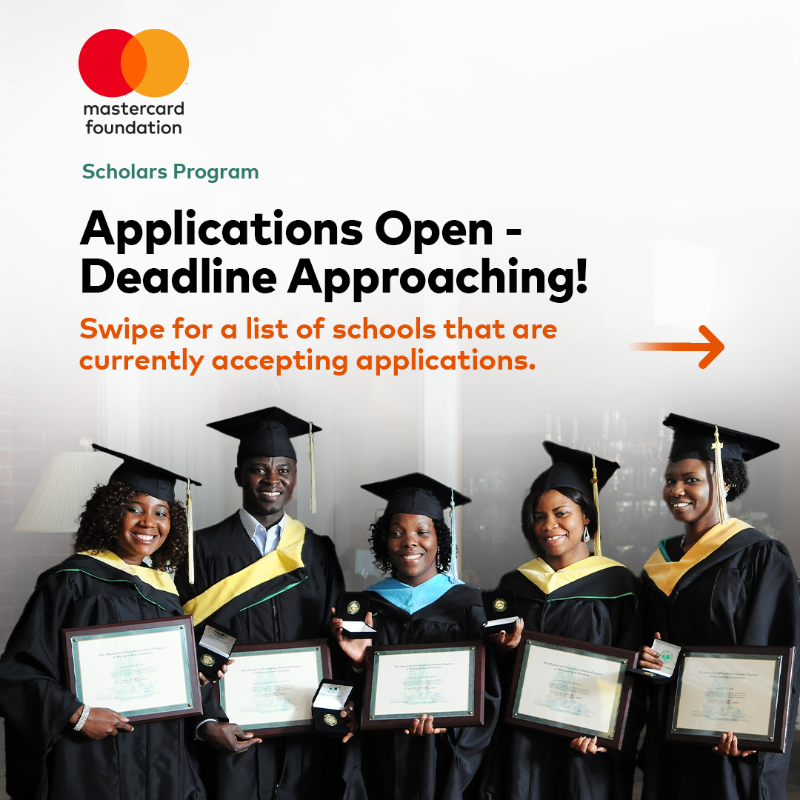
The Mastercard Foundation Scholars Program is a global initiative to develop the next generation of transformative leaders. Please note: Our partners fully manage the recruitment and selection process.
Learn more here: https://t.co/4QEm2LXDhThe Mastercard Foundation Scholars Program is a global initiative to develop the next generation of transformative leaders. Please note: Our partners fully manage the recruitment and selection process.
Learn more here: https://t.co/4QEm2LXDhThe Mastercard Foundation Scholars Program is a global initiative to develop the next generation of transformative leaders. Please note: Our partners fully manage the recruitment and selection process.
Learn more here: https://t.co/4QEm2LXDhThe Mastercard Foundation Scholars Program is a global initiative to develop the next generation of transformative leaders. Please note: Our partners fully manage the recruitment and selection process.
Learn more here: https://t.co/4QEm2LXDhF
Official Notice: Google Play Developer Registration Now Available for Ethiopian Developers!
I am thrilled to announce that Ethiopia is now officially supported for Google Play Developer Console registration! This means our talented developers can directly publish apps on Google Play, bringing their innovative ideas to the world.
This positive milestone was achieved following a discussions I had on behalf Ethiopian Ministry of Innovation and Technology with the Google team in late October, where we formally requested support for Ethiopia during their visit to Addis Ababa. While the process was in the making, I would like to extend my appreciation to the Google team for making it happen so swiftly and to everyone at Google Africa office who played a part in making this happen.
The inclusion was made official in October, but we wanted to provide an official statement after receiving a formal confirmation from Google. This marks a significant step for the Ethiopian tech community, empowering developers to share their talent on a global platform.
To our talented developers: the stage is now yours! Let's seize this opportunity to showcase Ethiopian tech talent globally and push our digital transformation forward.
Congratulations to the Ethiopian developer community, and thank you Google!
💚💛❤️#Ethiopia #GooglePlay #DigitalTransformation #TechInnovation
10 Best System design concepts to learn in 2024
1. Caching
2. DB Sharding
3. load-balancing
4. replication
5. fault-tolerance
6. high-availability
7. API Gateway
8. scalability
9. Performance
10. Indexing
learn more on DesignGuru - https://t.co/VuZLWnBFWY
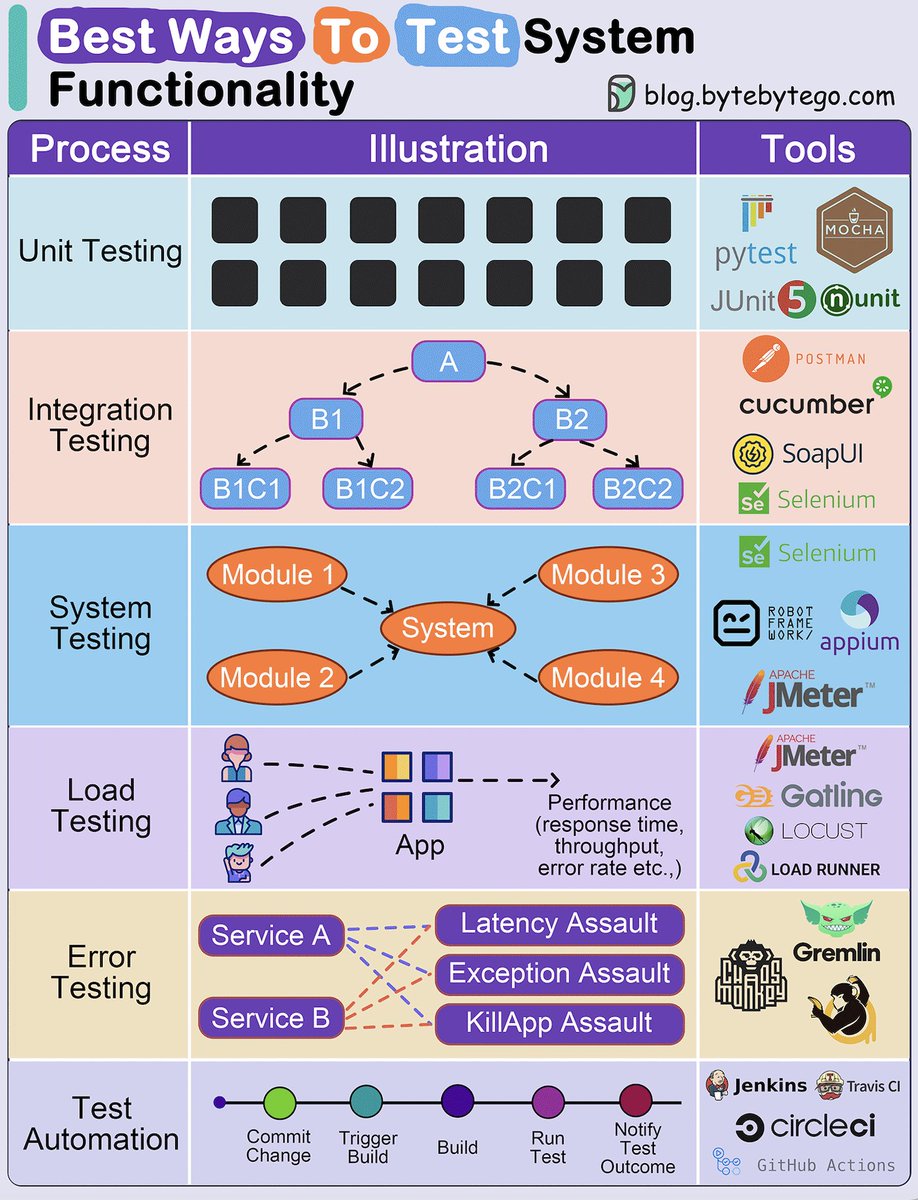
Best ways to test system functionality. Next week's topic will be listed at the end.
Testing system functionality is a crucial step in software development and engineering processes.
It ensures that a system or software application performs as expected, meets user requirements, and operates reliably.
Here we delve into the best ways:
1. Unit Testing: Ensures individual code components work correctly in isolation.
2. Integration Testing: Verifies that different system parts function seamlessly together.
3. System Testing: Assesses the entire system's compliance with user requirements and performance.
4. Load Testing: Tests a system's ability to handle high workloads and identifies performance issues.
5. Error Testing: Evaluates how the software handles invalid inputs and error conditions.
6. Test Automation: Automates test case execution for efficiency, repeatability, and error reduction.
Over to you: How do you approach testing system functionality in your software development or engineering projects?
Over to you: what's your company's release process look like?
--
Subscribe to our weekly newsletter to get a Free System Design PDF (158 pages): https://t.co/FIzCeaVVan
Checkout my latest project on Github: 👇
Title: Integrated Credit Risk Modeling and Loan Optimization with Advanced Segmentation.
The project Leverages alternative data source (data-driven lending approach) to enhance credit risk modeling scoring and loan optimization.








![goyalshaliniuk's tweet photo. Building a GenAI app?
Don’t just plug in a model - design it to scale, adapt, and evolve.
Here’s your blueprint for future-ready GenAI systems. 👇
1. Modular Architecture
Separate UI, orchestration, models, and storage to swap parts independently. Use LangChain or LlamaIndex to build pipelines.
2. Context Engineering
Layer system prompts, memory, and retrieved knowledge to optimize generation. Use chunking and summarization to stay efficient.
3. Retrieval-Augmented Generation (RAG)
Connect vector DBs like Pinecone or Weaviate and use hybrid search (dense + keyword) for domain-specific relevance.
4. Low-Latency Design
Cut load times and delay using model distillation, quantization, and async I/O.
5. Agent-Based Systems
Use CrewAI, AutoGen, or LangGraph for task decomposition and tool execution via specialized sub-agents.
6. Tool & Plugin Integration
Enable LLMs to run code, hit APIs, or use external tools through OpenAI function-calling or LangChain routing.
7. Streaming & Feedback
Improve experience with real-time streaming via WebSockets and user feedback for continuous refinement.
8. Memory Management
Support both session and long-term memory using Redis, Postgres, or vector DBs for persistence.
9. Smart Deployment
Use K8s or serverless runtimes (like AWS Lambda) to deploy GenAI apps with dynamic scaling.
10. Observability
Track usage, hallucinations, and prompts using tools like LangSmith or WhyLabs for LLM monitoring.
[Explore More In The Post]
Here’s the takeaway?
Good GenAI apps aren’t just about prompts, they’re engineered for performance, adaptability, and scale.](https://pbs.twimg.com/media/GwHf3i4WYAAplvi.jpg)