🌿 New research redefines Tillandsia myosura (Bromeliaceae)! 🌱 Morphological, molecular & geographic evidence supports its segregation from T. cleistopetala sp. nov., and T. pachyphylla #Botany#PlantTaxonomy#Bromeliaceae#NewSpecies
Genomic and morphological evidence supports the segregation of two #newspecies from Tillandsia myosura (T. subg. Diaphoranthema, #Bromeliaceae)
#taxonomy
https://t.co/vAARmQGTzM
New Research: Plastome phylogenomics reveals an early Pliocene North- and Central America colonization by long-distance dispersal from South America of a highly diverse bromeliad lineage: Understanding the spatial and temporal… #PlantScience#PlantSci https://t.co/OSXJur4V3d
Pattern recognition and machine learning is a book written by legendary machine learning from Microsoft for people studying machine learning.
If you want to learn machine learning from machine learning perspective this is the book that is the book that machine learning programs at good universities use. Free PDF courtesy of Microsoft
#MachineLearning
https://t.co/kyW912lhSA
📢Out today @GlobalChangeBio our new paper on climatic niche dynamics & biological invasions!
Focusing on island-endemic 🐸,🐦 &🦎, we quantified niche shifts during invasions and identified several drivers of niche expansion.
Check out the details here!
https://t.co/BzBnTKQ2as
📌Con mucha alegría comparto el PDF de mi libro ECOLOGÍA POLÍTICA DE LA AGRICULTURA 📚
🌿 https://t.co/qDStbZ4zsx
¡Ojalá puedan descargarlo, leerlo y compartirlo con sus amistades!
@AgroecologyE@FundAgroecology @AgroecologyMap
@GRAIN_org@oikeios@RevistaSABC
My PhD Thesis is finally online. I hope it will provide some new perspectives for anyone interested in geometry, topology, deep learning and graph neural networks.
https://t.co/zw33ZVHypx
One of La-Voulte's most famous fossils is Proteroctopus. Originally described as an octopus it's now thought to be outside of the group and a more distant relative.
#LaVoulteWeek#FossilFriday
https://t.co/RqXYNqfRbI
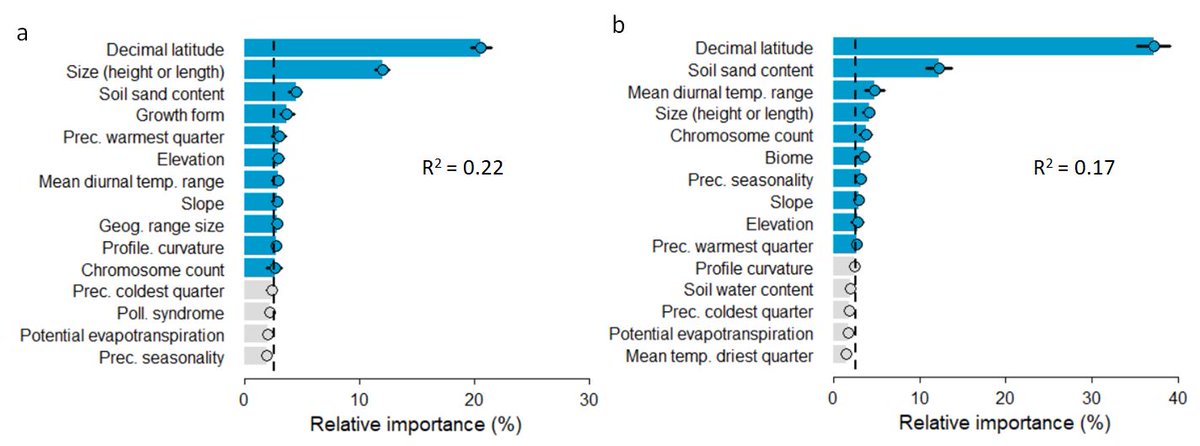
New preprint with @HdzHdz_Lab, using phylogenetics and machine learning to rank the forces shaping the Cactus radiation, the coolest plant family 🏜️. Location and plant size are most powerful, followed by topographic, climatic and other biotic factors. Complexity is important
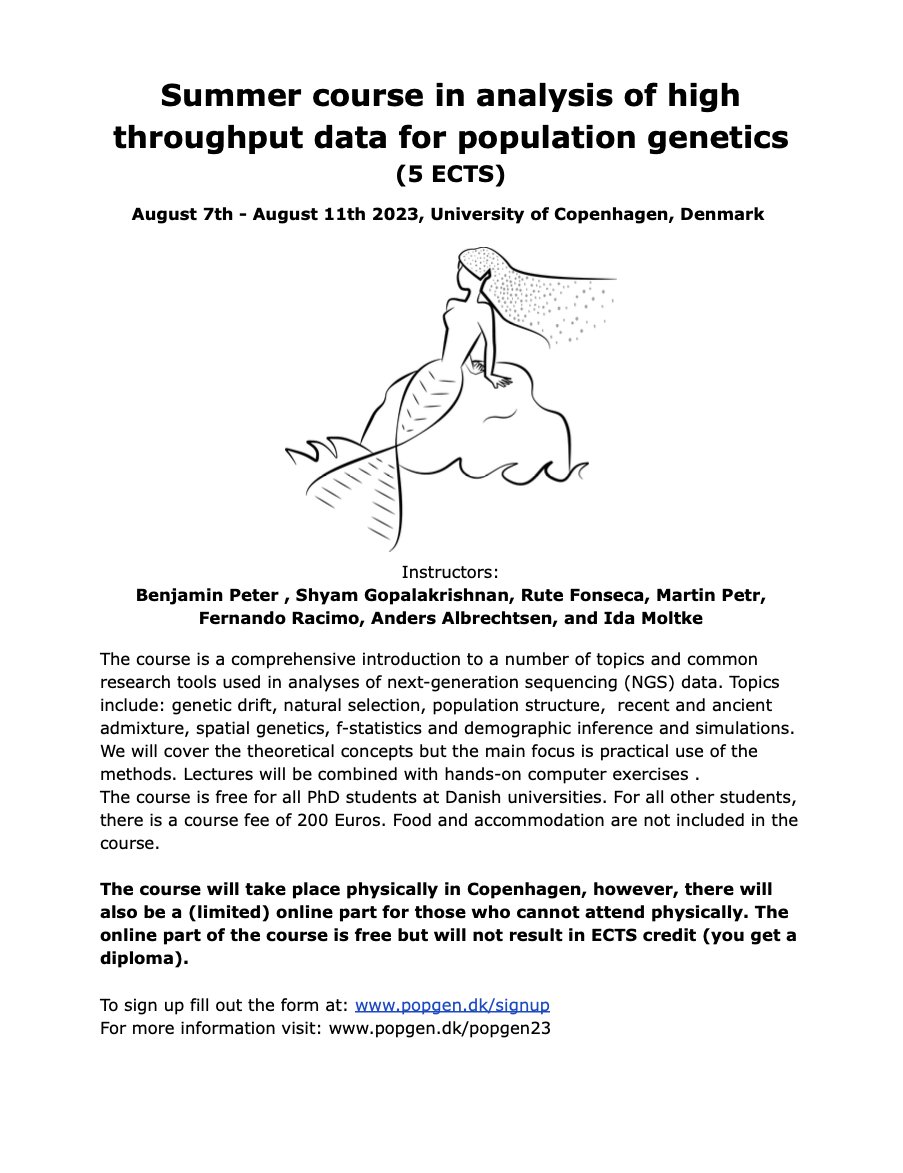
Applications are now open for our summer course in the analysis of high throughput data in population genetics! We'll cover multiple topics and tools commonly used in PopGen analyses.
Dates: 7-11 August 2023 @ University of Copenhagen
For more info: https://t.co/8zOz82pFEL
I am super happy to share our preprint: "Short structural variation fuelled CAM evolution within an explosive bromeliad radiation", taking a closer look at genome evolution in Tillandsia, one of the fastest diversifying clades of the plant kingdom (1/10) https://t.co/iEw63Q3iaA