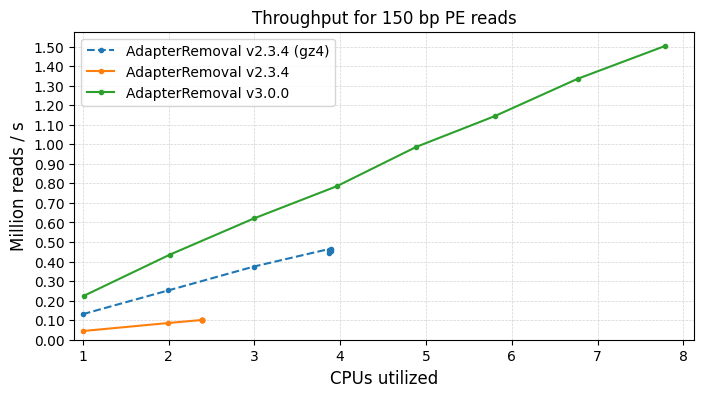
🧵2/2 New features in #AdapterRemoval v3 include QC reports, automatic adapter selection, improved demultiplexing, new trimming/filtering algorithms, automatic poly-G trimming, flexible output merging, SAM/BAM output, Windows support and more:
https://t.co/L7pTIY0Vgx
🧵1/2 AdapterRemoval v3, a dang fast(Q) processor, is here! 🚀
AdapterRemoval v3 filters and trims high-throughput sequencing data, merges overlapping reads, performs demultiplexing, & generates detailed QC reports (HTML & JSON), and does so much faster than #AdapterRemoval v2.
🧵5/5
The paper is first-authored jointly by @zilongli21 and @ffstaeger and recently published in Bioinformatics. This method is designed for single sample SV genotyping. Stay tuned for population-level joint SV genotyping!
🧵1/5
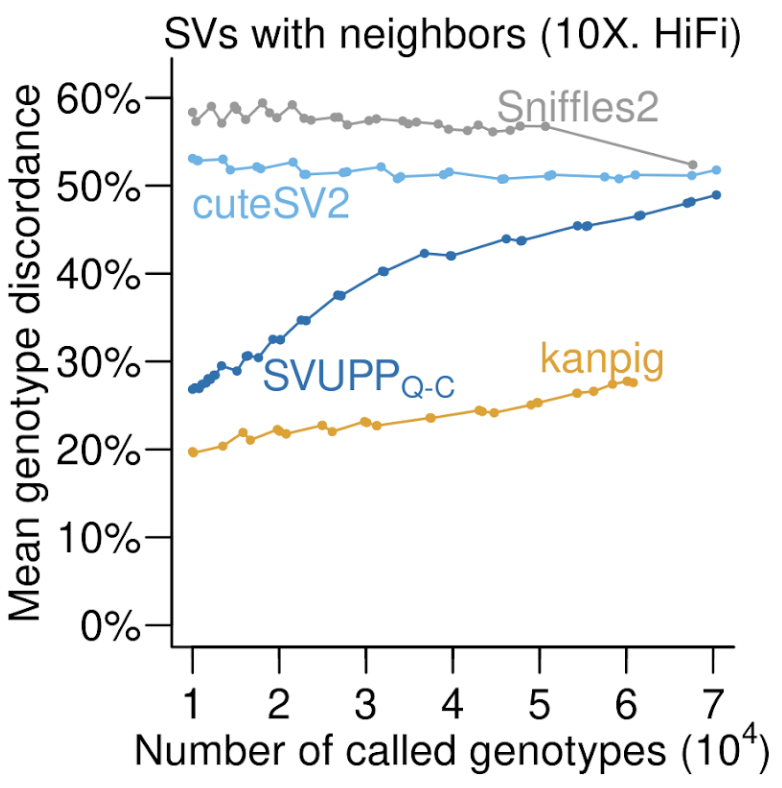
Thought long-read sequencing had “solved” structural variant genotyping? We did. Turns out many SVs still have high genotype error rates with current tools. Our new method SVUPP uses long-read pre-phasing to reduce errors and improve genotype quality
https://t.co/vH3FFqFqYw
🧵4/5
Limitation: all SV genotype callers perform poorly for SVs with neighbors (>20% error), which make up ~40% of SVs. Our results apply to the remaining 60%. If SVs with neighbors are important to your analysis, HiFi data + kanpig is currently the least-bad option.
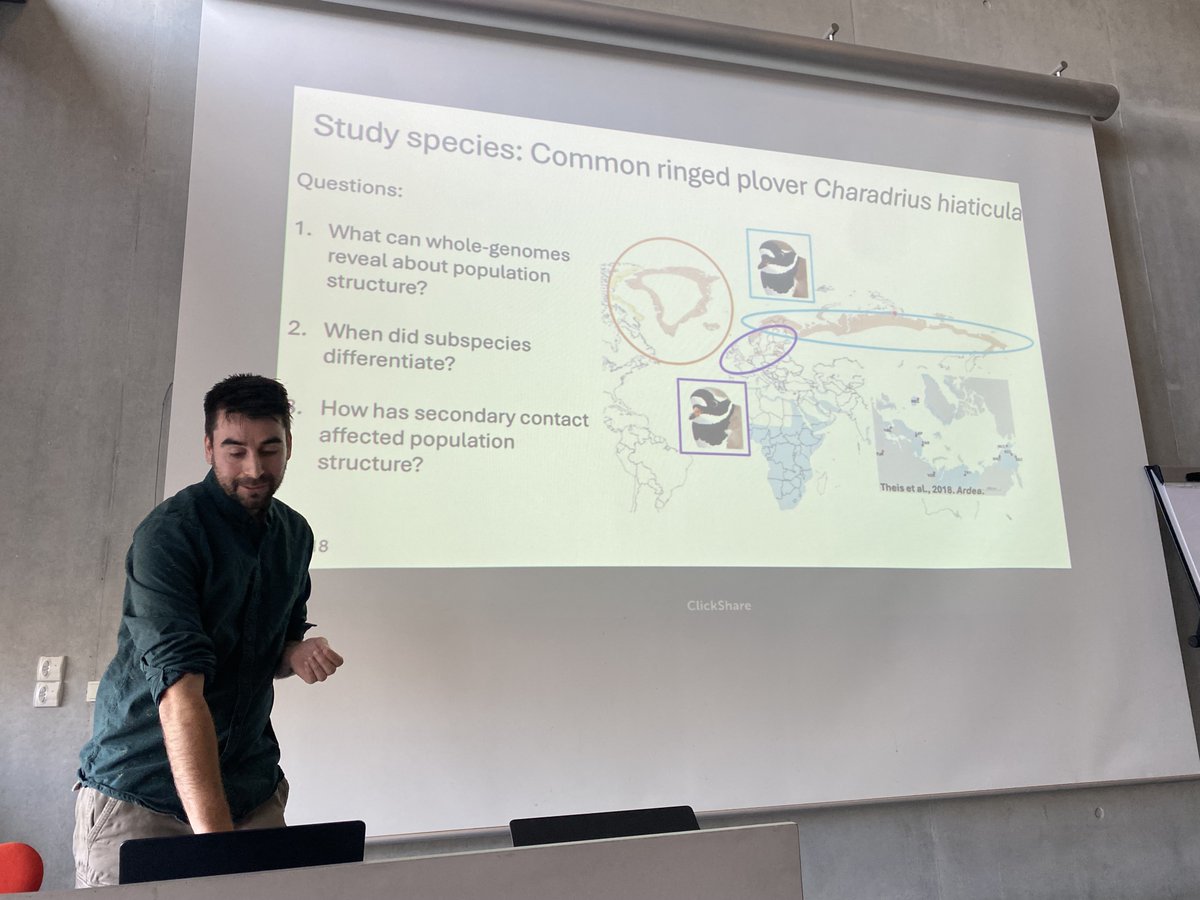
Big science highlights this month at our #EPIC seminar! Kees uncovered new insights into isolation by distance and shorebird diversity🐧, and Anna showed how ancient chewing gums provide a remarkable snapshot into #microbiome 🦠evolution and health. Fascinating work from both! 👏
Our monthly #EPIC seminars are back! 🎉
This month,Thomas Bøggild kicked things off with a fascinating talk on stopped recombination in new sex chromosomes, & Audald Lloret-Villas followed with great insights into recombination maps and imputation in #PopGen. See you next month!
🧵 This project is co-lead by Casia Nursyifa as her PhD project, and Xi Wang as her postdoc project. Congratulations to all 31 authors, including the senior authors Rasmus Heller, Bambang Purwantara, & Mohammad Agil.
🧵 The potential of new unique variants that can improve cattle productivity via genomic selection, making them high yield while being adaptive to hot climate, and potentially breed environmentally friendly cattle with low carbon footprint.
What a busy August it’s been for our group!🌍✈️
From our Summer Course in Copenhagen to #EPIC25 in Aarhus and #ESEB25 in Barcelona.Amazing to see so many of our researchers sharing their work through talks and posters!
An inspiring month full of science and collaboration! 🙌✨